element14 Community
element14 Community
    Register Log In
  • Site
  • Search
  • Log In Register
  • Community Hub
    Community Hub
    • What's New on element14
    • Feedback and Support
    • Benefits of Membership
    • Personal Blogs
    • Members Area
    • Achievement Levels
  • Learn
    Learn
    • Ask an Expert
    • eBooks
    • element14 presents
    • Learning Center
    • Tech Spotlight
    • STEM Academy
    • Webinars, Training and Events
    • Learning Groups
  • Technologies
    Technologies
    • 3D Printing
    • FPGA
    • Industrial Automation
    • Internet of Things
    • Power & Energy
    • Sensors
    • Technology Groups
  • Challenges & Projects
    Challenges & Projects
    • Design Challenges
    • element14 presents Projects
    • Project14
    • Arduino Projects
    • Raspberry Pi Projects
    • Project Groups
  • Products
    Products
    • Arduino
    • Avnet & Tria Boards Community
    • Dev Tools
    • Manufacturers
    • Multicomp Pro
    • Product Groups
    • Raspberry Pi
    • RoadTests & Reviews
  • About Us
  • Store
    Store
    • Visit Your Store
    • Choose another store...
      • Europe
      •  Austria (German)
      •  Belgium (Dutch, French)
      •  Bulgaria (Bulgarian)
      •  Czech Republic (Czech)
      •  Denmark (Danish)
      •  Estonia (Estonian)
      •  Finland (Finnish)
      •  France (French)
      •  Germany (German)
      •  Hungary (Hungarian)
      •  Ireland
      •  Israel
      •  Italy (Italian)
      •  Latvia (Latvian)
      •  
      •  Lithuania (Lithuanian)
      •  Netherlands (Dutch)
      •  Norway (Norwegian)
      •  Poland (Polish)
      •  Portugal (Portuguese)
      •  Romania (Romanian)
      •  Russia (Russian)
      •  Slovakia (Slovak)
      •  Slovenia (Slovenian)
      •  Spain (Spanish)
      •  Sweden (Swedish)
      •  Switzerland(German, French)
      •  Turkey (Turkish)
      •  United Kingdom
      • Asia Pacific
      •  Australia
      •  China
      •  Hong Kong
      •  India
      •  Korea (Korean)
      •  Malaysia
      •  New Zealand
      •  Philippines
      •  Singapore
      •  Taiwan
      •  Thailand (Thai)
      • Americas
      •  Brazil (Portuguese)
      •  Canada
      •  Mexico (Spanish)
      •  United States
      Can't find the country/region you're looking for? Visit our export site or find a local distributor.
  • Translate
  • Profile
  • Settings
Industrial Automation
  • Technologies
  • More
Industrial Automation
Blog MIT Develops RFID Drones for Inventory Control and Product Loss Prevention
  • Blog
  • Forum
  • Documents
  • Quiz
  • Events
  • Polls
  • Files
  • Members
  • Mentions
  • Sub-Groups
  • Tags
  • More
  • Cancel
  • New
Join Industrial Automation to participate - click to join for free!
  • Share
  • More
  • Cancel
Group Actions
  • Group RSS
  • More
  • Cancel
Engagement
  • Author Author: Catwell
  • Date Created: 8 Sep 2017 2:44 AM Date Created
  • Views 685 views
  • Likes 0 likes
  • Comments 0 comments
  • mit
  • robotics
  • rfid
  • robot
  • drone
  • on_campus
  • tacking
  • cabeatwell
  • school
  • university
  • sensor
Related
Recommended

MIT Develops RFID Drones for Inventory Control and Product Loss Prevention

Catwell
Catwell
8 Sep 2017

image

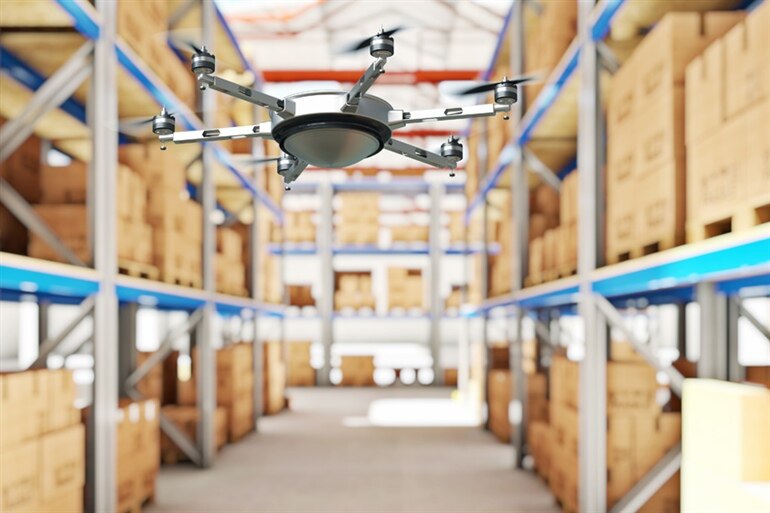
MIT’s RFly system uses autonomous drones to relay signals emitted by a standard RFID reader to track inventory. (Image credit MIT)


Implementing RFID in supply chain management was supposed to make tracking inventory a whole lot easier; however, in 2013 Walmart reported a $3-billion loss due to product mismanagement. Even the US Army suffered warehouse inventory losses to the tune of $5.8-billion between 2003 and 2011. A 2016 DoD Audit also found the Army lost $1-billion worth of weapons and equipment in Iraq and still have no idea where it went due to poor tracking.


MIT may have just solved that costly inventory bleed by utilizing drones to take over the tracking process using a novel approach to onboard RFID they’ve codenamed RFly. Their new system allows small, safe drones to fly around and read RFID tags and their locations from tens of meters away with an average error in recognition of around 19-centimeters.


You don't have permission to edit metadata of this video.
Edit media
x
image
Upload Preview
image


The research team encountered several notable issues during the development of their RFly system- most notably drone size. Most drones that can be safely operated among humans are on the small side so that they won’t inflict any damage; this makes them too small to carry a RFID reader. To overcome this issue, they used the drones themselves to relay signals emitted by a standard RFID reader to track the inventory.


Not only would this fix the safety problem posed by using large drones, but it also means the drones could be deployed with existing RFID systems already in place without the need for new tags, readers or even software, two bird with one stone.


This fix however, created additional obstacles to overcome- considering RFID tags are powered wirelessly by the reader, both transmit the same frequency simultaneously. Throwing a relay system in the mix compounds the problem- you now have two other frequencies fighting to be king of the hill, making it a foursome in a system battle royal.


Now add to that the issue of finding or localizing the RFID tags and the problem grows bigger as the platform uses an antenna array to do so. If those antennas are clustered together, a signal broadcasted at an angle will result in different arrival times, meaning the signals transmitted to the array will be slightly out of phase. It’s from those phase differences that the software can locate where the transmission originated from, which is key for the drones.


Since the drones are constantly moving and taking readings at different time increments from different locations, it simulates that multi-antenna array, providing the ability to effectively grab signal location. To separate the signals (those emitted from the reader and tags), the researchers outfitted the drones with an analog filter. The low frequency emitted from the tag is then coupled with the base frequency resulting in location identification.


It’s the researchers hope that their new RFly system will be deployed in large warehouses for continuous monitoring of product inventory to prevent inventory mismatches and loss while allowing employees to focus more on customer demands.   


Have a story tip? Message me at: cabe(at)element14(dot)com

http://twitter.com/Cabe_Atwell

  • Sign in to reply
element14 Community

element14 is the first online community specifically for engineers. Connect with your peers and get expert answers to your questions.

  • Members
  • Learn
  • Technologies
  • Challenges & Projects
  • Products
  • Store
  • About Us
  • Feedback & Support
  • FAQs
  • Terms of Use
  • Privacy Policy
  • Legal and Copyright Notices
  • Sitemap
  • Cookies

An Avnet Company © 2025 Premier Farnell Limited. All Rights Reserved.

Premier Farnell Ltd, registered in England and Wales (no 00876412), registered office: Farnell House, Forge Lane, Leeds LS12 2NE.

ICP 备案号 10220084.

Follow element14

  • X
  • Facebook
  • linkedin
  • YouTube