element14 Community
element14 Community
    Register Log In
  • Site
  • Search
  • Log In Register
  • Community Hub
    Community Hub
    • What's New on element14
    • Feedback and Support
    • Benefits of Membership
    • Personal Blogs
    • Members Area
    • Achievement Levels
  • Learn
    Learn
    • Ask an Expert
    • eBooks
    • element14 presents
    • Learning Center
    • Tech Spotlight
    • STEM Academy
    • Webinars, Training and Events
    • Learning Groups
  • Technologies
    Technologies
    • 3D Printing
    • FPGA
    • Industrial Automation
    • Internet of Things
    • Power & Energy
    • Sensors
    • Technology Groups
  • Challenges & Projects
    Challenges & Projects
    • Design Challenges
    • element14 presents Projects
    • Project14
    • Arduino Projects
    • Raspberry Pi Projects
    • Project Groups
  • Products
    Products
    • Arduino
    • Avnet & Tria Boards Community
    • Dev Tools
    • Manufacturers
    • Multicomp Pro
    • Product Groups
    • Raspberry Pi
    • RoadTests & Reviews
  • About Us
  • Store
    Store
    • Visit Your Store
    • Choose another store...
      • Europe
      •  Austria (German)
      •  Belgium (Dutch, French)
      •  Bulgaria (Bulgarian)
      •  Czech Republic (Czech)
      •  Denmark (Danish)
      •  Estonia (Estonian)
      •  Finland (Finnish)
      •  France (French)
      •  Germany (German)
      •  Hungary (Hungarian)
      •  Ireland
      •  Israel
      •  Italy (Italian)
      •  Latvia (Latvian)
      •  
      •  Lithuania (Lithuanian)
      •  Netherlands (Dutch)
      •  Norway (Norwegian)
      •  Poland (Polish)
      •  Portugal (Portuguese)
      •  Romania (Romanian)
      •  Russia (Russian)
      •  Slovakia (Slovak)
      •  Slovenia (Slovenian)
      •  Spain (Spanish)
      •  Sweden (Swedish)
      •  Switzerland(German, French)
      •  Turkey (Turkish)
      •  United Kingdom
      • Asia Pacific
      •  Australia
      •  China
      •  Hong Kong
      •  India
      •  Korea (Korean)
      •  Malaysia
      •  New Zealand
      •  Philippines
      •  Singapore
      •  Taiwan
      •  Thailand (Thai)
      • Americas
      •  Brazil (Portuguese)
      •  Canada
      •  Mexico (Spanish)
      •  United States
      Can't find the country/region you're looking for? Visit our export site or find a local distributor.
  • Translate
  • Profile
  • Settings
Industrial Automation
  • Technologies
  • More
Industrial Automation
Blog Ocean Voyages Institute removes record-breaking 103 tons of debris from the ocean
  • Blog
  • Forum
  • Documents
  • Quiz
  • Events
  • Polls
  • Files
  • Members
  • Mentions
  • Sub-Groups
  • Tags
  • More
  • Cancel
  • New
Join Industrial Automation to participate - click to join for free!
  • Share
  • More
  • Cancel
Group Actions
  • Group RSS
  • More
  • Cancel
Engagement
  • Author Author: Catwell
  • Date Created: 30 Jun 2020 6:31 PM Date Created
  • Views 604 views
  • Likes 4 likes
  • Comments 0 comments
  • environment
  • heroes
  • cabeatwell
  • ocean
  • innovation
  • cleanup
Related
Recommended

Ocean Voyages Institute removes record-breaking 103 tons of debris from the ocean

Catwell
Catwell
30 Jun 2020

image

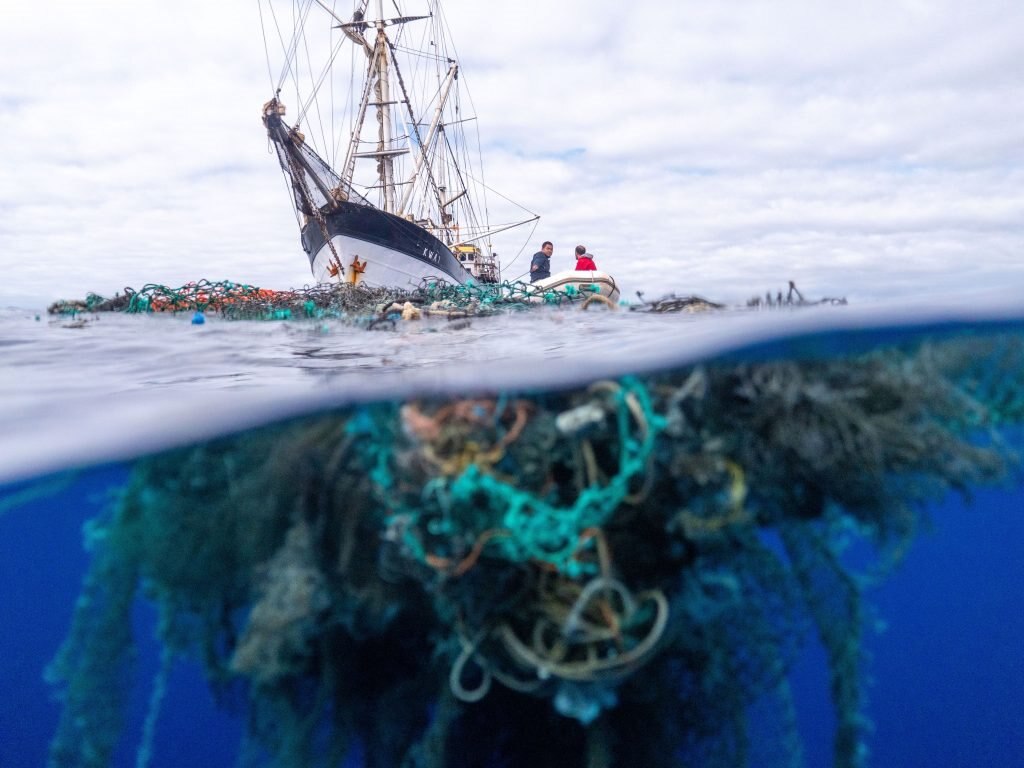
Ocean Voyages Institute removed a record-breaking 103 tons of debris from the ocean, which will be recycled and repurposed. (Image Credit: Ocean Voyages Institute)


After a successful 48-day mission to clean up 103 tons of plastics and fishing nets in the Great Pacific Garbage Patch that began on May 4th, Ocean Voyages Institute’s marine plastic recovery vessel, S/V KWAI, returned to the port of Honolulu on June 23rd. To date, this cleanup in the Gyre by Ocean Voyages Institute is a new record, which more than doubled last year’s results.


“I am so proud of our hard-working crew,” says Mary Crowley, founder and executive director of Ocean Voyages Institute. “We exceeded our goal of capturing 100 tons of toxic consumer plastics and derelict ‘ghost’ nets, and in these challenging times, we are continuing to help restore the health of our ocean, which influences our own health and the health of the planet.” Crowley adds: “The oceans can’t wait for these nets and debris to break down into microplastics which impair the ocean’s ability to store carbon and toxify the fragile ocean food web.”


Referred to as the “Ghost Net Buster,” Crowley is famous for coming up with effective techniques to clean up large amounts of plastics from the ocean. Her methods were used at the Gyre and the waters surrounding the Hawaiian Islands in 2019 to remove 48 tons of toxic plastics.


During the mission, KWAI’s crew used GPS satellite trackers, designed by Ocean Voyagers Institute and engineer Andy Sybrandy from Pacific Gyre, Inc, to help gather plastic pollution floating in the ocean. The trackers are placed on nets by volunteer yachts and ships. Drones and lookouts then up the mast, allowing the ship’s crew to move towards the debris. Afterward, they retrieve the trash, put it in industrial bags, and stash it in the cargo hold at the end of the voyage. Then it will be recycled and repurposed.


So far, Ocean Voyages Institute’s satellite trackers have proved Crowley’s theory that one tracker can locate more nets. The ocean organizes debris so that a tagged fishing net will lead to more nets along with a density of debris within 15 miles.


“We are utilizing proven nautical equipment to effectively clean up the oceans while innovating with new technologies,” says Crowley. “Ocean Voyages Institute has been a leader in researching and accomplishing ocean cleanup for over a decade, granted with less fanfare and attention than others, but with passion and commitment and making meaningful impacts.”
 

image

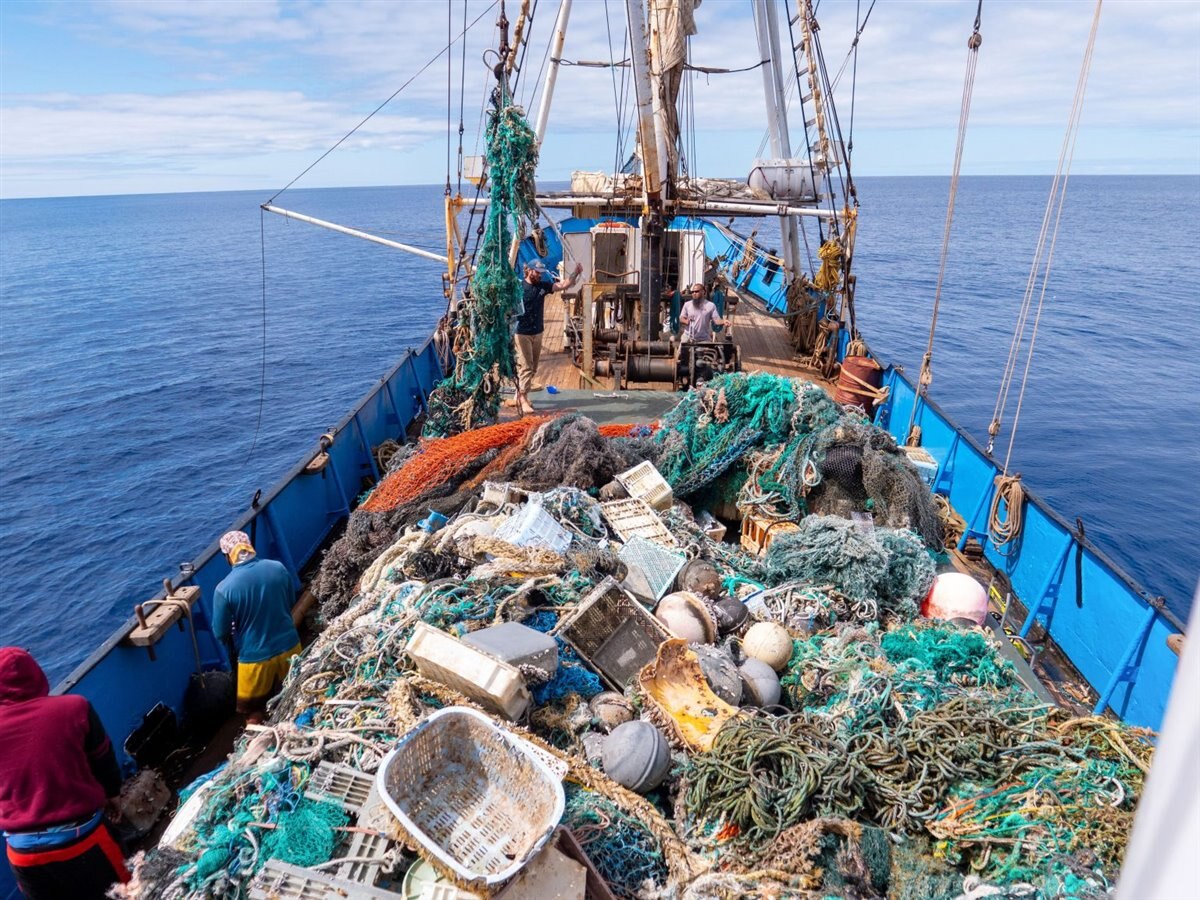
Large amounts of plastic and nets retrieved from the ocean and placed on the deck of the S/V KWAI ship. (Image Credit: Ocean Voyages Institute)

Ocean Voyager Institute will clear out its massive collection of debris from the ocean while being docked alongside Pier 29 to prepare for upcycling and proper disposal. S/V KWAI and the crew are currently undergoing a second mission to the Gyre to continue with cleanup efforts, which is littered with large amounts of toxic debris.


“Our solutions are scalable, and next year, we could have three vessels operating in the North Pacific Gyre for three months, all bringing in large cargos of debris,” says Crowley. “We are aiming to expand to other parts of the world, desperately needing efficient cleanup technologies.” Crowley adds: “There is no doubt in my mind that our work is making the oceans healthier for the planet and safer for marine wildlife, as these nets will never again entangle or harm a whale, dolphin, turtle or reefs.”


You don't have permission to edit metadata of this video.
Edit media
x
image
Upload Preview
image


Have a story tip? Message me at: cabe(at)element14(dot)com

http://twitter.com/Cabe_Atwell

  • Sign in to reply
element14 Community

element14 is the first online community specifically for engineers. Connect with your peers and get expert answers to your questions.

  • Members
  • Learn
  • Technologies
  • Challenges & Projects
  • Products
  • Store
  • About Us
  • Feedback & Support
  • FAQs
  • Terms of Use
  • Privacy Policy
  • Legal and Copyright Notices
  • Sitemap
  • Cookies

An Avnet Company © 2025 Premier Farnell Limited. All Rights Reserved.

Premier Farnell Ltd, registered in England and Wales (no 00876412), registered office: Farnell House, Forge Lane, Leeds LS12 2NE.

ICP 备案号 10220084.

Follow element14

  • X
  • Facebook
  • linkedin
  • YouTube