


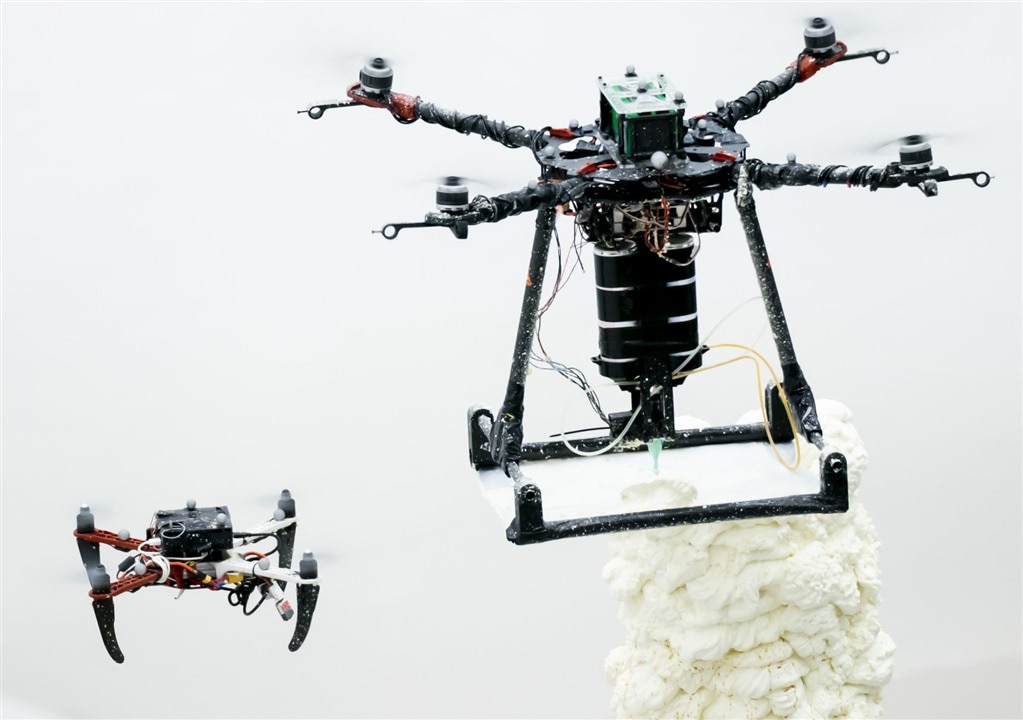
BuilDrone (right) 3D prints material while in-flight as the ScanDrone (left) monitors output. (Image Credit: University College London, Department of Computer Science, London. Dr. Vijay M. Pawar & Robert Stuart-Smith, Autonomous Manufacturing Lab.)
The construction industry is starting to use 3D printing more frequently. For example, immobile and mobile robots print materials for concrete and steel structures. Imperial College London and Empa researchers developed a new 3D printing technique for drones utilizing collective building methods inspired by natural builders, such as bees or wasps. The team says this technique can help with construction and manufacturing in hard-to-reach areas, like tall buildings or where a disaster occurred.
The fully autonomous drones in the fleet, called Aerial Additive Manufacturing (Aerial-AM), work together via an individual blueprint, adapting techniques while moving along. A human controller monitors their progress and, if required, intervenes based on the drones' data. While construction is underway, the drones adapt to the structure's geometry variations thanks to Aerial-AM's 3D printing and path-planning framework.
The fleet contains BuilDrones, which drop materials in-flight, and ScanDrones, which monitors BuilDrones' output and provides them with their next manufacturing steps. The team tested their concept by creating four cementitious mixtures for the drones to use and create a structure. During construction, the drones observed the printed geometry, adapting their behavior to reach all build specifications, and achieved five millimeters of manufacturing accuracy.
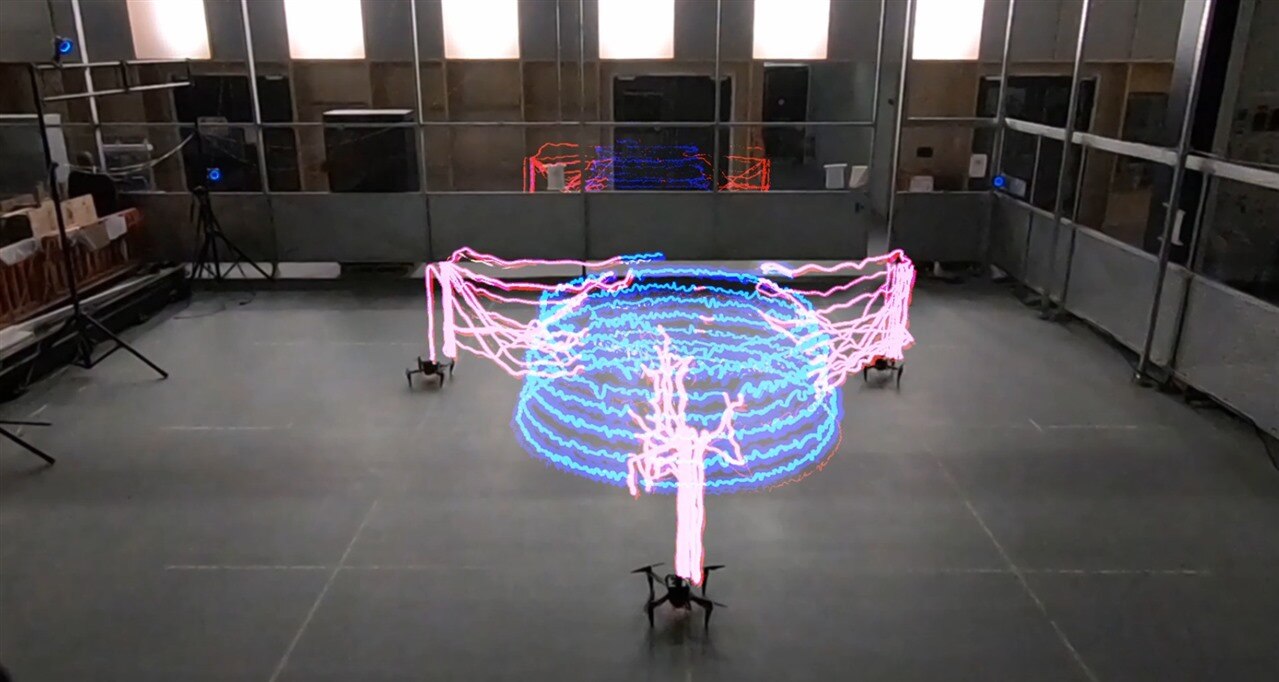
This image represents a simulation of potential building projects. (Image Credit: Autonomous Manufacturing Lab, UCL)
In the end, it printed a 2.05-meter tall cylinder (72 layers) with polyurethane-based foam material. The other cylinder (28 layers), 18 centimeters tall, was printed with a customized structural cementitious material. The team plans to collaborate with construction firms to verify the solutions and provide repair and manufacturing.
"We believe our fleet of drones could help reduce the costs and risks of construction in the future, compared to traditional manual methods," lead author Professor Kovac of Imperial's Department of Aeronautics and Empa's Materials and Technology Center of Robotics.
Have a story tip? Message me at: http://twitter.com/Cabe_Atwell