element14 Community
element14 Community
    Register Log In
  • Site
  • Search
  • Log In Register
  • Community Hub
    Community Hub
    • What's New on element14
    • Feedback and Support
    • Benefits of Membership
    • Personal Blogs
    • Members Area
    • Achievement Levels
  • Learn
    Learn
    • Ask an Expert
    • eBooks
    • element14 presents
    • Learning Center
    • Tech Spotlight
    • STEM Academy
    • Webinars, Training and Events
    • Learning Groups
  • Technologies
    Technologies
    • 3D Printing
    • FPGA
    • Industrial Automation
    • Internet of Things
    • Power & Energy
    • Sensors
    • Technology Groups
  • Challenges & Projects
    Challenges & Projects
    • Design Challenges
    • element14 presents Projects
    • Project14
    • Arduino Projects
    • Raspberry Pi Projects
    • Project Groups
  • Products
    Products
    • Arduino
    • Avnet & Tria Boards Community
    • Dev Tools
    • Manufacturers
    • Multicomp Pro
    • Product Groups
    • Raspberry Pi
    • RoadTests & Reviews
  • About Us
  • Store
    Store
    • Visit Your Store
    • Choose another store...
      • Europe
      •  Austria (German)
      •  Belgium (Dutch, French)
      •  Bulgaria (Bulgarian)
      •  Czech Republic (Czech)
      •  Denmark (Danish)
      •  Estonia (Estonian)
      •  Finland (Finnish)
      •  France (French)
      •  Germany (German)
      •  Hungary (Hungarian)
      •  Ireland
      •  Israel
      •  Italy (Italian)
      •  Latvia (Latvian)
      •  
      •  Lithuania (Lithuanian)
      •  Netherlands (Dutch)
      •  Norway (Norwegian)
      •  Poland (Polish)
      •  Portugal (Portuguese)
      •  Romania (Romanian)
      •  Russia (Russian)
      •  Slovakia (Slovak)
      •  Slovenia (Slovenian)
      •  Spain (Spanish)
      •  Sweden (Swedish)
      •  Switzerland(German, French)
      •  Turkey (Turkish)
      •  United Kingdom
      • Asia Pacific
      •  Australia
      •  China
      •  Hong Kong
      •  India
      • Japan
      •  Korea (Korean)
      •  Malaysia
      •  New Zealand
      •  Philippines
      •  Singapore
      •  Taiwan
      •  Thailand (Thai)
      • Vietnam
      • Americas
      •  Brazil (Portuguese)
      •  Canada
      •  Mexico (Spanish)
      •  United States
      Can't find the country/region you're looking for? Visit our export site or find a local distributor.
  • Translate
  • Profile
  • Settings
Industrial Automation
  • Technologies
  • More
Industrial Automation
Blog Researchers develop pneumatic computer memory to control soft robots
  • Blog
  • Forum
  • Documents
  • Quiz
  • Events
  • Polls
  • Files
  • Members
  • Mentions
  • Sub-Groups
  • Tags
  • More
  • Cancel
  • New
Join Industrial Automation to participate - click to join for free!
  • Share
  • More
  • Cancel
Group Actions
  • Group RSS
  • More
  • Cancel
Engagement
  • Author Author: Catwell
  • Date Created: 23 Jul 2021 5:51 PM Date Created
  • Views 1064 views
  • Likes 1 like
  • Comments 0 comments
  • robotics
  • control
  • robot
  • on_campus
  • cabeatwell
  • university
Related
Recommended

Researchers develop pneumatic computer memory to control soft robots

Catwell
Catwell
23 Jul 2021

image

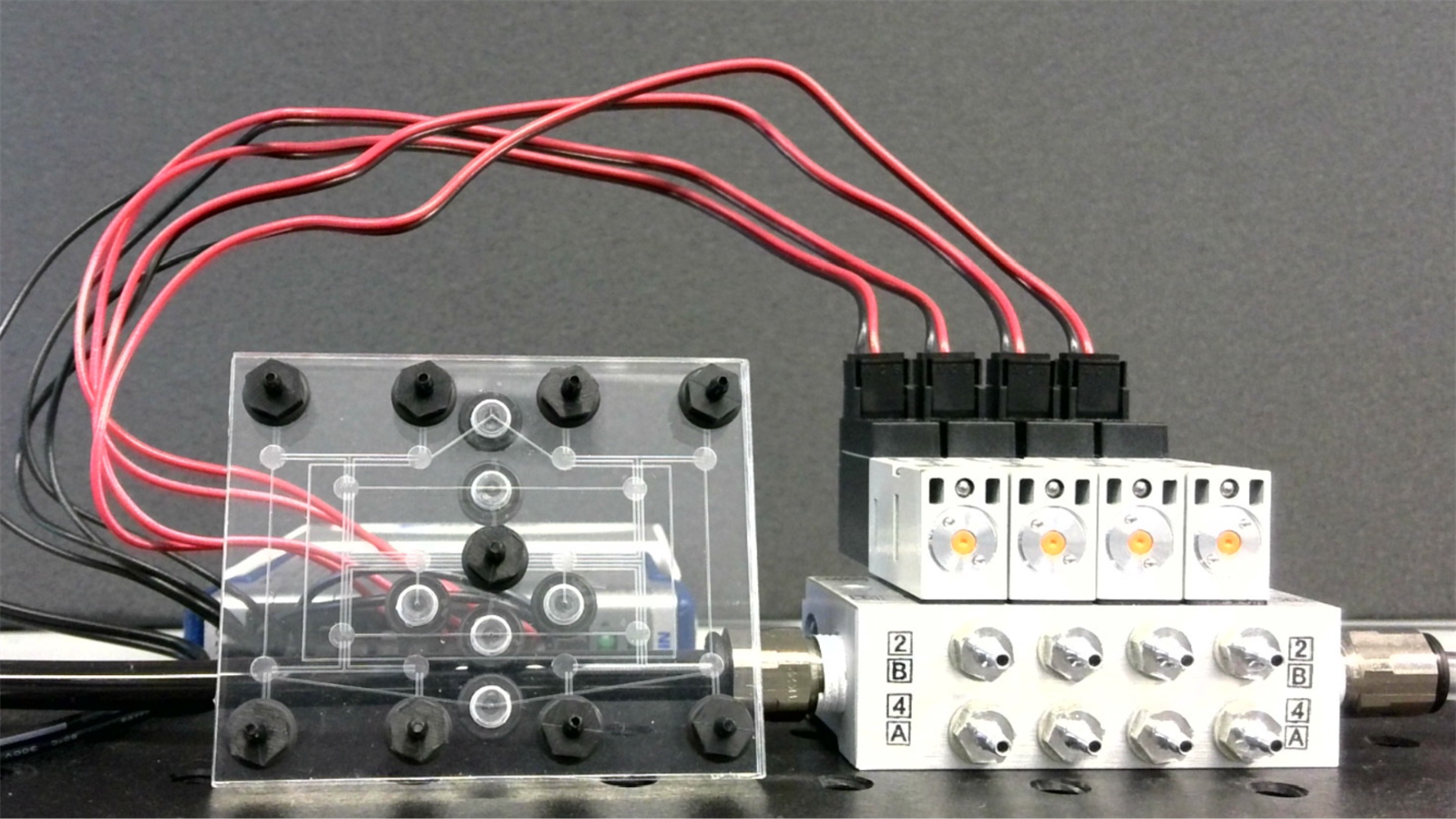
The 8-bit pneumatic RAM chip helps a soft robot control its movements. (Image Credit: William Grover/UC Riverside)


Soft robots still run on circuitry and various electronics to operate, which can introduce some limitations for advancements. A new innovation could help overcome that obstacle. Recently, UC Riverside engineers developed pneumatic computer memory to control soft robots.


Pneumatic logic was created before electronic computers, providing advanced controls in various products ranging from thermostats and climate control systems to early 1900s pianos. Pneumatic logic involves air moving through circuits or channels. Air pressure represents on/off or true/false, which are represented by 1 and 0 in computers, triggering or ending an electrical charge. Pneumatic soft robots need a way to memorize their positional moving parts. The team realized they could replace a soft robot’s electronic memory by developing and deploying a pneumatic logic memory instead.


Their innovation consists of microfluidic valves, which controls airflow, rather than electron transistors and circuits. These valves are always sealed against a pressure drop, even if it’s disconnected from an air supply line. This produces trapped pressure differentials that operate as memories and help control the robot’s actuators. Denser arrays of these valves enable more advanced operations while reducing the costly, bulky, and power-intensive electronics that control pneumatic robots.


The team altered the microfluidic valves to deal with larger airflow rates and developed an 8-bit RAM chip capable of controlling larger and quicker soft robots. Afterward, they integrated it into two 3D-printed rubber hands. Atmospheric pressure in a valve represents a “0”, and vacuum represents a “1”. The fingers extend when they connect to atmospheric pressure, and a vacuum causes them to contract.


The robot even managed to play a few notes, chords, and “Mary Had a Little Lamb” on a piano by using a combination of the atmospheric pressure and vacuum in the RAM chip’s channels. This system is very safe since it doesn’t produce any positive pressure, which means the memory won’t explode while it’s in use.


Overall, the technology still needs some speed and complexity improvements before being deployed for everyday use. Additionally, a robot requires soft processors and components to eliminate its reliance on electronic hardware. Even then, this technology is safe enough for delicate use on wearable devices for infants with motor impairments.


You don't have permission to edit metadata of this video.
Edit media
x
image
Upload Preview
image


Have a story tip? Message me at: http://twitter.com/Cabe_Atwell

  • Sign in to reply
element14 Community

element14 is the first online community specifically for engineers. Connect with your peers and get expert answers to your questions.

  • Members
  • Learn
  • Technologies
  • Challenges & Projects
  • Products
  • Store
  • About Us
  • Feedback & Support
  • FAQs
  • Terms of Use
  • Privacy Policy
  • Legal and Copyright Notices
  • Sitemap
  • Cookies

An Avnet Company © 2025 Premier Farnell Limited. All Rights Reserved.

Premier Farnell Ltd, registered in England and Wales (no 00876412), registered office: Farnell House, Forge Lane, Leeds LS12 2NE.

ICP 备案号 10220084.

Follow element14

  • X
  • Facebook
  • linkedin
  • YouTube