


After a few years of testing, French company Stanley Robotics will push out its self-driving robot valets and put them to use at France's Lyon-Saint-Exupery airport later this week. It only costs $61 to park for a week in the cheapest parking lot (farthest from terminals) or $63 to park in the same lot where Stanley Robotics provides its services. This is much cheaper than having a human park the car for you - priced at $117.
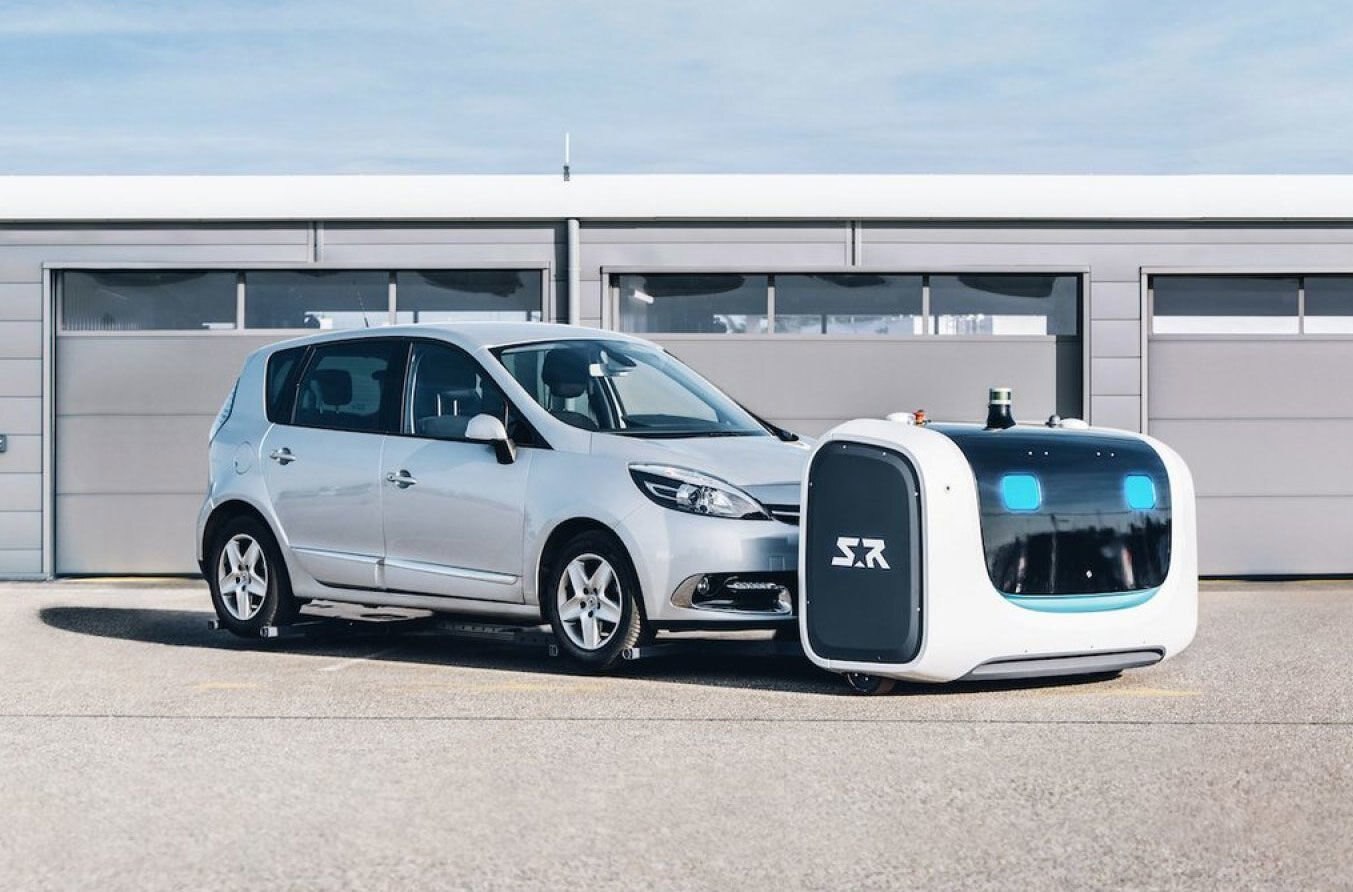
The robot valet lifts the car up using a forklift-like arm and transports it to a secure hangar. (Image Credit: Stanley Robotics)
Customers park their cars in a bright and spacious hangar, scan their information of the car model and then confirm their parking. After confirmation of their parking has been established, the hangar secures the car and a self-driving robot slides its arms underneath the car, lifts it by the tires and parks it. The parking lot is closed to the public to prevent any damage or break-ins from occurring. Only robots have access to the parking spaces. Once a customer has returned from their flight, the car will be waiting for them in a box, ready to be driven away.
The companies system uses parking space more efficiently than humans can, parking up to 50% more cars into the same space. Robot valets also adapt to parking structures with ease and doesn't need a lot of changes to the infrastructure, making it less costly than other parking services. The robots are completely autonomous, connected to the parking reservation service. This means they can easily manage arrivals and departures of the cars without human assistance. They can operate both indoors and outdoors, is resistant to harsh temperatures and bad weather and can function any time. These robots are electrically-powered, 100%. They can reduce polluting emissions in the parking lot, helping to preserve the environment.
Robots can control any types of car, at a length of up to 6m and can lift a 3-ton load with ease. It uses artificial intelligence to create more parking space with the companies algorithm by parking cars tightly in spaces. Sensors attached to the robot allow it to scan the environment it's in, adjusting its movements. This enables the robot to adapt to different obstacles it may encounter. Advances in autonomous vehicles allow it to be the very first robot to move vehicles outdoors.
Stanley Robotics will eventually expand its service at Lyon-Saint-Exupery to look after 6,000 parking spaces. However, for the time being, humans will need to look after the autonomous robots to secure operations and keep track of any malfunctions that may occur. This supervision will be done remotely without human assistance in the future.
Have a story tip? Message me at: cabe(at)element14(dot)com
Top Comments