element14 Community
element14 Community
    Register Log In
  • Site
  • Search
  • Log In Register
  • Community Hub
    Community Hub
    • What's New on element14
    • Feedback and Support
    • Benefits of Membership
    • Personal Blogs
    • Members Area
    • Achievement Levels
  • Learn
    Learn
    • Ask an Expert
    • eBooks
    • element14 presents
    • Learning Center
    • Tech Spotlight
    • STEM Academy
    • Webinars, Training and Events
    • Learning Groups
  • Technologies
    Technologies
    • 3D Printing
    • FPGA
    • Industrial Automation
    • Internet of Things
    • Power & Energy
    • Sensors
    • Technology Groups
  • Challenges & Projects
    Challenges & Projects
    • Design Challenges
    • element14 presents Projects
    • Project14
    • Arduino Projects
    • Raspberry Pi Projects
    • Project Groups
  • Products
    Products
    • Arduino
    • Avnet & Tria Boards Community
    • Dev Tools
    • Manufacturers
    • Multicomp Pro
    • Product Groups
    • Raspberry Pi
    • RoadTests & Reviews
  • About Us
  • Store
    Store
    • Visit Your Store
    • Choose another store...
      • Europe
      •  Austria (German)
      •  Belgium (Dutch, French)
      •  Bulgaria (Bulgarian)
      •  Czech Republic (Czech)
      •  Denmark (Danish)
      •  Estonia (Estonian)
      •  Finland (Finnish)
      •  France (French)
      •  Germany (German)
      •  Hungary (Hungarian)
      •  Ireland
      •  Israel
      •  Italy (Italian)
      •  Latvia (Latvian)
      •  
      •  Lithuania (Lithuanian)
      •  Netherlands (Dutch)
      •  Norway (Norwegian)
      •  Poland (Polish)
      •  Portugal (Portuguese)
      •  Romania (Romanian)
      •  Russia (Russian)
      •  Slovakia (Slovak)
      •  Slovenia (Slovenian)
      •  Spain (Spanish)
      •  Sweden (Swedish)
      •  Switzerland(German, French)
      •  Turkey (Turkish)
      •  United Kingdom
      • Asia Pacific
      •  Australia
      •  China
      •  Hong Kong
      •  India
      • Japan
      •  Korea (Korean)
      •  Malaysia
      •  New Zealand
      •  Philippines
      •  Singapore
      •  Taiwan
      •  Thailand (Thai)
      • Vietnam
      • Americas
      •  Brazil (Portuguese)
      •  Canada
      •  Mexico (Spanish)
      •  United States
      Can't find the country/region you're looking for? Visit our export site or find a local distributor.
  • Translate
  • Profile
  • Settings
Industrial Automation
  • Technologies
  • More
Industrial Automation
Blog Rochester researchers create a new superconductive material that could revolutionize electricity and electronics
  • Blog
  • Forum
  • Documents
  • Quiz
  • Events
  • Polls
  • Files
  • Members
  • Mentions
  • Sub-Groups
  • Tags
  • More
  • Cancel
  • New
Join Industrial Automation to participate - click to join for free!
  • Share
  • More
  • Cancel
Group Actions
  • Group RSS
  • More
  • Cancel
Engagement
  • Author Author: Catwell
  • Date Created: 13 Mar 2023 6:12 PM Date Created
  • Views 8425 views
  • Likes 7 likes
  • Comments 0 comments
  • materials
  • superconductor
  • on_campus
  • cabeatwell
  • university
  • innovation
Related
Recommended

Rochester researchers create a new superconductive material that could revolutionize electricity and electronics

Catwell
Catwell
13 Mar 2023

image

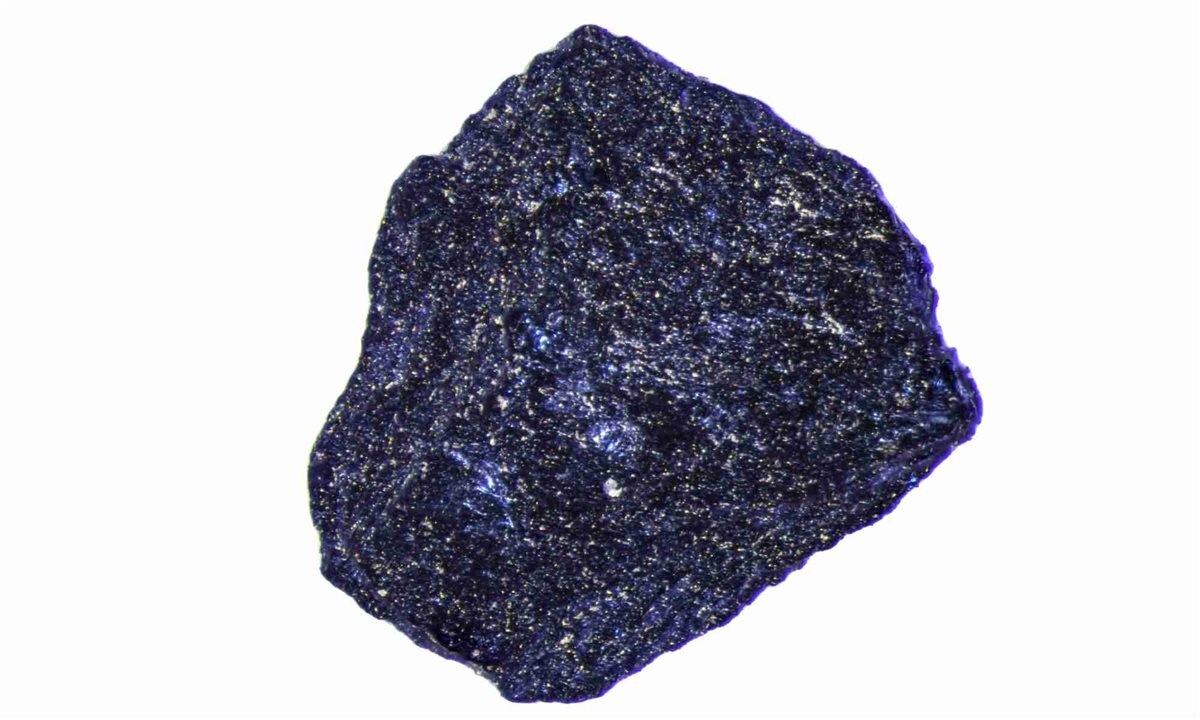
The team placed a pure sample of lutetium in a reaction chamber with a gas mixture of 99% hydrogen and 1% nitrogen. (Image Credit: University of Rochester photo / J. Adam Fenster)

Scientists at the University of Rochester created a new superconducting material called reddmatter that seamlessly distributes energy and works at low pressure and temperature, sufficient for practical, everyday applications. For example, this breakthrough could unlock high-speed magnetically hovering trains, lead to new medical equipment, contribute to nuclear fusion, and allow power grids to transmit power without resistance. 

Previously, professor Ranga Dias and his team published papers in Nature and Physical Review Letters, unveiling two similarly created superconducting materials, carbonaceous sulfur hydride and yttrium superhydride. However, the journal's editors retracted the Nature paper as the scientists faced criticism and skepticism over their discovery. In their latest breakthrough, the team took additional steps to avoid criticism. They collected new data outside a lab to verify the initial paper, and a team of scientists watched as the process unfolded. 
image

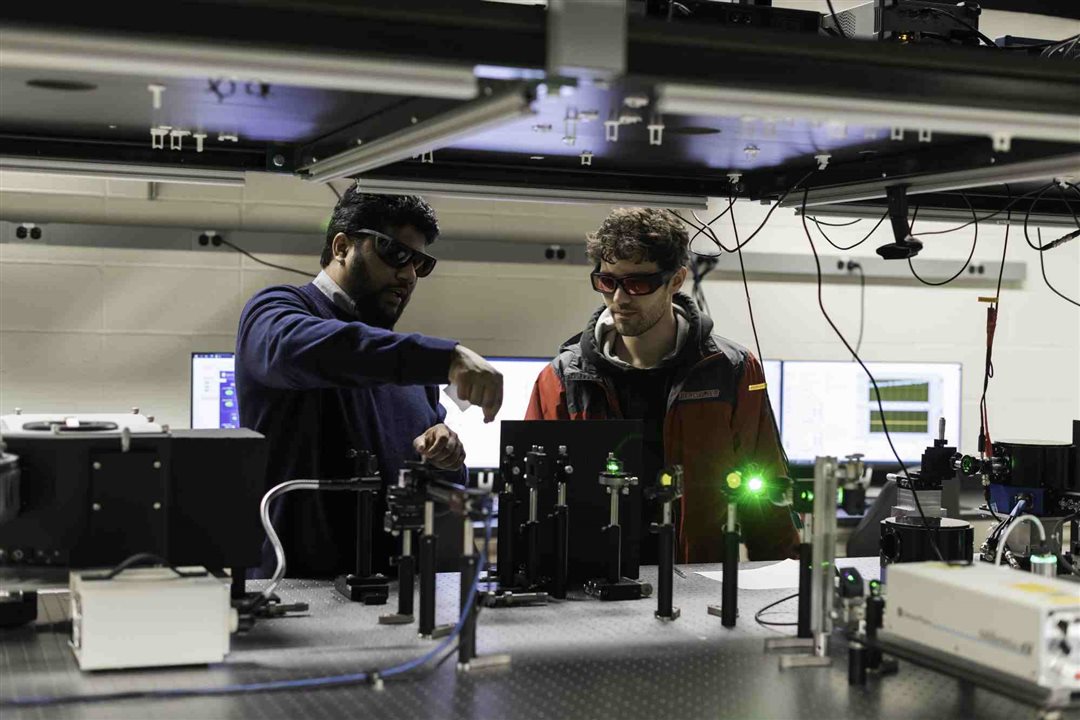
Ranga Dias fine-tunes a laser array in Dias's advanced spectroscopy lab in Hopeman Hall. (Image Credit: University of Rochester photo / J. Adam Fenster)

Reddmatter got its name from its color and as a tribute to a material from Star Trek. The material transitioned to a very bright red color during production, leading to its name. "It was a very bright red," Dias said. "I was shocked to see colors of this intensity. We humorously suggested a code name for the material at this state—'reddmatter'—after a material that Spock created in the popular 2009 Star Trek movie." 

The team created this material by placing lutetium, a rare earth metal,  and a gas mixture of 99% hydrogen and 1% nitrogen in a reaction chamber. These components then reacted at 392°F for two to three days. Dias chose nitrogen because it "has a rigid atomic structure that can be used to create a more stable, cage-like lattice within a material, and it hardens the low-frequency optical phonons." As a result, it can achieve superconductivity at lower PSI.

At first, the compound had a rich blue color. Then, it turned pink while being pressed in a diamond anvil cell at extremely high pressure, which caused it to become superconductive. After reverting to its non-superconductive metallic state, the material turned into a rich red color. 

Reddmatter must be heated to 20.5°C and compressed to 145,000 PSI to function. This level is significantly less intense compared to similar materials like the one Dias announced in 2020. The scientists behind this work say it starts a new era for practical applications of superconducting materials. 

"A pathway to superconducting consumer electronics, energy transfer lines, transportation, and significant improvements of magnetic confinement for fusion are now a reality," Dias said. "We believe we are now at the modern superconducting era." Dias believes the nitrogen-doped lutetium hydride could activate progress in developing tokamak machines to achieve nuclear fusion. 

You don't have permission to edit metadata of this video.
Edit media
x
image
Upload Preview
image

Have a story tip? Message me at: http://twitter.com/Cabe_Atwell

  • Sign in to reply
element14 Community

element14 is the first online community specifically for engineers. Connect with your peers and get expert answers to your questions.

  • Members
  • Learn
  • Technologies
  • Challenges & Projects
  • Products
  • Store
  • About Us
  • Feedback & Support
  • FAQs
  • Terms of Use
  • Privacy Policy
  • Legal and Copyright Notices
  • Sitemap
  • Cookies

An Avnet Company © 2026 Premier Farnell Limited. All Rights Reserved.

Premier Farnell Ltd, registered in England and Wales (no 00876412), registered office: Farnell House, Forge Lane, Leeds LS12 2NE.

ICP 备案号 10220084.

Follow element14

  • X
  • Facebook
  • linkedin
  • YouTube