element14 Community
element14 Community
    Register Log In
  • Site
  • Search
  • Log In Register
  • Community Hub
    Community Hub
    • What's New on element14
    • Feedback and Support
    • Benefits of Membership
    • Personal Blogs
    • Members Area
    • Achievement Levels
  • Learn
    Learn
    • Ask an Expert
    • eBooks
    • element14 presents
    • Learning Center
    • Tech Spotlight
    • STEM Academy
    • Webinars, Training and Events
    • Learning Groups
  • Technologies
    Technologies
    • 3D Printing
    • FPGA
    • Industrial Automation
    • Internet of Things
    • Power & Energy
    • Sensors
    • Technology Groups
  • Challenges & Projects
    Challenges & Projects
    • Design Challenges
    • element14 presents Projects
    • Project14
    • Arduino Projects
    • Raspberry Pi Projects
    • Project Groups
  • Products
    Products
    • Arduino
    • Avnet & Tria Boards Community
    • Dev Tools
    • Manufacturers
    • Multicomp Pro
    • Product Groups
    • Raspberry Pi
    • RoadTests & Reviews
  • About Us
    About the element14 Community
  • Store
    Store
    • Visit Your Store
    • Choose another store...
      • Europe
      •  Austria (German)
      •  Belgium (Dutch, French)
      •  Bulgaria (Bulgarian)
      •  Czech Republic (Czech)
      •  Denmark (Danish)
      •  Estonia (Estonian)
      •  Finland (Finnish)
      •  France (French)
      •  Germany (German)
      •  Hungary (Hungarian)
      •  Ireland
      •  Israel
      •  Italy (Italian)
      •  Latvia (Latvian)
      •  
      •  Lithuania (Lithuanian)
      •  Netherlands (Dutch)
      •  Norway (Norwegian)
      •  Poland (Polish)
      •  Portugal (Portuguese)
      •  Romania (Romanian)
      •  Russia (Russian)
      •  Slovakia (Slovak)
      •  Slovenia (Slovenian)
      •  Spain (Spanish)
      •  Sweden (Swedish)
      •  Switzerland(German, French)
      •  Turkey (Turkish)
      •  United Kingdom
      • Asia Pacific
      •  Australia
      •  China
      •  Hong Kong
      •  India
      •  Japan
      •  Korea (Korean)
      •  Malaysia
      •  New Zealand
      •  Philippines
      •  Singapore
      •  Taiwan
      •  Thailand (Thai)
      •  Vietnam
      • Americas
      •  Brazil (Portuguese)
      •  Canada
      •  Mexico (Spanish)
      •  United States
      Can't find the country/region you're looking for? Visit our export site or find a local distributor.
  • Translate
  • Profile
  • Settings
Industrial Automation
  • Technologies
  • More
Industrial Automation
Blog Space Tourism: Why Live On A Planet When You Can Live On Orbit?
  • Blog
  • Forum
  • Documents
  • Quiz
  • Events
  • Polls
  • Files
  • Members
  • Mentions
  • Sub-Groups
  • Tags
  • More
  • Cancel
  • New
Join Industrial Automation to participate - click to join for free!
  • Share
  • More
  • Cancel
Group Actions
  • Group RSS
  • More
  • Cancel
Engagement
  • Author Author: Catwell
  • Date Created: 7 Oct 2020 9:00 PM Date Created
  • Views 1747 views
  • Likes 3 likes
  • Comments 7 comments
  • transportation
  • housing
  • nasa
  • space
  • Lifestyle
  • cabeatwell
  • living
  • iss
Related
Recommended

Space Tourism: Why Live On A Planet When You Can Live On Orbit?

Catwell
Catwell
7 Oct 2020

image

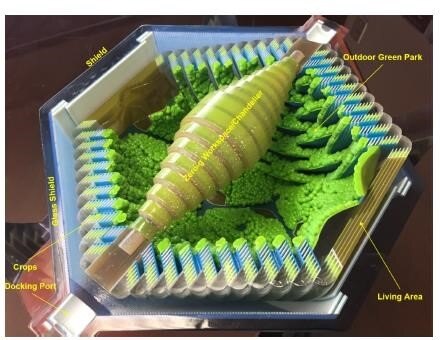
While many space tourism companies are planning to settle on the moon or Mars, there is a company working on building settlements in orbit. 3-D model of the orbital habitat's important features. (image credit: Texas A&M University)


Many of us dreamed of having a treehouse as a kid; some of us even had one. But, as we grow up, we move to bigger dreams, such as going to Mars or commuting around space. What if we could visit and live in space?


I can see living in orbit being a premier place to be. Off the planet, away from the planet's troubles? It's going to happen.


It is probably the kind of dream the engineers at Texas A&M University are trying to make true when they conceived of their own take on orbital habitat. Now there are 2 ways to live in space: building settlements on a planet/star of our choice or living on spaceships on the orbit of a star/planet. The first option is the most talked about but comes with many limitations, most of which are related to the environment and weather conditions of the planet we chose to settle on. The second option is currently used by astronauts working in space, but the orbital habitat built for them can only accommodate a small group of people. Building an orbital habitat ourselves is more beneficial because it would give us a lot more control over the environment and our living conditions than colonizing a planet would. That is if we can accommodate more people than just a team of astronauts.


The model proposed by the engineers of A&M University could house about 8,000 people. The research team explained that their model would solve the issues related to lack of gravity, exposure to radiation, habitat growth capability, sustainable agriculture, and commercial value that are the main concerns attached to living out in space. Living in a gravity-less environment can wreak havoc on the body (vision impairment, loss of bone density…), so the engineers thought of developing an artificial gravity in their model, which by itself seems to be a feat when we consider that the habitat will be in the shape of a concentric cylinder. To achieve that, the team utilizes centrifugal force caused by the rotation of the cylinder. At the right radius and rotation speed, the rotation of the cylinder creates a uniform sense of gravity no matter where one stands in the habitat. Any discrepancy in those numbers leads to the inhabitants feeling nauseous.


The other concern with living in orbit is exposure to radiation, which could cause cancer and cellular damage. For that, the engineers are planning to surround the habitat with a 5-meter- thick layer of water and regolith rock: 1-meter thick layer of regolith followed by a 2-meter thick layer of water followed by a 2-meter thick layer of regolith. The combination of the shield and rotation features assisted with a radiator will create inside the habitat the right temperature for plant growth. The system can create a temperature of up to 27degrees Celsius. To make the habitat commercially valuable, the engineers thought of creating different zones with different gravity to accommodate not only agriculture but also the transformation of raw materials to allow sustainable living for the thousands of people who will be living on the platform.


It looks like the engineers have a solution for everything that could go wrong during life in orbit. Now, is the project viable? How will they finance it? We know that Jeff Bezos is looking for an engineer to design an orbital habitat for Blue Origin, so could this be the right fit?


Have a story tip? Message me at: cabe(at)element14(dot)com

http://twitter.com/Cabe_Atwell

  • Sign in to reply

Top Comments

  • hugohu
    hugohu over 5 years ago +1
    Unless if you have a self sustaining ecosystem, as well as an industrial power like Earth, you'd find many things required to be shipped up from Earth, and things are expensive. If it's not self sustaining…
  • hugohu
    hugohu over 5 years ago in reply to Catwell +1
    Possibly. As long as we aren't self sustaining, there is no point of a space hotel. "Hotel". It's a "hotel", not a permanent housing, it's somewhere you live while travelling. It's going to be very expensive…
  • dubbie
    dubbie over 5 years ago +1
    Not me I think. I find Spain quite a long way to go. Dubbie
  • Catwell
    Catwell over 5 years ago in reply to phoenixcomm

    I hope they do. Feels like we are stagnating in space endeavors. (despite the constant amazing  robotics sent out, that is.)

    • Cancel
    • Vote Up +1 Vote Down
    • Sign in to reply
    • More
    • Cancel
  • phoenixcomm
    phoenixcomm over 5 years ago in reply to Catwell

    Catwell Cabe I am 70  never happen. They could put a settlement on the moon though. You can "print"   structures from moon crushed regolith. or dig down 20 feet or dig in to a mountain.

    ~~Cris

    • Cancel
    • Vote Up 0 Vote Down
    • Sign in to reply
    • More
    • Cancel
  • phoenixcomm
    phoenixcomm over 5 years ago

    I personally think its a whim, as you first have to haul up to orbit the regolith (very expensive) or you could get it from the moon. And where is the water going to come from thats right earth, and that will be very expensive.

    I think this is a paper tiger, and for an idea 4.0  but for practicality 1.0  so their GPA = 2.5

    ~~Cris H.

    • Cancel
    • Vote Up 0 Vote Down
    • Sign in to reply
    • More
    • Cancel
  • dubbie
    dubbie over 5 years ago

    Not me I think. I find Spain quite a long way to go.


    Dubbie

    • Cancel
    • Vote Up +1 Vote Down
    • Sign in to reply
    • More
    • Cancel
  • hugohu
    hugohu over 5 years ago in reply to Catwell

    Possibly.


    As long as we aren't self sustaining, there is no point of a space hotel. "Hotel". It's a "hotel", not a permanent housing, it's somewhere you live while travelling.


    It's going to be very expensive and a waste, really.

    • Cancel
    • Vote Up +1 Vote Down
    • Sign in to reply
    • More
    • Cancel
>
element14 Community

element14 is the first online community specifically for engineers. Connect with your peers and get expert answers to your questions.

  • Members
  • Learn
  • Technologies
  • Challenges & Projects
  • Products
  • Store
  • About Us
  • Feedback & Support
  • FAQs
  • Terms of Use
  • Privacy Policy
  • Legal and Copyright Notices
  • Sitemap
  • Cookies

An Avnet Company © 2026 Premier Farnell Limited. All Rights Reserved.

Premier Farnell Ltd, registered in England and Wales (no 00876412), registered office: Farnell House, Forge Lane, Leeds LS12 2NE.

ICP 备案号 10220084.

Follow element14

  • X
  • Facebook
  • linkedin
  • YouTube