


Faris Rajak Kotahatuhaha and his team came up with a submarine prototype that can help fight off climate change. The submarine would be stationed in the Arctic, re-freezing sea water to produce mini modular icebergs that eventually merge together to create ice floes. Faris worked in collaboration with Denny Lsmana Budi and Fiera Alifa for an international contest hosted by the Association of Siamese Architects. Their prototype won the 2nd place prize in the competition.
"The main goal of this idea is to restore the polar ecosystem, which has a direct effect on the balance of the global climate," said the designer, adding "it is better to prevent than cure."
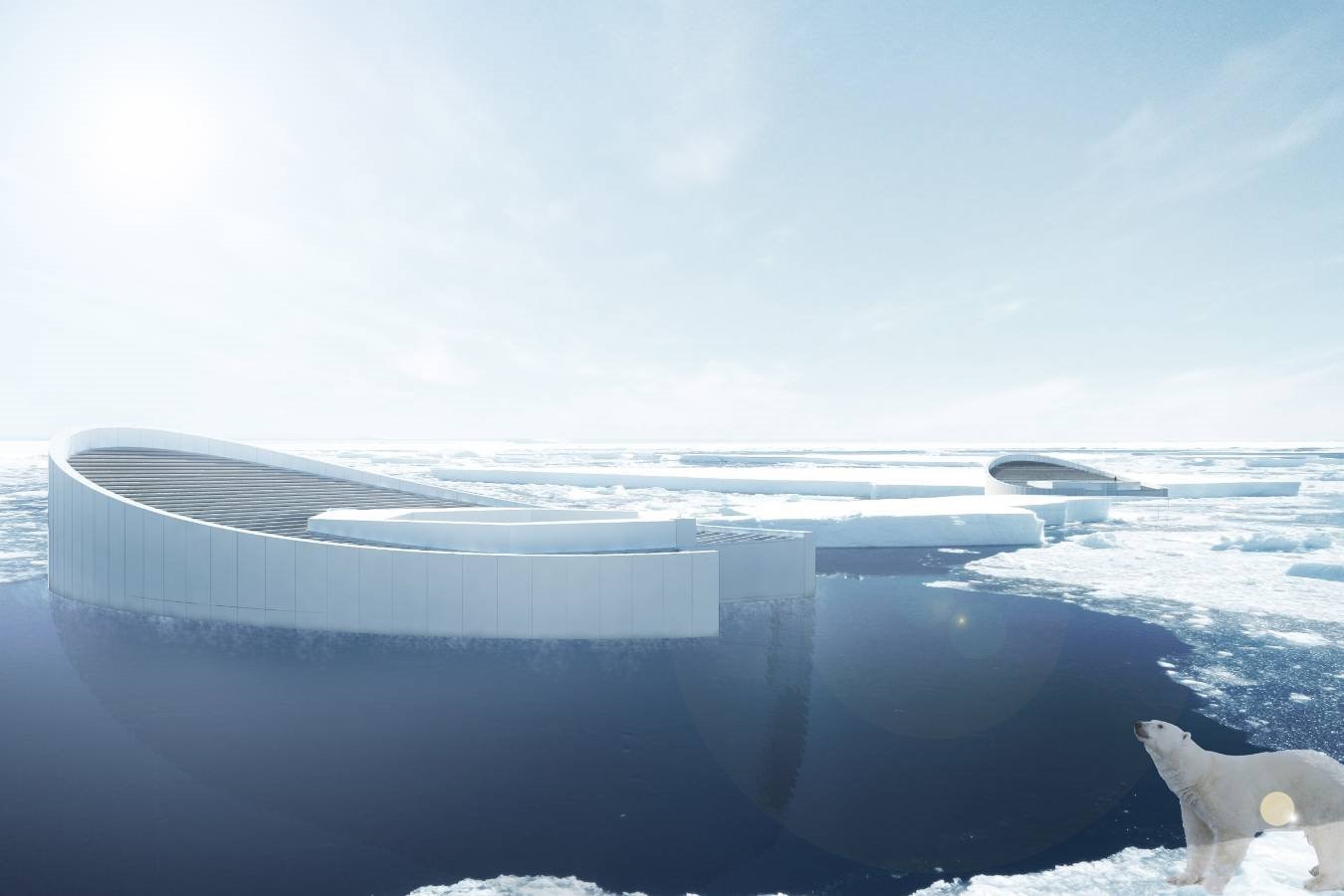
An artist’s impression of the proposed submarines. The submarines would form new icebergs to help rebuild the polar ice. (Image Credit: Dezeen)
The team’s approach was inspired by current issues in the melting polar ice. They realized that there is too much focus on keeping cities safe from rising sea-levels, rather than from where the problem originates. Such cases are made clear in New York City, where architecture firm BIG is in the process of developing a large-scale flood defense system to help keep Lower Manhattan safe from tidal surge destruction. Hassell and MVRDV have also come up with a series of propositions designed to keep San Francisco and the surrounding Bay Area safe from raging ocean waters.
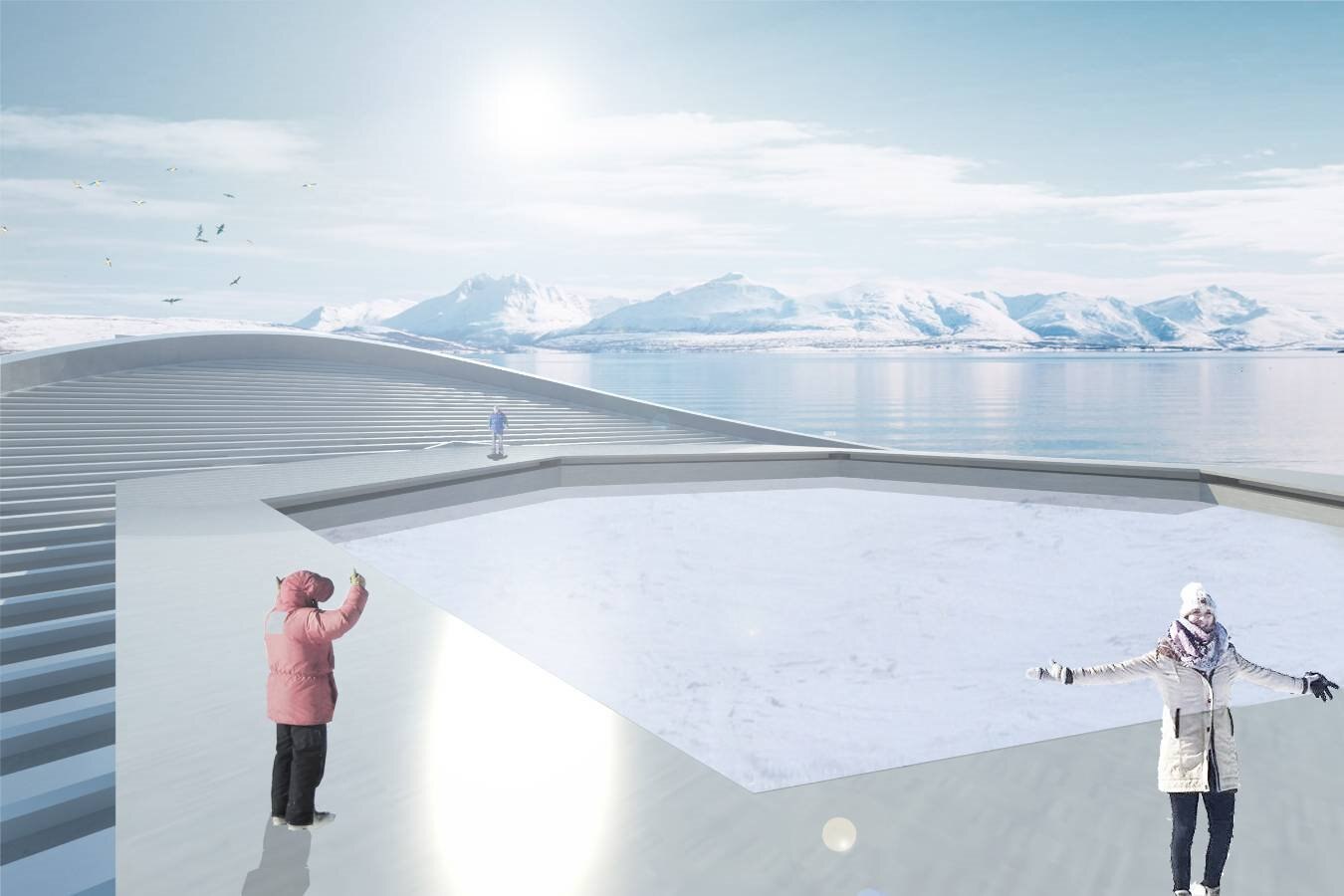
Sea water would be gathered and frozen into a hexagonal shape before being released into the water. (Image Credit: Dezeen)
The submarine submerges in the Arctic to gather sea water in a hexagonal shaped tank located in the center of the ship. Turbines would then rush cold air into the tank, starting up the freezing process. While the process is ongoing, the submarine emerges to the surface of the sea, covering up the tank to prevent sunlight from getting in. To quicken the entire process, a system of reverse osmosis would filter out salt from the water, allowing it to quickly freeze over.
When the water is frozen, the submarine sinks back into the water, leaving behind a newly formed iceberg with a volume of 2,027 cubic-meters. These icebergs would then merge into each other in a hexagonal shape that turns into a bigger ice floe. Several submarines could also be used at the same time to continue the process while slowly rebuilding the ice caps.
The submarines can also be big enough to accommodate additional functions such as polar research centers and underwater hotels that could help to finance the project, as Kotahatuhaha proposed.
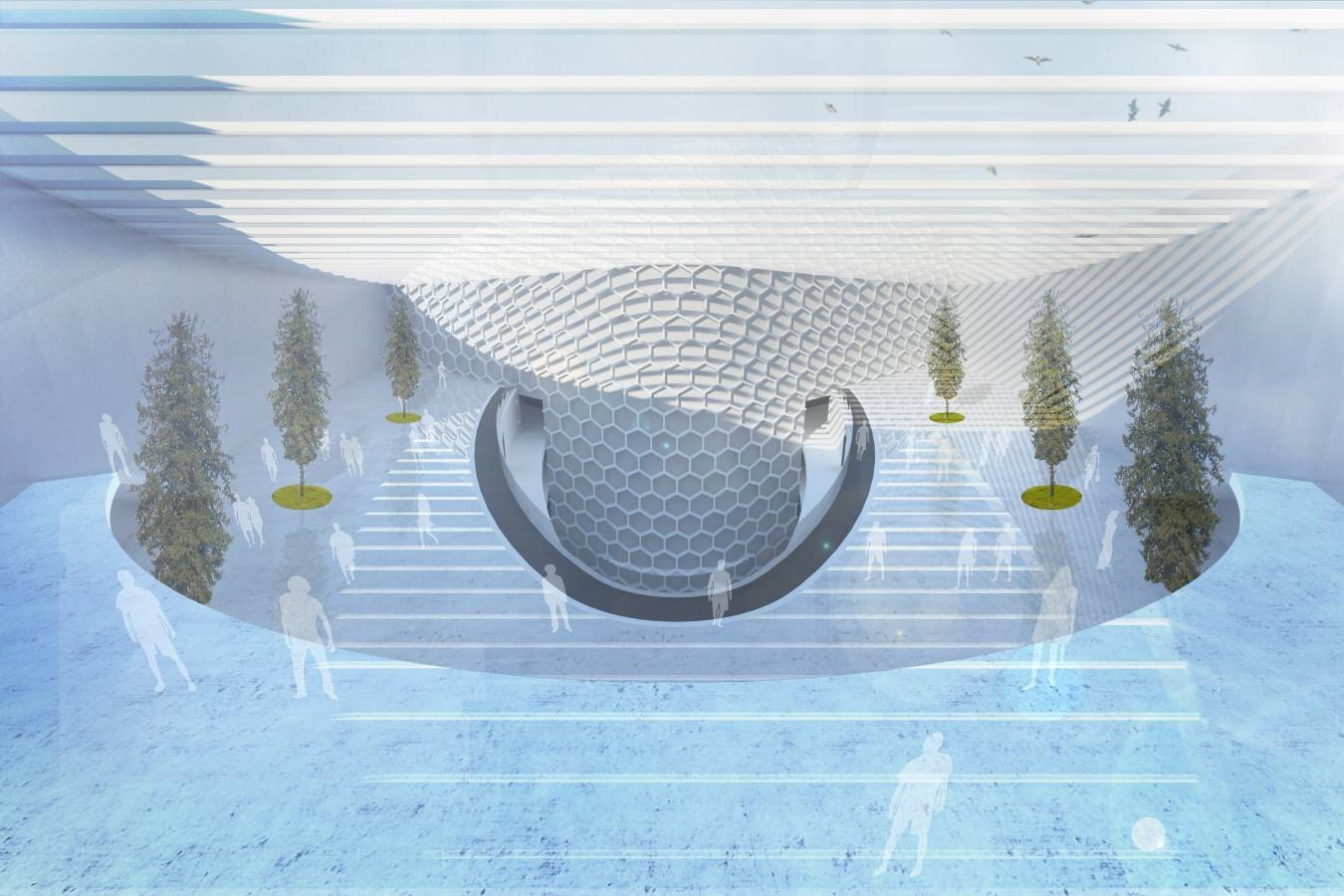
The underwater ice hotel proposed by the team leader could help to finance the project. (Image Credit: Dezeen)
Other proposals that can help thwart rising sea levels include a number of enormous floating umbrellas that could help preserve Arctic ice shelves, as well as a method to keep beaches and islands intact in coastal regions where danger could be imminent.
Have a story tip? Message me at: cabe(at)element14(dot)com
Top Comments