element14 Community
element14 Community
    Register Log In
  • Site
  • Search
  • Log In Register
  • Community Hub
    Community Hub
    • What's New on element14
    • Feedback and Support
    • Benefits of Membership
    • Personal Blogs
    • Members Area
    • Achievement Levels
  • Learn
    Learn
    • Ask an Expert
    • eBooks
    • element14 presents
    • Learning Center
    • Tech Spotlight
    • STEM Academy
    • Webinars, Training and Events
    • Learning Groups
  • Technologies
    Technologies
    • 3D Printing
    • FPGA
    • Industrial Automation
    • Internet of Things
    • Power & Energy
    • Sensors
    • Technology Groups
  • Challenges & Projects
    Challenges & Projects
    • Design Challenges
    • element14 presents Projects
    • Project14
    • Arduino Projects
    • Raspberry Pi Projects
    • Project Groups
  • Products
    Products
    • Arduino
    • Avnet & Tria Boards Community
    • Dev Tools
    • Manufacturers
    • Multicomp Pro
    • Product Groups
    • Raspberry Pi
    • RoadTests & Reviews
  • About Us
  • Store
    Store
    • Visit Your Store
    • Choose another store...
      • Europe
      •  Austria (German)
      •  Belgium (Dutch, French)
      •  Bulgaria (Bulgarian)
      •  Czech Republic (Czech)
      •  Denmark (Danish)
      •  Estonia (Estonian)
      •  Finland (Finnish)
      •  France (French)
      •  Germany (German)
      •  Hungary (Hungarian)
      •  Ireland
      •  Israel
      •  Italy (Italian)
      •  Latvia (Latvian)
      •  
      •  Lithuania (Lithuanian)
      •  Netherlands (Dutch)
      •  Norway (Norwegian)
      •  Poland (Polish)
      •  Portugal (Portuguese)
      •  Romania (Romanian)
      •  Russia (Russian)
      •  Slovakia (Slovak)
      •  Slovenia (Slovenian)
      •  Spain (Spanish)
      •  Sweden (Swedish)
      •  Switzerland(German, French)
      •  Turkey (Turkish)
      •  United Kingdom
      • Asia Pacific
      •  Australia
      •  China
      •  Hong Kong
      •  India
      • Japan
      •  Korea (Korean)
      •  Malaysia
      •  New Zealand
      •  Philippines
      •  Singapore
      •  Taiwan
      •  Thailand (Thai)
      • Vietnam
      • Americas
      •  Brazil (Portuguese)
      •  Canada
      •  Mexico (Spanish)
      •  United States
      Can't find the country/region you're looking for? Visit our export site or find a local distributor.
  • Translate
  • Profile
  • Settings
Industrial Automation
  • Technologies
  • More
Industrial Automation
Blog The current space treaty doesn’t cover future space exploration
  • Blog
  • Forum
  • Documents
  • Quiz
  • Events
  • Polls
  • Files
  • Members
  • Mentions
  • Sub-Groups
  • Tags
  • More
  • Cancel
  • New
Join Industrial Automation to participate - click to join for free!
  • Share
  • More
  • Cancel
Group Actions
  • Group RSS
  • More
  • Cancel
Engagement
  • Author Author: Catwell
  • Date Created: 15 Jul 2019 6:39 PM Date Created
  • Views 617 views
  • Likes 4 likes
  • Comments 2 comments
  • law
  • human
  • world
  • space mining
  • space law
  • space
  • cabeatwell
  • exploration
  • innovation
Related
Recommended

The current space treaty doesn’t cover future space exploration

Catwell
Catwell
15 Jul 2019

image

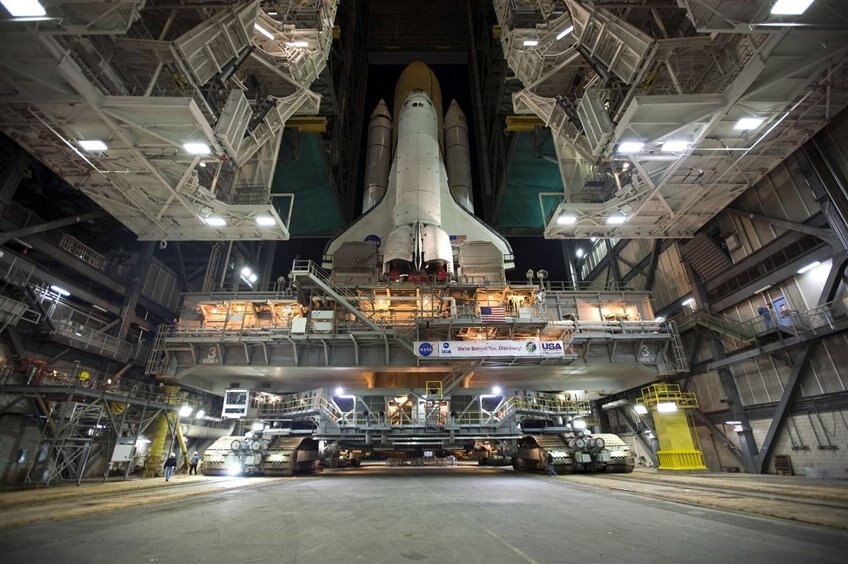
The 1967 U.N. Outer Space Treaty appears to be outdated when thinking about where space exploration is headed next. Is it time to update the space treaty? Probably. (Image credit: pixabay)


When man first landed on the moon 50 years ago, no one could’ve guessed one day there’d be talks of space tourism, asteroid mining, off-Earth settlements, and missions by private companies like SpaceX. With a renewed interest in space exploration, many are questioning the 1967 U.N. Outer Space Treaty that was established to prevent individual countries from claiming sovereignty over celestial bodies as well as preventing anyone from putting nukes in space. The problem is the treaty doesn’t take current space interests into consideration, so what exactly does it do?


The 1967 U.N. Outer Space Treaty prevents any nation from laying sovereignty claims over celestial bodies. So what about Elon Musk’s quest to settle Mars? This is where things get tricky. Some believe since the treaty doesn’t forbid it, it’s allowable. The problem is there’s an article in the treaty that makes the signing countries responsible for “national activities in outer space” regardless of whether they are done by government or private entities.


This means the U.S. would have to approve a SpaceX settlement mission to make sure the company’s activities don’t violate the treaty. In addition, the mission’s personnel and material, like their ships and habitats, would stay under the jurisdiction of the launching country. So chances are no, Musk can’t settle on Mars without approval.


What does the treaty say in terms of mining gold on Mars? The answer changes depending on who you ask. The U.S. government says yes. Though we don’t have enough proof that there are significant gold deposits on Mars, the amount of volcanic activity makes it plausible. While the treaty bars countries from appropriating celestial bodies, countries that support the right to mine materials can still argue that the celestial bodies don’t apply to resource mining. Opponents argue mining is a form of appropriation, so resources in space belong to everyone. More countries like Russia and China have expressed their intent to pursue space mining, so with the treaty being unclear on this issue space mining seems to get a pass.


The treaty also doesn’t account for possible space tourism. Though we’re still pretty far from regular trips to space, many have questioned it in regard to moving space dust and asteroids. While the treaty says you can’t own an asteroid, there’s nothing that says you can’t move it. And since there are no conservation laws in space, countries licensing tours would handle the rules. But some are worried that taking space dust as a souvenir would lead to the moon’s erosion. Typically, only governments are allowed to take scientific samples from celestial bodies to help increase our knowledge of outer space.


It may seem a bit silly to ask these questions, but with more organizations and companies getting serious about space travel and other ventures, it’s something that needs to be taken into consideration. While none of these scenarios have actually happened, it still seems like it’s time for a new space treaty.


Have a story tip? Message me at: cabe(at)element14(dot)com

http://twitter.com/Cabe_Atwell

  • Sign in to reply
  • Catwell
    Catwell over 6 years ago in reply to dubbie

    Hopefully soon.

    • Cancel
    • Vote Up 0 Vote Down
    • Sign in to reply
    • More
    • Cancel
  • dubbie
    dubbie over 6 years ago

    An interesting situation that at some time, probably not too distant, will need to be resolved.


    Dubbie

    • Cancel
    • Vote Up 0 Vote Down
    • Sign in to reply
    • More
    • Cancel
element14 Community

element14 is the first online community specifically for engineers. Connect with your peers and get expert answers to your questions.

  • Members
  • Learn
  • Technologies
  • Challenges & Projects
  • Products
  • Store
  • About Us
  • Feedback & Support
  • FAQs
  • Terms of Use
  • Privacy Policy
  • Legal and Copyright Notices
  • Sitemap
  • Cookies

An Avnet Company © 2026 Premier Farnell Limited. All Rights Reserved.

Premier Farnell Ltd, registered in England and Wales (no 00876412), registered office: Farnell House, Forge Lane, Leeds LS12 2NE.

ICP 备案号 10220084.

Follow element14

  • X
  • Facebook
  • linkedin
  • YouTube