


(Image Credit: geralt/pixabay)
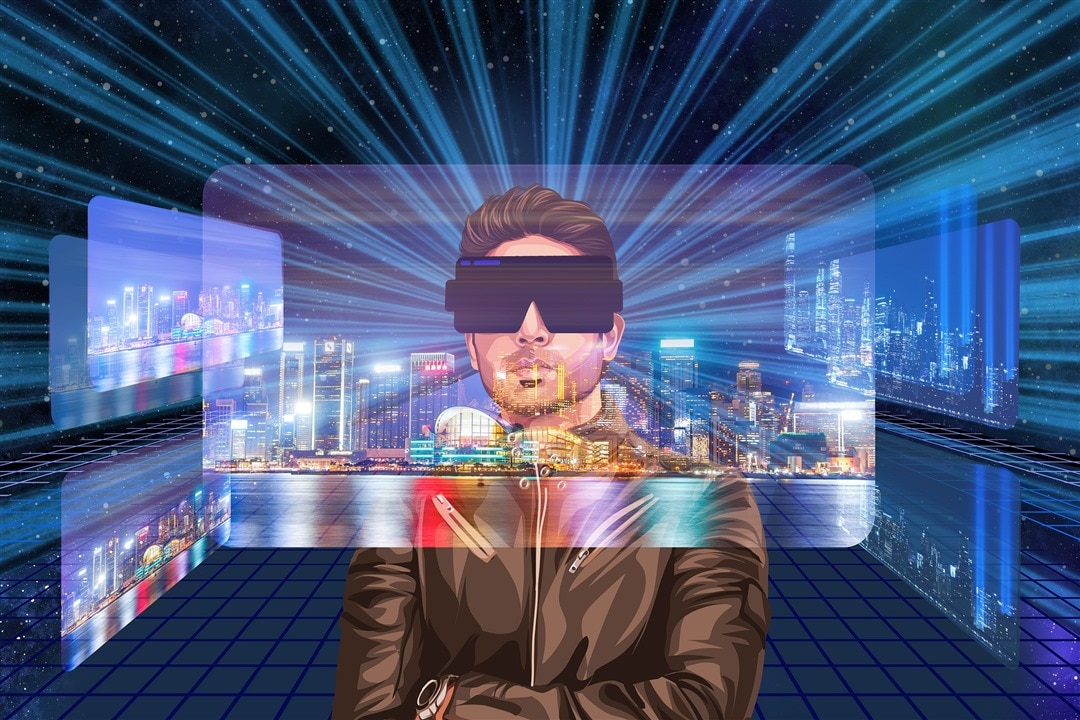
Everyone is familiar with the metaverse, a network of 3D virtual reality (AR), augmented reality (AR), and mixed reality (MR) worlds accessible through a web browser or VR headset. In this way, users can immerse themselves in a virtual environment, interact with others in real time, and share experiences, such as touching and manipulating an object that may not exist in the real world. Tech industries and others could also use it as a source of excellent financial and business opportunities. But, many people may wonder if the metaverse is taking over manufacturing and, if so, how?
According to Emma Taylor, a GlobalData analyst, the metaverse is expected to impact manufacturing by 2030 and work efficiently, thanks to VR, MR, and AR. “Manufacturing companies are well-positioned to enter into the metaverse, Taylor said. Automakers are using this technology for daily operations. BMW and Bentley use NVIDIA’s Omniverse to produce a digital twin of their facilities. “BMW claims this initiative has reduced production planning time substantially,” Taylor said.
Lockheed Martin has heavily invested in AR for improved production efficiency and accuracy. Even Microsoft and Boeing have partnered up in the metaverse to produce aircraft designs, helping to eliminate manufacturing errors and enhance engineering. “While large enterprises legitimize the metaverse, developing use cases will allow more small and medium-sized enterprises to enter the theme by 2030,” Taylor noted.
GlobalData estimates that the metaverse is expected to become a $600 billion opportunity by 2030. “Manufacturing enterprises will realize a range of benefits from the metaverse,” Taylor said, “including remote collaboration for workplace training, 3D visualization of factory floors for operational efficiency, and also marketing opportunities.” These use cases are still prototypes. “The maturity of the metaverse and its use cases will disrupt the manufacturing sector by 2030, with companies like retail, automotive, and beverages being some of the first to experience it,” noted Taylor.
What needs to be done first?
(Image Credit: pixabay)
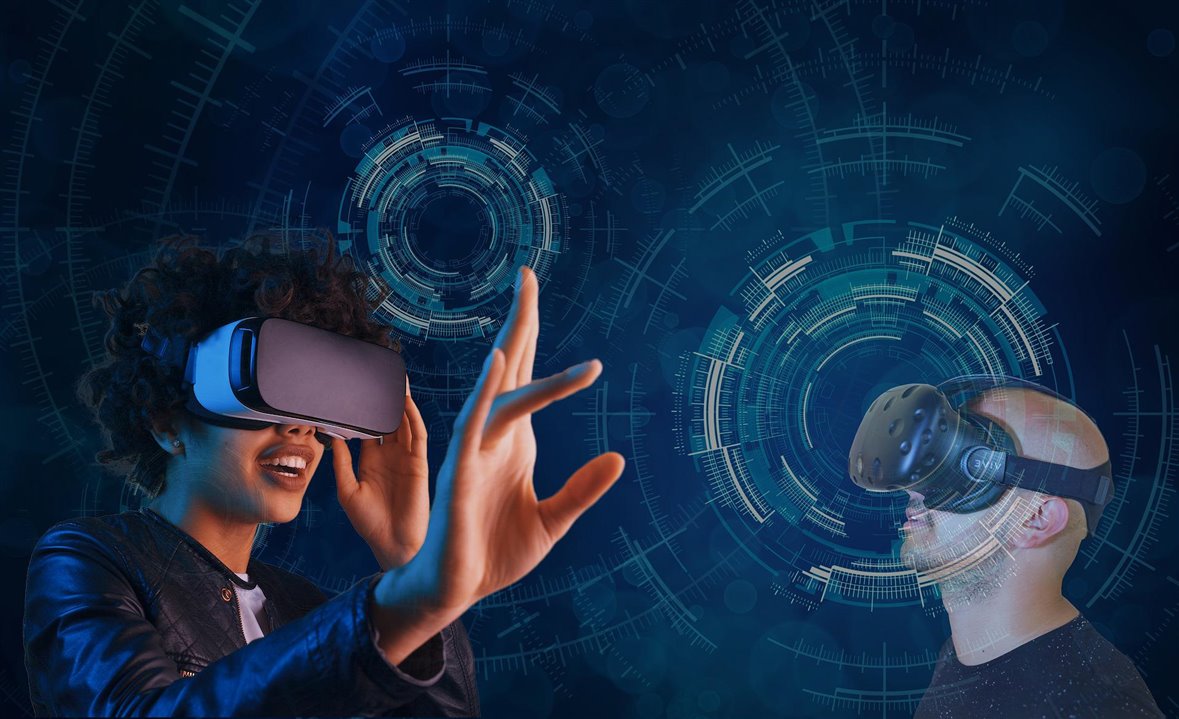
For starters, current VR tech still needs further development to make the experience more realistic and meet high standards in the digital world. Although companies like Google, Microsoft, Meta, and Magic Leap sell VR and AR headsets, they come with limitations, including the display. Users look at the VR screen just a few centimeters away from their eyes, so many pixels need to be packed in a very small space to reach the same definition as a 4K TV. Samsung and Stanford University researchers claim that new tech could bring us closer to pixel density’s limit, leading to more powerful VR headsets.
However, enhancing the display’s performance also means they need to be smaller, cheaper, and more energy-efficient. Perhaps holographic lenses or pancake lenses would decrease the space from the lens to the display. This may even reduce the image brightness, and only powerful displays can make up for that.
Today’s VR headsets also have a 15 PPD resolution limitation, which can be solved with better displays. According to the authors, VR displays need to pack between 7,000 and 10,000 pixels into each inch of the display to achieve 60 PPD for the human eye. Sure, that seems like a big gap, but we’re starting to reach that goal. VR headsets have RGB OLEDs, which are difficult to make more compact. Adding colored filters to white OLEDs instead could lead to 60 PPD. Using this approach can reduce the light source’s efficiency, making it more power intensive or less bright. “Meta-OLED,” an experimental design, could use nanopatterned mirrors to exploit the resonance phenomenon, beaming light from a certain frequency. As a result, meta-OLEDs could have higher efficiency, enhanced color definition, and reach over 10,000 PPD.
Expectations behind the metaverse manufacturing

(Image Credit: Starkvisuals/pixabay)
The metaverse will change human interactivity and provide a more immersive internet for companies and customers using VR headsets. Such technologies affect manufacturing operations while providing improved experiences for the users in the following manners:
- Safe and quick employee training
Company employees are being trained via VR headsets for equipment maintenance purposes rather than physical training with dangerous equipment. This approach allows trainees to make mistakes in the virtual world without facing real-world repercussions as they would when working with heavy machinery. More industrial companies are making the jump to VR training for new employees.
- Product design collaboration
VR also presented more product design opportunities for the manufacturing space. Usually, engineers collaborate with workers in the office, coming up with new ideas. VR allows designers to collaborate in a virtual environment, producing new virtual designs from anywhere. For example, one worker could create a visual clay model and use CAD to design it.
- Simulations
Digital twinning also occurs in the virtual world. This typically involves making a digital copy of a product and its parts. So manufacturers can create a digital twin to assess differences between a product design and physical products, allowing them to discover potential faults. Car designers can also use a virtual environment to fine-tune a self-driving vehicle.
Digital twins rely on mathematical models for real-world product simulations. IoT devices and sensors provide real-time data feeds to produce a theoretical analysis and simulation for performance predictions. This helps manufacturers in the decision-making process.
- AR/VR on-the-job equipment repairs
Technicians and field service personnel can even use AR, VR, and MR for equipment maintenance and support assistance. Such scenarios already occurred during the pandemic when workers relied on these technologies to deliver remote help through VR and MR. Various companies want to use AR with smartphones, tablets, and other devices.
- Create products based on virtual designs
Several opportunities await manufacturers exploring ways to connect to the metaverse. In this case, they can develop physical products sourced from designs created in a virtual environment. Users could potentially purchase an object in the virtual space and have it delivered to their homes in the future.
Although the manufacturing metaverse is still in its early stages, it can greatly change and improve the industry. First, manufacturers need to take the big step by meeting digital operations. This involves collecting process data, then combining and applying interoperability protocols to provide supply chain connectivity. Security and data privacy concerns must be addressed so that users can shop in the virtual world.
The metaverse will greatly benefit manufacturers and customers, but they must start making investments if a virtual world should come to fruition. In addition, the manufacturing metaverse can improve productivity, reduce costs, allow manufacturers to see improved results, and boost efficiency. Staying competitive would also mean they need to utilize the metaverse’s benefits.
Have a story tip? Message me at: http://twitter.com/Cabe_Atwell