


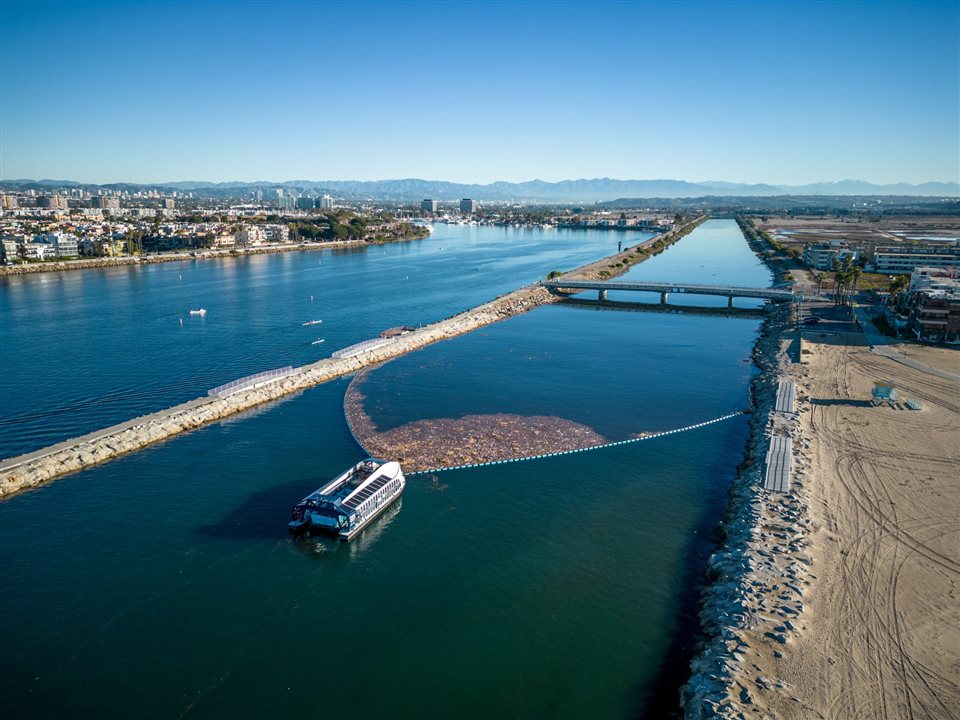
The Interceptor removes plastic waste from rivers. (Image Credit: The Ocean Cleanup)
LA is getting ready for the 2028 Olympics. While doing so, efforts are underway to clean the waterways and coastlines. Dutch-based company The Ocean Cleanup plans to expand its plastic interception network to cover the LA River and San Gabriel River, continuing the success of its system in Ballona Creek.
The project’s focus is to keep hundreds of tons of plastic waste out of the Pacific Ocean every year prior to the 2028 Summer Olympic Games. According to The Ocean Cleanup research, the LA rivers transport 410-628 tons of plastic to the Pacific annually.
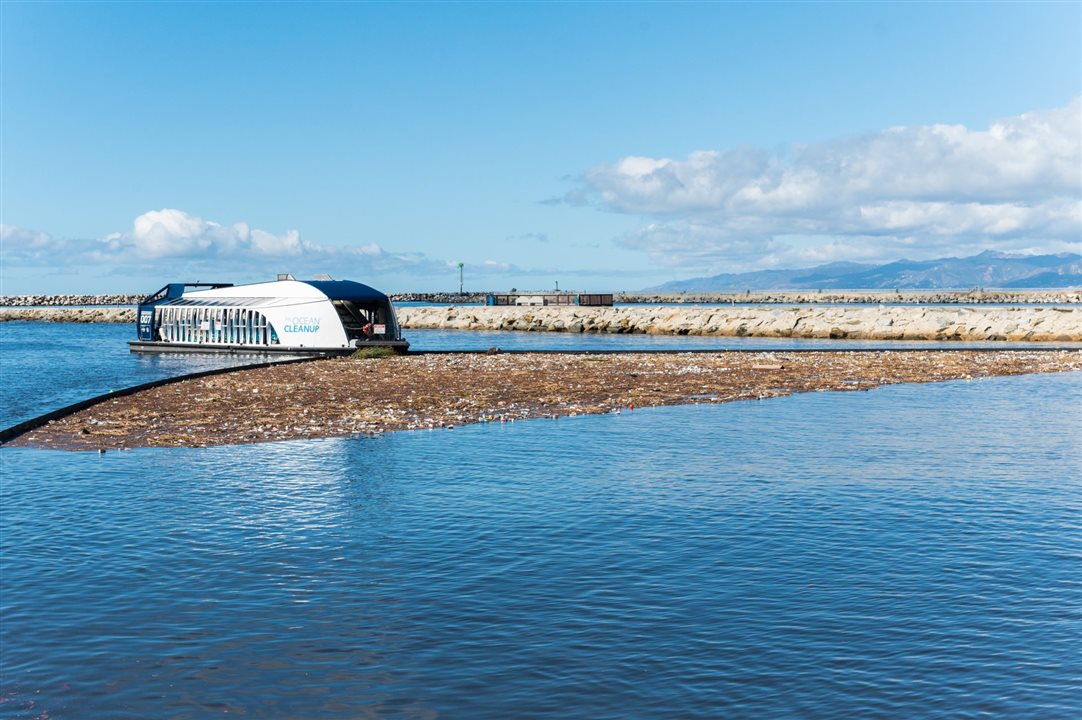
The expanded deployment of the interceptor, invented by Boyan Slat, is the core of this effort. These systems are autonomous white barges designed to collect plastic waste before it reaches the ocean. They remain afloat in the river throughout the year and start collecting post-rainfall. As the rain falls, stormwater washes litter into the river, which sweeps it into the Pacific. To keep the waste out, the interceptor uses a boom and net mounted on the river wall, helping guide debris to a collection point. Afterward, a conveyor belt removes the trash from the water and places it into an onboard storage bin. When the bins fill up, the waste is sent to the harbor. A crane then takes it out and sends it for sorting, processing, and disposal.
(Image Credit: The Ocean Cleanup)
Kia supports The Ocean Cleanup’s river cleanup by setting aside funds for these interceptors. Since its 2022 start, Ballona Creek Interceptor 007 has stopped over 175 tons of waste from drifting into nearby waters. During its two-year pilot program, the system collected more than 248,000 pounds of trash from Westside communities like Venice, Beverley Hills, and Santa Monica.
The effort is part of The Ocean Cleanup’s global 30 Cities Program. It has one goal in mind: to reduce the amount of plastic flowing from rivers into the oceans by one-third by the decade’s end. The Ocean Cleanup has already removed over 50 million kilograms of waste via its river and ocean cleanup systems around the world.
Have a story tip? Message me here at element14.