element14 Community
element14 Community
    Register Log In
  • Site
  • Search
  • Log In Register
  • Community Hub
    Community Hub
    • What's New on element14
    • Feedback and Support
    • Benefits of Membership
    • Personal Blogs
    • Members Area
    • Achievement Levels
  • Learn
    Learn
    • Ask an Expert
    • eBooks
    • element14 presents
    • Learning Center
    • Tech Spotlight
    • STEM Academy
    • Webinars, Training and Events
    • Learning Groups
  • Technologies
    Technologies
    • 3D Printing
    • FPGA
    • Industrial Automation
    • Internet of Things
    • Power & Energy
    • Sensors
    • Technology Groups
  • Challenges & Projects
    Challenges & Projects
    • Design Challenges
    • element14 presents Projects
    • Project14
    • Arduino Projects
    • Raspberry Pi Projects
    • Project Groups
  • Products
    Products
    • Arduino
    • Avnet & Tria Boards Community
    • Dev Tools
    • Manufacturers
    • Multicomp Pro
    • Product Groups
    • Raspberry Pi
    • RoadTests & Reviews
  • About Us
  • Store
    Store
    • Visit Your Store
    • Choose another store...
      • Europe
      •  Austria (German)
      •  Belgium (Dutch, French)
      •  Bulgaria (Bulgarian)
      •  Czech Republic (Czech)
      •  Denmark (Danish)
      •  Estonia (Estonian)
      •  Finland (Finnish)
      •  France (French)
      •  Germany (German)
      •  Hungary (Hungarian)
      •  Ireland
      •  Israel
      •  Italy (Italian)
      •  Latvia (Latvian)
      •  
      •  Lithuania (Lithuanian)
      •  Netherlands (Dutch)
      •  Norway (Norwegian)
      •  Poland (Polish)
      •  Portugal (Portuguese)
      •  Romania (Romanian)
      •  Russia (Russian)
      •  Slovakia (Slovak)
      •  Slovenia (Slovenian)
      •  Spain (Spanish)
      •  Sweden (Swedish)
      •  Switzerland(German, French)
      •  Turkey (Turkish)
      •  United Kingdom
      • Asia Pacific
      •  Australia
      •  China
      •  Hong Kong
      •  India
      •  Korea (Korean)
      •  Malaysia
      •  New Zealand
      •  Philippines
      •  Singapore
      •  Taiwan
      •  Thailand (Thai)
      • Americas
      •  Brazil (Portuguese)
      •  Canada
      •  Mexico (Spanish)
      •  United States
      Can't find the country/region you're looking for? Visit our export site or find a local distributor.
  • Translate
  • Profile
  • Settings
Industrial Automation
  • Technologies
  • More
Industrial Automation
Blog USPS introduce autonomous delivery trucks, Ford delivery robot
  • Blog
  • Forum
  • Documents
  • Quiz
  • Events
  • Polls
  • Files
  • Members
  • Mentions
  • Sub-Groups
  • Tags
  • More
  • Cancel
  • New
Join Industrial Automation to participate - click to join for free!
  • Share
  • More
  • Cancel
Group Actions
  • Group RSS
  • More
  • Cancel
Engagement
  • Author Author: Catwell
  • Date Created: 24 May 2019 7:47 PM Date Created
  • Views 566 views
  • Likes 4 likes
  • Comments 1 comment
  • ford
  • industrial
  • robotics
  • robot
  • autonomous vehicles
  • usps
  • cabeatwell
  • delivery
  • freight
  • innovation
Related
Recommended

USPS introduce autonomous delivery trucks, Ford delivery robot

Catwell
Catwell
24 May 2019

On May 21, 2019, the United States Postal Service (USPS) granted a contract to a self-driving truck company, TuSimple, in an effort to carry out five round trips over a two-week time span. The goal is to deliver USPS trailers over 1,000 miles between Phoenix, Arizona and Dallas, Texas, where the distribution centers are located. A safety engineer and driver will be stationed inside the vehicle during the journey to monitor performance and o ensure public safety.


TuSimple's autonomous trucks will travel from Phoenix, Arizona to Dallas, Texas, testing out its self-driving capabilities. (Image Credit: TuSimple)image
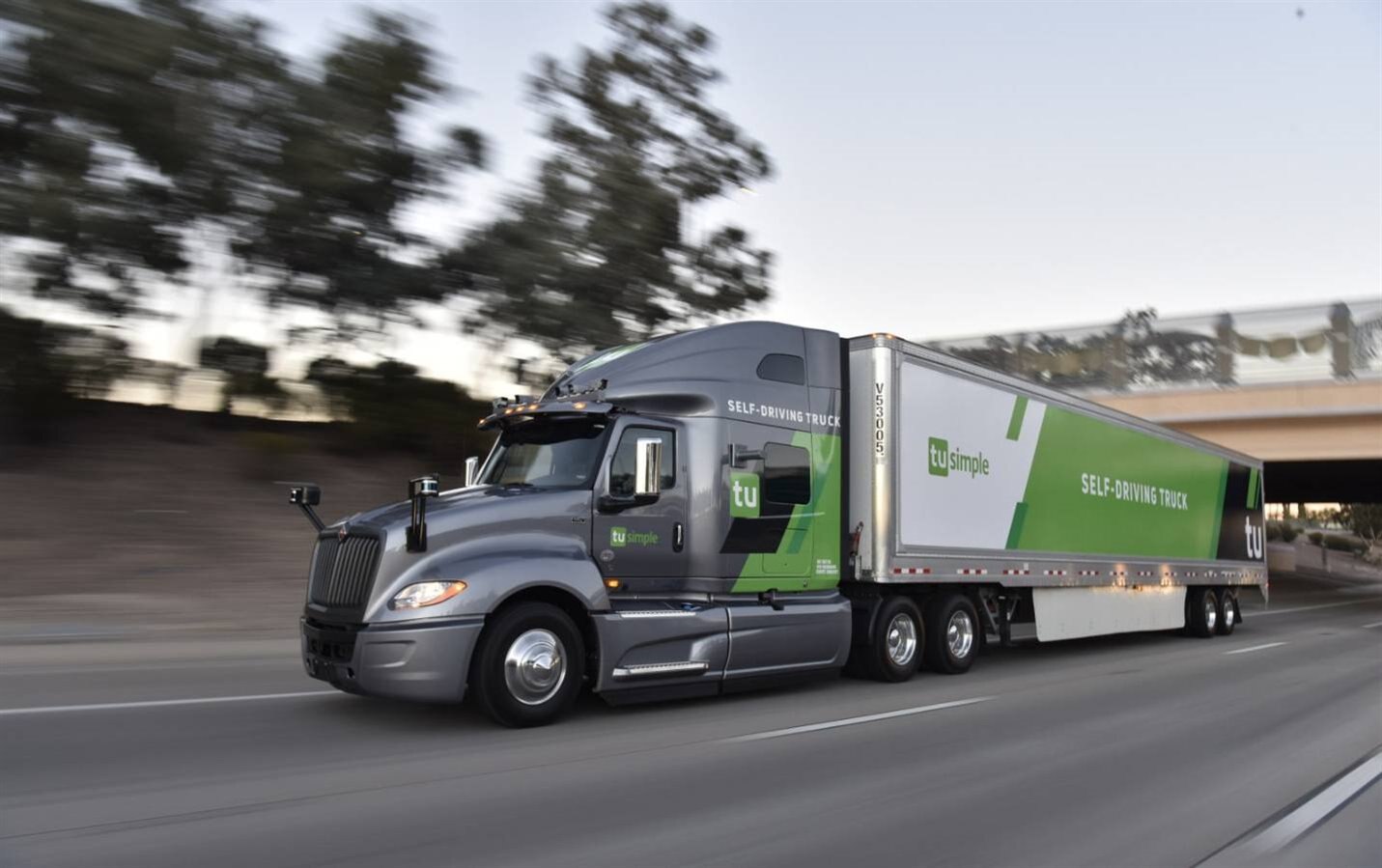
 

The new route established by TuSimple will allow the company to create room for scalability for autonomous performance, expanding beyond Arizona and debuting their self-driving vehicles in Texas. TuSimple will be operating  numerous of their trucks for 22 hours each, including overnight driving along the I-10, I-20 and I-30 corridors, traveling through Arizona and New Mexico until finally reaching Texas. All traffic that moves along the I-10 corridor makes up for 60 percent of the economic activity in the United States. The company plans on using this route more heavily due to high demands from customers for deliveries between Arizona and Texas.


Lengthy delivery routes with a short turnaround time are more suitable for self-driving vehicles due to the two-driver crew requirement. It can be a challenge to recruit new driving teams, especially with companies who will need to complete overnight deliveries and due to a truck driver shortage. American Truck Association (ATA) reported shortages that could reach up to 175,000 by 2024. TuSimple is on the brink of accomplishing their first driverless operation, which could lift a heavy load off human drivers, who can focus more on shorter, easily accessible and closer to home routes.


The Postal service is also looking for efficient ways to cut down on fuel costs by utilizing autonomous delivery vehicle technology, improve its transportation utilization rate via increased hours of operation and improving truck safety.


TuSimple is hoping to give a big boost to the $800-billion U.S. trucking industry by improving safety features, cutting down on carbon emissions and transportation costs. The TruSimple self-driving vehicles comes bundled with a 1000 meter vision range, allowing a safer experience on the roads due to their ability to see a lot more and they can react quicker than the average human driver in all types of weather.


Ford will also be joining the autonomous delivery service with a two-legged robot named "Digit." It's designed to transport delivery from the vehicle to the customer's door. The operational robot folds up in the rear of an autonomous vehicle, unfolding itself when it reaches its destination. Digit can also carry packages that weigh 40 pounds, walk on uneven terrain, travel up and down stairs and can even hold its balance during interference. The robot walks from the car to the door by using data collected from the autonomous vehicle. The car creates a detailed map of the area and transmits the data back to Digit. Both Digit and the vehicle can work together to come up with the best delivery route, effectively avoiding obstacles in the process. 


This video is unavailable.
You don't have permission to edit metadata of this video.


Have a story tip? Message me at: cabe(at)element14(dot)com

http://twitter.com/Cabe_Atwell

  • Sign in to reply
  • dubbie
    dubbie over 6 years ago

    It seems that it is only a matter of time now before these robots become realistic.


    Dubbie

    • Cancel
    • Vote Up 0 Vote Down
    • Sign in to reply
    • More
    • Cancel
element14 Community

element14 is the first online community specifically for engineers. Connect with your peers and get expert answers to your questions.

  • Members
  • Learn
  • Technologies
  • Challenges & Projects
  • Products
  • Store
  • About Us
  • Feedback & Support
  • FAQs
  • Terms of Use
  • Privacy Policy
  • Legal and Copyright Notices
  • Sitemap
  • Cookies

An Avnet Company © 2025 Premier Farnell Limited. All Rights Reserved.

Premier Farnell Ltd, registered in England and Wales (no 00876412), registered office: Farnell House, Forge Lane, Leeds LS12 2NE.

ICP 备案号 10220084.

Follow element14

  • X
  • Facebook
  • linkedin
  • YouTube