element14 Community
element14 Community
    Register Log In
  • Site
  • Search
  • Log In Register
  • Community Hub
    Community Hub
    • What's New on element14
    • Feedback and Support
    • Benefits of Membership
    • Personal Blogs
    • Members Area
    • Achievement Levels
  • Learn
    Learn
    • Ask an Expert
    • eBooks
    • element14 presents
    • Learning Center
    • Tech Spotlight
    • STEM Academy
    • Webinars, Training and Events
    • Learning Groups
  • Technologies
    Technologies
    • 3D Printing
    • FPGA
    • Industrial Automation
    • Internet of Things
    • Power & Energy
    • Sensors
    • Technology Groups
  • Challenges & Projects
    Challenges & Projects
    • Design Challenges
    • element14 presents Projects
    • Project14
    • Arduino Projects
    • Raspberry Pi Projects
    • Project Groups
  • Products
    Products
    • Arduino
    • Avnet & Tria Boards Community
    • Dev Tools
    • Manufacturers
    • Multicomp Pro
    • Product Groups
    • Raspberry Pi
    • RoadTests & Reviews
  • About Us
  • Store
    Store
    • Visit Your Store
    • Choose another store...
      • Europe
      •  Austria (German)
      •  Belgium (Dutch, French)
      •  Bulgaria (Bulgarian)
      •  Czech Republic (Czech)
      •  Denmark (Danish)
      •  Estonia (Estonian)
      •  Finland (Finnish)
      •  France (French)
      •  Germany (German)
      •  Hungary (Hungarian)
      •  Ireland
      •  Israel
      •  Italy (Italian)
      •  Latvia (Latvian)
      •  
      •  Lithuania (Lithuanian)
      •  Netherlands (Dutch)
      •  Norway (Norwegian)
      •  Poland (Polish)
      •  Portugal (Portuguese)
      •  Romania (Romanian)
      •  Russia (Russian)
      •  Slovakia (Slovak)
      •  Slovenia (Slovenian)
      •  Spain (Spanish)
      •  Sweden (Swedish)
      •  Switzerland(German, French)
      •  Turkey (Turkish)
      •  United Kingdom
      • Asia Pacific
      •  Australia
      •  China
      •  Hong Kong
      •  India
      • Japan
      •  Korea (Korean)
      •  Malaysia
      •  New Zealand
      •  Philippines
      •  Singapore
      •  Taiwan
      •  Thailand (Thai)
      • Vietnam
      • Americas
      •  Brazil (Portuguese)
      •  Canada
      •  Mexico (Spanish)
      •  United States
      Can't find the country/region you're looking for? Visit our export site or find a local distributor.
  • Translate
  • Profile
  • Settings
Industrial Automation
  • Technologies
  • More
Industrial Automation
Blog Valuable graphene can be produced from trash!
  • Blog
  • Forum
  • Documents
  • Quiz
  • Events
  • Polls
  • Files
  • Members
  • Mentions
  • Sub-Groups
  • Tags
  • More
  • Cancel
  • New
Join Industrial Automation to participate - click to join for free!
  • Share
  • More
  • Cancel
Group Actions
  • Group RSS
  • More
  • Cancel
Engagement
  • Author Author: Catwell
  • Date Created: 30 Jan 2020 6:55 PM Date Created
  • Views 805 views
  • Likes 7 likes
  • Comments 2 comments
  • research
  • graphene
  • on_campus
  • recycle
  • cabeatwell
  • process
  • university
  • innovation
Related
Recommended

Valuable graphene can be produced from trash!

Catwell
Catwell
30 Jan 2020

image

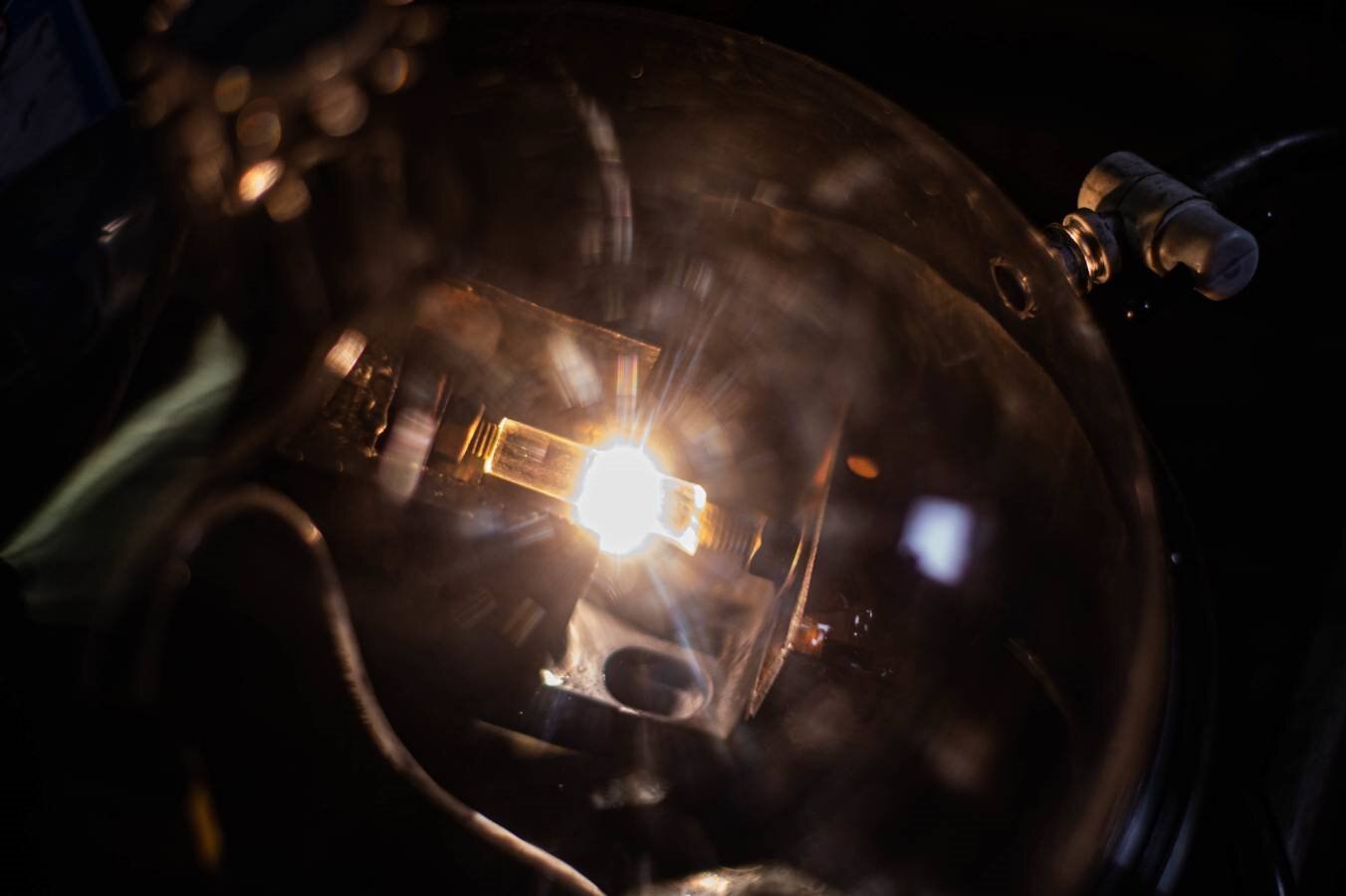
The flash graphene technique can transform carbon-containing material into bulk graphene, which can then be used as a material for many purposes. (Image Credit: Jeff Fitlow, Rice University)


Graphene has a lot of potential to be an important material in electronics and real-world applications, especially if it comes from the carbon in our garbage. Scientists at Rice University have demonstrated a new processing technique that transforms a wide range of trash, from leftover food to car tires, into graphene by zapping them with electricity. Currently, the system is able to yield small quantities of high-quality graphene or tons of weaker graphene. The researchers can only produce grams at a time in the lab, and they are currently working on up-scaling the system to produce kilograms per day. The team published their findings in the journal Nature on January 27, 2020.


The process, known as flash Joule heating, takes place in a custom-designed reactor and involves passing an electric current through a conductive material to generate heat. Scientists used this technology to heat materials that contain carbon to 3,000 Kelvin (4,940° F), which transformed trash into a large number of graphene flakes in just 10 milliseconds. The remaining non-carbon elements are converted into useful gases.  This new-found technique doesn’t just produce a lot more graphene that traditional methods, but it’s also cheaper and safer for the environment.


“When this process is industrialized, elements like oxygen and nitrogen that exit the flash reactor can all be trapped as small molecules because they have value,” James Tour, Rice University chemist, says.


Researchers say this new technology is promising due to the wide range of materials that can be turned into graphene flakes. Everything in the trash, including banana peels, coal, food waste and plastics, can be used as a source of carbon.


“This is a big deal,” Tour says. “The world throws out 30 to 40 percent of all food, because it goes bad, and plastic waste is of worldwide concern. We’ve already proven that any solid carbon-based matter, including mixed plastic waste and rubber tires, can be turned into graphene.”


Additionally, the research opens up the possibility of using an alternative form of graphene that’s much cheaper to produce. The team experimented on composites and concrete that becomes enhanced with the flash graphene. Tour also stated that a concentration of just 0.1% of flash grapheme in cement that binds concrete could reduce its immense environmental impact by a third. Cement production emits approximately 8% of human-made carbon dioxide every year.


“By strengthening concrete with graphene, we could use less concrete for building, and it would cost less to manufacture and less to transport,” he says. “Essentially, we’re trapping greenhouse gases like carbon dioxide and methane that waste food would have emitted in landfills. We are converting those carbons into graphene and adding that graphene to concrete, thereby lowering the amount of carbon dioxide generated in concrete manufacture. It’s a win-win environmental scenario using graphene.”


Tour and his team will be working towards up-scaling their flash graphene technology within the next two years to produce 1 kg of grapheme each day. This will be co-funded by the start-up company, Universal Matter Ltd. For now, they will be focusing on a new project funded by the Department of Energy that converts U.S-sourced coal into graphene.


“This could provide an outlet for coal in large scale by converting it inexpensively into a much-higher-value building material,” Tour says.


You don't have permission to edit metadata of this video.
Edit media
x
image
Upload Preview
image


Have a story tip? Message me at: cabe(at)element14(dot)com

http://twitter.com/Cabe_Atwell

  • Sign in to reply

Top Comments

  • dubbie
    dubbie over 5 years ago +1
    Sounds like a good idea. Hopefully it will be possible to scale up the process to commercial levels. Dubbie
  • dubbie
    dubbie over 5 years ago

    Sounds like a good idea. Hopefully it will be possible to scale up the process to commercial levels.


    Dubbie

    • Cancel
    • Vote Up +1 Vote Down
    • Sign in to reply
    • More
    • Cancel
  • 14rhb
    14rhb over 5 years ago

    This is really interesting and it makes me wonder if we occasionally produce Graphene accidentally i.e. whilst arc welding, an electrical short circuit.


    What did get my attention also was the mention of strengthening concrete. It made me think of the plastic additives that are currently used in rendering mixes and wall plasters to prevent them cracking. Whilst locked up in the building they are of course inert and fine but what happens when the building end life span/is converted/damaged? That seemingly inert 'rock' is often pulverised to make aggregates or dumped into landfill or land-reclaim. So the idea of adding a simple form of carbon is very appealing on an environmental level.

    • Cancel
    • Vote Up 0 Vote Down
    • Sign in to reply
    • More
    • Cancel
element14 Community

element14 is the first online community specifically for engineers. Connect with your peers and get expert answers to your questions.

  • Members
  • Learn
  • Technologies
  • Challenges & Projects
  • Products
  • Store
  • About Us
  • Feedback & Support
  • FAQs
  • Terms of Use
  • Privacy Policy
  • Legal and Copyright Notices
  • Sitemap
  • Cookies

An Avnet Company © 2025 Premier Farnell Limited. All Rights Reserved.

Premier Farnell Ltd, registered in England and Wales (no 00876412), registered office: Farnell House, Forge Lane, Leeds LS12 2NE.

ICP 备案号 10220084.

Follow element14

  • X
  • Facebook
  • linkedin
  • YouTube