element14 Community
element14 Community
    Register Log In
  • Site
  • Search
  • Log In Register
  • Community Hub
    Community Hub
    • What's New on element14
    • Feedback and Support
    • Benefits of Membership
    • Personal Blogs
    • Members Area
    • Achievement Levels
  • Learn
    Learn
    • Ask an Expert
    • eBooks
    • element14 presents
    • Learning Center
    • Tech Spotlight
    • STEM Academy
    • Webinars, Training and Events
    • Learning Groups
  • Technologies
    Technologies
    • 3D Printing
    • FPGA
    • Industrial Automation
    • Internet of Things
    • Power & Energy
    • Sensors
    • Technology Groups
  • Challenges & Projects
    Challenges & Projects
    • Design Challenges
    • element14 presents Projects
    • Project14
    • Arduino Projects
    • Raspberry Pi Projects
    • Project Groups
  • Products
    Products
    • Arduino
    • Avnet & Tria Boards Community
    • Dev Tools
    • Manufacturers
    • Multicomp Pro
    • Product Groups
    • Raspberry Pi
    • RoadTests & Reviews
  • About Us
  • Store
    Store
    • Visit Your Store
    • Choose another store...
      • Europe
      •  Austria (German)
      •  Belgium (Dutch, French)
      •  Bulgaria (Bulgarian)
      •  Czech Republic (Czech)
      •  Denmark (Danish)
      •  Estonia (Estonian)
      •  Finland (Finnish)
      •  France (French)
      •  Germany (German)
      •  Hungary (Hungarian)
      •  Ireland
      •  Israel
      •  Italy (Italian)
      •  Latvia (Latvian)
      •  
      •  Lithuania (Lithuanian)
      •  Netherlands (Dutch)
      •  Norway (Norwegian)
      •  Poland (Polish)
      •  Portugal (Portuguese)
      •  Romania (Romanian)
      •  Russia (Russian)
      •  Slovakia (Slovak)
      •  Slovenia (Slovenian)
      •  Spain (Spanish)
      •  Sweden (Swedish)
      •  Switzerland(German, French)
      •  Turkey (Turkish)
      •  United Kingdom
      • Asia Pacific
      •  Australia
      •  China
      •  Hong Kong
      •  India
      • Japan
      •  Korea (Korean)
      •  Malaysia
      •  New Zealand
      •  Philippines
      •  Singapore
      •  Taiwan
      •  Thailand (Thai)
      • Vietnam
      • Americas
      •  Brazil (Portuguese)
      •  Canada
      •  Mexico (Spanish)
      •  United States
      Can't find the country/region you're looking for? Visit our export site or find a local distributor.
  • Translate
  • Profile
  • Settings
Industrial Automation
  • Technologies
  • More
Industrial Automation
Blog WINE Spacecraft can Theoretically Explore Space Forever using Steam Power
  • Blog
  • Forum
  • Documents
  • Quiz
  • Events
  • Polls
  • Files
  • Members
  • Mentions
  • Sub-Groups
  • Tags
  • More
  • Cancel
  • New
Join Industrial Automation to participate - click to join for free!
  • Share
  • More
  • Cancel
Group Actions
  • Group RSS
  • More
  • Cancel
Engagement
  • Author Author: Catwell
  • Date Created: 24 Jan 2019 3:41 PM Date Created
  • Views 743 views
  • Likes 3 likes
  • Comments 0 comments
  • alternative energy
  • robotics
  • robot
  • on_campus
  • space
  • cabeatwell
  • spacecraft
  • steam power
  • university
  • innovation
Related
Recommended

WINE Spacecraft can Theoretically Explore Space Forever using Steam Power

Catwell
Catwell
24 Jan 2019

image

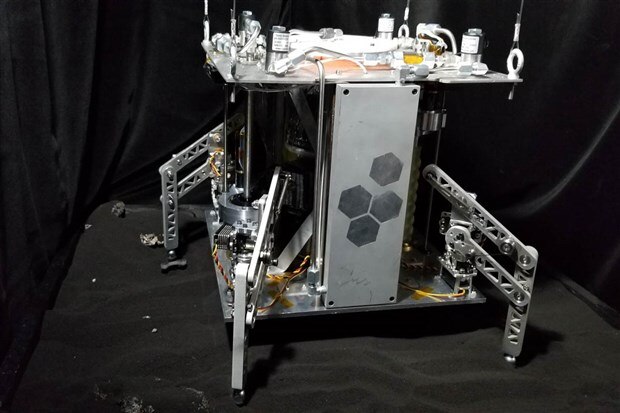
UCF’s World Is Not Enough spacecraft extracts water from asteroids and other celestial resources to generate steam, which is used as a propellant. (Image credit: UCF)


Scientists from the University of Central Florida have designed a spacecraft that utilizes steam to propel itself through space, which in theory, could allow it to explore space forever. The World Is Not Enough (WINE) probe would extract ice/water from asteroids and other celestial bodies, and convert it into steam, which it would then use as a propellant. The team collaborated with Honeybee Robotics and Embry-Riddle Aeronautical University to develop steam-based rocket thruster prototypes.


The scientists tested their probe using simulated Martian/asteroid material (AKA simulants), which was developed by UCF astrophysicists to research how Martian soil could be used by astronauts in future missions. Lead scientist on the WINE project stated, “It’s awesome, WINE successfully mined the soil, made rocket fuel, and launched itself on a jet of steam extracted from the simulant. We could potentially use this technology to hop on the Moon, Ceres, Europa, Titan, Pluto, the poles of Mercury, asteroids — anywhere there is water and sufficiently low gravity.”


image

One of the initial models of WINE rendered as a mother ship that could supply fuel to a swarm of CubeSats. (Image credit: Honeybee Robotics)


The WINE spacecraft itself is about the size of a microwave oven and can use deployable solar panels or radiosotopic decay units (RDUs) to provide enough energy for mining operations. Once enough ice or water is collected, it then converts it into steam to hop to the next celestial body to repeat the process. Current interplanetary missions rely on stored propellant to maneuver craft, but once those stores run dry, the mission is over. Steam power has the potential to extend that exploration using a single space vehicle, thus saving time and money on building and launching new exploration vehicles for a single mission. 


Have a story tip? Message me at: cabe(at)element14(dot)com

http://twitter.com/Cabe_Atwell

  • Sign in to reply
element14 Community

element14 is the first online community specifically for engineers. Connect with your peers and get expert answers to your questions.

  • Members
  • Learn
  • Technologies
  • Challenges & Projects
  • Products
  • Store
  • About Us
  • Feedback & Support
  • FAQs
  • Terms of Use
  • Privacy Policy
  • Legal and Copyright Notices
  • Sitemap
  • Cookies

An Avnet Company © 2025 Premier Farnell Limited. All Rights Reserved.

Premier Farnell Ltd, registered in England and Wales (no 00876412), registered office: Farnell House, Forge Lane, Leeds LS12 2NE.

ICP 备案号 10220084.

Follow element14

  • X
  • Facebook
  • linkedin
  • YouTube