element14 Community
element14 Community
    Register Log In
  • Site
  • Search
  • Log In Register
  • Community Hub
    Community Hub
    • What's New on element14
    • Feedback and Support
    • Benefits of Membership
    • Personal Blogs
    • Members Area
    • Achievement Levels
  • Learn
    Learn
    • Ask an Expert
    • eBooks
    • element14 presents
    • Learning Center
    • Tech Spotlight
    • STEM Academy
    • Webinars, Training and Events
    • Learning Groups
  • Technologies
    Technologies
    • 3D Printing
    • FPGA
    • Industrial Automation
    • Internet of Things
    • Power & Energy
    • Sensors
    • Technology Groups
  • Challenges & Projects
    Challenges & Projects
    • Design Challenges
    • element14 presents Projects
    • Project14
    • Arduino Projects
    • Raspberry Pi Projects
    • Project Groups
  • Products
    Products
    • Arduino
    • Avnet & Tria Boards Community
    • Dev Tools
    • Manufacturers
    • Multicomp Pro
    • Product Groups
    • Raspberry Pi
    • RoadTests & Reviews
  • About Us
  • Store
    Store
    • Visit Your Store
    • Choose another store...
      • Europe
      •  Austria (German)
      •  Belgium (Dutch, French)
      •  Bulgaria (Bulgarian)
      •  Czech Republic (Czech)
      •  Denmark (Danish)
      •  Estonia (Estonian)
      •  Finland (Finnish)
      •  France (French)
      •  Germany (German)
      •  Hungary (Hungarian)
      •  Ireland
      •  Israel
      •  Italy (Italian)
      •  Latvia (Latvian)
      •  
      •  Lithuania (Lithuanian)
      •  Netherlands (Dutch)
      •  Norway (Norwegian)
      •  Poland (Polish)
      •  Portugal (Portuguese)
      •  Romania (Romanian)
      •  Russia (Russian)
      •  Slovakia (Slovak)
      •  Slovenia (Slovenian)
      •  Spain (Spanish)
      •  Sweden (Swedish)
      •  Switzerland(German, French)
      •  Turkey (Turkish)
      •  United Kingdom
      • Asia Pacific
      •  Australia
      •  China
      •  Hong Kong
      •  India
      •  Korea (Korean)
      •  Malaysia
      •  New Zealand
      •  Philippines
      •  Singapore
      •  Taiwan
      •  Thailand (Thai)
      • Americas
      •  Brazil (Portuguese)
      •  Canada
      •  Mexico (Spanish)
      •  United States
      Can't find the country/region you're looking for? Visit our export site or find a local distributor.
  • Translate
  • Profile
  • Settings
Power & Energy
  • Technologies
  • More
Power & Energy
Alt Energy Solutions & Tech Are ‘nanodomes’ and ‘plasmonics’ the future of solar energy?
  • Blog
  • Forum
  • Quiz
  • Documents
  • Polls
  • Events
  • Mentions
  • Sub-Groups
  • Tags
  • More
  • Cancel
  • New
  • Share
  • More
  • Cancel
Group Actions
  • Group RSS
  • More
  • Cancel
Engagement
  • Author Author: Eavesdropper
  • Date Created: 2 Feb 2011 7:36 PM Date Created
  • Views 420 views
  • Likes 0 likes
  • Comments 0 comments
  • alternative_energy
  • energy_harvast
  • nanodomes
  • solar
  • solar_cell
Related
Recommended

Are ‘nanodomes’ and ‘plasmonics’ the future of solar energy?

Eavesdropper
Eavesdropper
2 Feb 2011
image
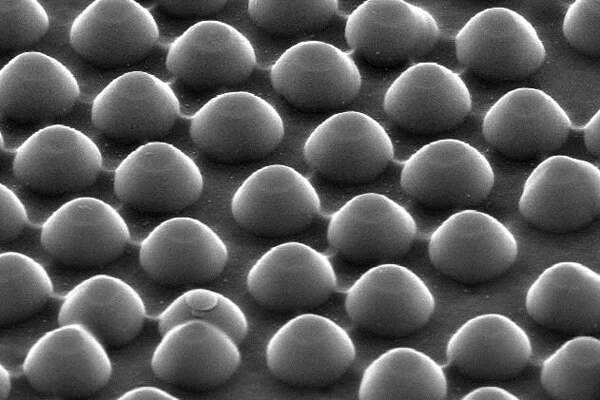
Researchers in solar energy speak of a day when millions of fallow square meters of sun-drenched roofs, windows, deserts and even clothing will be integrated with, many times, thinner, lighter, and inexpensive solar cells that we are familiar with today. It is not hard to envision a time when such technologies will be ubiquitous in our increasingly energy-hungry lives. That day may come a bit sooner thanks to a multidisciplinary team of Stanford engineers led by Mike McGehee, Yi Cui and Mark Brongersma, and joined by Michael Graetzel at the École Polytechnique Fédérale de Lausanne. The team succeeded in harnessing plasmonics, an emerging branch of science and technology, to more effectively trap light within thin solar cells to improve performance and push them one step closer to daily reality. Plasmonics is the study of the interaction of light and metal. Under precise circumstances, these interactions create a flow of high-frequency, dense electrical waves rather than electron particles. The electronic pulse travels in extremely fast waves of greater and lesser density, like sound through the air. The ‘lightbulb’ moment for the team came when they imprinted a honeycomb pattern of nanoscale dimples into a layer of metal within the solar cell. To fashion their waffle, McGehee and team members spread a thin layer of batter on a transparent, electrically conductive base. This batter is mostly Titania, a semi-porous metal that is also transparent to light. Next, they use their nano waffle iron to imprint the dimples into the batter. Next, they layer on some butter, a light-sensitive dye, which oozes into the dimples and pores of the waffle. Lastly, the engineers add some syrup, a layer of silver, which hardens almost immediately. When all those nanodimples fill up, the result is a pattern of nanodomes on the light-ward side of the silver, not to mention some new type of breakfast. This bumpy layer of silver has two primary benefits. First, it acts as a mirror, scattering unabsorbed light back into the dye for another shot at collection. Second, the light interacts with the silver nanodomes to produce plasmonic effects. Those domes of silver are crucial. Reflectors without them will not produce the desired effect. And any old nanodomes won't do either; they must be just the right diameter and height, and spaced just so, to fully optimize the plasmonics. Both efficiency and reliability will have to improve. Nonetheless, engineers like McGehee believe that if they can convert just 15 percent of the light into electricity and tease the lifespan to a decade, we might soon find ourselves in the age of personal solar cells. An advance like plasmonics just might provide the spark necessary to take the field down a new and exciting path.

Eavesdropper
  • Sign in to reply
element14 Community

element14 is the first online community specifically for engineers. Connect with your peers and get expert answers to your questions.

  • Members
  • Learn
  • Technologies
  • Challenges & Projects
  • Products
  • Store
  • About Us
  • Feedback & Support
  • FAQs
  • Terms of Use
  • Privacy Policy
  • Legal and Copyright Notices
  • Sitemap
  • Cookies

An Avnet Company © 2025 Premier Farnell Limited. All Rights Reserved.

Premier Farnell Ltd, registered in England and Wales (no 00876412), registered office: Farnell House, Forge Lane, Leeds LS12 2NE.

ICP 备案号 10220084.

Follow element14

  • X
  • Facebook
  • linkedin
  • YouTube