element14 Community
element14 Community
    Register Log In
  • Site
  • Search
  • Log In Register
  • Community Hub
    Community Hub
    • What's New on element14
    • Feedback and Support
    • Benefits of Membership
    • Personal Blogs
    • Members Area
    • Achievement Levels
  • Learn
    Learn
    • Ask an Expert
    • eBooks
    • element14 presents
    • Learning Center
    • Tech Spotlight
    • STEM Academy
    • Webinars, Training and Events
    • Learning Groups
  • Technologies
    Technologies
    • 3D Printing
    • FPGA
    • Industrial Automation
    • Internet of Things
    • Power & Energy
    • Sensors
    • Technology Groups
  • Challenges & Projects
    Challenges & Projects
    • Design Challenges
    • element14 presents Projects
    • Project14
    • Arduino Projects
    • Raspberry Pi Projects
    • Project Groups
  • Products
    Products
    • Arduino
    • Avnet & Tria Boards Community
    • Dev Tools
    • Manufacturers
    • Multicomp Pro
    • Product Groups
    • Raspberry Pi
    • RoadTests & Reviews
  • About Us
    About the element14 Community
  • Store
    Store
    • Visit Your Store
    • Choose another store...
      • Europe
      •  Austria (German)
      •  Belgium (Dutch, French)
      •  Bulgaria (Bulgarian)
      •  Czech Republic (Czech)
      •  Denmark (Danish)
      •  Estonia (Estonian)
      •  Finland (Finnish)
      •  France (French)
      •  Germany (German)
      •  Hungary (Hungarian)
      •  Ireland
      •  Israel
      •  Italy (Italian)
      •  Latvia (Latvian)
      •  
      •  Lithuania (Lithuanian)
      •  Netherlands (Dutch)
      •  Norway (Norwegian)
      •  Poland (Polish)
      •  Portugal (Portuguese)
      •  Romania (Romanian)
      •  Russia (Russian)
      •  Slovakia (Slovak)
      •  Slovenia (Slovenian)
      •  Spain (Spanish)
      •  Sweden (Swedish)
      •  Switzerland(German, French)
      •  Turkey (Turkish)
      •  United Kingdom
      • Asia Pacific
      •  Australia
      •  China
      •  Hong Kong
      •  India
      •  Japan
      •  Korea (Korean)
      •  Malaysia
      •  New Zealand
      •  Philippines
      •  Singapore
      •  Taiwan
      •  Thailand (Thai)
      •  Vietnam
      • Americas
      •  Brazil (Portuguese)
      •  Canada
      •  Mexico (Spanish)
      •  United States
      Can't find the country/region you're looking for? Visit our export site or find a local distributor.
  • Translate
  • Profile
  • Settings
Power & Energy
  • Technologies
  • More
Power & Energy
Alt Energy Solutions & Tech College student builds fusion reactor in basement
  • Blog
  • Forum
  • Quiz
  • Documents
  • Polls
  • Events
  • Mentions
  • Sub-Groups
  • Tags
  • More
  • Cancel
  • New
  • Share
  • More
  • Cancel
Group Actions
  • Group RSS
  • More
  • Cancel
Engagement
  • Author Author: ZeroSizeObject
  • Date Created: 27 Jan 2011 6:01 PM Date Created
  • Views 612 views
  • Likes 1 like
  • Comments 0 comments
  • fusion_reactor
  • enery_harvast
  • renewable
  • power
  • nuclear_power
Related
Recommended

College student builds fusion reactor in basement

ZeroSizeObject
ZeroSizeObject
27 Jan 2011
image
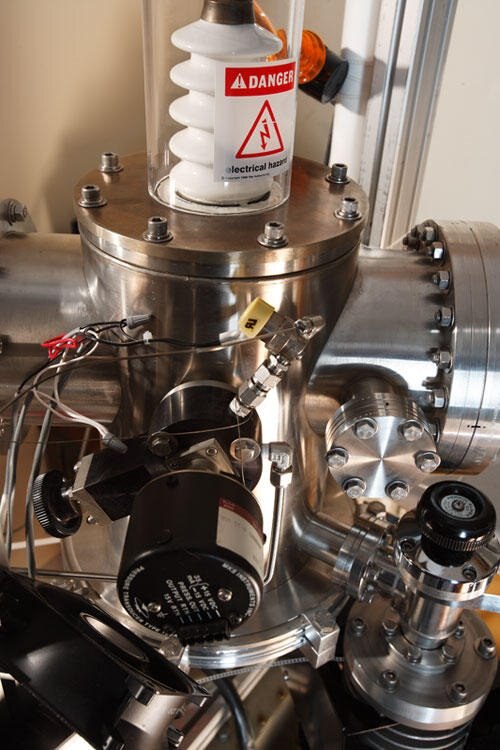
Most college students fill their dorm rooms with clothes, books, and electronics. Thiago Olson also brought his fusion reactor. But Vanderbilt University drew the line: No do-it-yourself reactors in the dorm! Instead, his device was housed in a nearby laboratory. Itching for a challenging science project, Thiago Olson decided to build a small nuclear reactor. He had limited funds, limited space in his garage, and little engineering know-how. With a year of research and another of building, Olson pulled it off, joining a club of fewer than 20 amateurs in the world who are known to have created ‘fusors’, tabletop machines that fuse atoms to produce energy. There’s no risk of a mushroom cloud-the machine creates barely enough energy to heat a cup of coffee. How did he do it? Olson pored over graduate-level physics textbooks, studied vacuum-pump manufacturers’ manuals, and scoured the Web for cheap parts. Though mostly self-taught, he occasionally solicited advice on a fusion Web site. Once, he posted photos of a cheap photomultiplier tube he’d bought online because he had no idea how to rig it up. Another fusioneer on the site who had the same model promptly told him which wires went where. Amateur nuclear engineers are, it seems, a helpful bunch. How it works: Two vacuum pumps suck air out of the central chamber, leaving a near-total vacuum. Loose atoms in here interfere with fusion and lower yield. The chamber is filled with deuterium and jolted with about 45,000 volts of electricity. A negatively charged grid of thin steel wires attracts the now-positive particles, sometimes causing them to collide. Colliding particles fuse to form helium-3. The resulting neutron emission is measured, proving that fusion occurred. Not bad for an amateur. Not to mention Olson built his reactor for just about a thousand bucks.

Zero
  • Sign in to reply
element14 Community

element14 is the first online community specifically for engineers. Connect with your peers and get expert answers to your questions.

  • Members
  • Learn
  • Technologies
  • Challenges & Projects
  • Products
  • Store
  • About Us
  • Feedback & Support
  • FAQs
  • Terms of Use
  • Privacy Policy
  • Legal and Copyright Notices
  • Sitemap
  • Cookies

An Avnet Company © 2026 Premier Farnell Limited. All Rights Reserved.

Premier Farnell Ltd, registered in England and Wales (no 00876412), registered office: Farnell House, Forge Lane, Leeds LS12 2NE.

ICP 备案号 10220084.

Follow element14

  • X
  • Facebook
  • linkedin
  • YouTube