


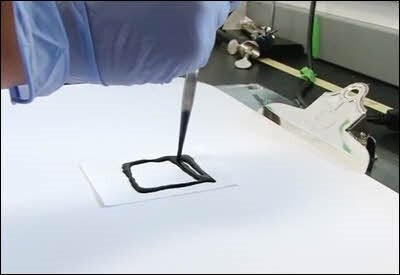
University of Stanford scientists are harnessing nanotechnology to quickly produce ultra-lightweight, bendable batteries and supercapacitors in the form of everyday paper. “Simply coating a sheet of paper with ink made of carbon nanotubes and silver nanowires makes a highly conductive storage device. Society really needs a low-cost, high-performance energy storage device, such as batteries and simple supercapacitors,” said Yi Cui, assistant professor of materials science and engineering. Cui had previously created nanomaterial energy storage devices using plastics. His new research shows that a paper battery is more durable because the ink adheres more strongly to paper (answering the question, "Paper or plastic?"). What's more, you can crumple or fold the paper battery, or even soak it in acidic or basic solutions, and the performance does not degrade. A paper supercapacitor may be especially useful for applications like electric or hybrid cars, which depend on the quick transfer of electricity. The paper supercapacitor's high surface-to-volume ratio gives it an advantage. Cui predicts the biggest impact may be in large-scale storage of electricity on the distribution grid. Excess electricity generated at night, for example, could be saved for peak-use periods during the day. Wind farms and solar energy systems also may require storage. More information can be found here: http://www.telovation.com/articles/low-cost-paper-batteries.html
The simple brute force solution to a problem usually triumphs over the elegant and complicated one. I have a feeling supercapacitors will be the winner in battery replacement.
Zero