


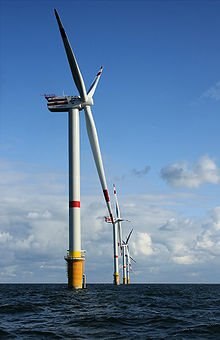
Climate change, pollution, and energy insecurity are among the greatest problems of our time. Addressing them requires major changes in our energy infrastructure. Achieving 100 percent renewable energy would mean the building of about four million 5 MW wind turbines, 1.7 billion 3 kW roof-mounted solar photovoltaic systems, and around 90,000 300 MW solar power plants. Professor Mark Delucchi and Professor Mark Jacobson left all fossil fuel sources of energy out of their calculations and concentrated only on wind, solar, waves and geothermal sources. Fossil fuels currently provide over 80 percent of the world’s energy supply. They also left out biomass, currently the most widely used renewable energy source, because of concerns about pollution and land-use issues. Their calculations also left out nuclear power generation, which currently supplies around six percent of the world’s electricity. To make their vision possible, a great deal of building would need to occur. The wind turbines needed, for example, are two to three times the capacity of most of today’s wind turbines, but 5 MW offshore turbines were built in Germany in 2006, and China built its first in 2010. The solar power plants needed would be a mix of photovoltaic panel plants and concentrated solar plants that concentrate solar energy to boil water to drive generators. Energy would also be obtained from photovoltaic panels mounted on most homes and buildings. The pair say all the major resources needed are available, with the only material bottleneck being supplies of rare earth materials such as neodymium, which is often used in the manufacture of magnets. Which in itself is a major issue. Rare earth materials are becoming more scarce. Hopefully an alternative will be discovered before 2030.
Cabe