


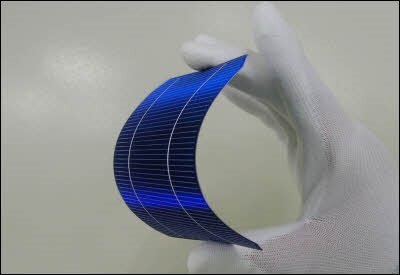
Wladek Walukiewicz has lead a group of scientists working at the Lawrence Berkeley National Laboratory, Rose Street Labs Energy and Sumika Electronic Materials, Inc. They have been studying the properties of GaNAs alloys, and they believe that the characteristics of these semiconductor alloys could lead to more efficient solar cells. “In solar cells made of standard semiconductors, the electric current is produced by electron-hole pairs photo-excited across the band gap separating the conduction and the valence band, only the photons with the energy larger than the band gap can produce electric current. This creates the solar cell power conversion dilemma,” said Walukiewicz. This dilemma means that in order for a solar cell device to be efficient, it must be complex, incorporating different layers with different gaps so that different portions of the solar spectrum can be absorbed. Walukiewicz and his colleagues believe that they have found a way around this. By using GaNAs alloys, the group has created a single material that can absorb multiple portions of the solar spectrum. “Scientists have been mixing semiconductors for years, creating materials with properties tailored for specific applications. But they were working with semiconductors that wanted to be mixed. We work with materials that don’t want to be mixed, using special methods to force them,” Walukiewicz says. When this mixing happens, Walukiewicz points out, interesting properties are seen, like the one that allows for an intermediate band of states to be formed in a wide gap semiconductor. The band acts as a stepping stone in the semiconductor band gap. As a result, solar cells developed with the GaNAs alloys have the potential to contribute to solving a problem in the world of solar energy.
Eavesdropper