element14 Community
element14 Community
    Register Log In
  • Site
  • Search
  • Log In Register
  • Community Hub
    Community Hub
    • What's New on element14
    • Feedback and Support
    • Benefits of Membership
    • Personal Blogs
    • Members Area
    • Achievement Levels
  • Learn
    Learn
    • Ask an Expert
    • eBooks
    • element14 presents
    • Learning Center
    • Tech Spotlight
    • STEM Academy
    • Webinars, Training and Events
    • Learning Groups
  • Technologies
    Technologies
    • 3D Printing
    • FPGA
    • Industrial Automation
    • Internet of Things
    • Power & Energy
    • Sensors
    • Technology Groups
  • Challenges & Projects
    Challenges & Projects
    • Design Challenges
    • element14 presents Projects
    • Project14
    • Arduino Projects
    • Raspberry Pi Projects
    • Project Groups
  • Products
    Products
    • Arduino
    • Avnet & Tria Boards Community
    • Dev Tools
    • Manufacturers
    • Multicomp Pro
    • Product Groups
    • Raspberry Pi
    • RoadTests & Reviews
  • About Us
  • Store
    Store
    • Visit Your Store
    • Choose another store...
      • Europe
      •  Austria (German)
      •  Belgium (Dutch, French)
      •  Bulgaria (Bulgarian)
      •  Czech Republic (Czech)
      •  Denmark (Danish)
      •  Estonia (Estonian)
      •  Finland (Finnish)
      •  France (French)
      •  Germany (German)
      •  Hungary (Hungarian)
      •  Ireland
      •  Israel
      •  Italy (Italian)
      •  Latvia (Latvian)
      •  
      •  Lithuania (Lithuanian)
      •  Netherlands (Dutch)
      •  Norway (Norwegian)
      •  Poland (Polish)
      •  Portugal (Portuguese)
      •  Romania (Romanian)
      •  Russia (Russian)
      •  Slovakia (Slovak)
      •  Slovenia (Slovenian)
      •  Spain (Spanish)
      •  Sweden (Swedish)
      •  Switzerland(German, French)
      •  Turkey (Turkish)
      •  United Kingdom
      • Asia Pacific
      •  Australia
      •  China
      •  Hong Kong
      •  India
      • Japan
      •  Korea (Korean)
      •  Malaysia
      •  New Zealand
      •  Philippines
      •  Singapore
      •  Taiwan
      •  Thailand (Thai)
      • Vietnam
      • Americas
      •  Brazil (Portuguese)
      •  Canada
      •  Mexico (Spanish)
      •  United States
      Can't find the country/region you're looking for? Visit our export site or find a local distributor.
  • Translate
  • Profile
  • Settings
Power & Energy
  • Technologies
  • More
Power & Energy
Blog Lithium-Sulfur battery could be the battery of the future
  • Blog
  • Forum
  • Quiz
  • Documents
  • Polls
  • Events
  • Mentions
  • Sub-Groups
  • Tags
  • More
  • Cancel
  • New
  • Share
  • More
  • Cancel
Group Actions
  • Group RSS
  • More
  • Cancel
Engagement
  • Author Author: Catwell
  • Date Created: 14 Jan 2020 7:16 PM Date Created
  • Views 1181 views
  • Likes 6 likes
  • Comments 1 comment
  • lithium sulfer
  • on_campus
  • battery
  • cabeatwell
  • university
  • power
  • energy
  • innovation
Related
Recommended

Lithium-Sulfur battery could be the battery of the future

Catwell
Catwell
14 Jan 2020

image

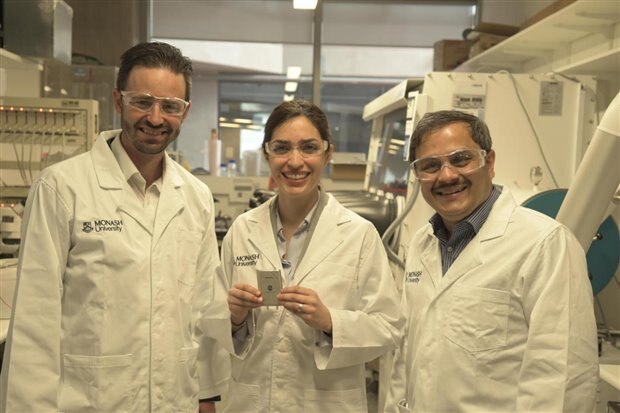
Associate Professor Matthew Hill, Dr. Mahdokht Shaibani and Professor Mainak Majumder show the new lithium-sulfur battery design. (Image Credit: Monash University)

For years, scientists have been looking for ways to make lithium-sulfur batteries that compete with lithium-ion. Researchers from Monash University in Melbourne, Australia, have developed what they claim is the world’s most efficient lithium-sulfur (LI-S) battery that has a lesser environmental impact and they’re close to commercializing it. These newly designed Li-S batteries have the potential to power your smartphone for five consecutive days and can allow an electric vehicle to drive for over 600 miles without needing to charge. The team published their findings in Science Advances on January 4, 2020.


According to Professor Mainak Majunder, a researcher behind the project, the new design could change the industry in the future, transforming how smartphones, computers, cars and solar grids are manufactured.


“Successful fabrication and implementation of Li-S batteries in cars and grids will capture a more significant part of the estimated $213 billion value chain of Australian lithium.” Professor Majunder continued, “Our research team has received more than $2.5 million in funding from government and international industry partners to trial this battery technology in cars and grids from this year, which we’re most excited about.”


To build the Li-S battery, the research team used the same materials found in standard lithium-ion batteries. They also reconfigured the design of sulfur cathodes to accommodate higher stress loads while maintaining high capacity and performance. Inspired by bridging architecture recorded in processing detergent powders in the 1970s, the team designed a method that produced bonds between particles to accommodate stress, giving it a high level of stability not seen in any other battery.


In addition to its outstanding performance, the Li-S battery cell also offers a low manufacturing price and abundant materials. The battery’s simple processing and a smaller impact on the environment make it a suitable fit for real-world applications in the future. The researchers have approved patents for the manufacturing process along with the prototype cells.


“This approach not only favors high-performance metrics and long cycle life, but is also simple and extremely low-cost to manufacture, using water-based processes, and can lead to significant reductions in environmentally hazardous waste,” explained Associate Professor Hill.


The researchers say the lithium-sulfur battery will provide a cleaner and more reliable energy market. It will also revolutionize Australia’s and the entire world’s vehicle market in the future. It could also outperform market leaders by over four times.


Have a story tip? Message me at: cabe(at)element14(dot)com

http://twitter.com/Cabe_Atwell

  • Sign in to reply
  • dubbie
    dubbie over 5 years ago

    If this works out it could be the defining moment for electric cars. 600 mile range is what we all want. To be honest, 400 miles might do.


    Dubbie

    • Cancel
    • Vote Up 0 Vote Down
    • Sign in to reply
    • More
    • Cancel
element14 Community

element14 is the first online community specifically for engineers. Connect with your peers and get expert answers to your questions.

  • Members
  • Learn
  • Technologies
  • Challenges & Projects
  • Products
  • Store
  • About Us
  • Feedback & Support
  • FAQs
  • Terms of Use
  • Privacy Policy
  • Legal and Copyright Notices
  • Sitemap
  • Cookies

An Avnet Company © 2026 Premier Farnell Limited. All Rights Reserved.

Premier Farnell Ltd, registered in England and Wales (no 00876412), registered office: Farnell House, Forge Lane, Leeds LS12 2NE.

ICP 备案号 10220084.

Follow element14

  • X
  • Facebook
  • linkedin
  • YouTube