element14 Community
element14 Community
    Register Log In
  • Site
  • Search
  • Log In Register
  • Community Hub
    Community Hub
    • What's New on element14
    • Feedback and Support
    • Benefits of Membership
    • Personal Blogs
    • Members Area
    • Achievement Levels
  • Learn
    Learn
    • Ask an Expert
    • eBooks
    • element14 presents
    • Learning Center
    • Tech Spotlight
    • STEM Academy
    • Webinars, Training and Events
    • Learning Groups
  • Technologies
    Technologies
    • 3D Printing
    • FPGA
    • Industrial Automation
    • Internet of Things
    • Power & Energy
    • Sensors
    • Technology Groups
  • Challenges & Projects
    Challenges & Projects
    • Design Challenges
    • element14 presents Projects
    • Project14
    • Arduino Projects
    • Raspberry Pi Projects
    • Project Groups
  • Products
    Products
    • Arduino
    • Avnet & Tria Boards Community
    • Dev Tools
    • Manufacturers
    • Multicomp Pro
    • Product Groups
    • Raspberry Pi
    • RoadTests & Reviews
  • About Us
  • Store
    Store
    • Visit Your Store
    • Choose another store...
      • Europe
      •  Austria (German)
      •  Belgium (Dutch, French)
      •  Bulgaria (Bulgarian)
      •  Czech Republic (Czech)
      •  Denmark (Danish)
      •  Estonia (Estonian)
      •  Finland (Finnish)
      •  France (French)
      •  Germany (German)
      •  Hungary (Hungarian)
      •  Ireland
      •  Israel
      •  Italy (Italian)
      •  Latvia (Latvian)
      •  
      •  Lithuania (Lithuanian)
      •  Netherlands (Dutch)
      •  Norway (Norwegian)
      •  Poland (Polish)
      •  Portugal (Portuguese)
      •  Romania (Romanian)
      •  Russia (Russian)
      •  Slovakia (Slovak)
      •  Slovenia (Slovenian)
      •  Spain (Spanish)
      •  Sweden (Swedish)
      •  Switzerland(German, French)
      •  Turkey (Turkish)
      •  United Kingdom
      • Asia Pacific
      •  Australia
      •  China
      •  Hong Kong
      •  India
      • Japan
      •  Korea (Korean)
      •  Malaysia
      •  New Zealand
      •  Philippines
      •  Singapore
      •  Taiwan
      •  Thailand (Thai)
      • Vietnam
      • Americas
      •  Brazil (Portuguese)
      •  Canada
      •  Mexico (Spanish)
      •  United States
      Can't find the country/region you're looking for? Visit our export site or find a local distributor.
  • Translate
  • Profile
  • Settings
Robotics
  • Technologies
  • More
Robotics
Blog MIT designs 3D printed robots with shock-absorbing material
  • Blog
  • Forum
  • Documents
  • Quiz
  • Events
  • Polls
  • Members
  • Mentions
  • Sub-Groups
  • Tags
  • More
  • Cancel
  • New
Join Robotics to participate - click to join for free!
  • Share
  • More
  • Cancel
Group Actions
  • Group RSS
  • More
  • Cancel
Engagement
  • Author Author: Catwell
  • Date Created: 18 Oct 2016 8:18 PM Date Created
  • Views 658 views
  • Likes 0 likes
  • Comments 0 comments
  • locomotion
  • transportation
  • mit
  • robotics
  • robot
  • on_campus
  • cabeatwell
  • school
  • university
  • machine
  • innovation
Related
Recommended

MIT designs 3D printed robots with shock-absorbing material

Catwell
Catwell
18 Oct 2016

image

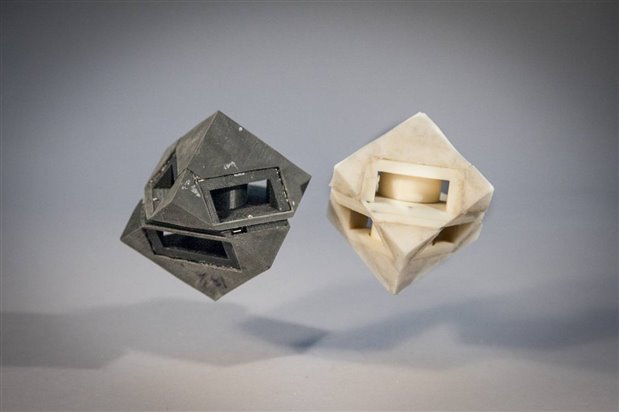
MIT researchers have developed a new programmable viscoelastic material technique that allows them to design 3D printed parts with their own level of stiffness and elasticity. (via MIT)


If you think about it, robots undergo a tremendous amount of abuse in terms of shock and vibration. Drones, manufacturing and military robots are just a few that routinely undergo punishment in one form or another and would greatly benefit from having a protective coating that would help reduce or eliminate internal damage.


Researchers from MIT’s Computer Science and Artificial Intelligence Laboratory have developed a coating that will help protect them against such damage as well as providing a level of durability. Beyond robots, the material could also be used on a host of other items as well- mobile devices, safety equipment and even shoe-wear (among many others). The material in question is known as programmable viscoelastic material (PVM) and it can be 3D printed in varying levels of stiffness and elasticity for any number of objects or robotic parts.


You don't have permission to edit metadata of this video.
Edit media
x
image
Upload Preview
image


The CSAIL researchers developed their PVM by using three different materials- a solid, liquid and a flexible rubbery substance known as TangoBlack+  and combining them while 3D printing an object- in this case autonomous cube robots. Those robots move by using a tensioned metal appendage, which allows the robots to jump from one location to the next. The team tested their shock-absorbing ‘skins’ on the robots and found that it transferred only 1/250 the amount of energy to the ground while landing over those that were not outfitted with the PVM.


We have all seen video of drones hard-hitting the ground and rotors breaking off. While it may be amusing to see, they are expensive to replace. Using MIT’s PVM material could help prevent that catastrophic damage and allow beginner pilots to fly with less worry. Another benefit of the material allows robots to land with more precision- four-times more to be exact. This of course, is dependent on the level of elasticity on the robot’s side surfaces.


The team used a ‘standard’ 3D printer to manufacture the robots, while the PVM process is based on using an inkjet to deposit droplets of the different materials mentioned above layer by layer and subjecting them to UV light to solidify the non-liquid materials. Adding or subtracting (essentially programming) the amounts of those materials will result in the desired solidity or elasticity, making it easy to create robots that have a solid body while also having shock-resistant limbs for example.


Imagine having robots working side by side with humans but without the risk of injury or having rescue robots that can traverse disaster zones without damaging sensitive electronics. Beyond that, I would love to see rugged mobile devices that can handle being dropped without breaking or my apartment floors and walls printed with the stuff so I didn’t have to hear my neighbors every footstep.


Have a story tip? Message me at: cabe(at)element14(dot)com

http://twitter.com/Cabe_Atwell

  • Sign in to reply
element14 Community

element14 is the first online community specifically for engineers. Connect with your peers and get expert answers to your questions.

  • Members
  • Learn
  • Technologies
  • Challenges & Projects
  • Products
  • Store
  • About Us
  • Feedback & Support
  • FAQs
  • Terms of Use
  • Privacy Policy
  • Legal and Copyright Notices
  • Sitemap
  • Cookies

An Avnet Company © 2025 Premier Farnell Limited. All Rights Reserved.

Premier Farnell Ltd, registered in England and Wales (no 00876412), registered office: Farnell House, Forge Lane, Leeds LS12 2NE.

ICP 备案号 10220084.

Follow element14

  • X
  • Facebook
  • linkedin
  • YouTube