element14 Community
element14 Community
    Register Log In
  • Site
  • Search
  • Log In Register
  • Community Hub
    Community Hub
    • What's New on element14
    • Feedback and Support
    • Benefits of Membership
    • Personal Blogs
    • Members Area
    • Achievement Levels
  • Learn
    Learn
    • Ask an Expert
    • eBooks
    • element14 presents
    • Learning Center
    • Tech Spotlight
    • STEM Academy
    • Webinars, Training and Events
    • Learning Groups
  • Technologies
    Technologies
    • 3D Printing
    • FPGA
    • Industrial Automation
    • Internet of Things
    • Power & Energy
    • Sensors
    • Technology Groups
  • Challenges & Projects
    Challenges & Projects
    • Design Challenges
    • element14 presents Projects
    • Project14
    • Arduino Projects
    • Raspberry Pi Projects
    • Project Groups
  • Products
    Products
    • Arduino
    • Avnet & Tria Boards Community
    • Dev Tools
    • Manufacturers
    • Multicomp Pro
    • Product Groups
    • Raspberry Pi
    • RoadTests & Reviews
  • About Us
    About the element14 Community
  • Store
    Store
    • Visit Your Store
    • Choose another store...
      • Europe
      •  Austria (German)
      •  Belgium (Dutch, French)
      •  Bulgaria (Bulgarian)
      •  Czech Republic (Czech)
      •  Denmark (Danish)
      •  Estonia (Estonian)
      •  Finland (Finnish)
      •  France (French)
      •  Germany (German)
      •  Hungary (Hungarian)
      •  Ireland
      •  Israel
      •  Italy (Italian)
      •  Latvia (Latvian)
      •  
      •  Lithuania (Lithuanian)
      •  Netherlands (Dutch)
      •  Norway (Norwegian)
      •  Poland (Polish)
      •  Portugal (Portuguese)
      •  Romania (Romanian)
      •  Russia (Russian)
      •  Slovakia (Slovak)
      •  Slovenia (Slovenian)
      •  Spain (Spanish)
      •  Sweden (Swedish)
      •  Switzerland(German, French)
      •  Turkey (Turkish)
      •  United Kingdom
      • Asia Pacific
      •  Australia
      •  China
      •  Hong Kong
      •  India
      •  Japan
      •  Korea (Korean)
      •  Malaysia
      •  New Zealand
      •  Philippines
      •  Singapore
      •  Taiwan
      •  Thailand (Thai)
      •  Vietnam
      • Americas
      •  Brazil (Portuguese)
      •  Canada
      •  Mexico (Spanish)
      •  United States
      Can't find the country/region you're looking for? Visit our export site or find a local distributor.
  • Translate
  • Profile
  • Settings
Robotics
  • Technologies
  • More
Robotics
Blog Nerds Without Borders Creates Turtle Sense Technology to Keep North Carolina's Beaches Open Longer
  • Blog
  • Forum
  • Documents
  • Quiz
  • Events
  • Polls
  • Members
  • Mentions
  • Sub-Groups
  • Tags
  • More
  • Cancel
  • New
Join Robotics to participate - click to join for free!
  • Share
  • More
  • Cancel
Group Actions
  • Group RSS
  • More
  • Cancel
Engagement
  • Author Author: Catwell
  • Date Created: 25 Nov 2014 6:41 PM Date Created
  • Views 516 views
  • Likes 0 likes
  • Comments 2 comments
  • nerds_without_borders
  • nature
  • turtles
  • diy
  • cabeatwell
  • wildlife
  • ieee
Related
Recommended

Nerds Without Borders Creates Turtle Sense Technology to Keep North Carolina's Beaches Open Longer

Catwell
Catwell
25 Nov 2014

image

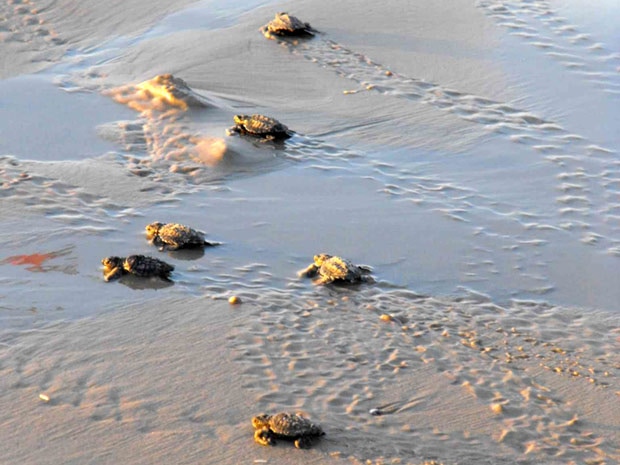
Baby turtles swimming to freedom, just an example... not their efforts. (via U.S. Fish and Wildlife Service)


The North Carolina tourist scene has had a problem for years now. Their beaches must be closed for at least six weeks due to little, baby Wolfpack Sea Turtles nesting on the sand. These Wolfpack Sea Turtles are endangered, so the US Fish and Wildlife service does what they can to keep people from accidentally smashing them underfoot.


However, this 6 week, no beach ban provides North Carolina with a big problem as the state tries to keep tourists and locals happy during the summer months. Nerds Without Borders decided to help solve the problem by developing some technology that will allow biologists to detect exactly when the Sea Turtle babies are ready to hatch. Overall, the time in which the eggs incubate to when they hatch and make a beeline for the water is supposedly 5 days. While nests and turtle babies will vary in terms of when they are exactly ready to hatch, the technology will give a more accurate picture of what's going on so the beaches can stay open for as long as possible without endangering the sea turtles.


The technology is also meant to increase ecotourism, according to Nerds Without Borders. If they can predict the hatching of sea turtles, then the local economy can set up events for tourists to witness this hatching process in action. Who wouldn't want to see a cute baby sea turtle run towards the water line?


This ecotourism also attempts to solve another local problem for North Carolina: inconsiderate sea turtle baby killers. Yep. After all, in a country where people seem to care more about themselves than others, there are people who would rather lay on the beach and kick and smash sea turtle babies: often they are kids, teens, and young adults.


Perhaps experiencing the magic of nature and the entrance of another mode of income from ecotourism  will inspire the local community to care for their resident endangered species.


Now, how exactly are these nerds going to predict when the eggs will hatch? Well, they've developed a pretty simple system, which starts with an egg shaped sensor module housed in ping-pong ball. The sensor tracks motion and temperature continually and sends it via wires to a capsule that houses the microcontoller and phone components.


The capsule contains the hardware that includes phone components (which are used in vending machines) which allows it to access GPS data, and send and receive wireless communications. The other portion of the hardware is a low-powered microcontroller that obtains sensor data and sends it to the researchers via text message. A SIM card is also part of the mix to allow it to access a network, but who pays that bill?


All of this tech is housed in a closed PVC pipe and connected onto the top of a secured PVC pipe that is anchored with a cement bucket and dug into the ground up to 20 feet away from the nest.


The hard part is interpreting all of this data coming in by correlating trends in the data with observations from biologists to determine what hatching looks like in data terms. Overall, they've been successfully capturing data, and it’s only a matter of time before they perfect the analytics.


You don't have permission to edit metadata of this video.
Edit media
x
image
Upload Preview
image

Thanks, IEEE Spectrum!


C

See more news at:

http://twitter.com/Cabe_Atwell

  • Sign in to reply

Top Comments

  • DAB
    DAB over 11 years ago +1
    The proper use of technology to benefit people and animals. DAB
Parents
  • markvenn
    markvenn over 11 years ago

    What a great idea. It must be possible to then develop this tech further to do things like monitoring land movements. I live on an island that is often affected by land slips, in fact one area has been un-livable for 9 months due to land slips. Some kind of warning system has to be a good idea.

    • Cancel
    • Vote Up 0 Vote Down
    • Sign in to reply
    • More
    • Cancel
Comment
  • markvenn
    markvenn over 11 years ago

    What a great idea. It must be possible to then develop this tech further to do things like monitoring land movements. I live on an island that is often affected by land slips, in fact one area has been un-livable for 9 months due to land slips. Some kind of warning system has to be a good idea.

    • Cancel
    • Vote Up 0 Vote Down
    • Sign in to reply
    • More
    • Cancel
Children
No Data
element14 Community

element14 is the first online community specifically for engineers. Connect with your peers and get expert answers to your questions.

  • Members
  • Learn
  • Technologies
  • Challenges & Projects
  • Products
  • Store
  • About Us
  • Feedback & Support
  • FAQs
  • Terms of Use
  • Privacy Policy
  • Legal and Copyright Notices
  • Sitemap
  • Cookies

An Avnet Company © 2026 Premier Farnell Limited. All Rights Reserved.

Premier Farnell Ltd, registered in England and Wales (no 00876412), registered office: Farnell House, Forge Lane, Leeds LS12 2NE.

ICP 备案号 10220084.

Follow element14

  • X
  • Facebook
  • linkedin
  • YouTube