


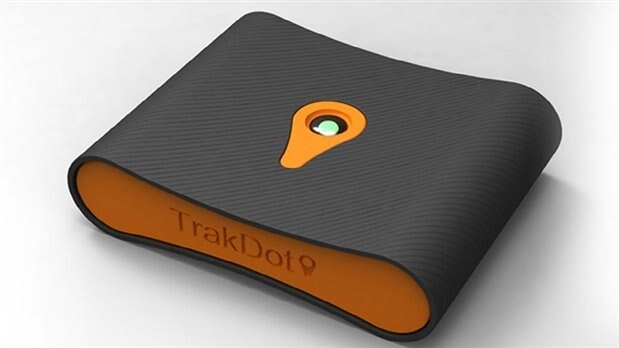
Trackdot device render. (via trackdot)
Bob was nervous and excited at the same time and he had good reason to be. He’s in line to be promoted to the head of operations at his tech company’s headquarters in Singapore and is set to deliver a speech regarding the firm’s future. He’s never made the trip from Silicon Valley to the east Asian country before but the journey will give him time to polish his speech before delivering it to the board members. Then it happens. He’s been staring at the luggage turnstile for the better part of an hour after landing and there is no sign of his bags. The problem is, Bob requires medication to keep his anxiety and anger under control otherwise he becomes a manic, neurotic mess of a human being that has a hair-trigger temper when under stress. His medications, only available in the US, are in his luggage, which are on their way to Sydney, Australia. Suffice it to say Bob never got that promotion. If only his luggage had flown with him that disaster could have been averted.
The story is fictional but the prospect of airlines losing luggage can be all too real for some and it’s never a pleasant experience. To help passengers keep tabs on where their luggage is headed, GlobaTrac has designed a new device that lets users track their bags all over the globe. The company’s Trakdot box is outfitted with their patented ‘micro-electronics’ that includes cellular technology which ‘pings’ nearby cell towers to triangulate its position rather than relying on GPS. In fact, the device is equipped with a SIM card (utilizing quad-based GSM allowing functionality in most countries) that allows it to connect seamlessly to the towers much in the same fashion as other mobile devices. The device is FCC and FAA compliant, meaning it can safely be used on an airplane without messing around with the aircraft’s avionics. The device functions normally on the ground and transitions over to ‘airplane mode’ when in flight. It does so using a built-in accelerometer that senses the plane’s speed during take-off as well as when the plane leaves the ground to transition over to ‘sleep mode’. It does the same when landing as the sensor monitors the reduction in speed and switches itself back on and connects with cell towers in the immediate area. Once on the ground, the device sends an SMS or email (depending on preference) to the user’s mobile device alerting them as to which airport their luggage is located (down to within 30 feet of its actual location). As with any mobile device, GlobalTrac is selling their Trakdot for $49.95 US and requires an $8 activation fee as well as a recurring annual fee of $12.99 (akin to a service plan). While that may seem too high of a price for some, the peace of mind it will deliver is well worth the fee. Be aware however, GlobalTrac is currently delivering backorders at this point, so those looking to get acquire a Trakdot will have to wait a few weeks to receive theirs.
Travelling international may render the system useless, as cell/data coverage in baggage areas are practically non-existent. More control of your world or a new avenue for illicit activities?
C
See more news at:
