element14 Community
element14 Community
    Register Log In
  • Site
  • Search
  • Log In Register
  • Community Hub
    Community Hub
    • What's New on element14
    • Feedback and Support
    • Benefits of Membership
    • Personal Blogs
    • Members Area
    • Achievement Levels
  • Learn
    Learn
    • Ask an Expert
    • eBooks
    • element14 presents
    • Learning Center
    • Tech Spotlight
    • STEM Academy
    • Webinars, Training and Events
    • Learning Groups
  • Technologies
    Technologies
    • 3D Printing
    • FPGA
    • Industrial Automation
    • Internet of Things
    • Power & Energy
    • Sensors
    • Technology Groups
  • Challenges & Projects
    Challenges & Projects
    • Design Challenges
    • element14 presents Projects
    • Project14
    • Arduino Projects
    • Raspberry Pi Projects
    • Project Groups
  • Products
    Products
    • Arduino
    • Avnet & Tria Boards Community
    • Dev Tools
    • Manufacturers
    • Multicomp Pro
    • Product Groups
    • Raspberry Pi
    • RoadTests & Reviews
  • About Us
  • Store
    Store
    • Visit Your Store
    • Choose another store...
      • Europe
      •  Austria (German)
      •  Belgium (Dutch, French)
      •  Bulgaria (Bulgarian)
      •  Czech Republic (Czech)
      •  Denmark (Danish)
      •  Estonia (Estonian)
      •  Finland (Finnish)
      •  France (French)
      •  Germany (German)
      •  Hungary (Hungarian)
      •  Ireland
      •  Israel
      •  Italy (Italian)
      •  Latvia (Latvian)
      •  
      •  Lithuania (Lithuanian)
      •  Netherlands (Dutch)
      •  Norway (Norwegian)
      •  Poland (Polish)
      •  Portugal (Portuguese)
      •  Romania (Romanian)
      •  Russia (Russian)
      •  Slovakia (Slovak)
      •  Slovenia (Slovenian)
      •  Spain (Spanish)
      •  Sweden (Swedish)
      •  Switzerland(German, French)
      •  Turkey (Turkish)
      •  United Kingdom
      • Asia Pacific
      •  Australia
      •  China
      •  Hong Kong
      •  India
      •  Korea (Korean)
      •  Malaysia
      •  New Zealand
      •  Philippines
      •  Singapore
      •  Taiwan
      •  Thailand (Thai)
      • Americas
      •  Brazil (Portuguese)
      •  Canada
      •  Mexico (Spanish)
      •  United States
      Can't find the country/region you're looking for? Visit our export site or find a local distributor.
  • Translate
  • Profile
  • Settings
Test & Tools
  • Technologies
  • More
Test & Tools
Forum Show us your junk!
  • Blog
  • Forum
  • Documents
  • Files
  • Members
  • Mentions
  • Sub-Groups
  • Tags
  • More
  • Cancel
  • New
Join Test & Tools to participate - click to join for free!
Actions
  • Share
  • More
  • Cancel
Forum Thread Details
  • Replies 143 replies
  • Subscribers 368 subscribers
  • Views 12300 views
  • Users 0 members are here
Related

Show us your junk!

neuromodulator
neuromodulator over 6 years ago

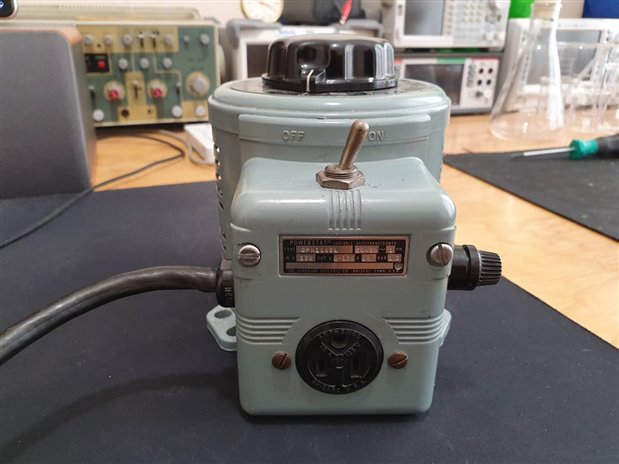
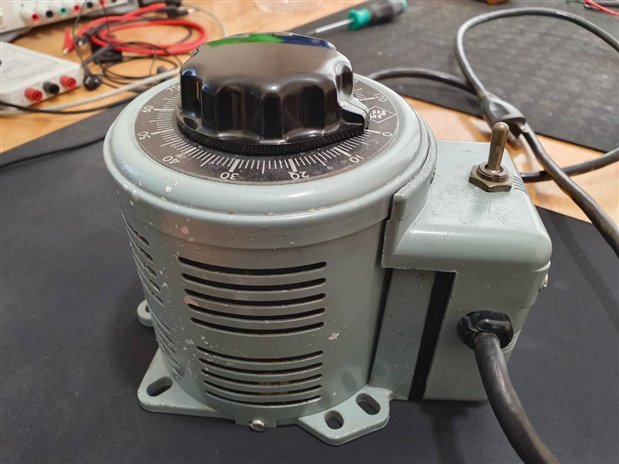
I love junk, specially when it can be fully restored, has interesting parts or uses interesting technology. Most of the junk I get, comes from the university, its dumped because its either too old or it doesn't work anymore. I'll start this thread by showing one of my latest junk acquisitions:
 

imageimageimage


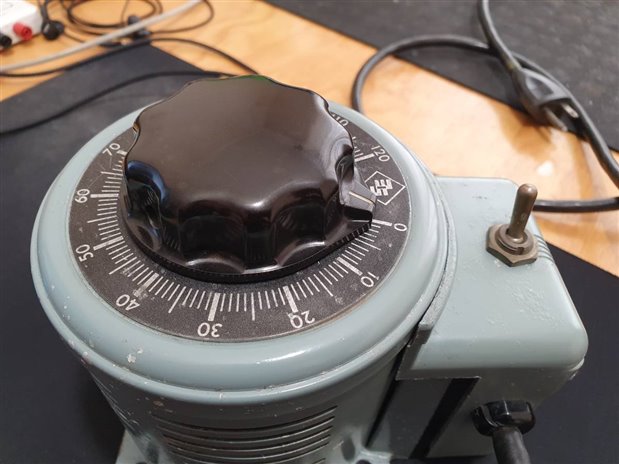
This is an autotransformer made by a company called "The Superior Electric Co" from Bristol, Connecticut. It was apparently build in the 60s (according to what I found in the net) and supports a max of 1.2 kva. The autotransformer works as expected but of course it shows its age, the rubber cable is not in the best condition and so isn't its paint. In the future I may repaint it and replace the cable but for now its good enough as it is.


Have you also found nice junk? Show us!

  • Sign in to reply
  • Cancel

Top Replies

  • michaelkellett
    michaelkellett over 6 years ago in reply to neuromodulator +13
    Here is the first processor controlled instrument I designed. Intel 8748, code hand assembled on paper and entered into Intel desktop dev system by hand in hex. Not really junk, but not very useful now…
  • dougw
    dougw over 6 years ago +12
    While looking for something else deep in the "archives" I came across my favourite scientific calculator. (circa 1975) It still works fine. The LEDs were so power hungry I eventually built a power supply…
  • genebren
    genebren over 6 years ago +11
    In the spirit of your original request (show us your junk!), here is some of my junk. One of my many past jobs was working for a life sciences company that built instrumentation for various forms of testing…
  • dougw
    dougw over 6 years ago in reply to gpolder

    For some reason, the company I worked for bought a used IBM1620 that used core memory. (built circa 1961) The computer occupied a large room and required a serious amount of power to run.

    We used to joke that when the computer was turned on the lights in the building would dim.

    That computer was a decimal computer (using BCD digits). The op codes were 2 digits. The core memory could hold 20,000 decimal digits.

    • Cancel
    • Vote Up +4 Vote Down
    • Sign in to reply
    • Cancel
  • genebren
    genebren over 6 years ago in reply to gpolder

    Definitely magnetic core memory.  When I first graduated (1976), I went to work for a military systems development company.  The US military was in love with magnetic core memory computer systems (both large and small).  I went to one of the manufactures for a training class (operation/maintenance/programming). where we got to get hands on with the core memory.  We actually did some repair work (mostly just soldering the wires to the card edge connectors).


    In the systems that we worked with, which were mostly vehicle-based systems, the core memory modules were one of the high failure rate items.  We had a few instances were we needed to extract data from the memory modules (potentially weeks of data collection) much in the same way that you might need to retrieve data from a crashed hard drive.  We would pop open the modules and attach/fix any leads and then attempt to run the system long enough to dump the data on to a magnetic tape drive (or sometimes paper tape).


    Gene

    • Cancel
    • Vote Up +4 Vote Down
    • Sign in to reply
    • Cancel
  • gpolder
    gpolder over 6 years ago in reply to gpolder

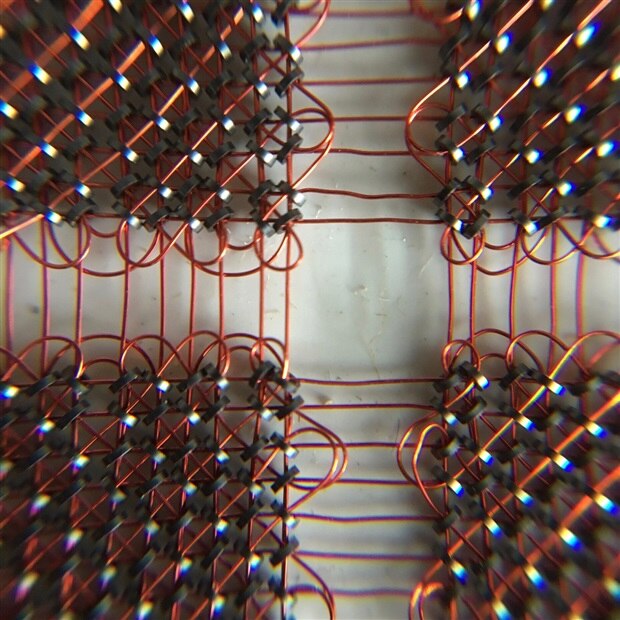
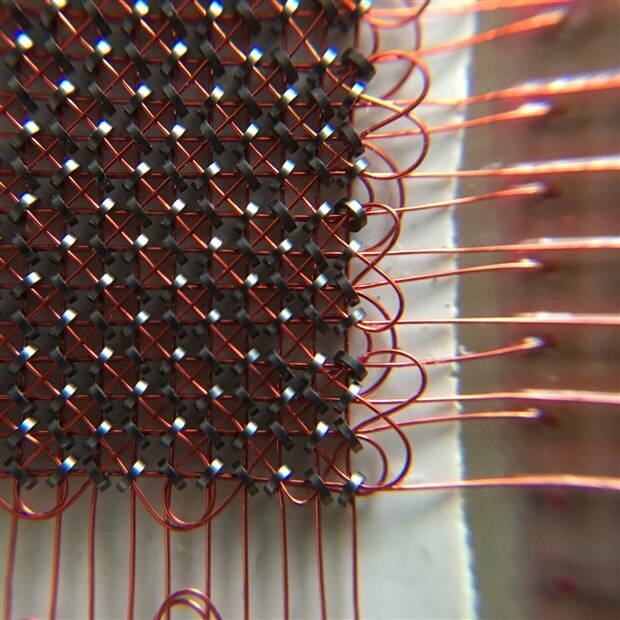
    Core memory indeed, good to see that it was recognized by so many people, luckily I'm not the only senior in this group.

    If I remember correctly, it came from an oscilloscope with a memory function, sort of an early digital scope.


    As promised a close-up:

    image

    image

    • Cancel
    • Vote Up +10 Vote Down
    • Sign in to reply
    • Cancel
  • ntewinkel
    ntewinkel over 6 years ago in reply to gpolder

    very cool! is each one of the little black hoops a bit?

    • Cancel
    • Vote Up +2 Vote Down
    • Sign in to reply
    • Cancel
  • Jan Cumps
    Jan Cumps over 6 years ago in reply to ntewinkel

    yes. You flip the magnetism by running a current through the matrix. If I recall well, a read operation is destructive and the bit has to be rewritten after a read.

    • Cancel
    • Vote Up +3 Vote Down
    • Sign in to reply
    • Cancel
  • jw0752
    jw0752 over 6 years ago

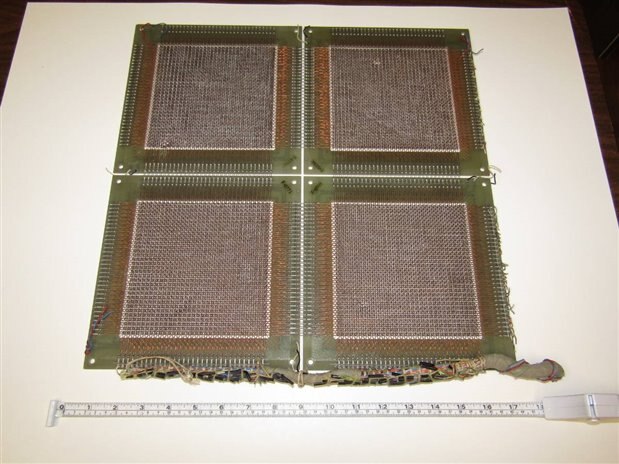
    The Cray Super computer was developed here in Chippewa Falls. Somewhere along the way I picked up this section of core memory from an early Cray machine. I would guess that it was in the middle to late 1960s. At the time they were still using discrete transistors in their circuits. There are 1024 bits in each of the 4 quadrants so this would be the equivalent of a 4 kb memory chip. My how things have gotten smaller.


    image


    John

    • Cancel
    • Vote Up +10 Vote Down
    • Sign in to reply
    • Cancel
  • balearicdynamics
    balearicdynamics over 6 years ago in reply to jw0752

    John if I am not wrong, this technology was hand-made.

    • Cancel
    • Vote Up +2 Vote Down
    • Sign in to reply
    • Cancel
  • jw0752
    jw0752 over 6 years ago in reply to balearicdynamics

    Hi Enrico,


    Yes you are correct. They had a form that held the cores and the wires were strung by hand. I remember someone showing me the process a long time ago.


    John

    • Cancel
    • Vote Up +3 Vote Down
    • Sign in to reply
    • Cancel
  • Gough Lui
    Gough Lui over 6 years ago in reply to jw0752

    Well, at 4kBits ... that's 512-bytes or just under two "extra length" 280-character tweets assuming coded in 8-bit ASCII, perhaps just short of three if coded in 5-bit Baudot.


    In fact, this message would consume about half of the array already.


    - Gough

    • Cancel
    • Vote Up +5 Vote Down
    • Sign in to reply
    • Cancel
  • beacon_dave
    beacon_dave over 6 years ago in reply to jw0752

    There is an Arduino shield kit available, if anyone wants to have a go at 'knitting' core store...

    https://www.tindie.com/products/kilpelaj/core-memory-shield-for-arduino/

    • Cancel
    • Vote Up +7 Vote Down
    • Sign in to reply
    • Cancel
<>
element14 Community

element14 is the first online community specifically for engineers. Connect with your peers and get expert answers to your questions.

  • Members
  • Learn
  • Technologies
  • Challenges & Projects
  • Products
  • Store
  • About Us
  • Feedback & Support
  • FAQs
  • Terms of Use
  • Privacy Policy
  • Legal and Copyright Notices
  • Sitemap
  • Cookies

An Avnet Company © 2025 Premier Farnell Limited. All Rights Reserved.

Premier Farnell Ltd, registered in England and Wales (no 00876412), registered office: Farnell House, Forge Lane, Leeds LS12 2NE.

ICP 备案号 10220084.

Follow element14

  • X
  • Facebook
  • linkedin
  • YouTube