


So much talk about Glassholes! You know, people that wear their Google Glass and violate some set of social rules claimed to be 'common sense' despite the fact that the tech hasn't been around long enough for much of society to realize they exist. But I guess that's how we as a culture will define our acceptance or rejection of the technology; a collection of reactions over time.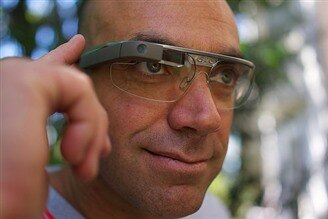

With the seemingly constant revelations that governments have been spying on us, it's no wonder that people act like they are on camera whenever they see someone wearing Glass. The first time I met a friend at a bar who was wearing his set I found myself distractedly glancing at the device, similar to if he got a Tyson-Style face-tattoo.
For some, the annoyance is similar to that felt when a person has a Bluetooth headset. Is the person really engaging with me, or are they dividing their attention with the input being provided directly to their head? But for others, it is a privacy concern. Some believe that any camera or microphone can be used as a snooping device, either for government surveillance or commercial information gathering. Imagine seeing banner ads when reading the morning news that flash and say, ‘Had too many beers last night at the bar with Jimmy? Starbucks now offers delivery! Click here to feel better.’
I don’t know if this is happening, or if it is even a future goal of the NSA or Google. The question that I’m interested in is if the technology makes it possible. The short answer is yes, it is possible to covertly record audio and video on Glass if it is connected to the internet because the hardware exists. But the real answer is a bit more nuanced. Let’s base this analysis on some specs:
Battery Capacity: 570mAh.
Internal Storage: 12GB
Battery life of video recording: 45 minutes
The first challenge is battery life. If Glass were to stream video non-stop, the battery would die in 0.75 hours. This is clearly not happening because nobody would bother wearing glass if it wasn’t able to survive past breakfast. At least we can feel comfortable knowing that streaming video isn’t being covertly captured.
The next challenge is data transmission management. Most people pay for their smartphone data by the GB. It would be tough for the snooping entity to get cell carriers to not meter the stolen data. It is more likely that the data consumed would be small enough to go unnoticed by the consumer. For the sake of argument, let’s say the average Glass user consumes a lot of data and wouldn’t miss anything under 100MB per month. Video is a challenge again because compressed, low-res video running for 12 hours per day would represent 2GB per month. Again, streaming video isn’t on the snooping menu.
What about audio? Well, nobody cares about audio. It’s impossible to be anywhere in public without being in earshot of a half dozen cell phones. Since mics don’t need to be pointed anywhere, snooping on a cell phone microphone is much easier than bothering with Glass, and just as prevalent in public.
What if the snoopers got clever and limited their scope to occasional image captures? This would still be quite useful in determining exactly where a person is, what context they are in, who they are with, what brands might be visible, etc… They could take a decent JPEG image every 5 minutes for 12 hours per day. That would only consume 16Kb of data per photo, or 71Mb of bandwidth per month. Plus, reports from users state that taking over 100 photos in a day would be a lot, but not devastating to the battery.
With a constant supply of images delivered to the cloud, it is possible to do all kinds of processing off of the user’s hardware. Face detection could determine if one of these images contained a person-of-interest. Then more significant snooping techniques like audio and video could be remotely turned on for that particular Glass user. He or she would see degraded battery life that day, but if it occurs rarely enough it may be ignored.
It seems that while wholesale covert snooping by Glass is not feasible, it could be used to catch occasional glimpses into what a person sees every day. I’m not saying that people that ask Glass users to remove them are being reasonable, but at least their concerns can’t be totally thrown out.
Specification References:
Glass Specifications: http://www.pcadvisor.co.uk/reviews/gadget/3528631/google-glass-explorer-edition-20-review/
Size of video: http://gopro.com/support/articles/hero3-low-resolution-video-lrv-file-size-information
Specification Assumptions:
- Glass can take 144 photos a day without killing a battery.
- Glass users won’t care about an extra 70Mb on their data plans
Photo Credits:
https://www.flickr.com/photos/royaloperahouse/14917690505/sizes/m/

