


We are already in the second half of the project and we want to see how we can help astronauts with this 1 meter of Pi project. So far, during this project, we realized that there are a couple of challenges in microgravity garden.
Let's recap a couple of challenges that we want to solve with this project!
1. Non self-pollinating plants need pollination --> how to monitor them and help pollination mechanically, bugs, or wind
2. We want to avoid bugs in space --> Bug catcher plants! But, this doesn't help pollination
3. Water monitor for hydroponics system --> Hydroponics system requires water and nutrition constantly
4. Environment change in space --> temperature, humidity, and light which are required for photosynthsis

Let's do our best to tackle those challenges with the time left in this project.
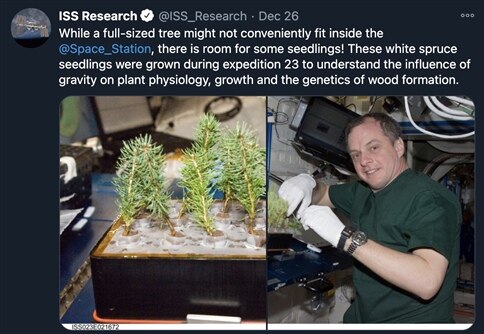
Interestingly, NASA is researching a microgravity garden.
https://twitter.com/ISS_Research/status/1342510163249438720?s=20
Blog 8 Task List
Previously, we tried an image recognition with a Raspberry Pi and webcam. For improvements, I researched a bit and tried a couple of things.
1. Add Google Coral to increase frame rate per second
2. Try different web cameras
2.1 1080p
2.2 2K 30 FPS with winder viewing angle for capturing 1 cubic meter range

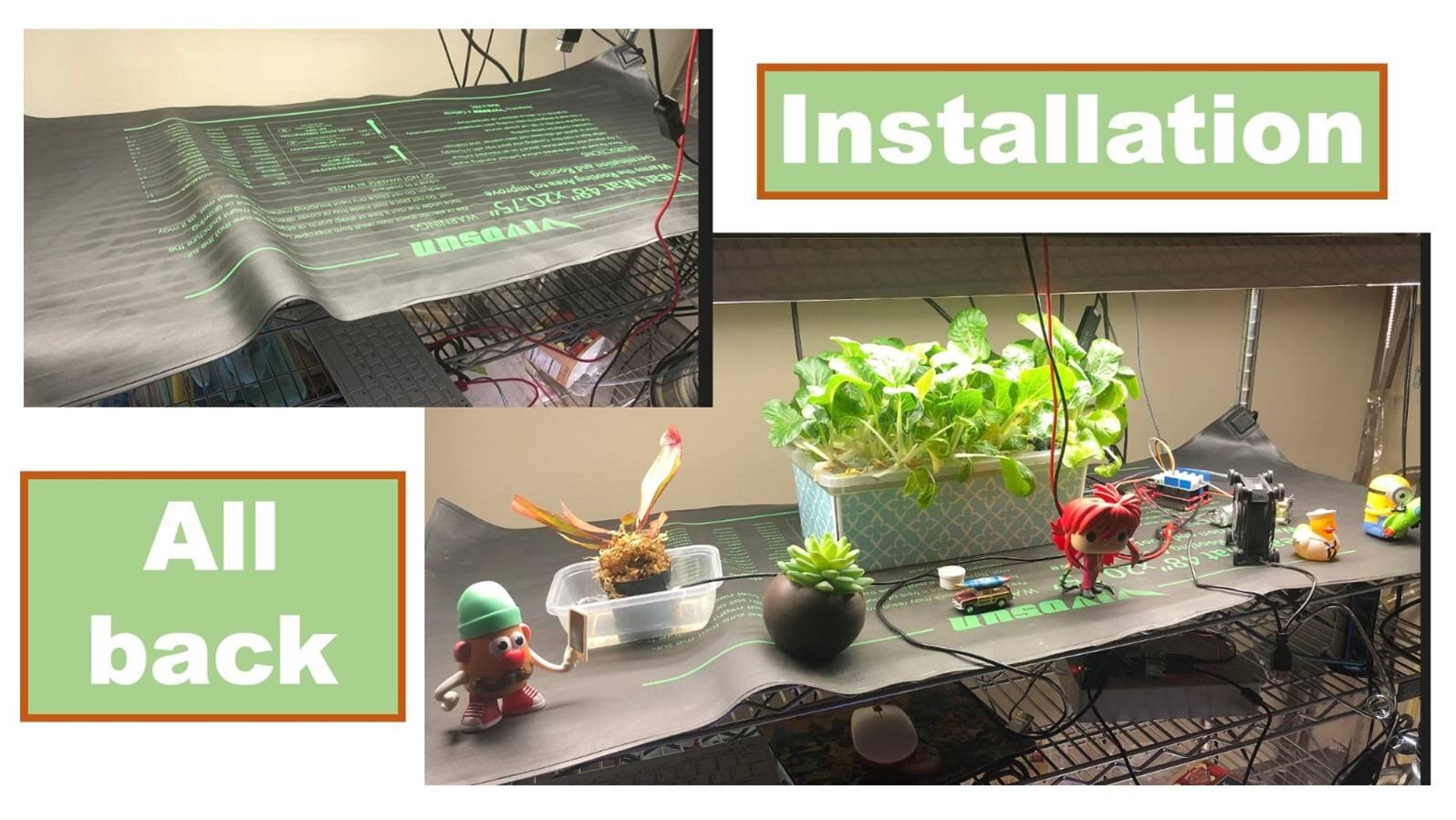
For plants, now is winter season and temperature is low, so I added a new item to warm up plants 
3. Added a gardening heat mat

Content
1. Improve frame per second by Google Coral: AI Accelerator
In the previous blog (2Pi Microgravity Garden Blog 7 | AI Image Recognition with Raspberry Pi and Tensor Flow
), we tried the image recognition just by the raspberry Pi and webcam. The frame per second is about 7.
This time, Google Coral is a nice and reasonable AI accelerator which is Raspberry Pi ready by a USB connection.
https://coral.ai/products/accelerator/
Without Google Coral, the Frame Per Second (FPS) was about 4.5 and all objects stay still now.
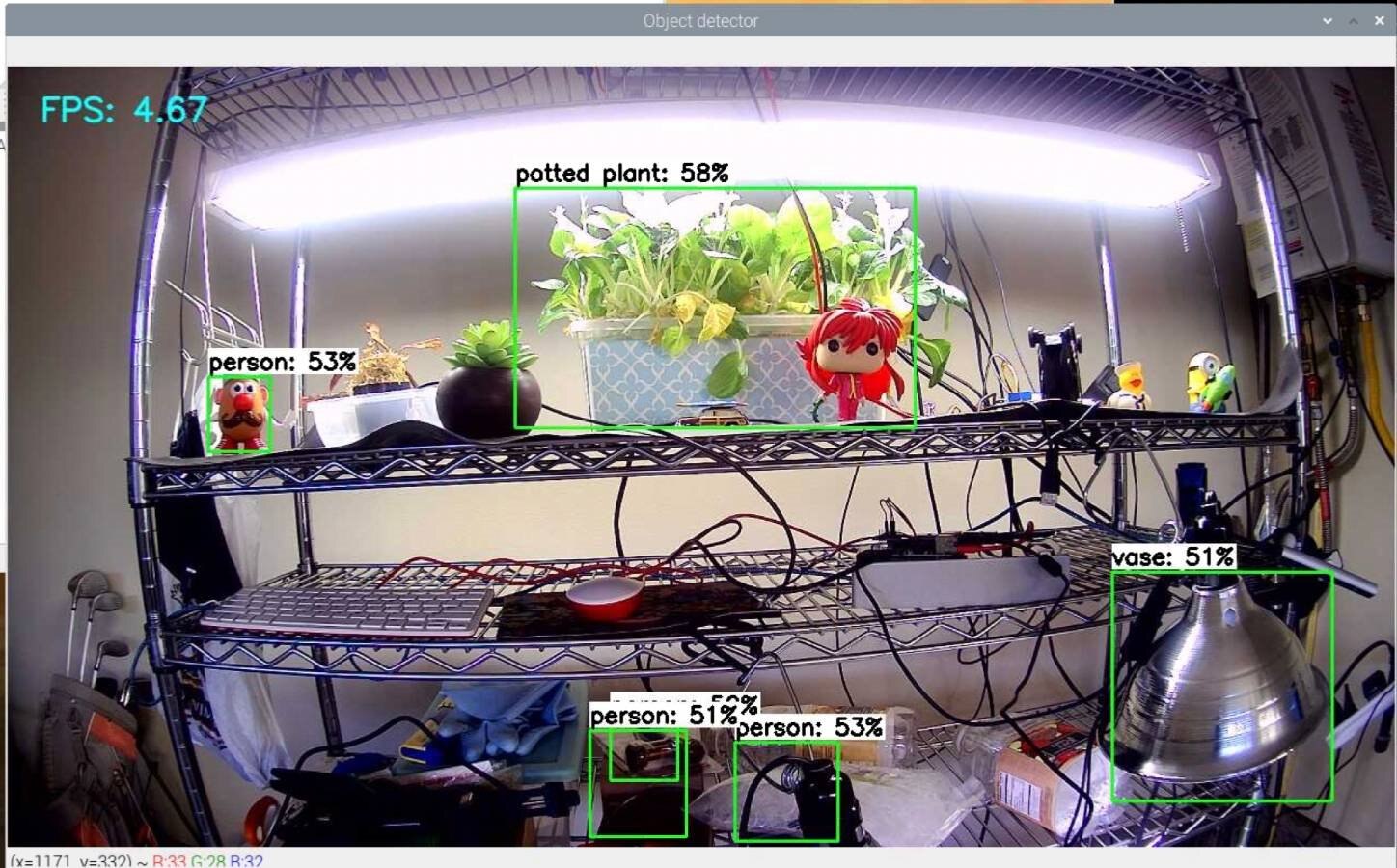
With Google Coral, the Frame Per Second (FPS) improved to 22 - 24. But, the object detection is not properly working anymore. This is the area of improvements.

To switch with and without Google Coral, just created an automation script.
The automation bash script is available on github.
https://github.com/kurama007/1MeterOfPi/blob/main/run_tfl.sh
2. Try different webcams
The original webcam used in this project was 1080p and regular angle. Then, I've switched to 2K (2560x1440) 90 degree wide viewing angle
https://www.amazon.com/gp/product/B08CMV4GF6/ref=ppx_yo_dt_b_asin_title_o01_s01?ie=UTF8&psc=1
This camera has wider viewing angle and I mounted it on a tripod. This turned out to be a good setup to capture 1 cubic meter area.
3. Add a heat mat
The outer space is very cold! The temperature is 2.7K which is -455 F or -270 C. So, we want to measure water temperature and outside temperature for environmental control.
Project Information
Project Description: https://green-scientist.com/projects/1-meter-of-pi-2pi-microgravity-garden/
1 Meter of Pi Project Blog: 1 Meter of Pi
Github repo: https://github.com/kurama007/1MeterOfPi