element14 Community
element14 Community
    Register Log In
  • Site
  • Search
  • Log In Register
  • Community Hub
    Community Hub
    • What's New on element14
    • Feedback and Support
    • Benefits of Membership
    • Personal Blogs
    • Members Area
    • Achievement Levels
  • Learn
    Learn
    • Ask an Expert
    • eBooks
    • element14 presents
    • Learning Center
    • Tech Spotlight
    • STEM Academy
    • Webinars, Training and Events
    • Learning Groups
  • Technologies
    Technologies
    • 3D Printing
    • FPGA
    • Industrial Automation
    • Internet of Things
    • Power & Energy
    • Sensors
    • Technology Groups
  • Challenges & Projects
    Challenges & Projects
    • Design Challenges
    • element14 presents Projects
    • Project14
    • Arduino Projects
    • Raspberry Pi Projects
    • Project Groups
  • Products
    Products
    • Arduino
    • Avnet & Tria Boards Community
    • Dev Tools
    • Manufacturers
    • Multicomp Pro
    • Product Groups
    • Raspberry Pi
    • RoadTests & Reviews
  • About Us
    About the element14 Community
  • Store
    Store
    • Visit Your Store
    • Choose another store...
      • Europe
      •  Austria (German)
      •  Belgium (Dutch, French)
      •  Bulgaria (Bulgarian)
      •  Czech Republic (Czech)
      •  Denmark (Danish)
      •  Estonia (Estonian)
      •  Finland (Finnish)
      •  France (French)
      •  Germany (German)
      •  Hungary (Hungarian)
      •  Ireland
      •  Israel
      •  Italy (Italian)
      •  Latvia (Latvian)
      •  
      •  Lithuania (Lithuanian)
      •  Netherlands (Dutch)
      •  Norway (Norwegian)
      •  Poland (Polish)
      •  Portugal (Portuguese)
      •  Romania (Romanian)
      •  Russia (Russian)
      •  Slovakia (Slovak)
      •  Slovenia (Slovenian)
      •  Spain (Spanish)
      •  Sweden (Swedish)
      •  Switzerland(German, French)
      •  Turkey (Turkish)
      •  United Kingdom
      • Asia Pacific
      •  Australia
      •  China
      •  Hong Kong
      •  India
      •  Japan
      •  Korea (Korean)
      •  Malaysia
      •  New Zealand
      •  Philippines
      •  Singapore
      •  Taiwan
      •  Thailand (Thai)
      •  Vietnam
      • Americas
      •  Brazil (Portuguese)
      •  Canada
      •  Mexico (Spanish)
      •  United States
      Can't find the country/region you're looking for? Visit our export site or find a local distributor.
  • Translate
  • Profile
  • Settings
Energy Harvesting Design Challenge
  • Challenges & Projects
  • Design Challenges
  • Energy Harvesting Design Challenge
  • More
  • Cancel
Energy Harvesting Design Challenge
Blog A Very Compact Guide to Energy Harvesting - Part 001
  • Blog
  • Forum
  • Documents
  • Files
  • Mentions
  • Sub-Groups
  • Tags
  • More
  • Cancel
  • New
  • Share
  • More
  • Cancel
Group Actions
  • Group RSS
  • More
  • Cancel
Engagement
  • Author Author: COMPACT
  • Date Created: 7 Apr 2013 9:06 PM Date Created
  • Views 604 views
  • Likes 2 likes
  • Comments 5 comments
  • energy_harvesting_challenge
Related
Recommended

A Very Compact Guide to Energy Harvesting - Part 001

COMPACT
COMPACT
7 Apr 2013

Preface

My thanks to Element14 and Würth Electronik for inviting me to participate in this Energy Harvesting  RoadTest Challenge.

I've already completed a large battery of tests and experiments and over the coming weeks publish my findings and progress.
image

Introduction

Energy Harvesting is best defined as the recovery and application of otherwise spent or wasted energy.

This energy is usually found in varying quantities in some obvious and not so obvious places.


An obvious example is Solar Energy - It's found virtually everywhere on planet Earth on bright sunny days.

A less obvious example is Thermal Energy from the difference between the ambient temperature and ground temperature.

Both are valid sources of energy that can be transformed into Electrical Energy by appropriate conversion techniques.

In my articles I will include details of odd locations and devices where I have harvested energy.


Where possible I will be using existing items and technologies in the quest for environmental sustainability and minimal impact.

And like usual I will retain the original functionality of the items.
 

imageimage

imageimage


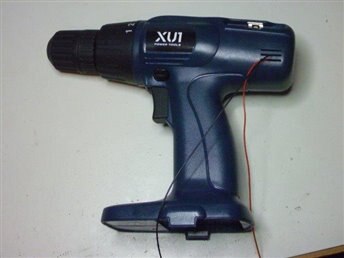
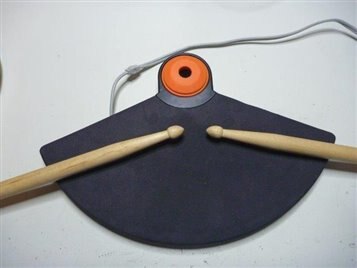
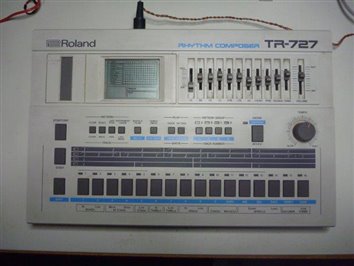
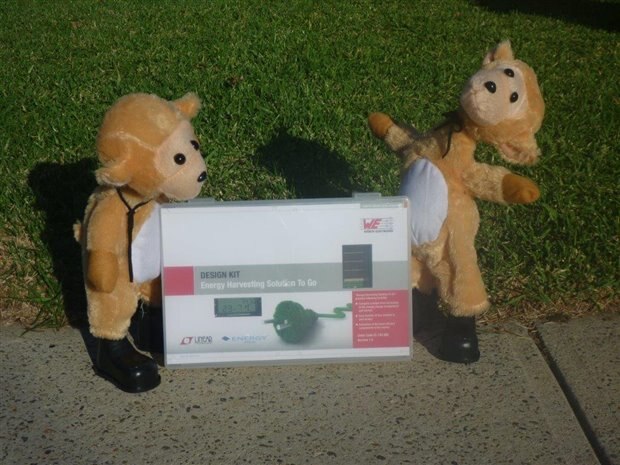
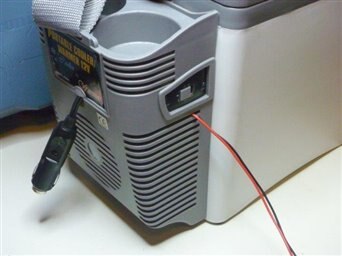
Can anyone pick the odd picture out?


My first goal is to create a TV remote control that requires no disposable batteries. Its power will be derived from a choice harvested energies.

A TV remote control is a fairly basic device. All that happens is when you press a button a set of Infrared LEDs commence blinking in a sequence that is recognized to a TV set as a command.

It spends the remainder of its time sleeping and turns on only when a button is pressed.

A low energy microcontroller is perfect for this task.


If time permits, I will create other more capable items that operate from harvested energy and effort.


No Batteries Required.

As per usual I followed my standard strategy of Crawl, Walk then Run by familiarising myself with the Energy Harvesting Kit and conducting a large range of experiments and tests.


This kit is an absolute beauty!

It is specifically designed to expedite the development of Energy Harvesting Solutions. All of the fiddly preparation such as minute surface mount soldering has been completed allowing immediate commence Energy Harvesting research.

It comes very neatly packaged in a translucent plastic parts case that contains;

     An Energy Harvesting board

     And Target Load board


The boards showcase many Würth Electronik Components that are perfectly suited their intended tasks.

The components used include Inductors, Connectors, Switches, Ferrite Beads, LED and Battery Holder.

The boards also showcase Energy harvesting semiconductors from Linear Technology and EFM32 microcontroller from EnergyMicro.


The main idea is that the Target Load board can be operated from energies harvested by the Energy Harvesting board.

The boards are neatly connected together adjacent to each other making components easily accessible from the top.


The lid of the case has two apertures;

     One to show the LCD display on the Target Load board

     And one for the Solar Cell on the Harvesting Board.


It enables operation with the lid closed. To get it working all you have to do is take the kit into the sunlight and Hey presto - Instant Temperature Sensor Readings on the LCD Display.

(Just as you would with a Solar powered Calculator.)


The Energy Harvesting board contains four different Energy Harvesting Power supplies, a Solar Cell and Peltier Device mounted on a Heatsink.

Other energy sources can be connected via its test pins or its PiezoElectric source connector.


Unlike traditional power supplies the Energy Harvesting Power Supplies;

     a. are designed to accumulate small amounts of power and then use them when enough is available.

     b. be very efficient as not to waste the precious energy they have captured.

     c. generate a power good signal to indicate that power is at acceptable and available.


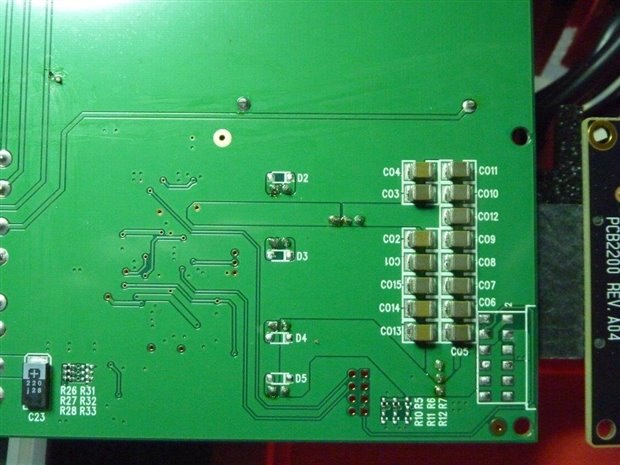
Here is a picture of the energy storage bank.
image


The Target Load Board is an EnergyMicro Giant Gecko STK3700.

It an evaluation board for the highly efficient EFM32 32 bit ARM microcontroller - a microcontroller designed to operate from miniscule amounts of power.

It is perfectly suited to operate from accumulated harvested energies and periodic operation.


.... To be continued...


Please feel free to leave comments. It'll help me know what to do improve my articles.

  • Sign in to reply
  • COMPACT
    COMPACT over 12 years ago in reply to DAB

    Hi Don,

    I thought my answer stated that. One issue with using water is that most rooves are above ground level and some sort of circulation system against gravity is required.

    This commonly is done using a pump that uses energy that effects the overall efficacy of harvesting system.


    Cheers


    Very Compact 

    • Cancel
    • Vote Up 0 Vote Down
    • Sign in to reply
    • More
    • Cancel
  • DAB
    DAB over 12 years ago in reply to COMPACT

    Hi Monte,


    I was thinking that you could connedt one side of the Thermalcoupler to the Solar cell and then attack a water cooled aluminum block to the other side.  You could have running water carry the heat away and ensure that you had a fair amount of thermal difference between the coupler and the solar cell.


    You could also go with a pool of water around the aluminum block, which would work for ground installations.


    For practicle reasons, I agree, you just do not have enough temperature contrast to make a usable device, but it is an interesting thought should they develop higher thermal transducers.


    Just a thought,

    DAB

    • Cancel
    • Vote Up 0 Vote Down
    • Sign in to reply
    • More
    • Cancel
  • COMPACT
    COMPACT over 12 years ago in reply to DAB

    G'day Don,


    I hope you've been well.

    Sorry to hear that you haven't the time to particpate in this challenge.


    I've already considered using a TEG in conjunction with a solar cell (or panel).

    The challenge is ensuring that there is a sufficient temperature differential between the solar cell and the surrounding ambient temperature.

    The temperature on the cool side of the TEG must be sufficient to generate power.

    In a real situation such as solar cells of a roof, the temperature in the roof space rises during the day reducing the temperature differential.

    The temperature not only rises from the heat from the solar cells but also from the roof times.


    In Australia, it is not uncommon to get temperatures of up to 60 degrees celsius in the roof space and sometimes there is not sufficient cross breeze to vent it effectively.

    Many houses do not use ridge vents andare inefficient at using convection to remove the unwanted heat.

    In the height of summer, we can get hot days of up to 49 degrees with no breeze making it a futile exercise.

    For breezy days I can see the combination working.


    Slight variation is positioning the TEGs between the roof space and internal ceiling.

    There can be an adequate temperature differential there but a TEG then reduces the efficiency of the ceiling insulation by allowing heat to move from one zone to the the other which effectively is like punching a hole in the insulation.


    A more effective method involves the use of water with the solar collectors. The water can be used to accumulate the heat from the roof and solar panels and be moved to a storage tank for later usage.

    This can lower the roof and solar cell temperatures.

    It gives the user the choice to use heated water or to generate electricity from it.


    The Energy Harvesting board is designed to give the developer the option of harnessing multiple energies simultaneously.

    This can be done by the removal of the circuit selection jumper and the installation of diodes on the backside of PCB.

    If you look at my picture of the energy storage bank you can see the component overlay and pads for these optional diodes marked D2 through D5.


    Cheers

    Very Compact

    • Cancel
    • Vote Up 0 Vote Down
    • Sign in to reply
    • More
    • Cancel
  • DAB
    DAB over 12 years ago

    Hi Monte,


    I have been waiting for your first blog.

    After reading over all of the posts, I wonder, have any of you testers considered putting the thermal collector onto a solar cell to pick up the wasted heat generated by the cell?

    It could be an interesting study to do about collecting both the IR and visible light for energy production.


    To all of the testers, I like what I see and look forward to your future posts.


    Thanks

    DAB

    • Cancel
    • Vote Up 0 Vote Down
    • Sign in to reply
    • More
    • Cancel
  • vsluiter
    vsluiter over 12 years ago

    Hi COMPACT,

    Nice to see you back again. I guess crawl, walk run is a very good strategy... I always start with running, but that gets very tiring in the end image

    To pick the odd one out: I guess it's the drum pad because it doesn't have a red and black lead


    I like your idea for the remote. It's low power, and a lot of batteries are wasted in these things. Good candidate for energy harvesting!

    Looking at the pictures you made, I realized that energy harvesting is also something based on local conditions; your toys-with-energy-kit picture is sunny (and it's 23.7 degrees outside! whoaa....), so sun is apparently an abundant energy source at your place. When you'd be designing something to use above the polar circle, solar power would not be the source of choice. Local solutions for global impact.... I'm getting carried away image

    • Cancel
    • Vote Up 0 Vote Down
    • Sign in to reply
    • More
    • Cancel
element14 Community

element14 is the first online community specifically for engineers. Connect with your peers and get expert answers to your questions.

  • Members
  • Learn
  • Technologies
  • Challenges & Projects
  • Products
  • Store
  • About Us
  • Feedback & Support
  • FAQs
  • Terms of Use
  • Privacy Policy
  • Legal and Copyright Notices
  • Sitemap
  • Cookies

An Avnet Company © 2026 Premier Farnell Limited. All Rights Reserved.

Premier Farnell Ltd, registered in England and Wales (no 00876412), registered office: Farnell House, Forge Lane, Leeds LS12 2NE.

ICP 备案号 10220084.

Follow element14

  • X
  • Facebook
  • linkedin
  • YouTube