


ADIN1110 Evaluation board
Last week my missing ADIN1110 evaluation board has finally arrived (thanks E14Alice for support). It is based on ADIN1110 chip, which - unlike ADIN1100 - integrates both MAC and PHY function, which can be mapped to first two layers of OSI stack (respectively link level and physical layer).
At the other side, ADIN1100 is a 10BASE-T1L PHY, so connecting it to the MCU requires builtin MAC - which may (in - for example - some variants of ESP32) or may not (in Broadcom SoC based Raspberry Pi boards) be present, which explains why our Raspberry Pi SPE shield is also ADIN1110 based.
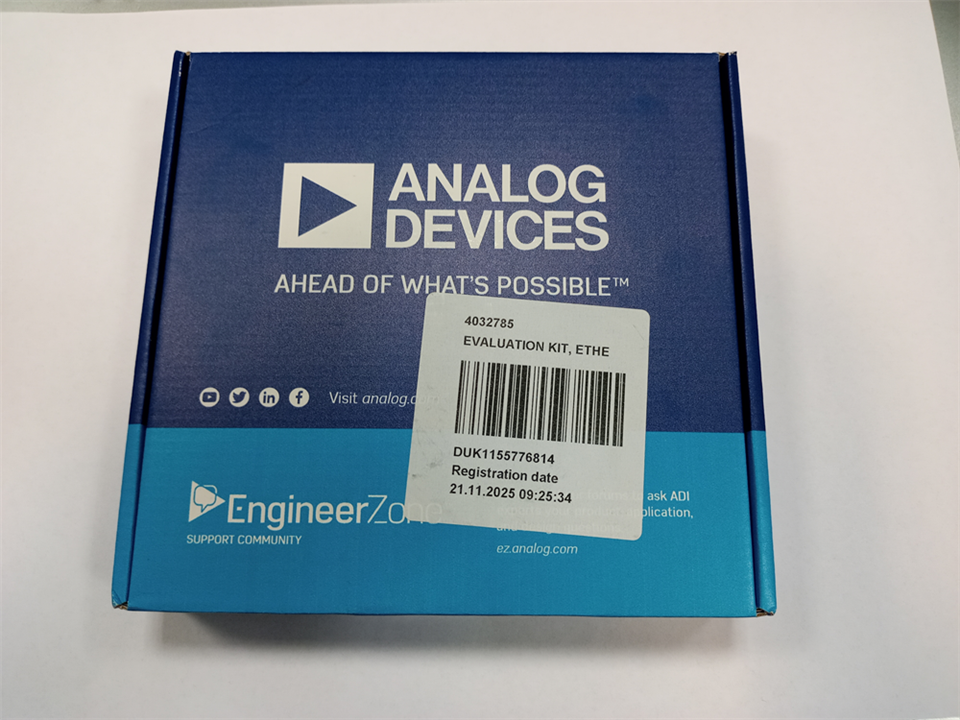
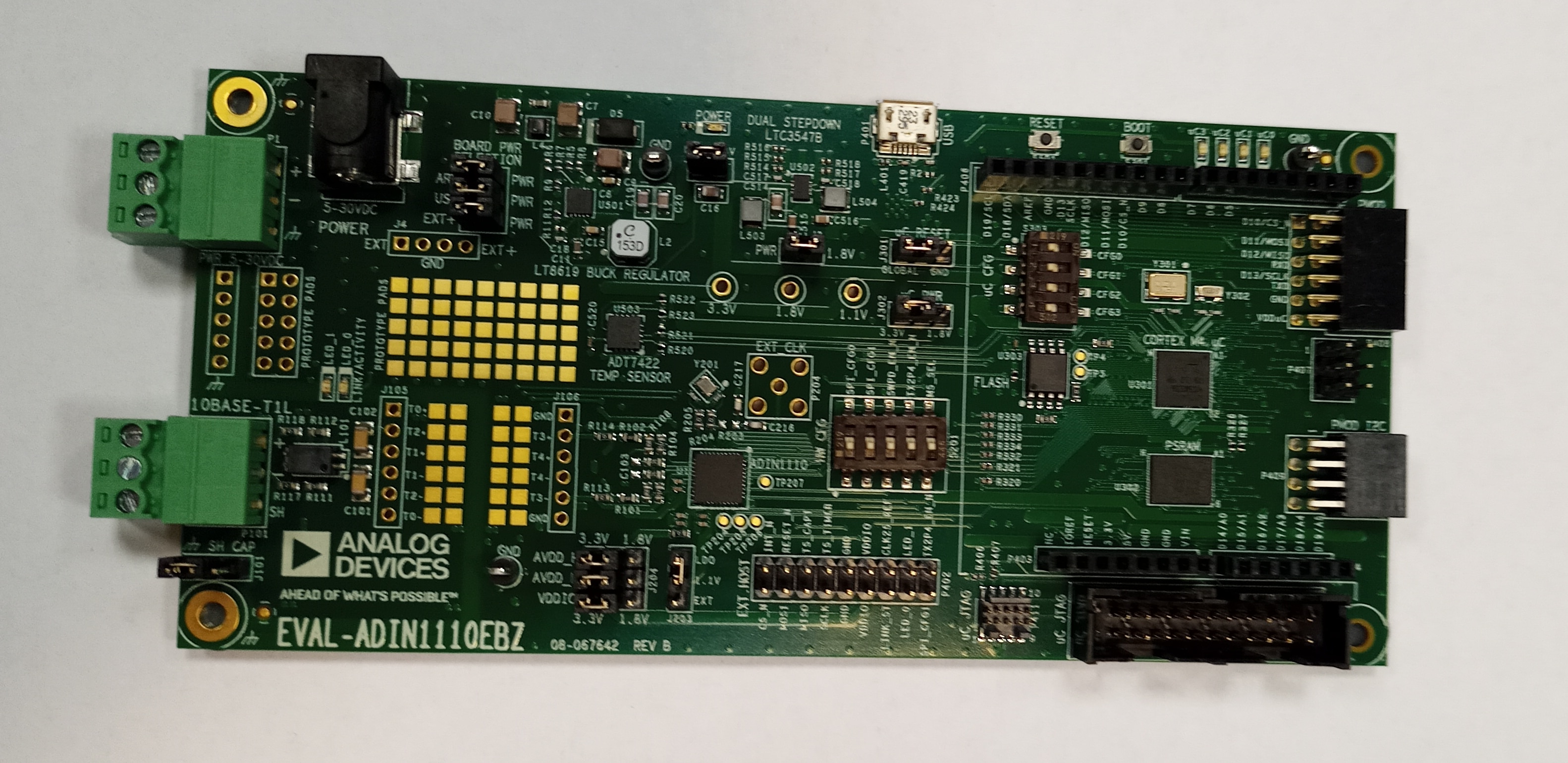
ADIN1110 evaluation board looks like below:
| {gallery}ADIN1110_eval |
|---|
|

|
|
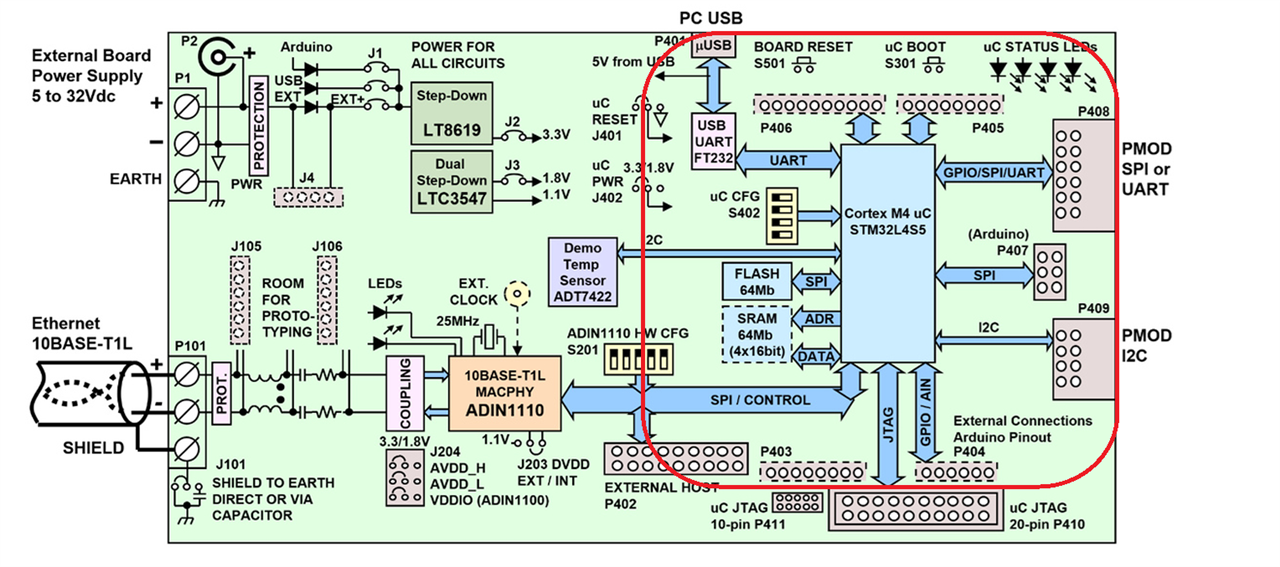
ADIN1110 evaluation kit can be described as kind of superset of CN0575 Raspberry PI SPE shield (save PoDL circuit), where SPE MAC connects to STM32L4S5 MCU, which can serve as independent network node with hardware encryption offload and even Arduino UNO compatible header:
IEC 63171-6 to terminal block adapter
As both types of ADIN evaluation boards terminate SPE link on terminal blocks, IEC63171-6 (didn't find more user-friendly name for this connector) to terminal block adapter was prepared. As veluv01 already shown, IP20 connectors can be easily installed on standard universal PCB, so adapter construction was very easy:
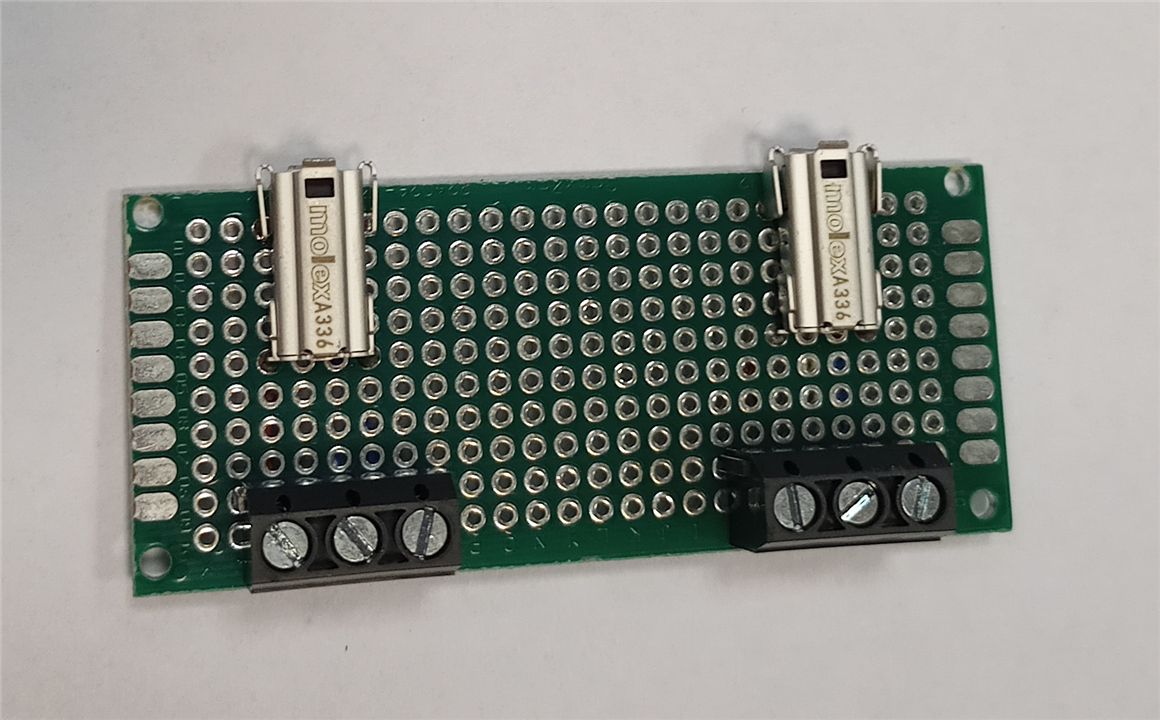
and with cable connected

Medium range loop test
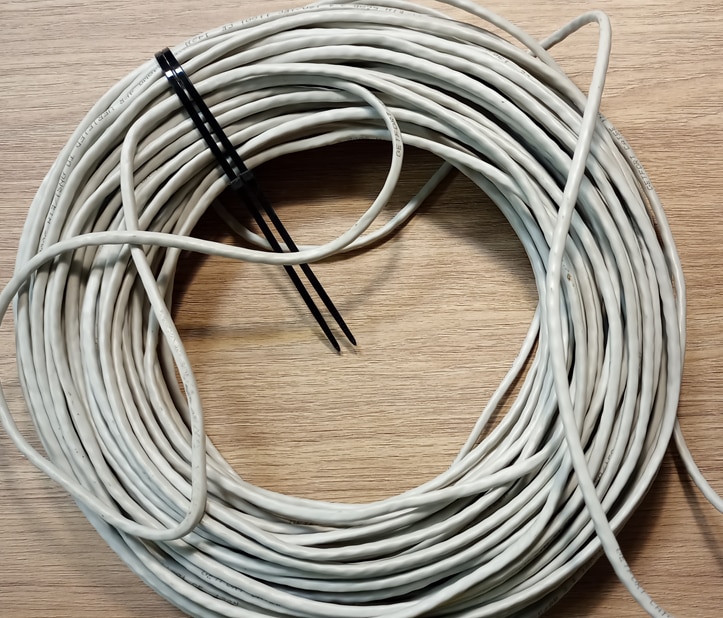
Our first test will be if 48m of CAT5E CCE (copper clad aluminum - very inexpensive one) AWG 24 cable - shown below - can be used for reliable communication using two ADIN1100 evaluation boards in default configuration (working as media converter)
In the default configuration, ADIN1100 evaluation board works as media converter between 10BASE-1TL and 10BASE-T links, and can be powered either by USB or dedicated power supply with voltage in 5-32V range.
In such a setup, ADIN1100 and ADIN1200 PHY are connected back-to-back and provide media conversion:

As I now have two of them (E14 team generously decided to let me keep an additional one that was sent in my design kit), I can check if they can reliably operate on medium-length link of cheap and easily avaliable cable in office environment.
Test setup was prepared as in photo below:
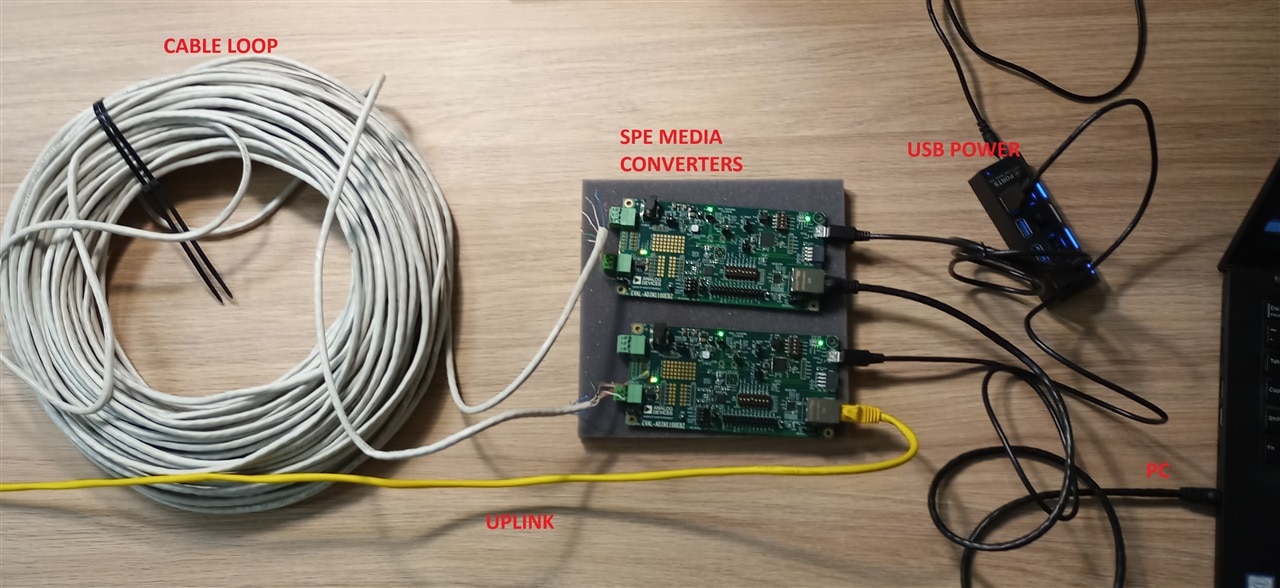
One media converter is connected to the laptop PC, another one to the Ethernet uplink and between them is nearly 50m of (sub)standard Ethernet cable with one pair of four available used for transmission. Both converters are powered using powered USB hub (only power, no data link connected).
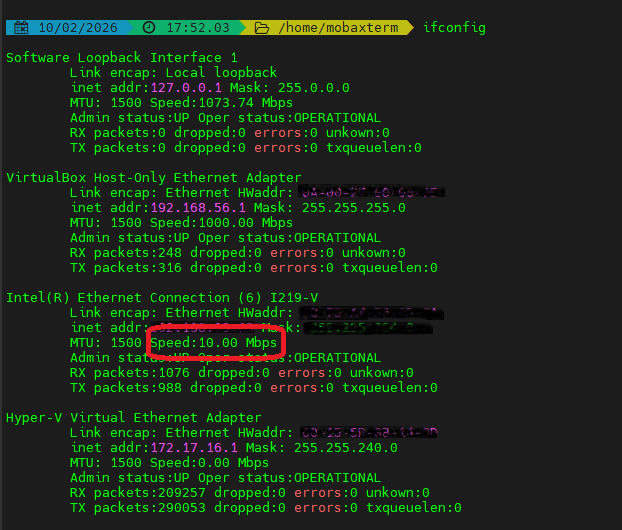
First - autonegotiation was successful and link speed of 10Mb/s correctly set:
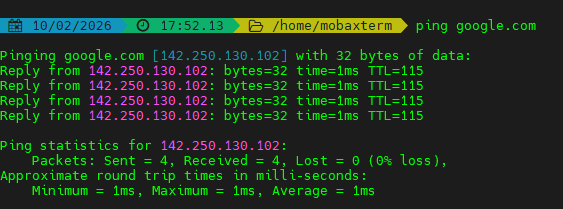
Then, ICMP echo (aka ping  ) test was successful:
then - as quick verification, Internet based bandwidth metering page was tried, assuring us that all the available link bandwidth is present
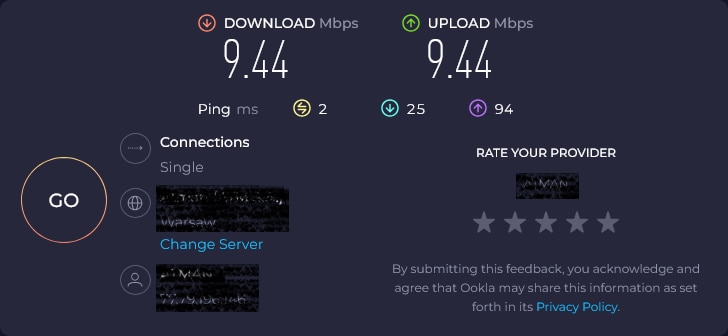
Further tests are planned to more precisely measure link performance but first observations are promising.


