element14 Community
element14 Community
    Register Log In
  • Site
  • Search
  • Log In Register
  • Community Hub
    Community Hub
    • What's New on element14
    • Feedback and Support
    • Benefits of Membership
    • Personal Blogs
    • Members Area
    • Achievement Levels
  • Learn
    Learn
    • Ask an Expert
    • eBooks
    • element14 presents
    • Learning Center
    • Tech Spotlight
    • STEM Academy
    • Webinars, Training and Events
    • Learning Groups
  • Technologies
    Technologies
    • 3D Printing
    • FPGA
    • Industrial Automation
    • Internet of Things
    • Power & Energy
    • Sensors
    • Technology Groups
  • Challenges & Projects
    Challenges & Projects
    • Design Challenges
    • element14 presents Projects
    • Project14
    • Arduino Projects
    • Raspberry Pi Projects
    • Project Groups
  • Products
    Products
    • Arduino
    • Avnet & Tria Boards Community
    • Dev Tools
    • Manufacturers
    • Multicomp Pro
    • Product Groups
    • Raspberry Pi
    • RoadTests & Reviews
  • About Us
    About the element14 Community
  • Store
    Store
    • Visit Your Store
    • Choose another store...
      • Europe
      •  Austria (German)
      •  Belgium (Dutch, French)
      •  Bulgaria (Bulgarian)
      •  Czech Republic (Czech)
      •  Denmark (Danish)
      •  Estonia (Estonian)
      •  Finland (Finnish)
      •  France (French)
      •  Germany (German)
      •  Hungary (Hungarian)
      •  Ireland
      •  Israel
      •  Italy (Italian)
      •  Latvia (Latvian)
      •  
      •  Lithuania (Lithuanian)
      •  Netherlands (Dutch)
      •  Norway (Norwegian)
      •  Poland (Polish)
      •  Portugal (Portuguese)
      •  Romania (Romanian)
      •  Russia (Russian)
      •  Slovakia (Slovak)
      •  Slovenia (Slovenian)
      •  Spain (Spanish)
      •  Sweden (Swedish)
      •  Switzerland(German, French)
      •  Turkey (Turkish)
      •  United Kingdom
      • Asia Pacific
      •  Australia
      •  China
      •  Hong Kong
      •  India
      •  Japan
      •  Korea (Korean)
      •  Malaysia
      •  New Zealand
      •  Philippines
      •  Singapore
      •  Taiwan
      •  Thailand (Thai)
      •  Vietnam
      • Americas
      •  Brazil (Portuguese)
      •  Canada
      •  Mexico (Spanish)
      •  United States
      Can't find the country/region you're looking for? Visit our export site or find a local distributor.
  • Translate
  • Profile
  • Settings
Experimenting with Single Pair Ethernet
  • Challenges & Projects
  • Design Challenges
  • Experimenting with Single Pair Ethernet
  • More
  • Cancel
Experimenting with Single Pair Ethernet
Forum "waterproof" enclosure
  • News
  • Projects
  • Forum
  • DC
  • Leaderboard
  • Files
  • Members
  • More
  • Cancel
  • New
Join Experimenting with Single Pair Ethernet to participate - click to join for free!
Actions
  • Share
  • More
  • Cancel
Forum Thread Details
  • Replies 6 replies
  • Subscribers 31 subscribers
  • Views 105 views
  • Users 0 members are here
  • raspberry pi 4
  • experimenting with single pair ethernet
  • CN0575
Related

"waterproof" enclosure

JWx
JWx 5 days ago

Enclosure selection

As an enclosure for Raspberry PI, Kradex Z74 with transparent lid was selected. As can be seen, Raspberry PI with CN-0575 SPE shield occupies about half of it, giving some space for additional components
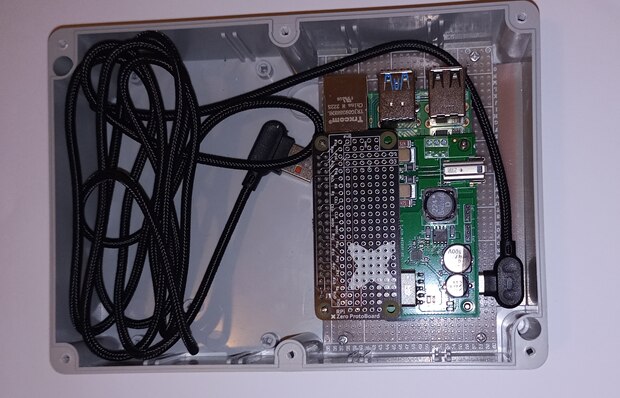
image

Enclosure itself - rated for IP65 (so it is protected from dust ingress and from water jets from any direction, but not for water immersion), has foam-roll gasket between the main part and the lid that should be trimmed and self-installed from the provided length
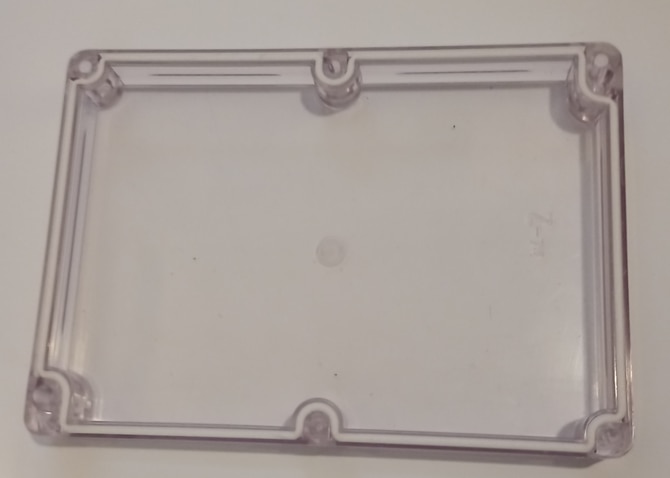
image

Raspberry Pi itself was screwed into section of PCB cut-out to the shape of enclosure floor, boards connected using 2.5mm spacers and screws - RPI has mounting holes of 2.7mm diameter, so more common 3mm spacers cannot be used.
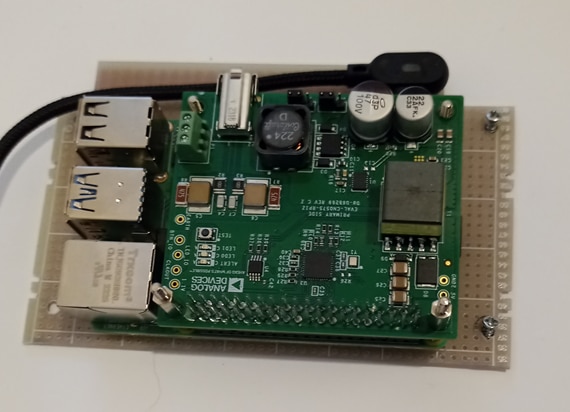
image

 Immersion test

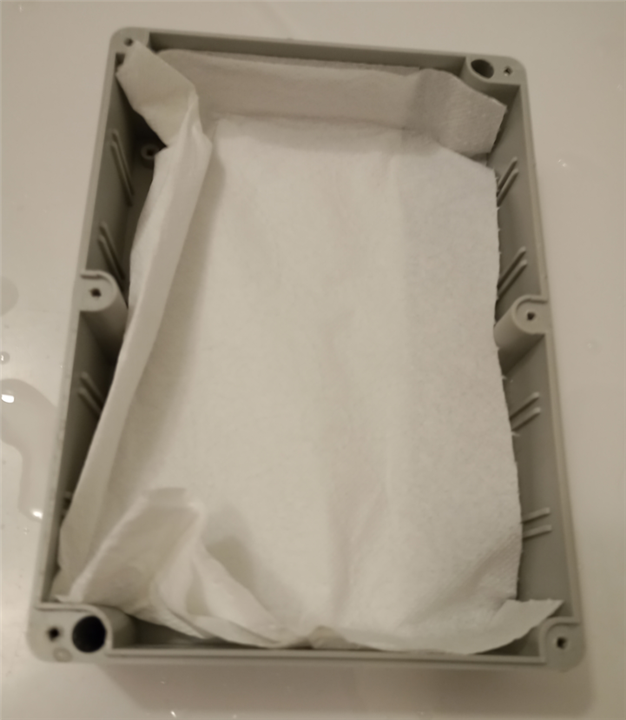
As this enclosure was a part of my research set from Extreme Environment challenges, let's test it Extreme Env way - never mind the formal rating, drop it into the water (with paper towel inserted to quickly identify water leaks)!

You don't have permission to edit metadata of this video.
Edit media
x
image
Upload Preview
image

And? No excessive bubbling, no water identifiable on the paper towel - success! This enclosure survived short-term water immersion - more tests will be executed as the project advances.
image

  • Sign in to reply
  • Cancel

Top Replies

  • vmate
    vmate 4 days ago +2
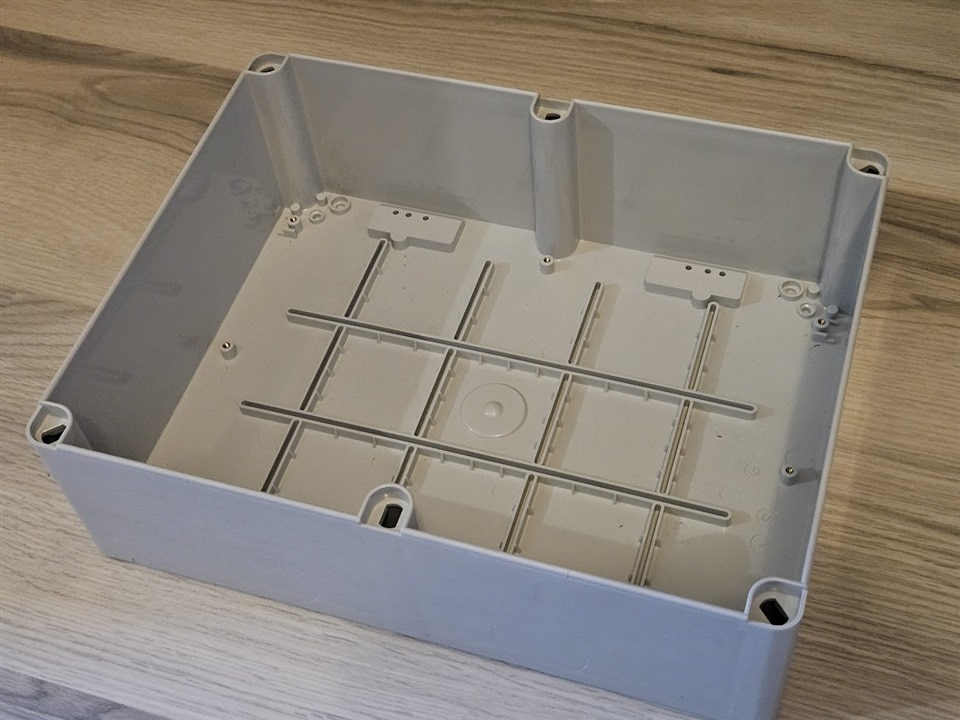
    Oh nice, we ended up with similar boxes then, except mine's a bit larger.
  • JWx
    JWx 4 days ago in reply to vmate +1
    Interesting one - especially this rail system at the bottom, would make PCB placement easier...
  • vmate
    vmate 4 days ago in reply to JWx +1
    I couldn't figure out how it's supposed to be used though, there's no way to get something to stay in the rail, so I just used some of those melt-in thread things typically used for 3D prints, you can…
  • vmate
    vmate 4 days ago

    Oh nice, we ended up with similar boxes then, except mine's a bit larger.

    image

    • Cancel
    • Vote Up +2 Vote Down
    • Sign in to reply
    • Cancel
  • JWx
    JWx 4 days ago in reply to vmate

    Interesting one - especially this rail system at the bottom, would make PCB placement easier...

    • Cancel
    • Vote Up +1 Vote Down
    • Sign in to reply
    • Cancel
  • vmate
    vmate 4 days ago in reply to JWx

    I couldn't figure out how it's supposed to be used though, there's no way to get something to stay in the rail, so I just used some of those melt-in thread things typically used for 3D prints, you can see them in some of the holes.

    • Cancel
    • Vote Up +1 Vote Down
    • Sign in to reply
    • Cancel
  • JWx
    JWx 4 days ago in reply to vmate

    I think with the screw with wide thread (don't know correct English word) - something like screw for wood/metal sheets, thread will lock itself in the rail and hold (if PCB is not too heavy and sudden movement/vibrations are limited) 

    • Cancel
    • Vote Up 0 Vote Down
    • Sign in to reply
    • Cancel
  • kmikemoo
    kmikemoo 3 days ago in reply to JWx

     JWx I think you are correct.  In the US, we would say "coarse thread" (opposite 'fine thread').  The gap looks similar in size to the threaded inserts for the backing plate.  I can see using them if I just wanted to mount one DIN rail.

    • Cancel
    • Vote Up +1 Vote Down
    • Sign in to reply
    • Cancel
  • JWx
    JWx 3 days ago in reply to kmikemoo

    Thanks  kmikemoo ! Very interesting information - I think I have one enclosure with such a mounting system, so I had a chance to try to fix a PCB to it, but (if I remember correctly) this one has poorly fitted rubber caps covering (many) cable openings so it is only nominally IP65... 

    • Cancel
    • Vote Up 0 Vote Down
    • Sign in to reply
    • Cancel
element14 Community

element14 is the first online community specifically for engineers. Connect with your peers and get expert answers to your questions.

  • Members
  • Learn
  • Technologies
  • Challenges & Projects
  • Products
  • Store
  • About Us
  • Feedback & Support
  • FAQs
  • Terms of Use
  • Privacy Policy
  • Legal and Copyright Notices
  • Sitemap
  • Cookies

An Avnet Company © 2026 Premier Farnell Limited. All Rights Reserved.

Premier Farnell Ltd, registered in England and Wales (no 00876412), registered office: Farnell House, Forge Lane, Leeds LS12 2NE.

ICP 备案号 10220084.

Follow element14

  • X
  • Facebook
  • linkedin
  • YouTube