element14 Community
element14 Community
    Register Log In
  • Site
  • Search
  • Log In Register
  • Community Hub
    Community Hub
    • What's New on element14
    • Feedback and Support
    • Benefits of Membership
    • Personal Blogs
    • Members Area
    • Achievement Levels
  • Learn
    Learn
    • Ask an Expert
    • eBooks
    • element14 presents
    • Learning Center
    • Tech Spotlight
    • STEM Academy
    • Webinars, Training and Events
    • Learning Groups
  • Technologies
    Technologies
    • 3D Printing
    • FPGA
    • Industrial Automation
    • Internet of Things
    • Power & Energy
    • Sensors
    • Technology Groups
  • Challenges & Projects
    Challenges & Projects
    • Design Challenges
    • element14 presents Projects
    • Project14
    • Arduino Projects
    • Raspberry Pi Projects
    • Project Groups
  • Products
    Products
    • Arduino
    • Avnet & Tria Boards Community
    • Dev Tools
    • Manufacturers
    • Multicomp Pro
    • Product Groups
    • Raspberry Pi
    • RoadTests & Reviews
  • About Us
    About the element14 Community
  • Store
    Store
    • Visit Your Store
    • Choose another store...
      • Europe
      •  Austria (German)
      •  Belgium (Dutch, French)
      •  Bulgaria (Bulgarian)
      •  Czech Republic (Czech)
      •  Denmark (Danish)
      •  Estonia (Estonian)
      •  Finland (Finnish)
      •  France (French)
      •  Germany (German)
      •  Hungary (Hungarian)
      •  Ireland
      •  Israel
      •  Italy (Italian)
      •  Latvia (Latvian)
      •  
      •  Lithuania (Lithuanian)
      •  Netherlands (Dutch)
      •  Norway (Norwegian)
      •  Poland (Polish)
      •  Portugal (Portuguese)
      •  Romania (Romanian)
      •  Russia (Russian)
      •  Slovakia (Slovak)
      •  Slovenia (Slovenian)
      •  Spain (Spanish)
      •  Sweden (Swedish)
      •  Switzerland(German, French)
      •  Turkey (Turkish)
      •  United Kingdom
      • Asia Pacific
      •  Australia
      •  China
      •  Hong Kong
      •  India
      •  Japan
      •  Korea (Korean)
      •  Malaysia
      •  New Zealand
      •  Philippines
      •  Singapore
      •  Taiwan
      •  Thailand (Thai)
      •  Vietnam
      • Americas
      •  Brazil (Portuguese)
      •  Canada
      •  Mexico (Spanish)
      •  United States
      Can't find the country/region you're looking for? Visit our export site or find a local distributor.
  • Translate
  • Profile
  • Settings
In the Air Design Challenge
  • Challenges & Projects
  • Design Challenges
  • In the Air Design Challenge
  • More
  • Cancel
In the Air Design Challenge
Blog In the Air Design Challenge - Pollen & Allergen Sensing – Post 1 (Pollen Sensor)
  • Blog
  • Forum
  • Documents
  • Polls
  • Files
  • Events
  • Mentions
  • Sub-Groups
  • Tags
  • More
  • Cancel
  • New
  • Share
  • More
  • Cancel
Group Actions
  • Group RSS
  • More
  • Cancel
Engagement
  • Author Author: tomaja
  • Date Created: 3 Nov 2014 11:18 PM Date Created
  • Views 5441 views
  • Likes 2 likes
  • Comments 37 comments
  • iot_pollen
  • in_the_air
Related
Recommended

In the Air Design Challenge - Pollen & Allergen Sensing – Post 1 (Pollen Sensor)

tomaja
tomaja
3 Nov 2014

Previous posts:

In the Air Design Challenge - Pollen & Allergen Sensing
 

image

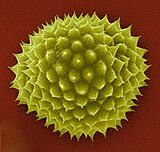
Figure 1. Bad guy (Ambrosia pollen grain)


As I’m still waiting for my challenge kit I’m using the time to consider pollen sensing since that might be the weakest point of my project.


Possibilities

At this moment I have two alternatives for pollen sensor: Homemade and commercial one.

Using commercial one would make my project much easier and the focus would be on making some nice apps for desktop and mobile but with homemade sensor most efforts would be on making the sensor do its thing...


1) Homemade pollen sensor

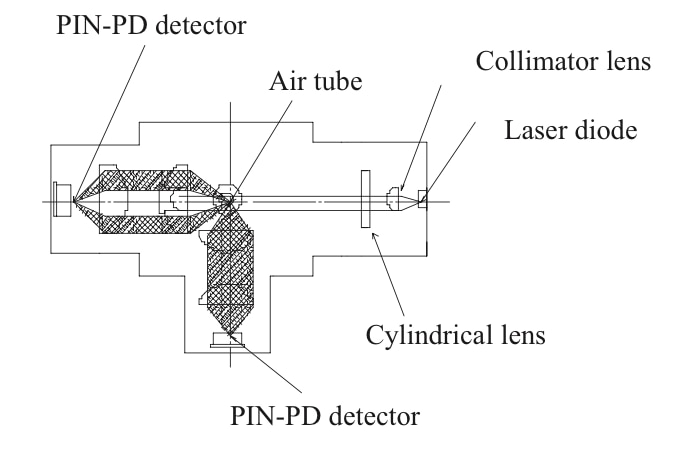
As my plan is to detect pollen, I did some research and discovered a paper on pollen sensing that proposes an idea which seems feasible (Shigeto Kawashima et al. - An algorithm and a device for counting airborne pollen automatically using laser optics).

This task would require very much hard work and could easily turn out to be a failure but I can still try. Some optics would be required - hopefully I will be able to obtain all the necessary parts to build the prototype.
image

Figure 2. Pollen sensor


Authors propose that red laser should be used but I think that maybe green or yellow laser would be more appropriate because pollen colour is usually the same (i.e. it reflects green or yellow). I bought the green (532nm) one locally to be used for this purpose.

In order to observe the photodiode sensor signals an oscilloscope is required so I decided to order one that fits in the budget (PicoScope 2204A). It arrived in just two days(!) and as I last used the oscilloscope ~15 years ago (at university) I spend some time testing it – It turned out it’s like riding a bike image


2) Commercial sensor

Now some bad news regarding the commercial pollen sensor… The one that I found (http://www.shinyei.co.jp/stc/optical/poln/main_poln_e.html) is not suitable for my location.

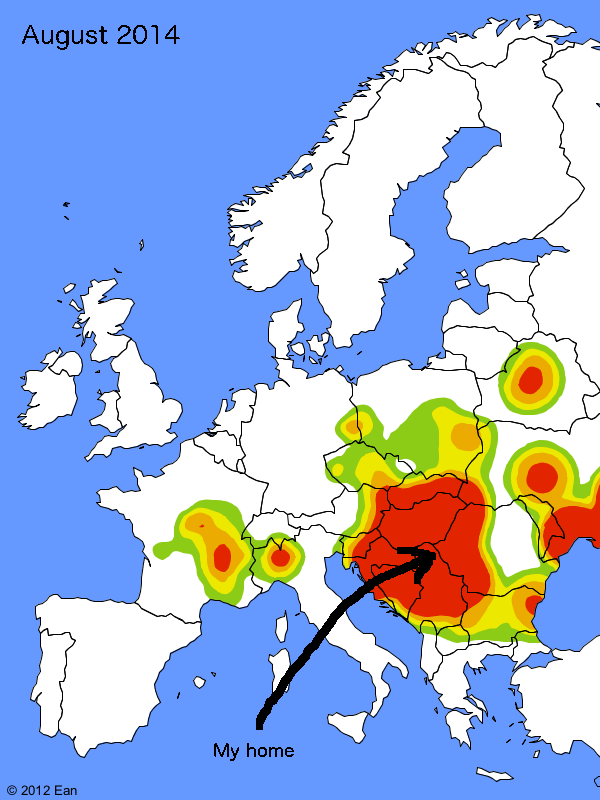
It only detects Japanese Cedar and Cypress but these pollen particles are bigger than those of Ragweed (which is the most common allergen in this part of Europe). This is not completely bad news as someone in Japan might find this project useful even with this sensor but for me that's probably not good enough.

Ragweed pollen presence in Europe:
image

Figure 3. Ragweed pollen presence in Europe (August 2014)


Conclusion

In short, I will most probably focus my work on homemade pollen detection. image


I will update as soon as my challenge kit arrives (at this moment it’s being held at the local customs)

Comments and suggestions are always welcome.


Dragan

  • Sign in to reply

Top Comments

  • dougw
    dougw over 11 years ago +1
    Interesting project Dragan, Maybe it would be useful to investigate commercial sensors. I would be interested in knowing how well inexpensive airborne particle sensors can detect ragweed pollen, if this…
  • mcb1
    mcb1 over 11 years ago in reply to dougw +1
    Nice links Douglas. Presumably you would filter in order to capture what you want, but it might be hard targeting specific types of pollen. It would certainly be an interesting exercise to filter out just…
  • fvan
    fvan over 11 years ago in reply to dougw +1
    I purchased a pair of those SHARP sensors for my application last week. Will post my findings as soon as I get to experiment with them.
  • tomaja
    tomaja over 11 years ago in reply to michaelwylie

    Thanks, unfortunately no, none of my friends have a CNC access that I'm aware of. (I read your Chinese 3D printer review, I don't have access to even such one image)

    That article you found states that blue light source makes a good choice for excitation. I could buy something like [this] and use the included glasses to make a filter for the detector PD and, as you suggested, avoid that tube bending.

    EDIT: No, I will have to use proper filter, these glasses will filter out the green light too.

    • Cancel
    • Vote Up 0 Vote Down
    • Sign in to reply
    • More
    • Cancel
  • michaelwylie
    michaelwylie over 11 years ago in reply to tomaja

    I think you should give it a shot, experiment a little like you are planning. Part of the process is learning, so learn and then let us know how it goes. I think if you can get the body done and the optics sorted you'll end up with a response. It might not be a great response, but you'll get something. Unless you've got some friends, machining is usually EXPENSIVE, especially for a single piece. I think you are correct to explore the 3D printing option. The price will depend on the size and tolerance of your sensor body.


    Have any friends at the local university or any friends who work with CNC?

    • Cancel
    • Vote Up 0 Vote Down
    • Sign in to reply
    • More
    • Cancel
  • tomaja
    tomaja over 11 years ago in reply to michaelwylie

    Thanks again Mike!

    I was thinking that I should use white LEDs so that I don't have to check what wavelength causes most luminance (because I don't know how could I manage that without proper resources).


    As an alternative to white LEDs, I guess I could try with a couple of different monochromatic light sources like laser diodes (one by one) and try to repeat same conditions and measure the light intensity radiated by the pollen grains for each tested source (or try to find some research results on that topic).

    Then I could use the one that caused most luminance and try different PDs to find the peak luminance wavelength. What do you say?

    EDIT: Your link from yesterday provides results I can use for PD selection.


    As for the sensor body, I was thinking about using some 3D printing service (I don't have access to 3D printer or CNC machine locally). But I'm still far from having any real design ready, still just thinking about possibilities. One thing I know is that I will somehow have to make the inner surface smooth if I want to use 3D printed body.


    I really appreciate your comments, I will have to give special credits to you if this project ends up successful image


    Thanks,

    Dragan

    • Cancel
    • Vote Up 0 Vote Down
    • Sign in to reply
    • More
    • Cancel
  • tomaja
    tomaja over 11 years ago in reply to shabaz

    Thank you for your kind offer shabaz!

    Yes, Mike is certainly an expert, he helps a lot with his comments and suggestions.

    • Cancel
    • Vote Up 0 Vote Down
    • Sign in to reply
    • More
    • Cancel
  • DAB
    DAB over 11 years ago

    Hi Dagan


    I saw a post somewhere, not on Element 14, where someone took an image sensor, pulled the lens off and then used it to directly measure the size of small objects using the number of pixels that the object covered.

    I think this might be an inexpensive way for you to detect and count particles as they pass through your system.


    DAB

    • Cancel
    • Vote Up 0 Vote Down
    • Sign in to reply
    • More
    • Cancel
<>
element14 Community

element14 is the first online community specifically for engineers. Connect with your peers and get expert answers to your questions.

  • Members
  • Learn
  • Technologies
  • Challenges & Projects
  • Products
  • Store
  • About Us
  • Feedback & Support
  • FAQs
  • Terms of Use
  • Privacy Policy
  • Legal and Copyright Notices
  • Sitemap
  • Cookies

An Avnet Company © 2026 Premier Farnell Limited. All Rights Reserved.

Premier Farnell Ltd, registered in England and Wales (no 00876412), registered office: Farnell House, Forge Lane, Leeds LS12 2NE.

ICP 备案号 10220084.

Follow element14

  • X
  • Facebook
  • linkedin
  • YouTube