element14 Community
element14 Community
    Register Log In
  • Site
  • Search
  • Log In Register
  • Community Hub
    Community Hub
    • What's New on element14
    • Feedback and Support
    • Benefits of Membership
    • Personal Blogs
    • Members Area
    • Achievement Levels
  • Learn
    Learn
    • Ask an Expert
    • eBooks
    • element14 presents
    • Learning Center
    • Tech Spotlight
    • STEM Academy
    • Webinars, Training and Events
    • Learning Groups
  • Technologies
    Technologies
    • 3D Printing
    • FPGA
    • Industrial Automation
    • Internet of Things
    • Power & Energy
    • Sensors
    • Technology Groups
  • Challenges & Projects
    Challenges & Projects
    • Design Challenges
    • element14 presents Projects
    • Project14
    • Arduino Projects
    • Raspberry Pi Projects
    • Project Groups
  • Products
    Products
    • Arduino
    • Avnet & Tria Boards Community
    • Dev Tools
    • Manufacturers
    • Multicomp Pro
    • Product Groups
    • Raspberry Pi
    • RoadTests & Reviews
  • About Us
  • Store
    Store
    • Visit Your Store
    • Choose another store...
      • Europe
      •  Austria (German)
      •  Belgium (Dutch, French)
      •  Bulgaria (Bulgarian)
      •  Czech Republic (Czech)
      •  Denmark (Danish)
      •  Estonia (Estonian)
      •  Finland (Finnish)
      •  France (French)
      •  Germany (German)
      •  Hungary (Hungarian)
      •  Ireland
      •  Israel
      •  Italy (Italian)
      •  Latvia (Latvian)
      •  
      •  Lithuania (Lithuanian)
      •  Netherlands (Dutch)
      •  Norway (Norwegian)
      •  Poland (Polish)
      •  Portugal (Portuguese)
      •  Romania (Romanian)
      •  Russia (Russian)
      •  Slovakia (Slovak)
      •  Slovenia (Slovenian)
      •  Spain (Spanish)
      •  Sweden (Swedish)
      •  Switzerland(German, French)
      •  Turkey (Turkish)
      •  United Kingdom
      • Asia Pacific
      •  Australia
      •  China
      •  Hong Kong
      •  India
      • Japan
      •  Korea (Korean)
      •  Malaysia
      •  New Zealand
      •  Philippines
      •  Singapore
      •  Taiwan
      •  Thailand (Thai)
      • Vietnam
      • Americas
      •  Brazil (Portuguese)
      •  Canada
      •  Mexico (Spanish)
      •  United States
      Can't find the country/region you're looking for? Visit our export site or find a local distributor.
  • Translate
  • Profile
  • Settings
Sci Fi Your Pi
  • Challenges & Projects
  • Design Challenges
  • Sci Fi Your Pi
  • More
  • Cancel
Sci Fi Your Pi
Blog Meditech: Heart rate sensor (photoplethysmograph) circuit preview
  • Blog
  • Forum
  • Documents
  • Files
  • Mentions
  • Sub-Groups
  • Tags
  • More
  • Cancel
  • New
  • Share
  • More
  • Cancel
Group Actions
  • Group RSS
  • More
  • Cancel
Engagement
  • Author Author: balearicdynamics
  • Date Created: 15 Jun 2015 8:20 AM Date Created
  • Views 498 views
  • Likes 3 likes
  • Comments 4 comments
  • heart_frequency
  • meditech_project
  • infrared_sensor
  • medical_devices
  • bitscope
  • phototransistor
  • heart_rate_monitor
  • sci_fi_your_pi
  • heart-beat
  • sensor
Related
Recommended

Meditech: Heart rate sensor (photoplethysmograph) circuit preview

balearicdynamics
balearicdynamics
15 Jun 2015

Introduction

One of the hearth controls is the hearth rate sensor, based or plethysmograph. In our specific case this probe is based on the light transmission so the version is a PPT, or photoplethysmograph.

The general principle is to measure a light source transmitted through a human body tissue: the change of the transmitted light varies synchronized with the heart pulses. This probe will be used in conjunction with the blood pressure analysis to take a more complete blood status checking.


Main components


Sensor

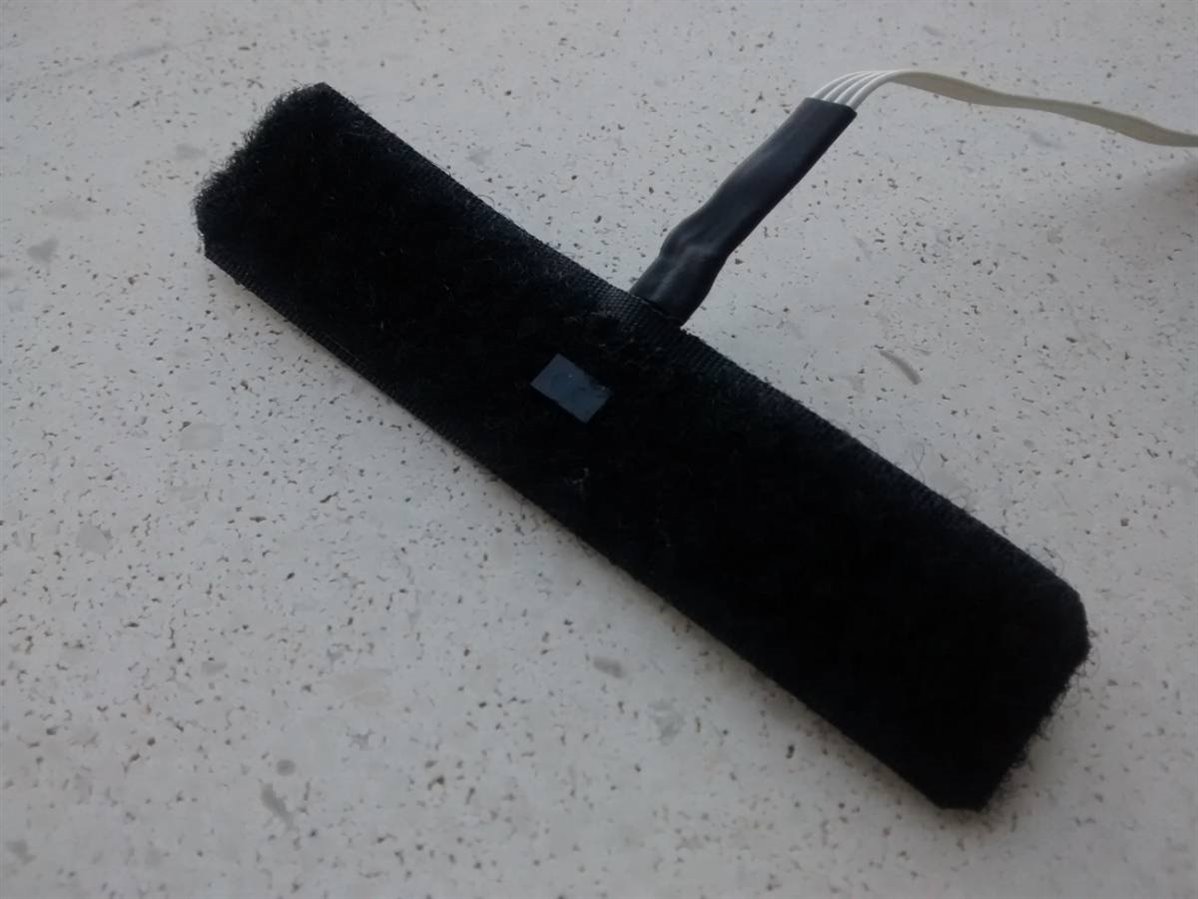
After several tests the choice for the adopted sensor has been oriented to the IR component TCRT1000 reflective optical sensor ( see the attached data sheet) for photoplethysmography (and other non-biomedical applications). It has the advantage of working at 3.3V in the IR range at a fixed wavelenght of 950nm that has a good tissue penetration with very low influence from the external visible light; in fact direct light exposition of the sensor reduces the detection contrast and can create serious problems in the detection but in this specific application the sensor reflection is read with the transmitter-reflecting surface directly connected to the human body tissue surface so this problem does not exist. So, despite this low cost device is declared for non-specific medical applications it has demonstrated to work fine in a very stable way.
 

image

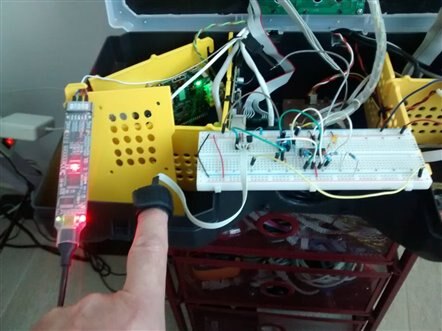
The test version of the sensor has been included in a velcro strip that should be closed around (better) the finger index of the patient. The prototype version will provide a more comfortable support for the base always following this principle.


Signal processing

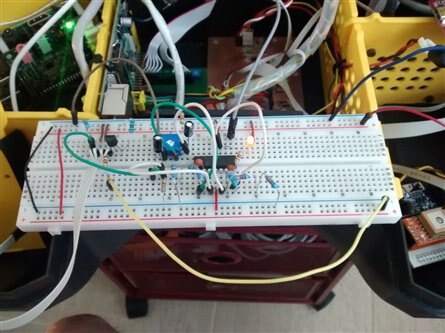
Inspired by some solutions explained on Electronic Projects Focus the following images shows the test preview circuit where using a generic four OP Amp MCP6004 (see the attached data sheet) the sensor signal is filtered by the noise, isolating and amplifying the beat frequency only so it can be detected as a digital level change.


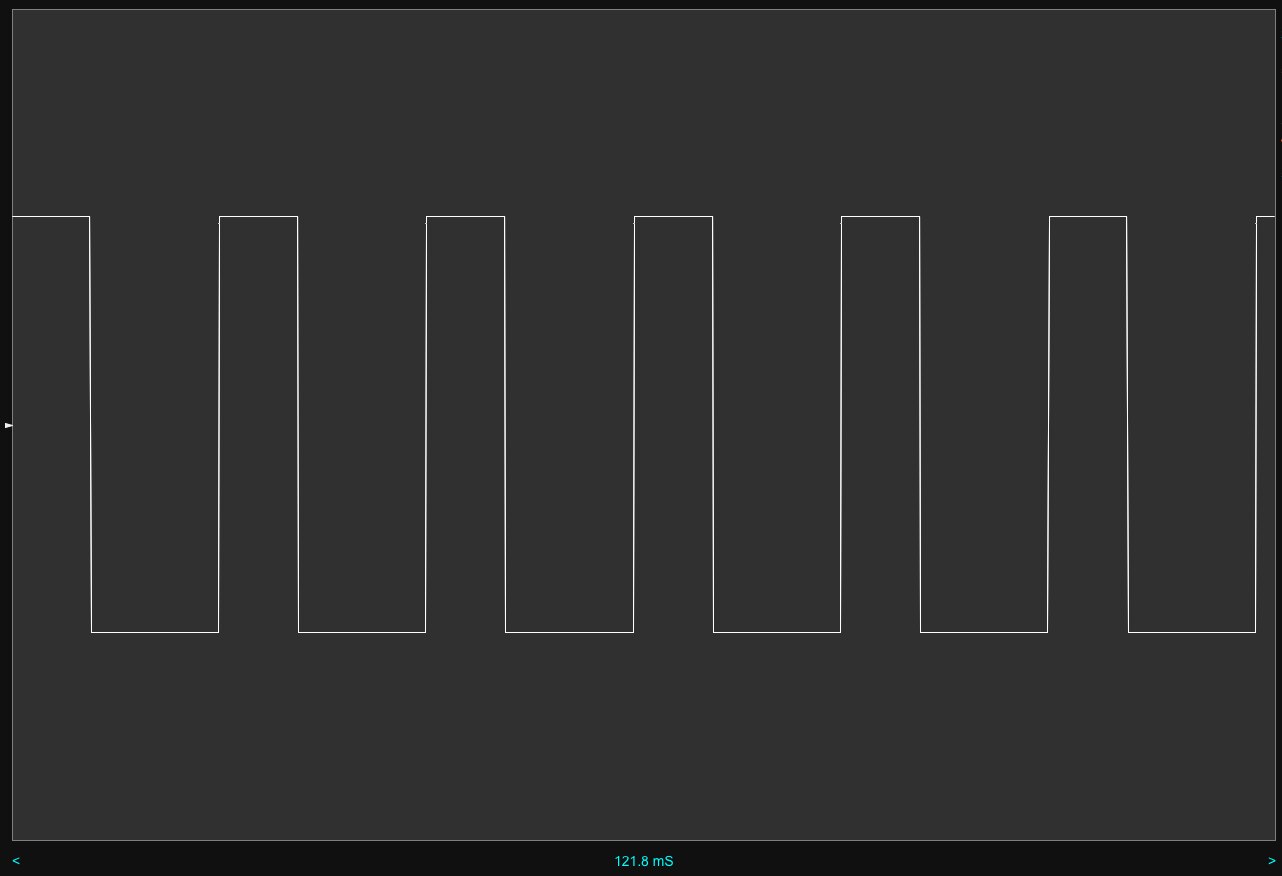
The signals are filtered and amplified through two stages: a low-pass and a high-pass filter isolating and amplifying the value. The final resulting signal is then post-processed for Meditech by the BitScope device (uses a one of the 8 logic channels).


The output from the low-pass filter is sent to the high-pass filter through a 5K trimmer for the final tuning of the signal before the last amplification stage.
image

The heartbeat frequency detection (in the image above has been detected with the BitScope meter application) demonstrated to be very stable and reliable for the usage.


Circuit preview

The following images and video shows a breadboard testing circuit preview of the probe.
imageimage

You don't have permission to edit metadata of this video.
Edit media
x
image
Upload Preview
image


Attachments:
imageTCRT1000.pdf
imageTCRT1000-TechnicalDocumentation.pdf
imageMPC6004.pdf
  • Sign in to reply

Top Comments

  • mcb1
    mcb1 over 10 years ago +1
    I see a breadboard with real components and things that don;t need code in them to run.... It's looking good. Mark
  • balearicdynamics
    balearicdynamics over 10 years ago in reply to mcb1 +1
    Ha Anyway don't think I can stay too quite. this stage is the prototype building in the - almost - final aspect. Then I have to organise and structure all the software. In this case for example, the oscilloscope…
Parents
  • mcb1
    mcb1 over 10 years ago

    I see a breadboard with real components and things that don;t need code in them to run....


    It's looking good.


    Mark

    • Cancel
    • Vote Up +1 Vote Down
    • Sign in to reply
    • More
    • Cancel
  • balearicdynamics
    balearicdynamics over 10 years ago in reply to mcb1

    Mark! I have not understood image


    Is good or bad ?


    Enrico

    • Cancel
    • Vote Up 0 Vote Down
    • Sign in to reply
    • More
    • Cancel
  • mcb1
    mcb1 over 10 years ago in reply to balearicdynamics

    Good ...

    • Cancel
    • Vote Up 0 Vote Down
    • Sign in to reply
    • More
    • Cancel
  • balearicdynamics
    balearicdynamics over 10 years ago in reply to mcb1

    Ha image


    Anyway don't think I can stay too quite. this stage is the prototype building in the - almost - final aspect. Then I have to organise and structure all the software. In this case for example, the oscilloscope program is sufficient but the heart beat (and other probes) will use the BitScope hardware with custom software based on their libraries, aiming to get the same results but with the right interpretation so I expect this next stage as a not simple passage.


    Enrico

    • Cancel
    • Vote Up +1 Vote Down
    • Sign in to reply
    • More
    • Cancel
Comment
  • balearicdynamics
    balearicdynamics over 10 years ago in reply to mcb1

    Ha image


    Anyway don't think I can stay too quite. this stage is the prototype building in the - almost - final aspect. Then I have to organise and structure all the software. In this case for example, the oscilloscope program is sufficient but the heart beat (and other probes) will use the BitScope hardware with custom software based on their libraries, aiming to get the same results but with the right interpretation so I expect this next stage as a not simple passage.


    Enrico

    • Cancel
    • Vote Up +1 Vote Down
    • Sign in to reply
    • More
    • Cancel
Children
No Data
element14 Community

element14 is the first online community specifically for engineers. Connect with your peers and get expert answers to your questions.

  • Members
  • Learn
  • Technologies
  • Challenges & Projects
  • Products
  • Store
  • About Us
  • Feedback & Support
  • FAQs
  • Terms of Use
  • Privacy Policy
  • Legal and Copyright Notices
  • Sitemap
  • Cookies

An Avnet Company © 2025 Premier Farnell Limited. All Rights Reserved.

Premier Farnell Ltd, registered in England and Wales (no 00876412), registered office: Farnell House, Forge Lane, Leeds LS12 2NE.

ICP 备案号 10220084.

Follow element14

  • X
  • Facebook
  • linkedin
  • YouTube