element14 Community
element14 Community
    Register Log In
  • Site
  • Search
  • Log In Register
  • Community Hub
    Community Hub
    • What's New on element14
    • Feedback and Support
    • Benefits of Membership
    • Personal Blogs
    • Members Area
    • Achievement Levels
  • Learn
    Learn
    • Ask an Expert
    • eBooks
    • element14 presents
    • Learning Center
    • Tech Spotlight
    • STEM Academy
    • Webinars, Training and Events
    • Learning Groups
  • Technologies
    Technologies
    • 3D Printing
    • FPGA
    • Industrial Automation
    • Internet of Things
    • Power & Energy
    • Sensors
    • Technology Groups
  • Challenges & Projects
    Challenges & Projects
    • Design Challenges
    • element14 presents Projects
    • Project14
    • Arduino Projects
    • Raspberry Pi Projects
    • Project Groups
  • Products
    Products
    • Arduino
    • Avnet & Tria Boards Community
    • Dev Tools
    • Manufacturers
    • Multicomp Pro
    • Product Groups
    • Raspberry Pi
    • RoadTests & Reviews
  • About Us
  • Store
    Store
    • Visit Your Store
    • Choose another store...
      • Europe
      •  Austria (German)
      •  Belgium (Dutch, French)
      •  Bulgaria (Bulgarian)
      •  Czech Republic (Czech)
      •  Denmark (Danish)
      •  Estonia (Estonian)
      •  Finland (Finnish)
      •  France (French)
      •  Germany (German)
      •  Hungary (Hungarian)
      •  Ireland
      •  Israel
      •  Italy (Italian)
      •  Latvia (Latvian)
      •  
      •  Lithuania (Lithuanian)
      •  Netherlands (Dutch)
      •  Norway (Norwegian)
      •  Poland (Polish)
      •  Portugal (Portuguese)
      •  Romania (Romanian)
      •  Russia (Russian)
      •  Slovakia (Slovak)
      •  Slovenia (Slovenian)
      •  Spain (Spanish)
      •  Sweden (Swedish)
      •  Switzerland(German, French)
      •  Turkey (Turkish)
      •  United Kingdom
      • Asia Pacific
      •  Australia
      •  China
      •  Hong Kong
      •  India
      • Japan
      •  Korea (Korean)
      •  Malaysia
      •  New Zealand
      •  Philippines
      •  Singapore
      •  Taiwan
      •  Thailand (Thai)
      • Vietnam
      • Americas
      •  Brazil (Portuguese)
      •  Canada
      •  Mexico (Spanish)
      •  United States
      Can't find the country/region you're looking for? Visit our export site or find a local distributor.
  • Translate
  • Profile
  • Settings
Vertical Farming
  • Challenges & Projects
  • Design Challenges
  • Vertical Farming
  • More
  • Cancel
Vertical Farming
Blog Project: ferris farm post 2
  • Blog
  • Forum
  • Documents
  • Polls
  • Files
  • Events
  • Mentions
  • Sub-Groups
  • Tags
  • More
  • Cancel
  • New
  • Share
  • More
  • Cancel
Group Actions
  • Group RSS
  • More
  • Cancel
Engagement
  • Author Author: shanesissons
  • Date Created: 29 Jul 2015 11:56 AM Date Created
  • Views 1096 views
  • Likes 4 likes
  • Comments 7 comments
  • mechanical_farm
Related
Recommended

Project: ferris farm post 2

shanesissons
shanesissons
29 Jul 2015

I am going to go through my initial design idea in this post and where I am currently at on the design stage


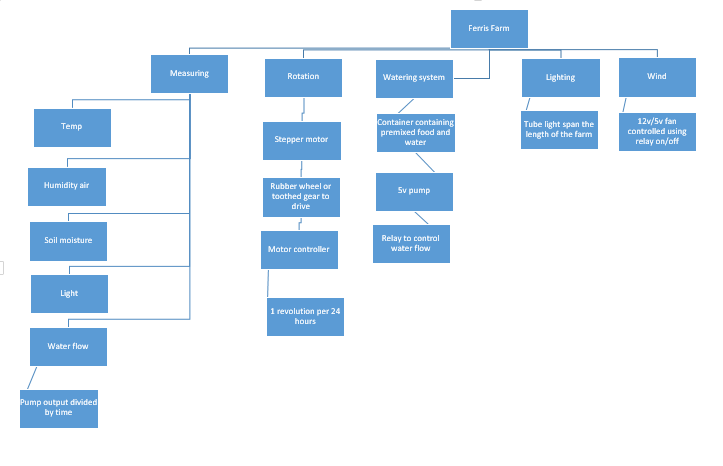
Firstly I made a quick flowchart with the basics of everything i will be adding into the farm and some notes on how it will be used


i like to work from charts or tick lists so that when I start getting parts finished I can mark them off and I can see where I am and what to do next
 

image


image

INITIAL DESIGN


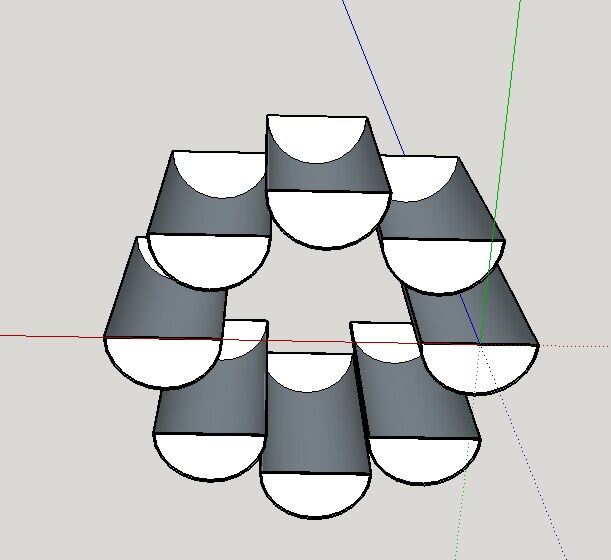
The planters will be made using 112mm diameter pvc pipe (drainpipe)


I decided to go with this because it is designed for outdoor wet use meaning i have not got to worry about light making it brittle as fast as it would some other materials


i have 2 options for closing the ends i can purchase the end caps but this will add more length to the diameter

or i can cut half circle pieces of plastic and attach them into place


these will connect to the frame using plastic or wooden dowels that run the length of the farm

brackets will hold the planters in place while still letting them swing round keeping them horizontal


image


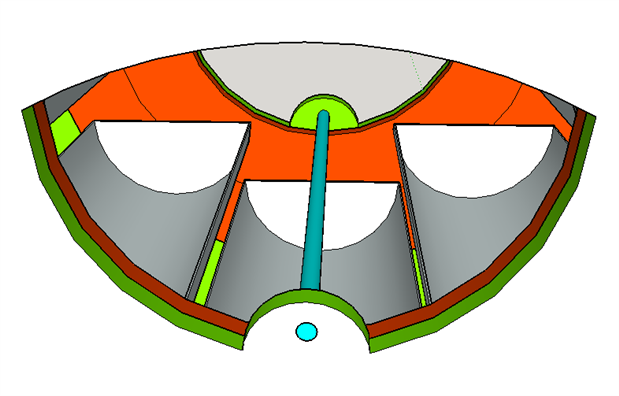
The watering system will water each plant once per cycle


my options for how i will water the plants are


a constant drip system where the water will feed the plants the optimal amount of water each cycle


a on/off cycle where the water will come on for a set amount of time for each planter when it is at the bottom of the farm


the final option is by using a moisture sensor that tests the soil each time it passes at the bottom i could use that data to deliver the optimum amount of water for each planter


the picture to the left shows how the tubing would sit inside the farm the current layout would be closed at one side and water fed through the other i am thinking about feeding the water in through both sides to eliminate one side getting the water and the other not


Here is the rotation mechanism and the outside frameimage
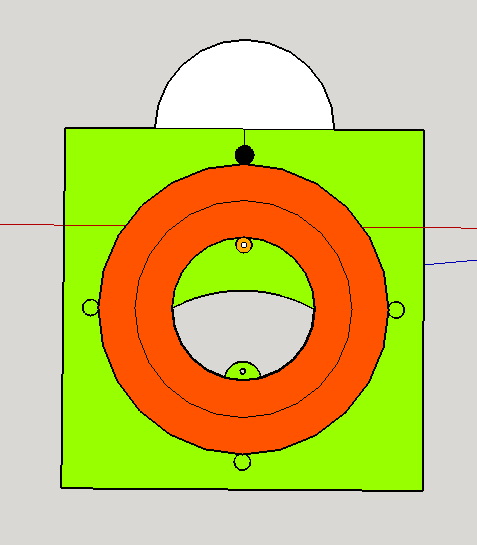

the idea is to use a disk to rotate the planters instead of a solid circle this would use bearings on each side and a stepper motor with a rubber or toothed gear at the top


both sides will have a motor and will turn in sync with each other (i hope other wise i will have alot of soil to clean up )


this way i can use the space in the centre to access the planters for watering and sensor testing


the white area at the top will be for mounting the lighting


i have not looking into what type of lighting to use as of yet but i will be going for a trip to a local shop that will have the know how and the stock to buy


the fan will also be mounted in the centre of the disk i will be using a very small pc fan just enough to create a slight breeze this will help keep the plants healthy
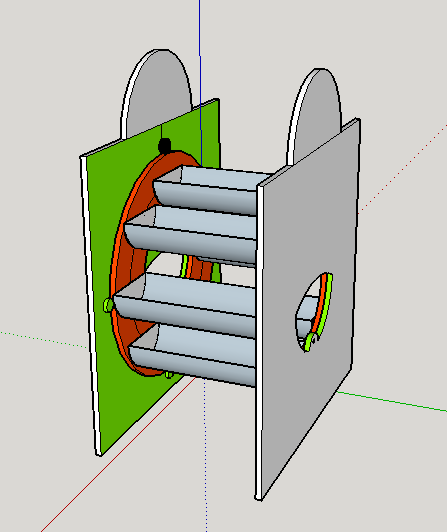


image


Here is a view of the model with all of the parts (it looks narrower than it actually will be)


the electronics will be attached on the outside above the water system and also on the opposite side to the water system the frame will be held together from the top back and bottom with the front and half of the top open to view


this could then have a hinged lid to completely seal the unit from outside light if this was needed


the wiring will run across the bottom to connect the watering system to the the electronics


i feel that it is best to keep electronics and water as far apart as possible just in case spills happen


let me know if there is anything you would like me to cover that i have not gone into detail about and i will make sure i include these in the next post


  • Sign in to reply

Top Comments

  • Former Member
    Former Member over 10 years ago +1
    I like this concept, I have seen it done with a single cooltube light running through the center. Inverted planters so the plants point towards the center of the circle vs outside, means 360* light. Maybe…
  • Former Member
    Former Member over 10 years ago

    I like this concept, I have seen it done with a single cooltube light running through the center. Inverted planters so the plants point towards the center of the circle vs outside, means 360* light. Maybe inside/outside grow, with young plants growing inside 18h light, plants on the outside facing out can be light isolated from the interior. By having two 'zones' you can cycle crops throughout lifespan/light phase & change environmentals independent, increasing planting diversity


    keep in mind that thing will need a high torq motor or gear/chain reduction. You can buy a stepper or servo or use a motor with gear reduction case built in. Alternative, you can build a gearbox with sprockets and chain/belts/pulley. Also, 12v wench motor might be a great solution. Cheap enough @ Harbor Freight, and should have enough torq to spin the wheel. The winch should also have a built-in method for preventing back-drive from the load (mechanical holding). You can power the system with a standard car battery or smaller, and you can charge the batter via solar or hydro/wind. (diy hydro example: https://www.engineeringforchange.org/static/content/Energy/S00070/5%20Gallon%20Bucket%20Build%20Manual.pdf ) Powering from the battery is smart because any motor you choose is going to have to have have good torq, and any motor with good torq draws lots of current. The car battery (12v@50Ah) can handle the current demands and you can scale up the system by connecting more batteries in parallel (12v@100Ah) to power pump's or T5 grow lights. You can also scale the system/sensor voltage by connecting batteries in series (24v@50Ah). Increasing voltage has the positive effect of reducing current draws. Sourcing high current is usually wasteful so reducing system wide current demands is worth considering.


    Thinking about it for a sec. Buy an electric bike motor kit and you will have everything you need. http://electricbikereport.com/electric-bike-direct-drive-geared-hub-motors/

    easy to adapt to your design via the wheel or shaft. Arduino speed control examples available online.


    be sure to have a method for the water to drain from the planters, standing water is not a good thing.


    looking fwd to this build

    • Cancel
    • Vote Up +1 Vote Down
    • Sign in to reply
    • More
    • Cancel
  • shanesissons
    shanesissons over 10 years ago in reply to jw0752

    Hi John,


    That is a great idea i had thought of doing something along those lines.

    My only issue i have is my tolerances of my frame as i am going to be cutting all of my materials by hand there might be some slop.


    In my next post i will cover the electronic components i am going to source with 2 or 3 options for each part.


    Thanks for the idea.


    Shane

    • Cancel
    • Vote Up 0 Vote Down
    • Sign in to reply
    • More
    • Cancel
  • jw0752
    jw0752 over 10 years ago

    Hi Shane,

    You are off to a great start. You could have moisture sensors in each planter and then have wiper brushes make connection to the contact points on the outside of the planter as it rotates into watering position. This would simplify from the mechanism needed to insert a single moisture sensor.

    John

    • Cancel
    • Vote Up 0 Vote Down
    • Sign in to reply
    • More
    • Cancel
  • sftwrngnr
    sftwrngnr over 10 years ago

    Very cool design!

    • Cancel
    • Vote Up 0 Vote Down
    • Sign in to reply
    • More
    • Cancel
  • shanesissons
    shanesissons over 10 years ago in reply to DAB

    Hi DAB

    the scale i am building each planter will be 25cm by 10 cm and would be suitable for small plants i.e. kitchen herbs but could also be used for seedlings


    the plants rotate once per 24 hours and the light will give them light at the top this will simulate the day/night cycle and each plant will get the same amount of light


    the soil moisture will be monitored i am yet to decided how i will go about doing this my current idea is to use a servo/stepper motor to lower a sensor into the soil to test each planter as it comes around to the watering area i would like to have it set up to know the positioning of each planter and to always know the moisture of each planter but i will look into this down the line


    shane

    • Cancel
    • Vote Up 0 Vote Down
    • Sign in to reply
    • More
    • Cancel
>
element14 Community

element14 is the first online community specifically for engineers. Connect with your peers and get expert answers to your questions.

  • Members
  • Learn
  • Technologies
  • Challenges & Projects
  • Products
  • Store
  • About Us
  • Feedback & Support
  • FAQs
  • Terms of Use
  • Privacy Policy
  • Legal and Copyright Notices
  • Sitemap
  • Cookies

An Avnet Company © 2025 Premier Farnell Limited. All Rights Reserved.

Premier Farnell Ltd, registered in England and Wales (no 00876412), registered office: Farnell House, Forge Lane, Leeds LS12 2NE.

ICP 备案号 10220084.

Follow element14

  • X
  • Facebook
  • linkedin
  • YouTube