


The Plant Blog 1: Starting The Plant and First Steps
Hi everybody,
Before I get into the fun stuff, I want to thank Element 14 for giving me, and my team, the opportunity to compete in this competition. I will be writing these blogs and submitting them regularly on the weekend, but every now and then, I might be able to squeeze one or two blogs during the weekday.
Structure of my blogs:
I will structure my blogs based on the problems I ran into with my first system, and show you all the progress of the second version of our aquaponics system; an automated aquaponics system. I will talk you through some aquaponics basics, but it would definitely help if you learned how a system works. If something is unclear in my blog, let me know in the comments, and I will clear it up for you as soon as I can.
The Plant:
The Plant is a project I began earlier this year to try out aquaponics. I've read about aquaponics dozens of times on the internet, and how amazing it is. But, the whole time I was reading these articles, I was wondering: why has aquaponics not picked up as a major method of food production? I did research, built a system, grew a few plants, and maintained a group of thirteen goldfish, and this is what my system turned out to look like:
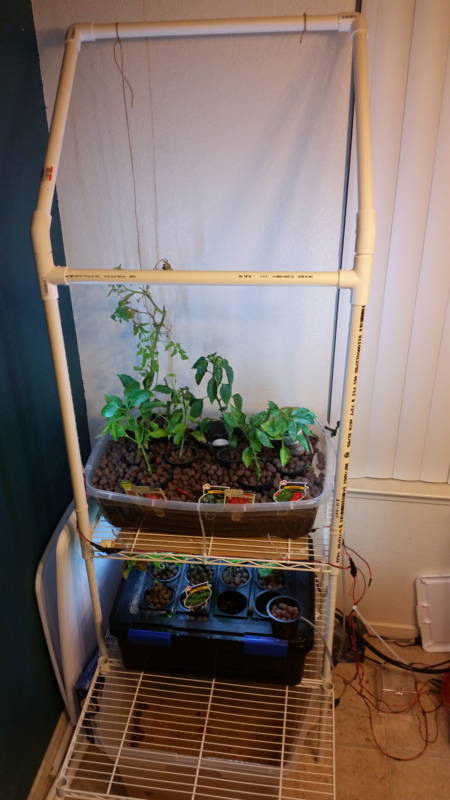
The system worked. The plumbing worked perfectly at an estimated cycle rate of 6 gallons every minute for a 32 gallon system. A system that only cost me about $150. Provided us with a few tomatoes,
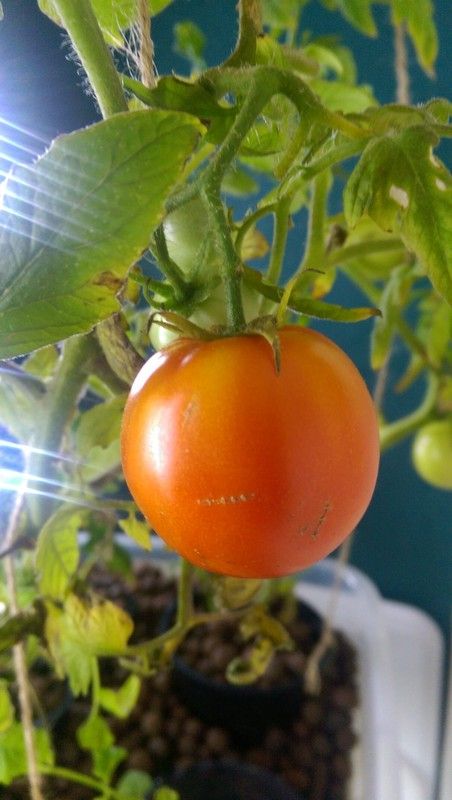
and enough basil for us to make our own pesto sauce. We felt so good that aquaponics was going to work just based off of this system, we named our project "The Plant" and dubbed my small aquaponics system "The Mini Plant". This is how the whole system's water cycle worked:
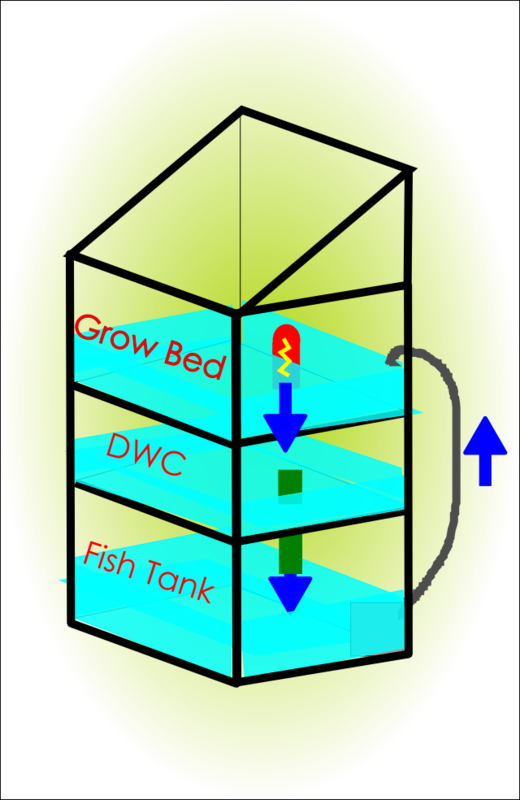
But after a few weeks, there were problems. Fish were dying, plants were dying, pumps were breaking. I found my answer as to why aquaponics has not been picked up by the agriculture business. This is why we are competing. We are developing a less risky maintenance method, in hopes that a commercial can be spring out of these projects.
The Challenge/Opportunity: pH
Maintaining an aquaponics system is difficult. Building an aquaponics system is essentially building a tiny ecosystem; an ecosystem maintaining plants, fishes and bacteria. The fish feed the bacteria, the bacteria provide proper nutrients to the plants, the plants filter the water for the fish, then the cycle continues. Aquaponics is cycle of life that nature has developed, but compacted. Inherently, the system was going to be difficult to maintain. Our first problem with the aquaponics system was with the water.
We started our aquaponics system with tap water. The tap water where I live is hard water; therefore, the water contains metals that make the water basic. Too basic for delicate fish to live in. Not only that, the water contains carbonates that buffer the water from manually reducing the PH. To reduce the PH using hydroponics chemicals did not seem like the right idea. I decided to wait, keep the fish alive while the bacteria developed to begin preparing the water for plants. I would measure the PH, ammonia, nitrite, and nitrate of the system using the common fresh water fish chemistry set. After three weeks, the water's PH began reducing, which is then when I put in the plants. Like I said in my introduction, the system did fine for a few weeks but afterwards fish were dying. The problem was in the PH of the water.
The PH of the water spike, and became basic. Later I found out that one of my fish had got caught in between the pump and the tank. The dead fish produced enough ammonia in the system to start killing off my fish and plants. The bacteria at the time, could not handle all the ammonia. I had to buy gallon jugs of water at the store (they have water at a PH level of 7), to try to flush out some of the basic water.
Solution:
The second version of the aquaponics system will need a pH regulating system. If the pH of the water begins to rise, I need the system to warn me. Let me know if I am feeding the fish too much or if there is a dead fish floating around. We decided to include a pH sensor from Atlas Scientific along with the Raspberry Pi to let us know the system's pH condition. Working with the Raspberry Pi was, of course, a decision we made before knowing we were going to work with the EZR32. We plan on designing an embedded system that will keep an eye on the pH. Once we set the range at satisfactory pH levels, we leave the pH sensor in the system. While the sensor is sitting in the system, we want it to collect data, and send it over to a database all through the internet. This way we can further study how the PH affects the system. But if the sensor package starts picking up undesirable levels, the system warns us. We are looking into receiving a text message or message on our main computer, but the manner of warning has not been officially decided.
Current Sensor Package Work:
We began work on our system before the start of the competition, because we wanted to complete this project with or without being allowed to compete. We ordered our Raspberry Pi and Atlas Scientific pH sensor kit. While we waited for kits to arrive, we started work on a database collecting system through the internet. I will mention how the server works more in depth in a later blog. Also, Something to note is that my team is located in California, while I am at my new job in Illinois, so having the system work online is a requirement. Once I received the kits, I plugged everything in (there were a few pieces missing so I jimmied it as best as I could, but I got it working =D )
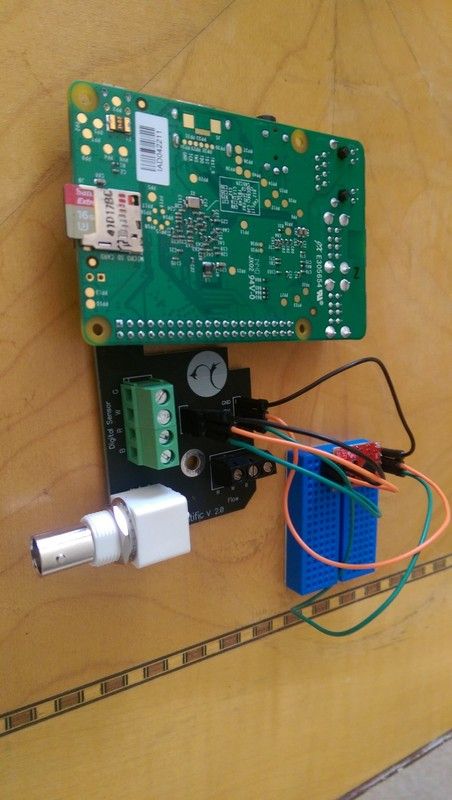
got a quick Python script to test the kits.
Once we verified that everything worked, we set up the Raspberry Pi with SSH, and had a team member run the code from California. So far everything is working well.
To-do:
Now that the team and I can test our system, we will work on outputting the data obtained from the raspberry pi kit, and send it to the database over the internet. Now that we know we are competitors, we will also look into how we will either implement the EZR32 with the Raspberry Pi, or replace the Pi with the EZR32. Because we do not have much experience with the EZR32 we were hoping someone in the element 14 community can answer that. We will also begin designing the second version of the aquaponics system. You will hear about all this in the upcoming weeks.
Thank you again Element 14 for letting us compete in this great competition, and good luck to the competitors. Please let me know if you want me to clarify anything.
Top Comments