element14 Community
element14 Community
    Register Log In
  • Site
  • Search
  • Log In Register
  • Community Hub
    Community Hub
    • What's New on element14
    • Feedback and Support
    • Benefits of Membership
    • Personal Blogs
    • Members Area
    • Achievement Levels
  • Learn
    Learn
    • Ask an Expert
    • eBooks
    • element14 presents
    • Learning Center
    • Tech Spotlight
    • STEM Academy
    • Webinars, Training and Events
    • Learning Groups
  • Technologies
    Technologies
    • 3D Printing
    • FPGA
    • Industrial Automation
    • Internet of Things
    • Power & Energy
    • Sensors
    • Technology Groups
  • Challenges & Projects
    Challenges & Projects
    • Design Challenges
    • element14 presents Projects
    • Project14
    • Arduino Projects
    • Raspberry Pi Projects
    • Project Groups
  • Products
    Products
    • Arduino
    • Avnet & Tria Boards Community
    • Dev Tools
    • Manufacturers
    • Multicomp Pro
    • Product Groups
    • Raspberry Pi
    • RoadTests & Reviews
  • About Us
    About the element14 Community
  • Store
    Store
    • Visit Your Store
    • Choose another store...
      • Europe
      •  Austria (German)
      •  Belgium (Dutch, French)
      •  Bulgaria (Bulgarian)
      •  Czech Republic (Czech)
      •  Denmark (Danish)
      •  Estonia (Estonian)
      •  Finland (Finnish)
      •  France (French)
      •  Germany (German)
      •  Hungary (Hungarian)
      •  Ireland
      •  Israel
      •  Italy (Italian)
      •  Latvia (Latvian)
      •  
      •  Lithuania (Lithuanian)
      •  Netherlands (Dutch)
      •  Norway (Norwegian)
      •  Poland (Polish)
      •  Portugal (Portuguese)
      •  Romania (Romanian)
      •  Russia (Russian)
      •  Slovakia (Slovak)
      •  Slovenia (Slovenian)
      •  Spain (Spanish)
      •  Sweden (Swedish)
      •  Switzerland(German, French)
      •  Turkey (Turkish)
      •  United Kingdom
      • Asia Pacific
      •  Australia
      •  China
      •  Hong Kong
      •  India
      •  Japan
      •  Korea (Korean)
      •  Malaysia
      •  New Zealand
      •  Philippines
      •  Singapore
      •  Taiwan
      •  Thailand (Thai)
      •  Vietnam
      • Americas
      •  Brazil (Portuguese)
      •  Canada
      •  Mexico (Spanish)
      •  United States
      Can't find the country/region you're looking for? Visit our export site or find a local distributor.
  • Translate
  • Profile
  • Settings
element14 presents
  • Challenges & Projects
  • More
element14 presents
Off-Grid MakerShop Project - Water Tank Monitoring System
  • Blog
  • Forum
  • Documents
  • Polls
  • Files
  • Members
  • Mentions
  • Sub-Groups
  • Tags
  • More
  • Cancel
  • New
Join element14 presents to participate - click to join for free!
  • Share
  • More
  • Cancel
Group Actions
  • Group RSS
  • More
  • Cancel
Engagement
  • Author Author: KalebTheMaker
  • Date Created: 18 Feb 2023 8:59 PM Date Created
  • Views 12721 views
  • Likes 12 likes
  • Comments 58 comments
  • micro-hydro
  • sensors
  • homestead
  • water
  • solar
  • automation
Related
Recommended

Project - Water Tank Monitoring System

KalebTheMaker
KalebTheMaker
18 Feb 2023

Hi all,

On Bonesnapper Ridge, I have a fairly large system for storing water and I would like to monitor the entire system. This topic started to take off on another thread, so I thought I would make a new post to keep it all in one place and give a little more background.

Wells

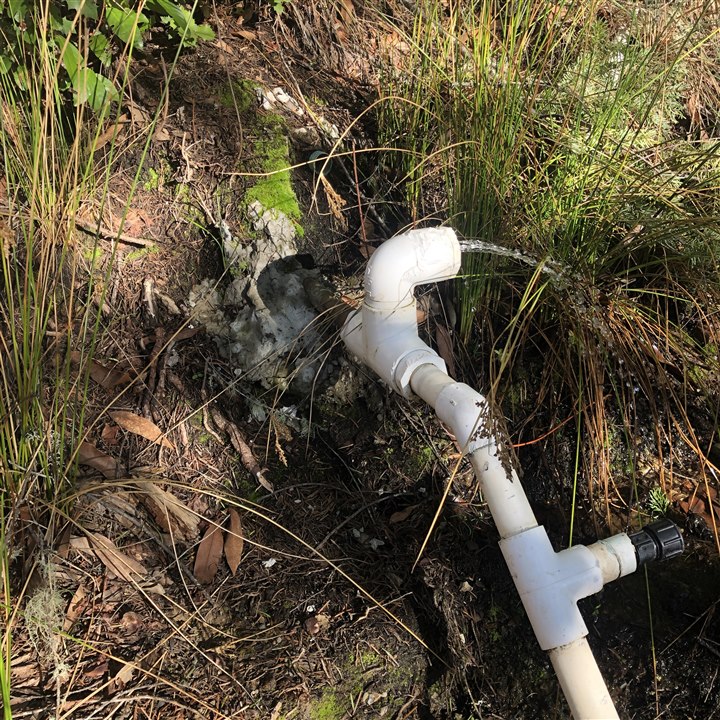
There are multiple wells on the property, but I am focused on three of them. These are "horizontal wells" or tapped springs. They are drilled horizontally into the side of the hill and are gravity fed to a set of tanks at the bottom of the property. These wells flow 24/7 365 days a year. The wells flow into the tanks, and then there are overflow pipes that overflow into a culvert. As I said, 24/7. Maybe I could install very small turbines on these to generate a little bit of power?

Tanks

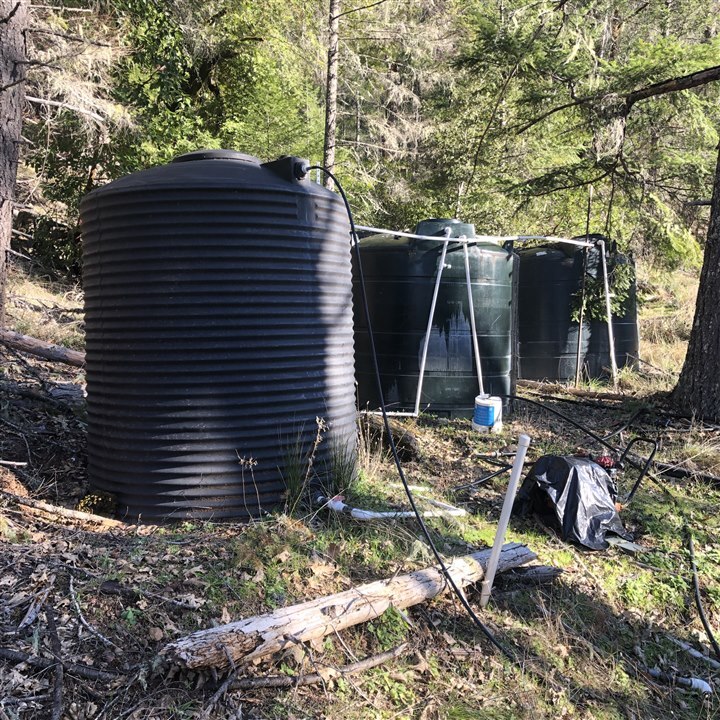
There are two main tank sites on the property. There are three ~2500 gallon tanks at the well site which is at the lower elevation of the property. There are three more ~2500 gallon tanks at the highest elevation of the property. There is also one 2500 gallon tank right in between these two sets of tanks in the middle of the elevation. The bottom tanks are plumbed all the way up to the top tanks and flows through that middle tank. Note: The lower tanks are 100% full until I pump, then it takes about 8 hours to fill up what I pumped out.

Pumping

To get water from the lower tanks to the upper tanks that feed the house/shop, currently, I have to drive down to the lower tanks and fire up a gas-powered honda water pump (currently broken... yay another project!). On a full tank of gas, this can pump something like 1800 gallons. So I would have to pump several tanks of gas worth to fill up the upper tanks. I have to open and close a few valves manually in this process.

Water Usage

I am surprised at how little water I have been using. I don't have laundry up here yet, so that will add a bit, but as of now, it's quite low. Last time I pumped I marked it on the upper tank before I pumped, and then I marked it off after the pump. That's where I came up with the approximate 1800 gallons on a tank of gas. It has been a few months since I have pumped water, and there is still plenty in the upper tanks.

Sensor Data & System Design

My goal at the end of a few projects is to have sensors in each of the tanks ( seven tanks ) and report that back to MQTT or an InfluxDB database here at the house. Build a solar or hydro-powered pumping system at the bottom tanks, so that when the top tanks get below a certain threshold, the pump will automatically turn on and pump water until a threshold is met. 

What data do I need out of the tank sensors?

The nerd in me wants it down to the gallon. But that's going to be more difficult to achieve, and in the system design, I don't really need that. I can probably get away with down to the 100 or 1000 gallon. The resolution will determine how often I pump, and the design of the pump system will also be a factor in how often I can pump. for example, if the pump and battery can pump 100 gallons on a full charge, then I have to know how long it takes to gain a full charge on the battery using either solar or hydro. Then I can set my thresholds in the system for how often to pump. I'll probably end up looking at the state of charge of the pump batteries and determining if it can pump as well.

Maybe for now, I will have to settle for somewhere in the middle and have a minimum resolution of 500 gallons. If it's lower than that great, if it's higher? Well, I will just have to deal with it. 

The order of execution

I want to get the sensors built first, and then the rest of the monitoring system and the pumping system will come at a later date. I would like to get all of it done this summer, but there is a LOT to do here and it's not critical. But the senors are critical to my data-hungry brain, and sore legs from hiking up the hill to check water levels. 

I would love to hear your feedback on this! Some of this topic has been discussed on the thread below, so please check that out. 

/challenges-projects/element14-presents/b/off-grid-makershop/posts/off-grid-maker-shop-general-update

I will add some pictures first thing tomorrow to this post. I'm in a rush to get out of this house this morning. 

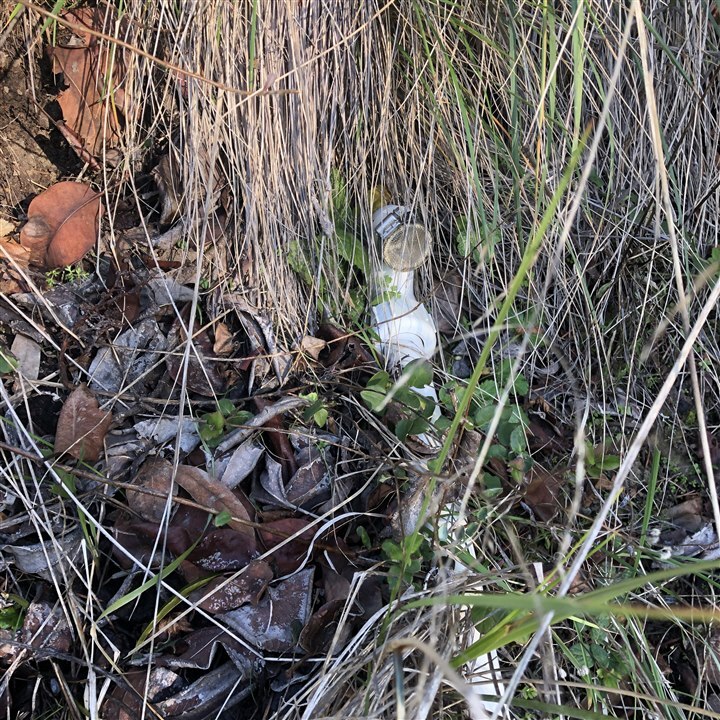
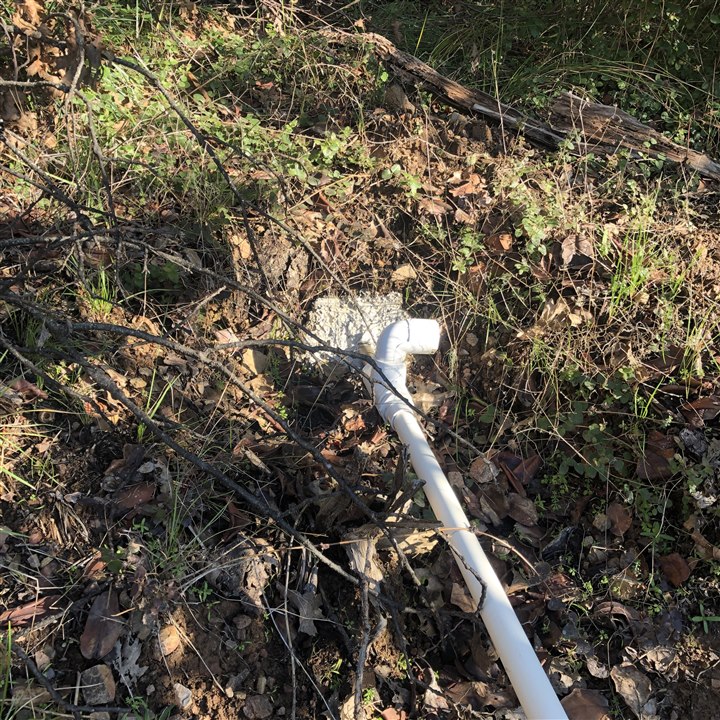
Well and Tank Pictures:

Upper Tanks
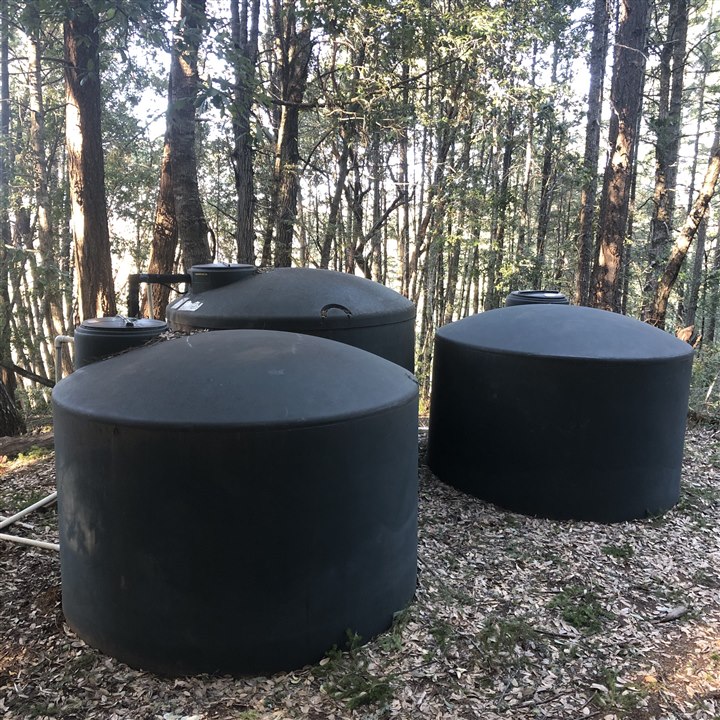
image

Lower Tanks  

image

Primary Well

image

Secondary Well

image

Tertiary Well

image

The second and third wells are tied together, they do not have as much output as the primary well. 

Elevation Data

Site Elevation (m) Elevation (ft) Barometric Pressure (mb)
House 672.7 2207 1019
Upper Tanks 698 2290 1016
Middle Tank 646.8 2122 1022
Primary Solar Site 628.5 2062 1024
Lower Tanks 622.7 2043 1026
Primary Well 620.6 2055 1025
Secondary Well 00 626.4 2066 1024
Secondary Well 01 630.6 2069 (eyeballed) 1024

NOTE: Updated for the third time. 

For this data I took my Garmin 64s out with barometric pressure turned on. When I got the area the elevation would fluctuate wildly starting low, then gradually going up until it stabilized. This took about three minutes. I waited at each site for appx three minutes until it stabilized. I recorded the barometric pressure for Dave. 

However, The difference between the "Primary Solar Site" and "Lower Tanks" being ~6' does not seem right. The road from the solar site to the wells and tanks goes downhill for quite a ways, then up just a little. There is no line of sight, and I could be deceived, but I really do not think so.  "Lower Tanks" to "Primary Well" seems off as well, data shows ~12', but I think it's more like 5-8'. 

Thanks!

-Kaleb

  • Sign in to reply
  • beacon_dave
    beacon_dave over 3 years ago in reply to KalebTheMaker

    The DFRobot sensor appears to be an absolute sensor so it is measuring the atmospheric pressure as well as the water pressure.

    This will affect your accuracy as approx 100kPa will be atmospheric and only 24kPa will be your full tank reading. You are also looking at only using the lower 124kPa out of the 1,000kPa full scale reading.

    If using the DFRobot sensor you may want to double up and leave one in free air to give your atmospheric reading as a reference. Otherwise  your tank reading will vary as the atmospheric pressure changes day-to-day. A swing of +50mBar to -50mBar in air pressure could result in a swing of +5kPa to -5kPa  which is significant compared with a measurement range of 0-24kPa range. (about +/-500gallons).

    The Honeywell 1Bar gauge sensor is not much more than two DFRobot sensors, and you would only need one, and should get you closer to the 10gal resolution with a 10bit AtoD. 

    • Cancel
    • Vote Up 0 Vote Down
    • Sign in to reply
    • More
    • Cancel
  • beacon_dave
    beacon_dave over 3 years ago in reply to KalebTheMaker

    The diameter of the tank doesn't come into the measurement, just the height of the water.

    In some ways this makes it easier to prototype as you can just work with some 1" diameter pipe with a sensor in the end to get the same sort of readings as you would from the 2500 gallon tank.

    • Cancel
    • Vote Up 0 Vote Down
    • Sign in to reply
    • More
    • Cancel
  • beacon_dave
    beacon_dave over 3 years ago in reply to KalebTheMaker

    Yes, that looks right but you need to factor in the difference between 'gauge' and 'absolute' measurements.

    'Absolute' is atmospheric + hydrostatic so 100kPa + 24kPa = 124kPa or 0.124MPa

    'Gauge' is referenced to atmospheric so just 24kPa. 

    • Cancel
    • Vote Up 0 Vote Down
    • Sign in to reply
    • More
    • Cancel
  • KalebTheMaker
    KalebTheMaker over 3 years ago in reply to beacon_dave

    hah, we were both doing the same thing. I responded on a different comment about getting different answers on that. 

    • Cancel
    • Vote Up 0 Vote Down
    • Sign in to reply
    • More
    • Cancel
  • KalebTheMaker
    KalebTheMaker over 3 years ago in reply to beacon_dave

    I have looked at the math for determining hydrostatic pressure and checked an omni-calculator for hydrostatic pressure and I get two different results. I even asked a friendly AI (so far) and it gave me a different answer. So I am a little confused for spec'ing a pressure sensor. The DF robot one looks pretty good, and is affordable so I can get all of them. DFRobot sensor is 0-1Mpa, and omnicalculator says the full tank would be .125. 

    The math I found for this is: 

    P = phg

    Where P is the pressure in pascals, p is the density of the fluid (~997 for water in kg/m3), h is the height in meters (2.4384m tank height), and g is the acceleration due to gravity (~9.8 meters per second). so...

    997*2.4384*9.8 = 23824.63pa or ~0.023Mpa, about 3.4psi which seems pretty low for 2500g of water. 

    Did I do that math right? Omni calculator gives me .124Mpa. Math has never been my strongest point, and I usually rely on calculators, but I want to learn so I try to do the math and check against the calculators. And I cant find anywhere where the diameter of the tank matters. Seems like a tank that is a mile in diameter and 8' depth of water would have a much different hydrostatic pressure. 

    I feel like leaving out the diameter is wrong, and the different results leave me a bit weary of the right answer. What do you think?

    -Kaleb

    • Cancel
    • Vote Up 0 Vote Down
    • Sign in to reply
    • More
    • Cancel
<>
element14 Community

element14 is the first online community specifically for engineers. Connect with your peers and get expert answers to your questions.

  • Members
  • Learn
  • Technologies
  • Challenges & Projects
  • Products
  • Store
  • About Us
  • Feedback & Support
  • FAQs
  • Terms of Use
  • Privacy Policy
  • Legal and Copyright Notices
  • Sitemap
  • Cookies

An Avnet Company © 2026 Premier Farnell Limited. All Rights Reserved.

Premier Farnell Ltd, registered in England and Wales (no 00876412), registered office: Farnell House, Forge Lane, Leeds LS12 2NE.

ICP 备案号 10220084.

Follow element14

  • X
  • Facebook
  • linkedin
  • YouTube