

Rather than presenting a typical maker build, Clem's examination of the Trinamic Open Source Ventilator (TOSV) focuses on a project created during a period when hospitals worldwide were facing unprecedented demand for respiratory support equipment. The TOSV initiative was conceived as a fully open-source reference design that could be manufactured locally and developed collaboratively, while still pursuing the level of engineering discipline expected of medical equipment. The project combines a Raspberry Pi 4, Trinamic motion-control technology, precision pressure sensing, and an openly available hardware and software stack.
Breathe Deep and Dive In
Why an Open-Source Ventilator?
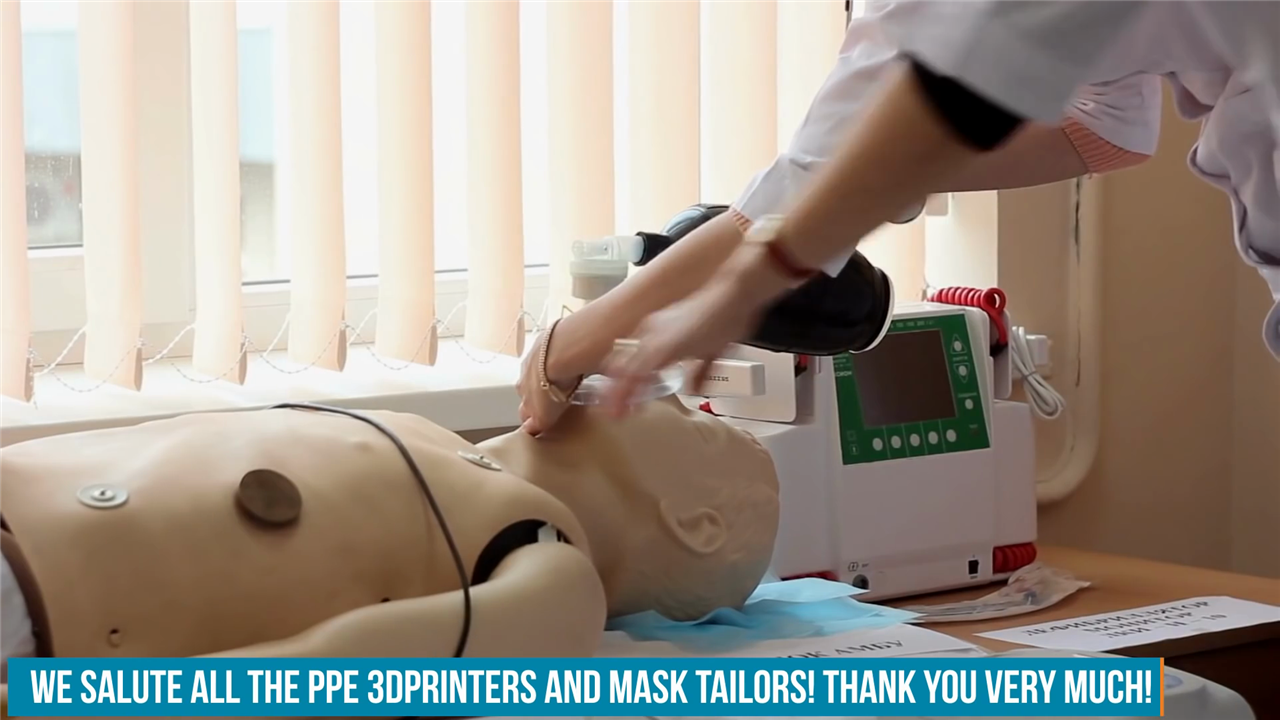
From the outset, Clem is careful to distinguish this project from the many emergency breathing-assistance concepts that appeared during the COVID-19 pandemic. He highlights a concern that runs throughout the entire teardown: a ventilator is not merely a motor pushing air through a tube.
"Ventilation is a very complicated topic. It's not trivial at all."
He explains that many people associate artificial respiration with emergency first aid, but a ventilator intended for patients suffering from lung damage operates on an entirely different level. Pressure, airflow, oxygen mixing, timing, lung response, and patient safety must all be carefully managed.
"If you ventilate or respire a patient that has damaged lungs even in the slightest wrong way, you will possibly kill him or her or at least damage the lungs further."
This perspective informs every design decision within the TOSV project. Rather than producing a quickly assembled emergency device, Trinamic's goal was to create an open-source platform capable of moving towards medical certification while remaining accessible to manufacturers around the world.
Motion Control Meets Medical Engineering
Trinamic built its reputation around precision motor control, particularly through the TMC family of motion-control devices widely used in industrial equipment and 3D printers. Clem points out that a ventilator is fundamentally a motion-control problem: a motor must react continuously to changing sensor inputs while maintaining strict operating limits.
"They are specialists in motion control and motion control is what these ventilators are doing."
Rather than driving a motor at a constant speed, the system processes live pressure data and dynamically adjusts airflow. Incoming air pressure, oxygen injection, patient breathing characteristics, and exhaust pressure are continually monitored.
"The device reacts dynamically to all these sensory data."
According to Trinamic's published material, the design uses the TMC4671-LA servo controller together with the TMC6100 gate driver to control the blower assembly, forming the heart of the ventilator's closed-loop control system.
Hardware Architecture
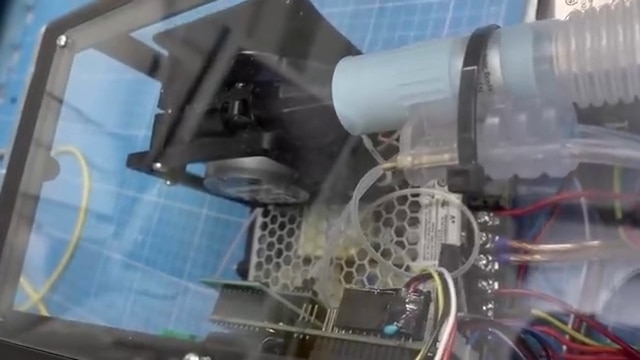
The teardown reveals a design that balances accessibility with functionality. The main enclosure consists of 3D-printed components combined with laser-cut acrylic panels, allowing the internals to remain visible during development and demonstration.
"The main body is 3D printed and it has acrylic laser cut panels so you can see the inside."
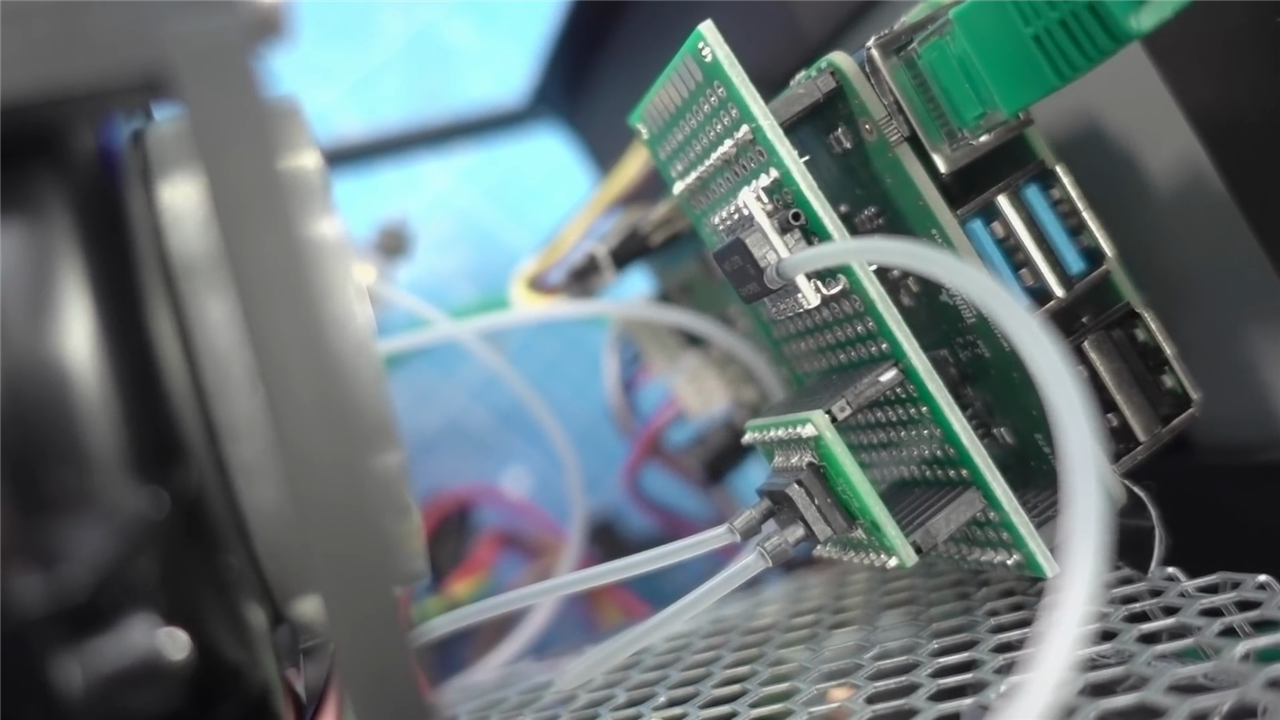
At the centre of the system sits a Raspberry Pi 4, responsible for user interaction and higher-level control. Attached to the Pi is a 7-inch Raspberry Pi touchscreen alongside Trinamic's custom controller board.
"The main brains of the project is a Raspberry Pi 4."
Mounted above the motion-control hardware is a pressure-sensing subsystem which, at the time of filming, still relied on hand-assembled sensor hardware. Trinamic was already preparing production-ready versions of the sensor board so manufacturers could reproduce the complete design using the released design files.
The project's openness extends beyond the firmware. Mechanical CAD, PCB layouts, software, and supporting documentation are all intended to be freely available for local manufacture and adaptation.

Precision Sensors Over Improvisation
One of the most important observations in the teardown concerns the pressure sensors. Rather than relying on improvised sensing arrangements, the system uses medical-grade, high-accuracy sensors that represent a substantial proportion of the overall cost.
"These are the most expensive items in the BOM."
"They are high precision and they are suitable for these medical applications."
Clem repeatedly stresses that the project avoids estimated behaviour and unverified assumptions. Pressure targets, volume targets, and safety parameters can all be measured and controlled directly by qualified operators.
"There is no guesswork involved. It's science and doctors can at any time control the whole process."
This commitment to measured feedback is reflected throughout the firmware architecture. Configuration structures include dedicated parameters for pressure regulation, volume regulation, PEEP management, inhalation and exhalation timing, and multiple PID control loops. For example:
uint16_t pidPressure_P_param;
uint16_t pidPressure_I_param;

uint16_t pidVolume_P_param;
uint16_t pidVolume_I_param;

uint32_t pPEEP;
uint32_t volumeMax;
The firmware also exposes functions dedicated to pressure management:
bool bldc_setTargetPressure(uint8_t motor, int32_t pressure);
int32 bldc_getActualPressure(uint8_t motor);
int32_t bldc_getPressureErrorSum(uint8_t motor);
These interfaces illustrate that pressure regulation was treated as a primary control objective rather than a secondary measurement, aligning closely with Clem's emphasis on accuracy and repeatable operation.
A Proper Ventilator, Not a Bag-Squeezer
During the teardown, Clem contrasts the TOSV with a common category of pandemic-era projects built around mechanically compressing manual resuscitation bags. While useful for emergency concepts, those approaches face significant limitations when precise respiratory control is required.
"It's not just any blower fan or these bags that you see often in ventilation projects where you just squeeze the bags."
Instead, the TOSV employs a blower-based system similar in concept to respiratory devices used in clinical and assisted-breathing applications. The fan is controlled through closed-loop motor control, allowing pressure and airflow characteristics to be adjusted continuously rather than mechanically approximated.
The wider open-hardware ecosystem surrounding the project also produced alternative mechanical implementations, including turbine-based enclosure concepts developed by the community around the TOSV electronics platform.
Intelligent Patient Interaction and User Interface and Safety Systems
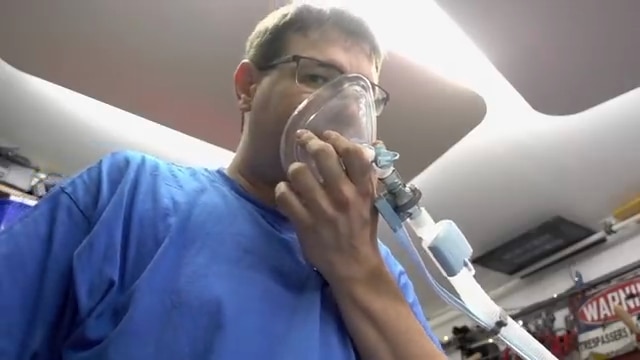
One of the most revealing sections of the teardown occurs when Clem briefly experiences the machine himself. Rather than forcing airflow at a fixed rate, he notices how the device responds to breathing effort and gradually influences the user's respiratory rhythm.
"It doesn't force the air into my lungs."
"It's a very intelligent device that dynamically adapts to the person that is breathing with it."
This observation highlights a design aspect that is easy to miss when looking only at schematics: the ventilator is intended to cooperate with the patient rather than simply overpower the respiratory system. Achieving that behaviour requires the interplay of sensors, control algorithms, motor regulation, and carefully tuned operating parameters.
The touchscreen interface provides immediate access to operating data as well as clinician configuration settings. Clem notes that the software presents critical information clearly while also incorporating safeguards against accidental misuse.
A particularly interesting example is the shutdown procedure. Stopping the machine requires intentionally pressing and holding the command rather than tapping a button accidentally.
"I have to tap on there and leave it there for a set amount of time before I can switch it off so you don't switch off a patient by accident."
Alarm handling and calibration reminders are also built into the design.
"The unit also complains about any anomalies and alarms the user."
"It also complains that it hasn't been calibrated for a set period of time."
The system additionally supports Ethernet connectivity, enabling remote monitoring capabilities and allowing clinical staff to review device status without being directly beside the machine.
Availability Over Exclusivity and Future Development Considerations
The primary objective of the project was never to outperform commercial ventilators. Clem repeatedly returns to a simpler goal: availability.
"The point with this device is not to be better than a currently available ventilator."
Instead, the design provides a path for manufacturers to build proven hardware locally when supply chains become constrained. As shown during the teardown, Trinamic released the CAD files, PCB files, firmware, software, and supporting documentation specifically to encourage broader adoption.
At the time the unit was examined, certification had not yet been completed, although development had been informed through consultation with doctors and respiratory specialists.
"Trinamic was in contact with a lot of doctors and specialists, especially for lung treatment."
Several future directions emerge from the discussion. Production-ready pressure sensor boards were still being finalised, alternative pressure sensors could potentially be supported to improve availability, and certification efforts would ultimately need to be pursued on a country-by-country basis.
Clem also identifies a broader ambition extending beyond ventilators alone:
"One day we should have an open source alternative for every crucial medical device."
Rather than viewing TOSV as a finished endpoint, he presents it as part of a larger movement towards openly documented, locally manufacturable medical technology that can be mobilised rapidly during future emergencies.
When this project first went live, it was the early years of what became a several year pandemic the likes of the generation had never seen. Trinamic released this hardware and its files in the hope that it supported those that needed it, and over time, the resources available to reproduce this were pulled.
The element14 Community has retrieved the files and repositories to allow you to be able to rebuild this project should you need to explore, experiment and invent. Understanding that this project does not hold as a validated, certified medical device.
But open source should be open, right?
Supporting Files and Links:
- Episode 460 Resource Files - Trinamic Open Source Ventilator (TOSV) Teardown - Contains files for the Reference Design Board and archive of github repositories
- Bonus Content: Trinamic Open Source Ventilator (TOSV)
- Bonus Content: Trinamic Open Source Ventilator Project
- Trinamic Open Source Ventilator
| Product Name | Manufacturer | Quantity | Buy Now |
|---|---|---|---|
| Reference Design Board, TMC4671/TMC6100, Ventilators / Respirator System | Trinamic | 1 | |
| RASPBERRY PI 4 MODEL B, CORTEX-A72, 8GB | Raspberry Pi | 1 | Buy Now |
| Daughter Board, Raspberry Pi 7" Touch Screen Display, 10 Finger Capacitive Touch | Raspberry Pi | 1 | |
| MOTOR DRIVER, -40 TO 125DEG C (TMC4671-LA) | Trinamic | 1 | Buy Now |
| MOTOR DRIVER, -40 TO 125DEG C (TMC6100-LA) | Trinamic | 1 | Buy Now |
| PRESSURE SENSOR ADD-ON BOARD | Trianmic | 1 | Buy Now |

Top Comments
-

kmikemoo
-
Cancel
-
Vote Up
+1
Vote Down
-
-
Sign in to reply
-
More
-
Cancel
-

mayermakes
in reply to kmikemoo
-
Cancel
-
Vote Up
+1
Vote Down
-
-
Sign in to reply
-
More
-
Cancel
Comment-

mayermakes
in reply to kmikemoo
-
Cancel
-
Vote Up
+1
Vote Down
-
-
Sign in to reply
-
More
-
Cancel
Children