element14 Community
element14 Community
    Register Log In
  • Site
  • Search
  • Log In Register
  • Community Hub
    Community Hub
    • What's New on element14
    • Feedback and Support
    • Benefits of Membership
    • Personal Blogs
    • Members Area
    • Achievement Levels
  • Learn
    Learn
    • Ask an Expert
    • eBooks
    • element14 presents
    • Learning Center
    • Tech Spotlight
    • STEM Academy
    • Webinars, Training and Events
    • Learning Groups
  • Technologies
    Technologies
    • 3D Printing
    • FPGA
    • Industrial Automation
    • Internet of Things
    • Power & Energy
    • Sensors
    • Technology Groups
  • Challenges & Projects
    Challenges & Projects
    • Design Challenges
    • element14 presents Projects
    • Project14
    • Arduino Projects
    • Raspberry Pi Projects
    • Project Groups
  • Products & Partners
    Products & Partners
    • Arduino
    • Avnet & Tria Boards Community
    • Dev Tools
    • Manufacturers
    • Multicomp Pro
    • Product Groups
    • Raspberry Pi
    • RoadTests & Reviews
  • About Us
    About the element14 Community
  • Store
    Store
    • Visit Your Store
    • Choose another store...
      • Europe
      •  Austria (German)
      •  Belgium (Dutch, French)
      •  Bulgaria (Bulgarian)
      •  Czech Republic (Czech)
      •  Denmark (Danish)
      •  Estonia (Estonian)
      •  Finland (Finnish)
      •  France (French)
      •  Germany (German)
      •  Hungary (Hungarian)
      •  Ireland
      •  Israel
      •  Italy (Italian)
      •  Latvia (Latvian)
      •  
      •  Lithuania (Lithuanian)
      •  Netherlands (Dutch)
      •  Norway (Norwegian)
      •  Poland (Polish)
      •  Portugal (Portuguese)
      •  Romania (Romanian)
      •  Russia (Russian)
      •  Slovakia (Slovak)
      •  Slovenia (Slovenian)
      •  Spain (Spanish)
      •  Sweden (Swedish)
      •  Switzerland(German, French)
      •  Turkey (Turkish)
      •  United Kingdom
      • Asia Pacific
      •  Australia
      •  China
      •  Hong Kong
      •  India
      •  Japan
      •  Korea (Korean)
      •  Malaysia
      •  New Zealand
      •  Philippines
      •  Singapore
      •  Taiwan
      •  Thailand (Thai)
      •  Vietnam
      • Americas
      •  Brazil (Portuguese)
      •  Canada
      •  Mexico (Spanish)
      •  United States
      Can't find the country/region you're looking for? Visit our export site or find a local distributor.
  • Translate
  • Profile
  • Settings
Project14
  • Challenges & Projects
  • More
Project14
Member Updates 10 Year Challenge | Tell Us What You Can't Live Without for an ESP8266, Arduino Uno, or Arduino Nano!
  • News
  • Member Updates
  • Competitions
  • Forum
  • Documents
  • Theme Suggestions
  • Polls
  • Members
  • More
  • Cancel
  • New
Join Project14 to participate - click to join for free!
  • Share
  • More
  • Cancel
Group Actions
  • Group RSS
  • More
  • Cancel
Engagement
  • Author Author: tariq.ahmad
  • Date Created: 12 Jun 2019 8:59 PM Date Created
  • Views 9455 views
  • Likes 20 likes
  • Comments 109 comments
  • 10yearchallenge
  • 10years
Related
Recommended

10 Year Challenge | Tell Us What You Can't Live Without for an ESP8266, Arduino Uno, or Arduino Nano!

tariq.ahmad
tariq.ahmad
12 Jun 2019
image

Electronics & Design Projects

Tell Us What You Can't Live Without to win a swag bag with an Adafruit Feather ESP8266, an Arduino Uno, or an Arduino Nano board!

About Project14 image

Project14 Home
Monthly Themes
Monthly Theme Poll


In the Comments Below:  Let Us Know What You Couldn't Live Without 10 Years Ago,  Let Us Know What You Can't Live Without Today!


You Can Win a Swag Bags with an ESP8266, Arduino Uno, or Arduino Nano for Sharing Video, Images, or  Text About What Inspired You Then, and What Inspires You Now!


imageimageimage
The element14 community was founded in June of 2009!  It was the first online community for engineers!Project14 is celebrating the 10 year anniversary of the element14 community by asking you what you couldn't live without then, what you can't live without now!You could receive a swag bag with one of the following Arduino compatible boards: an ESP8266, an Arduino Uno, or an Arduino Nano!


Recently, the element14 community turned 10 years old and the element14 team has come up with some great ideas around how to celebrate occasion.  rscasny , who runs our Roadtest program, got things kicked off with In Honor of element14's 10th Birthday: What is Your Favorite RoadTest Bundle? and cstanton , our community manager, invites you to share your favorite memories over the last 10 years in Happy 10th Anniversary! - A Decade of element14 Community.  e14mindi , the community content manager, is giving away up to 25 free Raspberry Pi 4 boards in Win a Raspberry Pi 4 in Celebration of Our 10th Birthday! for letting us know what you plan to do with the board's upgraded capabilities. Project14, which turned two in April, is no stranger to parties. In March, we celebrated Arduino's Birthday by giving away some MKR 1010 boards in support of the IoT: In the Cloud Cloud competition.  In April, we celebrated the second birthday of Project14, with a Month of Robots competition and a series of live streams about you.  It featured project videos from past competitions, as well as, project show & tells from Sean_Miller ,  gam3t3ch ,  balearicdynamics ,  jomoenginer , carmelito , and dubbie .image
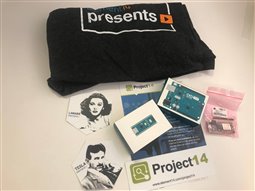
 

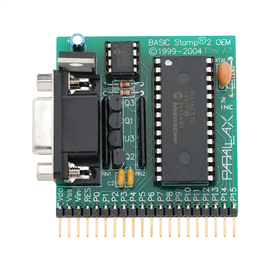
But Project14 is just one of many wonderful programs that make the element14 community special.  Because, we're grateful to the element14 community for allowing us to exist, we wanted to do something extra special for the 10 year anniversary. Milestones are an opportunity to stop for a second and think about where you were 10 years ago and where you are today.  What was important to you yesterday, what's important to you today?  We're giving away some of our favorite boards to help get this conversation started.  In the comments below, let us know what you couldn't live without 10 years ago, and what couldn't you live without today. For example, 10 years ago you may have not been able to live without a BASIC Stamp for your robotics projects and today you couldn't live without an Arduino.  Or, perhaps you could not imagine living without your 3D printer today, what did use 10 years ago before 3D printers were affordable?  What are the things that inspired you then, and what inspires you today?  You can post pictures, videos, or tell interesting stories that demonstrate whatever rocks, or rocked your world in the 10 years since the community was founded.  To celebrate 10 years of the element14 community we'll be sending swag bags for posting thoughtful, entertaining, interesting, or enlightening responses.  Each package will contain gifts including an Adafruit Feather ESP8266, an Arduino Uno, or an Arduino Nano board!


While supplies last, share what you couldn't live without 10 years ago, and what you can't live without today for a chance to receive one of the following boards:


imageimageimage
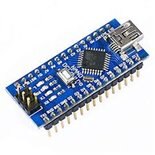
30 Adafruit Feather Huzzah ESP826615 Arduino Uno Boards15 Arduino Nano Boards


Ten years ago, I'd never heard of the element14 community.  Not even sure that I knew what an online community was.  I was working for a PHP startup and the term open source was never something I thought of in connection with hardware. I was proud to be working for a small business, being a part of a small team made me feel important, and had no desire to work for anything bigger.  As far as work goes, I would say that the most important thing to me in those days was saving up my paychecks to go to music concerts, working independently (making up the rules as you go along), and feeling like you made a difference with the work that you did.  Today, I feel very fortunate to be a part of the element14 community.  Although its a part of a much bigger company, you get a lot of freedom with how you run things, and the feeling you make a difference.  As far as work goes, the thing that I could not live without is all the creativity and inspiration you experience from seeing all your electronics & design projects.  While, I've slowed down since my halcyon start up days, there are parallels between working in a small business and working for an online community that's part of a much bigger company. Though, the concert experiences are less these days, you get a healthy dose of rock by witnessing the thought and creativity that goes into your projects.  Sometimes, the more things change, the more they stay the same.image


Recently,  you engaged in some great conversation during the Project14 live streams about you.  For example, during Home Automation: an element14 Story,  Sean_Miller showed the evolution of a robotics project that he built over a long period of time, and how the tools & technology changed as the project progressed. He showed footage and discussed the maker dream he began chasing 9 year ago, when he began building an R2D2 robot with his son as a way to get into the hobby. He started off by modeling the robot with some software he stumbled across,  before Autodesk Fusion 360 took off.  However he doesn't use a 3D printer, as 3D printers were not affordable in 2010, so much of the early work he does is with modeling clay that was bake-able or high impact polystyrene.  Back then, his experience was in programming, so right away he wanted to start programming things before he had anything built.  As the technology changes over the course of 9 years, the R2D2 robot turns from what is essentially a full size movie prop, to an RC unit, and eventually a semi-autonomous droid with a Netduino programmed in C# as the brains.
image


During the second live stream, Robotics: Tribute to Gordon McComb ,  jomoenginer showed a first edition copy of the Robot Builders Bonanza by Gordon McComb from 1987 alongside the Fifth edition which was released posthumously at the end of 2018. The Robot Builder's Bonanza is widely credited with making robotics projects accessible to the masses, and its been an inspiration to jomoenginer who has shared many memorable robotics projects with the community.   If you pick up a copy of the Robot Builders Bonanza 3rd edition, the version of the book from when the community launched in 2010, the popular boards for hobby robotics were names such as Freescale 68HC11, BASIC Stamp, Intel 8051, Hitachi H8, and Atmel AVR.  Through the edits made to the book since it was first released, in the latest edition you can find entire chapters devoted to Raspberry Pi, Arduino, and the micro:bit.  All of which are very popular on the community. Today you can get a Raspberry Pi for $35, an Arduino for less than that, and there is a huge community with lots of support for both platforms.   The Jetson Nano which is a pretty hot product for robotics projects can be had for a few hundred dollars, whereas just a few years ago, something like that would run you thousands of dollars. As dubbie , whose background is in engineering, pointed out, you don't need any special knowledge to get involved with robotics, anyone can do it. You don't even need a 3D printer, as carmelito pointed out, you can prototype anything with dollar foam board, and its also how he got started with hobby RC projects.image


Now It's Your Turn to Tell Your Story!  What Could You Not Live Without 10 Years Ago?  What Can't You Live Without today?


Video, Images, and Text are all Welcome forms of submission!


How did you do electronics projects before the Raspberry Pi or before you knew about Arduino?   What did you use before 3D printers became a thing?  Or,  perhaps you had a tool or a piece of test equipment you couldn't live without 10 years ago.  You've probably found a tool or piece of test equipment since then that you believe you couldn't live without.   You're free to share any stories, videos, or images about anything you thought you couldn't live without 10 years ago and to show us what you can't live without today!


In the Comments Below:  Let Us Know What You Couldn't Live Without 10 Years Ago,  Let Us Know What You Can't Live Without Today!


You Can Win a Swag Bags with an ESP8266, Arduino Uno, or Arduino Nano for Sharing Video, Images, or  Text About What Inspired You Then, and What Inspires You Now!

Attachments:
imageTerms and Conditions-element14 Ten Year Challenge.pdf
  • Sign in to reply

Top Comments

  • dubbie
    dubbie over 7 years ago +19
    I have difficulty remembering what I was doing 10 minutes ago so 10 years is like back to infinity. However, I did have a digital camera at the time so I have looked back to see what photographs I still…
  • luislabmo
    luislabmo over 7 years ago +18
    Ahhh 10 years, congratulations!, I hope this community succeed for years to come. The answer to both is so simple for me... A Computer can't live without one, couldn't live without one 10 years ago and…
  • Workshopshed
    Workshopshed over 7 years ago +18
    Back in 2009 I was heavily into Flea Circuses so a that time I could not manage without a wallet full of Library cards. I visited the following, some of them multiple times. British Library Wellcome Trust…
Parents
  • Gough Lui
    Gough Lui over 7 years ago

    I never really considered where I was ten years ago ... but now that I've sat down and spent some time, it's rather surprising that the world has come so far in just 10 years (dragging me along with it!)


    In 2009, I would have been studying my third year in Electrical Engineering, which incidentally, I did not finish and instead transferred to Photovoltaics and Solar Energy. The things I found essential back then were:

    • An Asus eeePC701, being indebted to the whole netbook revolution for bringing low-cost, compact laptops with longer battery lives to the market, without the "ripoff" prices that were endemic to the "ultrabook" branding that was to come later. It was a fabulous machine, despite its limited screen (and one stuck pixel in my case). I'm not sure why we look back on netbooks with such disdain as they really paved the way for tablets, which are now struggling as the phablet phones eat up the market.
    • An O2 XDA II mini running Windows Mobile 2003SE. The smartphone of the era, or more accurately, a PDA with phone functionality. Sure, it had a crappy 1.3MP camera that made us believe that phone cameras would never be good enough, and a 3-hour active-use battery life, but I got mine second hand for about AU$300 and it was the best phone ever. While others were toting their feature phones with monophonic tones, I could have any WAV file I wanted. I could store the whole Cityrail timetables in HTML format on the SD card and have an electronic timetable (yes, our transport authority offered downloadable ZIP files for this express purpose). I had TCPMP installed and with 802.11b Wi-Fi in the house, could stream standard-def DivX files from an SMB share. Unfortunately, the iPhone was released and I had a good laugh at it until I realised that nobody ever really seemed to care about Windows Mobile after that and all the development effort went over to the iPhone.
    • My Canon Powershot A530 with me everyday. Point and shoot sitting at home? No way. If you wanted to take a good photo, you needed a decent camera with you and a phone camera was a joke. With the 5MP of goodness running off two AA’s, it was a hassle to keep the batteries charged but it had a decent optical zoom at least. Now, the point-and-shoot market is pretty much drying up.
    • A few Ralink RT2500-based 802.11g Wi-Fi cards, as the first “affordable” Wi-Fi chipset that did it all (monitor mode, 802.11g with TX-burst). I couldn’t afford an AP, thus we ran ad-hoc for a few years before using the RT2500’s SoftAP feature. Transmission power and sensitivity are nothing like today’s chipsets though, so coverage issues within the house were not uncommon. Finding a neighbour’s Wi-Fi interfering with yours? Not much of a chance … not like today where a free channel is impossible to find on either band.
    • My trusty DT830 “19-range” 3.5 digit multimeter. The venerable meter which is now available for about $4 all-inclusive, I paid probably about $10 for from a variety store. I held it dear to me as it was really all I had in the way of test equipment. I trusted every last digit on the screen, without realising that it was betraying me all this time. *shakes head*
    • A $7 60W soldering iron with a discarded Weller tip. It came with a silly coated copper tip that eroded quickly and despite constant grinding, never kept its shape. When my school had a clean-out and threw out some old Weller tips, I found it fitted the barrel well enough that I used it. This made the iron last for ages. I didn’t care that it took almost forever to heat up, and when it did, unless I soldered quickly, I would melt the living daylight out of whatever I was soldering. I was only slightly peeved at the fact that soldering sessions longer than about 20 minutes meant my fingers were being burned through the barrel. I had an iron, and I could build things. That was good enough for me. I made the “mistake”, learning from books that we should use a lower wattage iron (e.g. 25W) for delicate electronics – I bought one, and I could never make a decent joint without prolonged heating and damage, so I stuck to the long-barrelled, heavy 60W iron for everything, learning to spot when the solder was melted and flowed properly, adjusting my speed to match the iron’s recovery characteristic.
    • A PoScope Basic 2. At the time, I was doing some electronic work, so having an oscilloscope was important. But I didn’t know just how shoddy some “so-called” oscilloscopes could be – this was just 200kS/s with a single 10-bit range spanning 20V if I recalled correctly. There was a digital analyser, but with no break-out leads included. The software looked good, but the drivers were difficult to get working. It was a disappointment, which cost me all of AU$200. But back then, there weren’t many choices – DSOs were well above even $2,000 and basic 10/20Mhz CROs were still about $400+.
    • My Netcomm RoadsterII 56 USB – a trusty 56k dial-up modem with a Conexant chipset, this formed my link to the world. Having moved from house to house on a regular thanks to renting, the dial-up connection was the most affordable, easiest to establish with no ongoing contract or issues with relocation unlike broadband connections. I shared this with the house through ICS (in Windows) using Wi-Fi which meant no issues with Ethernet cable length between houses, but it was slow and we were missing out on the VOD revolution that was YouTube’s nascent years. Wireless broadband technologies were, unfortunately, a bit slow and expensive.
    • My Corsair Flash Voyager 4GB USB stick – I nicknamed this “my life”. I stored all my work on it – assignments, downloads, programs, documents, etc. It was unfalteringly reliable. The ruggedized rubber protected it against shocks, and despite USB connector wear out and replacing it twice (desoldering the old A connector and putting a new one on), it continued to serve for most of my undergrad years.
    • An Arduino Duemilenove – my first entry into embedded microcontrollers on my own with a platform that was accessible enough and cheap enough that it wouldn’t send me broke (unlike some other platforms where the programmer would cost you more than the basic USB oscilloscope above). It simplified a lot of tasks around the home – I even joked that (in the future) almost nobody would use a 555 timer (without good reason) after this.


    In 2019, it seems things have changed quite a bit – but it’s more of a big evolution across multiple categories rather than a revolution.

    • Instead of a netbook, I tend to rely on an old-fashioned “fatbook” laptop and remote desktop connection to my superior PC at home. The accessibility of higher-speed internet really helped realise the possibility of remote-control access. At home, the PC consisting of an overclocked Ryzen 7 1700 @ 3.8GHz, 64GB RAM, 2.75TB of SSD, 32TB of HDD, GTX1070Ti graphics and dual Blu-Ray drives really gets everything I need done, especially with two 4K IPS displays, the mechanical keyboard and laser mouse.
    • Windows Mobile is gone, instead, I rely on Android-based smartphones. At the moment, I’m running a Sharp Aquos S3 as a daily driver and my old Xiaomi Mi Max for duties around the house. These have battery lives unimaginable ten years ago, with cameras far superior to the point-and-shoot I carried back then. They also have better wireless capabilities, better screens with capacitive touch and more connectivity features. LTE’s advance over UMTS/3G really makes a big difference in data speeds, and more RAM/CPU power means the ability to deliver more sophisticated experiences that weren’t possible in 2009.
    • Mikrotik hAP routers and other products – Going off the consumer-grade stuff, I’ve shifted over to something semi-serious without spending big bucks. The Mikrotik stuff might be confusing at first, but is so flexible and adaptable, it’s helped me realise a home network that is more efficient and robust than what I had before, with VLAN segmentation, multiple AP SSIDs which are isolated, working over multiple subnets and seamlessly bridging Ethernet with Wi-Fi say for my outdoor experiments, with superior debugging abilities.
    • A Keysight U1241B DMM – not the best in my collection, but the one I now trust and are willing to take along with me for a bit of rough-and-tumble. Cheap DMMs and the accuracy/safety issues are a thing of the past for me.
    • The Keysight U1461A Insulation Resistance DMM – from a RoadTest, this unit now is something I incorporate in all my salvage-equipment testing. This one I couldn’t live without because it’s a key part of making sure I don’t put myself at risk with faulty equipment.
    • My Keithley Model 2110 5.5-digit DMM – my second RoadTest item has been indispensable and has been running more often than it is switched off. It helped make some basic measurements initially, before being involved in USB power bank cycle testing (1000x), UV-LED output and temperature trend recording (over 6000h) and various review confirmations for power supply output voltage/current accuracy. It’s been more useful than I had initially thought – I really can’t do without this.
    • My Tenma Hot-Air Rework and Soldering Iron Station – it was a cheap rebranded Atten unit, but it’s the one I use day to day. The iron with its fine tip and the hot air gun have saved countless pieces of electronics from the bin, saving much more than its cost making it a good value buy. While I have a Metcal PS-900, I love it too much to let me ruin it … so it sits tucked away like fine china.
    • The Rohde & Schwarz RTM3004 – a beast of a box oscilloscope that does almost everything I need. The RoadTest I did of it really taught me so much about what I was missing … I really can’t do without it anymore especially with its LAN capabilities really bridging what a computer-connected scope and box-oscilloscope are, providing a best-of-both-worlds compromise. (Although for those who have to fork out their own money, when I reviewed the PicoScope, I was quite happy with that too although when it comes to digital and triggers, it was slightly lacking. Nothing is as bad as what I started with, though).
    • The Rohde & Schwarz HMP4040 – I never really appreciated what a quality power supply could do until I met the HMP4040. Front panel readings as good as most DMMs – I never thought that to be “normal” and spent a lot of time instrumenting lower-end power supplies for experiments in my undergraduate and postgraduate years. Stability and voltage setting accuracy that you could trust, rather than needing to verify at every step and current limiters that have tame overshoot behaviour. All the floating channels you might ever want and sense lines to top it off. It’s one of those “I never really knew I needed this until it arrived” moments.
    • The B&K Precision Model 8600 DC Electronic Load – I’ve always been fascinated by batteries, but had (for so many years) been lacking the equipment to properly test them. Resistors may be fine if constant resistance draws are what you’re after, but constant current or constant power are far more interesting. This is another case of RoadTest turned essential.
    • The Tektronix RSA306 – I’ve never had a spectrum analyser, but being a radio-minded person, I have always wanted one. Another RoadTest win, this has helped me track down interference around the house, look at broadcast satellite TV signals, figure out what certain radio modules were doing and capture raw I/Q data.
    • The Tektronix PA1000 – So much to thank RoadTests for, this one was a bit of a difficult beast to like. In fact, seeing that PWRVIEW is now refusing to run under Windows 10 properly, it still is. But when you get it working, it makes measurements of standby/active power for AC-powered devices that are much more accurate and repeatable as compared to the plug-in testers which many people blindly trust. Essential equipment where you want to prove them wrong!
    • My franken-phone that provides my LTE connectivity – broadband internet is a must but the fixed infrastructure in my area is still a problem, thus … quota-limited LTE is the only way to go.
    • My SSD-in-a-Box – for all those important documents and backups, especially when you can’t afford cloud storage due to bandwidth limitations. USB 3.0 really pushes the speed from a slow 30MB/s to up to 420MB/s.
    • The Raspberry Pi – so many things around the house and various microservices, I can’t imagine not having them around to keep everything humming along. The low-power consumption of the boards and relative reliability make for a lot less work compared to administering a fleet of Windows boxes. While I do have a few Arduino Unos kicking about, they’re still useful for what they are, but not as critical as they once were. I also have some ESP8266’s which are a lot of fun building IoT stuff with and I find them rather nifty and affordable.
    • Linux - Back then, I wasn’t even willing to give it a serious go, installing it only for a course or two – now I use it regularly and rely on it to help me out of tricky recovery situations for myself and others. I still can’t commit to it for my day-to-day OS, but I can’t live without it either. It’s got so bad that I even have Cygwin on most of my Windows desktops (even though now we have the Windows Subsystem for Linux malarkey that’s exclusive to Windows 10, I prefer to stick to what I know best).
    • Python – I was staunchly a C-guy, and I still think in my C-ways. But watching Python’s surge in popularity and seeing how simple things are to do in Python, I can’t imagine being without it. Through pyvisa/pyvisa-py, I’ve automated so many experiments using experiments that would have required almost super-human levels of concentration and time to implement. Using Python alone, it’s become so simple to manipulate various data types and code up converters from one format to another. It’s like having another tool in your bag – C for embedded, Python for rapid development.
    • My web host and my blog – I never thought I’d ever take the time to document and share my findings but now, I’m glad I have. Having my own presence online has opened up some new opportunities but also, has meant I can disseminate my information faster and further than it would have been possible through direct contact. It’s not a major site, but it is what it is, and I’m happy about that. It’s not for everyone.


    I’m sure there are other things I have missed out that I consider “can’t live without”, but if anything, I think this shows just how important element14 (and especially the RoadTest program, along with the generous sponsors) has been to my past ten years in making my life easier and allowing me to pursue random interesting electronically-related questions using equipment I could have never dreamed of owning myself.


    Thanks a bunch to everyone … be it those who run the RoadTest program or keep the forum alive and spam-free, or those who are readers, visitors and members contributing interesting content and leaving feedback. I’m glad to have been part of this community (actively and passively) throughout the years.


    - Gough

    • Cancel
    • Vote Up +13 Vote Down
    • Sign in to reply
    • More
    • Cancel
Comment
  • Gough Lui
    Gough Lui over 7 years ago

    I never really considered where I was ten years ago ... but now that I've sat down and spent some time, it's rather surprising that the world has come so far in just 10 years (dragging me along with it!)


    In 2009, I would have been studying my third year in Electrical Engineering, which incidentally, I did not finish and instead transferred to Photovoltaics and Solar Energy. The things I found essential back then were:

    • An Asus eeePC701, being indebted to the whole netbook revolution for bringing low-cost, compact laptops with longer battery lives to the market, without the "ripoff" prices that were endemic to the "ultrabook" branding that was to come later. It was a fabulous machine, despite its limited screen (and one stuck pixel in my case). I'm not sure why we look back on netbooks with such disdain as they really paved the way for tablets, which are now struggling as the phablet phones eat up the market.
    • An O2 XDA II mini running Windows Mobile 2003SE. The smartphone of the era, or more accurately, a PDA with phone functionality. Sure, it had a crappy 1.3MP camera that made us believe that phone cameras would never be good enough, and a 3-hour active-use battery life, but I got mine second hand for about AU$300 and it was the best phone ever. While others were toting their feature phones with monophonic tones, I could have any WAV file I wanted. I could store the whole Cityrail timetables in HTML format on the SD card and have an electronic timetable (yes, our transport authority offered downloadable ZIP files for this express purpose). I had TCPMP installed and with 802.11b Wi-Fi in the house, could stream standard-def DivX files from an SMB share. Unfortunately, the iPhone was released and I had a good laugh at it until I realised that nobody ever really seemed to care about Windows Mobile after that and all the development effort went over to the iPhone.
    • My Canon Powershot A530 with me everyday. Point and shoot sitting at home? No way. If you wanted to take a good photo, you needed a decent camera with you and a phone camera was a joke. With the 5MP of goodness running off two AA’s, it was a hassle to keep the batteries charged but it had a decent optical zoom at least. Now, the point-and-shoot market is pretty much drying up.
    • A few Ralink RT2500-based 802.11g Wi-Fi cards, as the first “affordable” Wi-Fi chipset that did it all (monitor mode, 802.11g with TX-burst). I couldn’t afford an AP, thus we ran ad-hoc for a few years before using the RT2500’s SoftAP feature. Transmission power and sensitivity are nothing like today’s chipsets though, so coverage issues within the house were not uncommon. Finding a neighbour’s Wi-Fi interfering with yours? Not much of a chance … not like today where a free channel is impossible to find on either band.
    • My trusty DT830 “19-range” 3.5 digit multimeter. The venerable meter which is now available for about $4 all-inclusive, I paid probably about $10 for from a variety store. I held it dear to me as it was really all I had in the way of test equipment. I trusted every last digit on the screen, without realising that it was betraying me all this time. *shakes head*
    • A $7 60W soldering iron with a discarded Weller tip. It came with a silly coated copper tip that eroded quickly and despite constant grinding, never kept its shape. When my school had a clean-out and threw out some old Weller tips, I found it fitted the barrel well enough that I used it. This made the iron last for ages. I didn’t care that it took almost forever to heat up, and when it did, unless I soldered quickly, I would melt the living daylight out of whatever I was soldering. I was only slightly peeved at the fact that soldering sessions longer than about 20 minutes meant my fingers were being burned through the barrel. I had an iron, and I could build things. That was good enough for me. I made the “mistake”, learning from books that we should use a lower wattage iron (e.g. 25W) for delicate electronics – I bought one, and I could never make a decent joint without prolonged heating and damage, so I stuck to the long-barrelled, heavy 60W iron for everything, learning to spot when the solder was melted and flowed properly, adjusting my speed to match the iron’s recovery characteristic.
    • A PoScope Basic 2. At the time, I was doing some electronic work, so having an oscilloscope was important. But I didn’t know just how shoddy some “so-called” oscilloscopes could be – this was just 200kS/s with a single 10-bit range spanning 20V if I recalled correctly. There was a digital analyser, but with no break-out leads included. The software looked good, but the drivers were difficult to get working. It was a disappointment, which cost me all of AU$200. But back then, there weren’t many choices – DSOs were well above even $2,000 and basic 10/20Mhz CROs were still about $400+.
    • My Netcomm RoadsterII 56 USB – a trusty 56k dial-up modem with a Conexant chipset, this formed my link to the world. Having moved from house to house on a regular thanks to renting, the dial-up connection was the most affordable, easiest to establish with no ongoing contract or issues with relocation unlike broadband connections. I shared this with the house through ICS (in Windows) using Wi-Fi which meant no issues with Ethernet cable length between houses, but it was slow and we were missing out on the VOD revolution that was YouTube’s nascent years. Wireless broadband technologies were, unfortunately, a bit slow and expensive.
    • My Corsair Flash Voyager 4GB USB stick – I nicknamed this “my life”. I stored all my work on it – assignments, downloads, programs, documents, etc. It was unfalteringly reliable. The ruggedized rubber protected it against shocks, and despite USB connector wear out and replacing it twice (desoldering the old A connector and putting a new one on), it continued to serve for most of my undergrad years.
    • An Arduino Duemilenove – my first entry into embedded microcontrollers on my own with a platform that was accessible enough and cheap enough that it wouldn’t send me broke (unlike some other platforms where the programmer would cost you more than the basic USB oscilloscope above). It simplified a lot of tasks around the home – I even joked that (in the future) almost nobody would use a 555 timer (without good reason) after this.


    In 2019, it seems things have changed quite a bit – but it’s more of a big evolution across multiple categories rather than a revolution.

    • Instead of a netbook, I tend to rely on an old-fashioned “fatbook” laptop and remote desktop connection to my superior PC at home. The accessibility of higher-speed internet really helped realise the possibility of remote-control access. At home, the PC consisting of an overclocked Ryzen 7 1700 @ 3.8GHz, 64GB RAM, 2.75TB of SSD, 32TB of HDD, GTX1070Ti graphics and dual Blu-Ray drives really gets everything I need done, especially with two 4K IPS displays, the mechanical keyboard and laser mouse.
    • Windows Mobile is gone, instead, I rely on Android-based smartphones. At the moment, I’m running a Sharp Aquos S3 as a daily driver and my old Xiaomi Mi Max for duties around the house. These have battery lives unimaginable ten years ago, with cameras far superior to the point-and-shoot I carried back then. They also have better wireless capabilities, better screens with capacitive touch and more connectivity features. LTE’s advance over UMTS/3G really makes a big difference in data speeds, and more RAM/CPU power means the ability to deliver more sophisticated experiences that weren’t possible in 2009.
    • Mikrotik hAP routers and other products – Going off the consumer-grade stuff, I’ve shifted over to something semi-serious without spending big bucks. The Mikrotik stuff might be confusing at first, but is so flexible and adaptable, it’s helped me realise a home network that is more efficient and robust than what I had before, with VLAN segmentation, multiple AP SSIDs which are isolated, working over multiple subnets and seamlessly bridging Ethernet with Wi-Fi say for my outdoor experiments, with superior debugging abilities.
    • A Keysight U1241B DMM – not the best in my collection, but the one I now trust and are willing to take along with me for a bit of rough-and-tumble. Cheap DMMs and the accuracy/safety issues are a thing of the past for me.
    • The Keysight U1461A Insulation Resistance DMM – from a RoadTest, this unit now is something I incorporate in all my salvage-equipment testing. This one I couldn’t live without because it’s a key part of making sure I don’t put myself at risk with faulty equipment.
    • My Keithley Model 2110 5.5-digit DMM – my second RoadTest item has been indispensable and has been running more often than it is switched off. It helped make some basic measurements initially, before being involved in USB power bank cycle testing (1000x), UV-LED output and temperature trend recording (over 6000h) and various review confirmations for power supply output voltage/current accuracy. It’s been more useful than I had initially thought – I really can’t do without this.
    • My Tenma Hot-Air Rework and Soldering Iron Station – it was a cheap rebranded Atten unit, but it’s the one I use day to day. The iron with its fine tip and the hot air gun have saved countless pieces of electronics from the bin, saving much more than its cost making it a good value buy. While I have a Metcal PS-900, I love it too much to let me ruin it … so it sits tucked away like fine china.
    • The Rohde & Schwarz RTM3004 – a beast of a box oscilloscope that does almost everything I need. The RoadTest I did of it really taught me so much about what I was missing … I really can’t do without it anymore especially with its LAN capabilities really bridging what a computer-connected scope and box-oscilloscope are, providing a best-of-both-worlds compromise. (Although for those who have to fork out their own money, when I reviewed the PicoScope, I was quite happy with that too although when it comes to digital and triggers, it was slightly lacking. Nothing is as bad as what I started with, though).
    • The Rohde & Schwarz HMP4040 – I never really appreciated what a quality power supply could do until I met the HMP4040. Front panel readings as good as most DMMs – I never thought that to be “normal” and spent a lot of time instrumenting lower-end power supplies for experiments in my undergraduate and postgraduate years. Stability and voltage setting accuracy that you could trust, rather than needing to verify at every step and current limiters that have tame overshoot behaviour. All the floating channels you might ever want and sense lines to top it off. It’s one of those “I never really knew I needed this until it arrived” moments.
    • The B&K Precision Model 8600 DC Electronic Load – I’ve always been fascinated by batteries, but had (for so many years) been lacking the equipment to properly test them. Resistors may be fine if constant resistance draws are what you’re after, but constant current or constant power are far more interesting. This is another case of RoadTest turned essential.
    • The Tektronix RSA306 – I’ve never had a spectrum analyser, but being a radio-minded person, I have always wanted one. Another RoadTest win, this has helped me track down interference around the house, look at broadcast satellite TV signals, figure out what certain radio modules were doing and capture raw I/Q data.
    • The Tektronix PA1000 – So much to thank RoadTests for, this one was a bit of a difficult beast to like. In fact, seeing that PWRVIEW is now refusing to run under Windows 10 properly, it still is. But when you get it working, it makes measurements of standby/active power for AC-powered devices that are much more accurate and repeatable as compared to the plug-in testers which many people blindly trust. Essential equipment where you want to prove them wrong!
    • My franken-phone that provides my LTE connectivity – broadband internet is a must but the fixed infrastructure in my area is still a problem, thus … quota-limited LTE is the only way to go.
    • My SSD-in-a-Box – for all those important documents and backups, especially when you can’t afford cloud storage due to bandwidth limitations. USB 3.0 really pushes the speed from a slow 30MB/s to up to 420MB/s.
    • The Raspberry Pi – so many things around the house and various microservices, I can’t imagine not having them around to keep everything humming along. The low-power consumption of the boards and relative reliability make for a lot less work compared to administering a fleet of Windows boxes. While I do have a few Arduino Unos kicking about, they’re still useful for what they are, but not as critical as they once were. I also have some ESP8266’s which are a lot of fun building IoT stuff with and I find them rather nifty and affordable.
    • Linux - Back then, I wasn’t even willing to give it a serious go, installing it only for a course or two – now I use it regularly and rely on it to help me out of tricky recovery situations for myself and others. I still can’t commit to it for my day-to-day OS, but I can’t live without it either. It’s got so bad that I even have Cygwin on most of my Windows desktops (even though now we have the Windows Subsystem for Linux malarkey that’s exclusive to Windows 10, I prefer to stick to what I know best).
    • Python – I was staunchly a C-guy, and I still think in my C-ways. But watching Python’s surge in popularity and seeing how simple things are to do in Python, I can’t imagine being without it. Through pyvisa/pyvisa-py, I’ve automated so many experiments using experiments that would have required almost super-human levels of concentration and time to implement. Using Python alone, it’s become so simple to manipulate various data types and code up converters from one format to another. It’s like having another tool in your bag – C for embedded, Python for rapid development.
    • My web host and my blog – I never thought I’d ever take the time to document and share my findings but now, I’m glad I have. Having my own presence online has opened up some new opportunities but also, has meant I can disseminate my information faster and further than it would have been possible through direct contact. It’s not a major site, but it is what it is, and I’m happy about that. It’s not for everyone.


    I’m sure there are other things I have missed out that I consider “can’t live without”, but if anything, I think this shows just how important element14 (and especially the RoadTest program, along with the generous sponsors) has been to my past ten years in making my life easier and allowing me to pursue random interesting electronically-related questions using equipment I could have never dreamed of owning myself.


    Thanks a bunch to everyone … be it those who run the RoadTest program or keep the forum alive and spam-free, or those who are readers, visitors and members contributing interesting content and leaving feedback. I’m glad to have been part of this community (actively and passively) throughout the years.


    - Gough

    • Cancel
    • Vote Up +13 Vote Down
    • Sign in to reply
    • More
    • Cancel
Children
No Data
element14 Community

element14 is the first online community specifically for engineers. Connect with your peers and get expert answers to your questions.

  • Members
  • Learn
  • Technologies
  • Challenges & Projects
  • Products
  • Store
  • About Us
  • Feedback & Support
  • FAQs
  • Terms of Use
  • Privacy Policy
  • Legal and Copyright Notices
  • Sitemap
  • Cookies

An Avnet Company © 2026 Premier Farnell Limited. All Rights Reserved.

Premier Farnell Ltd, registered in England and Wales (no 00876412), registered office: Farnell House, Forge Lane, Leeds LS12 2NE.

Follow element14

  • X
  • Facebook
  • linkedin
  • YouTube