element14 Community
element14 Community
    Register Log In
  • Site
  • Search
  • Log In Register
  • Community Hub
    Community Hub
    • What's New on element14
    • Feedback and Support
    • Benefits of Membership
    • Personal Blogs
    • Members Area
    • Achievement Levels
  • Learn
    Learn
    • Ask an Expert
    • eBooks
    • element14 presents
    • Learning Center
    • Tech Spotlight
    • STEM Academy
    • Webinars, Training and Events
    • Learning Groups
  • Technologies
    Technologies
    • 3D Printing
    • FPGA
    • Industrial Automation
    • Internet of Things
    • Power & Energy
    • Sensors
    • Technology Groups
  • Challenges & Projects
    Challenges & Projects
    • Design Challenges
    • element14 presents Projects
    • Project14
    • Arduino Projects
    • Raspberry Pi Projects
    • Project Groups
  • Products
    Products
    • Arduino
    • Avnet & Tria Boards Community
    • Dev Tools
    • Manufacturers
    • Multicomp Pro
    • Product Groups
    • Raspberry Pi
    • RoadTests & Reviews
  • About Us
    About the element14 Community
  • Store
    Store
    • Visit Your Store
    • Choose another store...
      • Europe
      •  Austria (German)
      •  Belgium (Dutch, French)
      •  Bulgaria (Bulgarian)
      •  Czech Republic (Czech)
      •  Denmark (Danish)
      •  Estonia (Estonian)
      •  Finland (Finnish)
      •  France (French)
      •  Germany (German)
      •  Hungary (Hungarian)
      •  Ireland
      •  Israel
      •  Italy (Italian)
      •  Latvia (Latvian)
      •  
      •  Lithuania (Lithuanian)
      •  Netherlands (Dutch)
      •  Norway (Norwegian)
      •  Poland (Polish)
      •  Portugal (Portuguese)
      •  Romania (Romanian)
      •  Russia (Russian)
      •  Slovakia (Slovak)
      •  Slovenia (Slovenian)
      •  Spain (Spanish)
      •  Sweden (Swedish)
      •  Switzerland(German, French)
      •  Turkey (Turkish)
      •  United Kingdom
      • Asia Pacific
      •  Australia
      •  China
      •  Hong Kong
      •  India
      •  Japan
      •  Korea (Korean)
      •  Malaysia
      •  New Zealand
      •  Philippines
      •  Singapore
      •  Taiwan
      •  Thailand (Thai)
      •  Vietnam
      • Americas
      •  Brazil (Portuguese)
      •  Canada
      •  Mexico (Spanish)
      •  United States
      Can't find the country/region you're looking for? Visit our export site or find a local distributor.
  • Translate
  • Profile
  • Settings
Project14
  • Challenges & Projects
  • More
Project14
Blog Time and Space Prize
  • Blog
  • Forum
  • Documents
  • Theme Suggestions
  • Polls
  • Members
  • More
  • Cancel
  • New
Join Project14 to participate - click to join for free!
  • Share
  • More
  • Cancel
Group Actions
  • Group RSS
  • More
  • Cancel
Engagement
  • Author Author: shabaz
  • Date Created: 3 Jul 2024 9:00 PM Date Created
  • Views 2248 views
  • Likes 16 likes
  • Comments 13 comments
  • SLG4DVKGSD
  • Time and Space
  • SLG47004V
  • greenpak
  • ADAU1467
  • SLG47004V-SKT
  • AnalogPAK
  • renesas
  • analog devices
  • LCTR1002
  • EVAL-ADAU1467Z
  • SLG47004V-EVB
  • sigmadsp
  • SLG47004
Related
Recommended

Time and Space Prize

shabaz
shabaz
3 Jul 2024

Thanks to the judges and element14, I was able to obtain some bits and pieces that I may not ordinarily have purchased. I took the opportunity to try some new things. This blog post just contains some photos, in case they are of interest.

First off are some items that will allow experimentation with a Renesas GreenPAK part SLG47004V.

image

The diagram here shows what’s inside the SLG47004V chip; it contains analog functions such as op-amps and comparators, plus digital functions such as configurable combinatorial logic, flip-flops, and even a digital pattern generator. I don’t know much more about it currently.

image

Here’s a close-up of the SLG47004V-EVB board which is mostly blank apart from the single SLG47004V chip installed at the center.

image

The SLG4DVKGSD board is used to program it:

image

Both the eval board and the programmer board are quite low-cost, which makes it attractive for experimenting. However, the chip is QFN sized : ( so I figured it was worth getting the SLG47004V-SKT board that contains a QFN socket broken out to pin headers. It comes with 20 SLG47004V chips, i.e. plenty for a lot of experimentation (each chip is reprogrammable).

image

I also wanted to experiment further with audio DSP, and I selected an Analog Devices DSP board, EVAL-ADAU1467Z. It comes with a separate USB interface board.

image

The ADAU1467 is one of the more powerful DSPs in the range.

image

These types of DSP chips are extremely easy to use and it doesn’t have to cost a lot; see the following blog post:  Wave Miner: A Pi-controlled Digital Signal Processor 


Close-up of the evaluation board:

image

Underside:

image

The USB interface board is extremely useful (it can be purchased separately as EVAL-ADUSB2EBZ), but unfortunately, it’s pricey. However, it is possible to work around it and use a Pi partially, but that’s nowhere near as convenient.
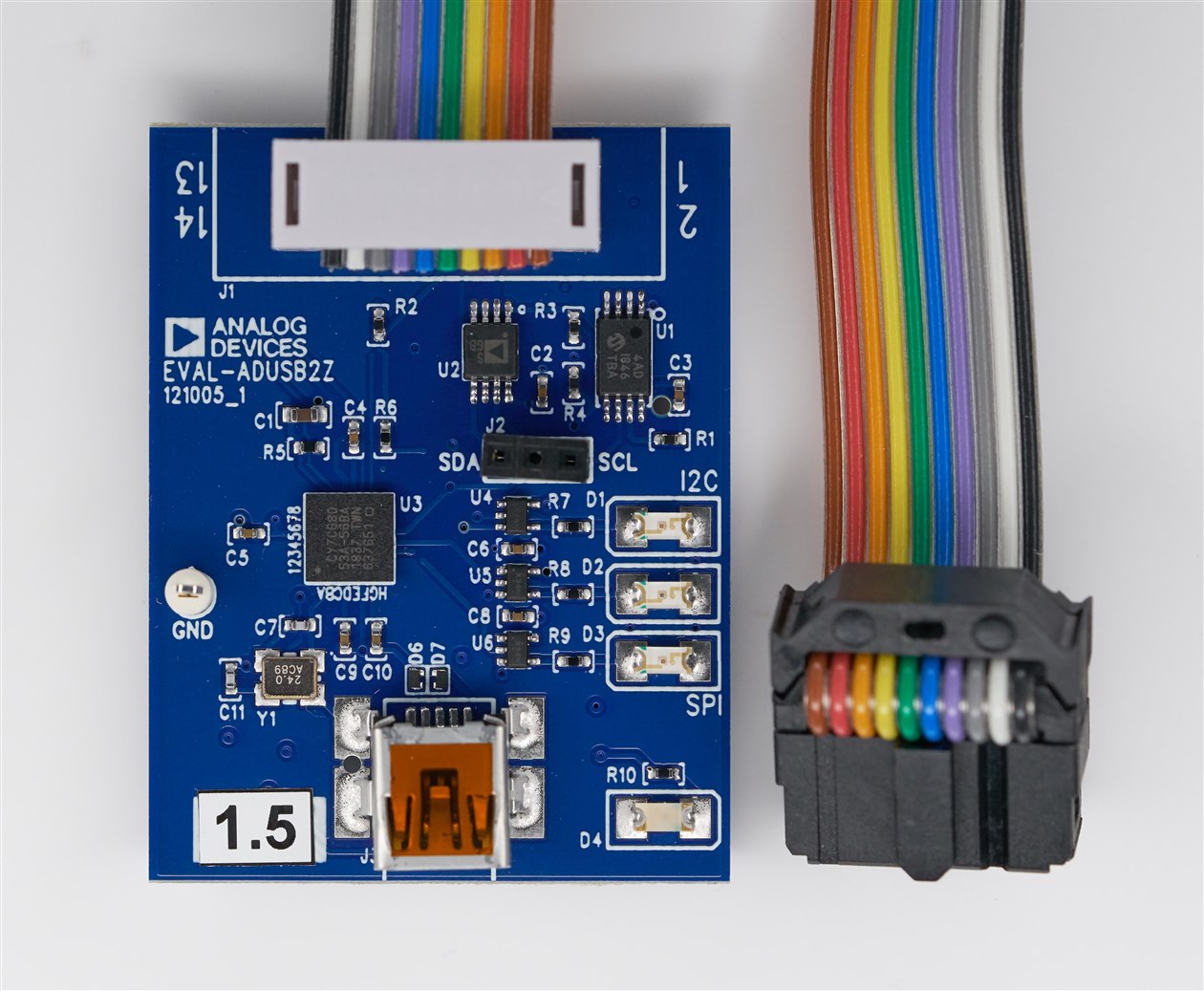
image

Finally, I also chose an LCTR1002 50-ohm SMA RF terminator and some GC005-LF prototyping boards.

image

Thanks for reading.

  • Sign in to reply

Top Comments

  • shabaz
    shabaz over 1 year ago in reply to balajivan1995 +1
    Things like Echo Dot (at least the early versions; I've not checked the recent models) use tiny MEMs microphones, and at least the Echo Dot 2 uses analog output ones, connected to an ADC (TI TLV320ADC3101…
  • shabaz
    shabaz over 1 year ago

    I installed the software needed for the GreenPAK device, which is called (awful name) Go Configure Software Hub. Upon startup, it was possible to select the chip, and then a 'GreenPAK Designer' window appears with a center black area for schematics.

    For a first project I just clicked on the right-side pane list of internal components to choose an op amp. Them I selected some external components (resistors and voltage sources) using the left side pane. Very straightforward. Wires are added by clicking on any two nodes (only valid connections will be formed).

    Then, I clicked on Debug, a simulation pane appeared on the right, and then it was possible to right-click on nodes to add probes.

    image

    When the simulation was run from the simulation pane, charts with the probe outputs appeared. The bottom blue trace is the op amp output. 

    image

    Interesting how the output wasn't correct for the first approx 2 msec. Probably that's the chip initializing itself (maybe). I'm guessing.

    So far I've only used the software, and have not tried to connect to the board.

    Anyway, this is really neat. I need to explore this more. There are examples online, that do more sophisticated stuff such as reading rotary encoders and generating adjustable sine-waves. 

    The incredible thing is the low cost. These chips are about $2 in single quantity, yet house several op-amps, electronically controlled resistors, oscillators, logic and so on. They are also low-power (can operate from coin cells).

    • Cancel
    • Vote Up 0 Vote Down
    • Sign in to reply
    • More
    • Cancel
  • DAB
    DAB over 1 year ago

    Nice set of toys.

    I look forward to hearing what you do with them.

    • Cancel
    • Vote Up 0 Vote Down
    • Sign in to reply
    • More
    • Cancel
  • shabaz
    shabaz over 1 year ago in reply to balajivan1995

    Things like Echo Dot (at least the early versions; I've not checked the recent models) use tiny MEMs microphones, and at least the Echo Dot 2 uses analog output ones, connected to an ADC (TI TLV320ADC3101) which has a small in-built DSP for adding some processing if desired. The TI DSPs use software called PurePath Console, which doesn't seem as nice as AD's Sigma Studio. Some versions of PurePath Console require purchasing the Eval board for the desired device. Some of the more recent TI devices are supported by the latest releases of PurePath Console, and then purchasing the eval board isn't essential, because the I2C commands for the DSP configuration are accessible in the software. I've not used PPC because of the eval board cost, but it could be interesting to hear from users who have (or those who have used more recent parts perhaps with a lower-cost board).

    There's an Echo Dot Gen 2 teardown here:  Amazon Echo Dot 2nd Gen Teardown  (photos are no longer high-res there unfortunately, but the specific part number of the microphone is unknown anyway, google didn't help me at the time; it may be a special labelled part specifically ordered from the mnfr by Amazon).

    I dug up this photo of an Echo Dot Gen 2 mic. It's not very detailed, I could take an Echo Dot 2 apart to get a better photo, but I don't think it's worth it, since it's so old; better to look at a more recent design, but the mic might still have a custom part number.

    image

    Two mics per TI chip (differential signals):

    image

    Another design worth checking is ReSpeaker: https://wiki.seeedstudio.com/ReSpeaker_Mic_Array_v2.0/

    According to the info at that link, the ReSpeaker is using a MEMs PDM microphone from ST: https://www.st.com/en/audio-ics/mp34dt01-m.html

    • Cancel
    • Vote Up +1 Vote Down
    • Sign in to reply
    • More
    • Cancel
  • shabaz
    shabaz over 1 year ago in reply to balajivan1995

    The ESP32 is very powerful, a lot of the signal processing could be done in software on it.

    I too would probably look to using either an I2S or perhaps PDM microphone, to simplify things. For signal processing, perhaps you need voice activity detection (VAD), and possibly AGC and maybe even noise reduction, although some of these things might be part of the processing done in the cloud with whichever service you wish to use. Googling, there is VAD capability built-in to the ESP32 SDK apparently. Provided enough audio is buffered until the VAD response has occurred, you'd have enough samples for sending to your service. I've never used the ESP32 for anything except very basic things (nothing related to speech unfortunately) so far, so don't have a lot of additional suggestions.

    • Cancel
    • Vote Up 0 Vote Down
    • Sign in to reply
    • More
    • Cancel
  • balajivan1995
    balajivan1995 over 1 year ago in reply to dougw

    I'm looking for mic that can pick up audio over 2-3 meters as well. Also, speaker should handle high quality audio as well, in case I want to play audios as well. This i2s mic is not that good quality, I've tried before.

    • Cancel
    • Vote Up 0 Vote Down
    • Sign in to reply
    • More
    • Cancel
<>
element14 Community

element14 is the first online community specifically for engineers. Connect with your peers and get expert answers to your questions.

  • Members
  • Learn
  • Technologies
  • Challenges & Projects
  • Products
  • Store
  • About Us
  • Feedback & Support
  • FAQs
  • Terms of Use
  • Privacy Policy
  • Legal and Copyright Notices
  • Sitemap
  • Cookies

An Avnet Company © 2026 Premier Farnell Limited. All Rights Reserved.

Premier Farnell Ltd, registered in England and Wales (no 00876412), registered office: Farnell House, Forge Lane, Leeds LS12 2NE.

ICP 备案号 10220084.

Follow element14

  • X
  • Facebook
  • linkedin
  • YouTube