


It’s during times like these that inspire innovation.
In that spirit, the “Fighting Germs” contest is here to not only reward that innovation ─ but also give to other charities for those attempting the same thing! It’s fun, it’s beneficial.
They say the best time to plant a tree is thirty years ago. The next best time is today.
.
.
Boston Dynamics' Spot is being used for telehealth sessions.
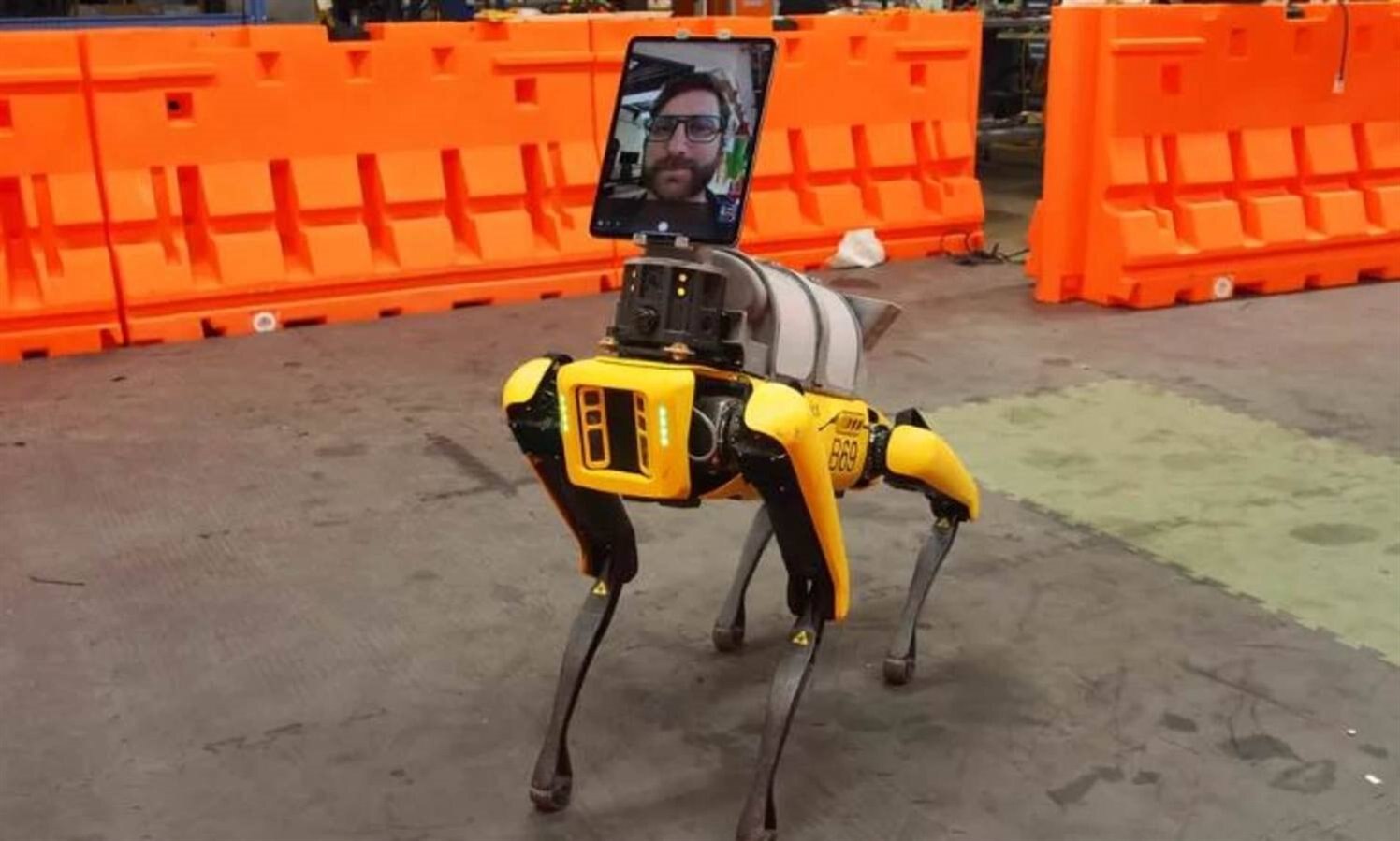
Spot allows doctors to speak with patients remotely to reduce exposure to the virus. (Image credit: Boston Dynamics)
First responders working around the clock treating COVID-19 patients risk exposure to the virus every day. Boston Dynamics wants to reduce the risk using their four-legged robot, Spot. Spot's been used in the past to hold open doors and pull a rickshaw, and now it's helping healthcare workers treat patients remotely at Boston's Brigham and Women's Hospital.
Equipped with an iPad and a two-way radio, healthcare workers can speak with high-risk patients from a safe distance, possibly even their homes. They can also guide the robots through triage tents where patients are located to have them line up for an assessment. Boston Dynamics wants to take this one step further. They're currently working on ways for Spot to remotely collect vital sign information, like body temperature, respiratory rate, pulse rate, and oxygen saturation. They're looking to use a thermal camera for this along with RGB cameras to measure changes in blood vessel contraction. (Spot is also being used to tell people to keep their distance in Singapore.)
The idea of telehealth interaction is also being tested at Union Hospital in Clinton, Indiana. The facility recently deployed rolling robots equipped with an iPad to visit patient rooms. Similar to Spot, this allows caregivers to interact with patients without risking exposure to the contagious virus. According to Jack Jaeger, executive director of the RHIC Simulation Center at Union Hospital, the robots have been used in the simulation center for several years. They planned to start using them before COVID-19 struck.
Tech startup uses autonomous robots for contactless medical supply deliveries
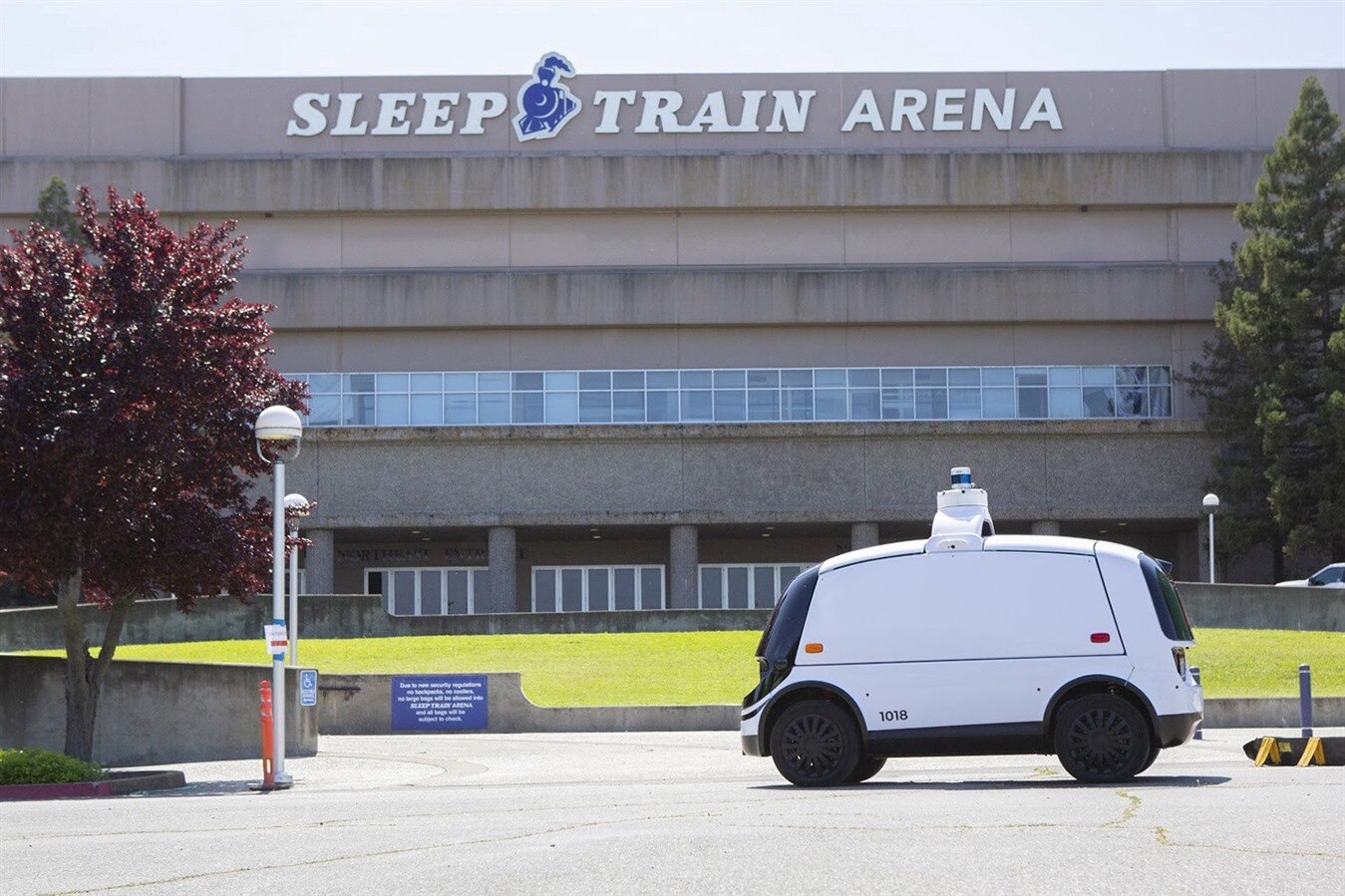
Nuro provides true contactless deliveries to first responders. (Image credit: Nuro)
To decrease the spread of the virus, many companies have launched curbside pickup and deliveries. But Nuro is providing true contactless delivery with its delivery robots. The autonomous vehicle startup, founded by two former Google engineers, is using their small hoard of delivery robots to transport medical supplies around two California stadiums that have been converted into treatment centers.
Whereas most self-driving car companies were forced to shut down due to shelter-in-place orders, Nuro realized it could use its R2 prototype vehicles to make essential deliveries. They're currently being used to carry food, personal protective equipment, clean linens, and other supplies to workers stationed at the Event Center in San Mateo and the Sleep Train Arena in Sacramento.
Typically, the vehicle requires the recipient to punch in a code on a touchscreen to receive their delivery. The company tweaked this so that the recipient only needs to give a thumbs up to the vehicle's camera to get their goods to make it truly contactless. To reduce complications for the vehicles, they travel on preplanned routes via private roads. Though they're capable of traveling up to 25 mph, the R2 is limited to 5mph outdoors and 2.5 mph indoors.
Robotic company Antwork is using a similar method to deliver testing samples and medical supplies to hospitals in China using drones. They hope this automatic and unmanned delivery method will help reduce human contact and get emergency supplies to facilities faster. So far, the drones have been 50% more efficient than traditional delivery methods.
Autonomous robots use UV lights to disinfect hospitals in China
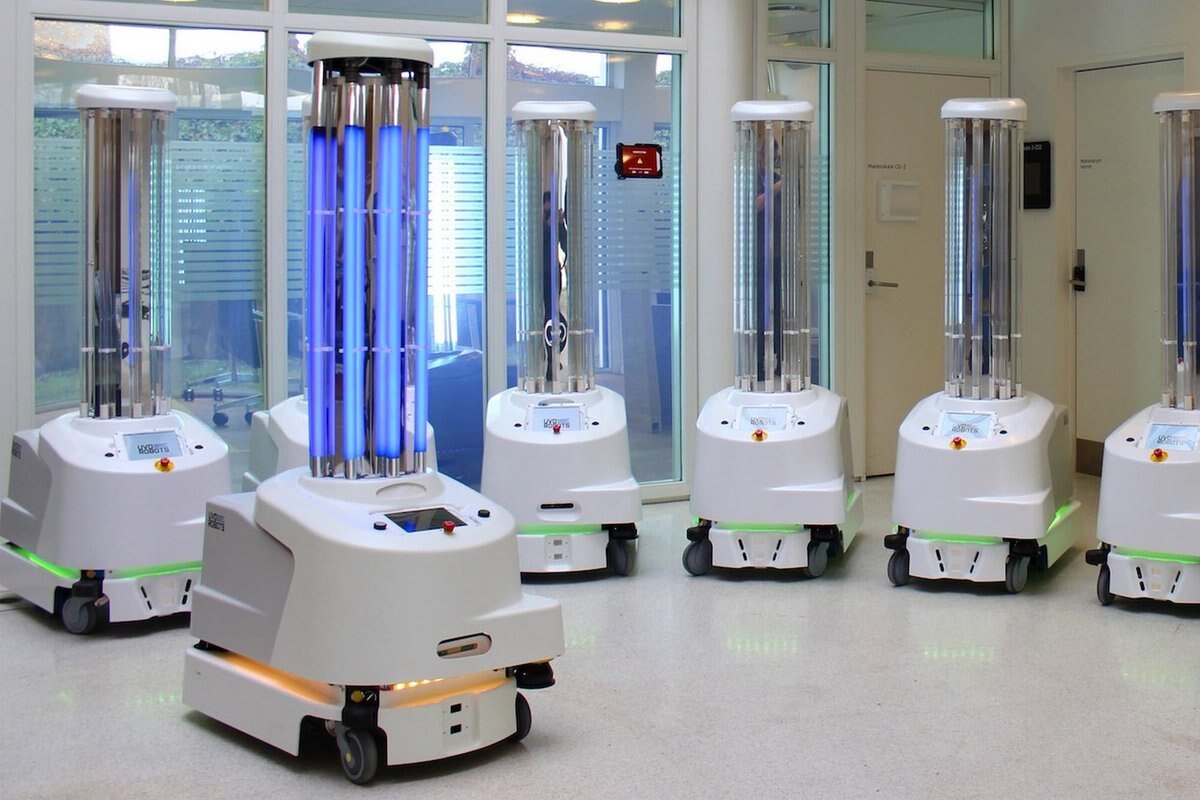
The robots navigate around the hospitals and beam UV lights to clean patient rooms. (Image credit: UVD Robots)
A team of robots in China is fighting back against COVID-19 by making sure facilities are clean. Danish company UVD Robots recently deployed a fleet of disinfecting robots to operate in China's hospitals to clean patient rooms and operating theaters. The bots are equipped with multiple lidar sensors and UV lamps that emit 20 joules per square meter per second of 254-nanometer light to destroy bacteria and microorganisms that it comes across.
The robot operates autonomously, but it needs a bit of help before it starts working. A human operator controls the robot using a computer to scan the environment using its lidars. It uses this information to create a digital map of the area. The operator then marks which rooms and areas need to be disinfected. From there, the robot operates on its own using simultaneous localization and mapping to navigate. It can travel through hallways and on elevators without further human assistance.
The disinfecting process involves the robot spending one to two minutes in various positions around the room to ensure it gets as many surfaces as possible. It takes about 10 to 15 minutes to disinfect the entire room. To keep both patients and hospital staff safe, the robots operate when there are no people around. It even has sensors to detect motion and will shut off its lights if a person enters the room. When it's done cleaning for the night, the robot will continue to its charging station. The robots are already servicing several hospitals in China. The company hopes to employ them in over 2,000 hospitals in the country.
Bright Machines' new robot hopes to increase COVID-19 testing
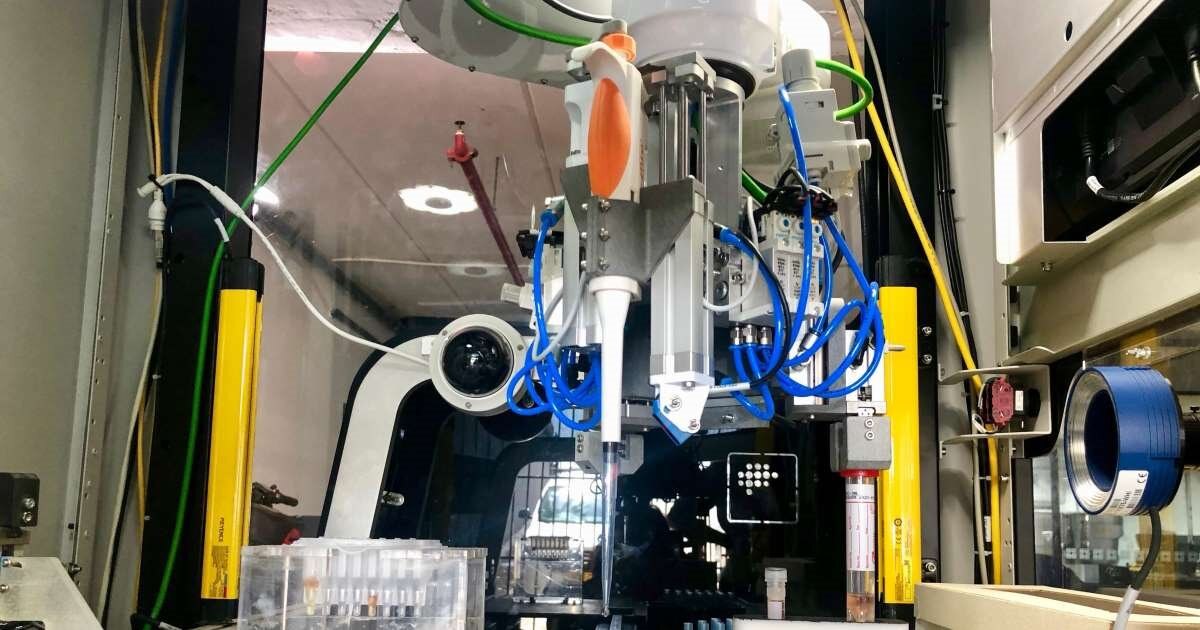
This robot can run COVID tests 24/7 speeding up the process. (Image credit: Bright Machines)
Accurate testing is essential in the fight against COVID-19, but there have been various obstacles to overcome, like shortage of kits and long wait times for results. Robotics company Bright Machines is hoping to speed up testing by automating the process. Switching its focus from electronics manufacturers to hospitals, the company has teamed up with Tel Aviv's Ichilov Hospital Laboratory, Impact Lab and iCobots to create an improved COVID-19 testing machine.
The machine is made up of a robotic cell, a dual conveyor, a robotic arm and a vision system. It's programmed to open different-sized test tubes and draw samples from the patient test tube to the control tube. The vision system works to verify performance throughout the process and make sure it's done correctly.
Turning testing into an automatic process reduces human involvement, lowering the risk of people being exposed to the virus. It also ensures testing can be done 24/7 greatly speeding up the process. Soon, the machine will be moved to Ichilov Hospital Laboratory where it will operate at no cost for up to 12 months. Other testing facilities have reached out to Bright Machines about installing the machine at their locations. The team is currently working on an automated process to create HIV test cartridges for Diagnostics for the Real World.
New robot could help treat patients in China's hospitals
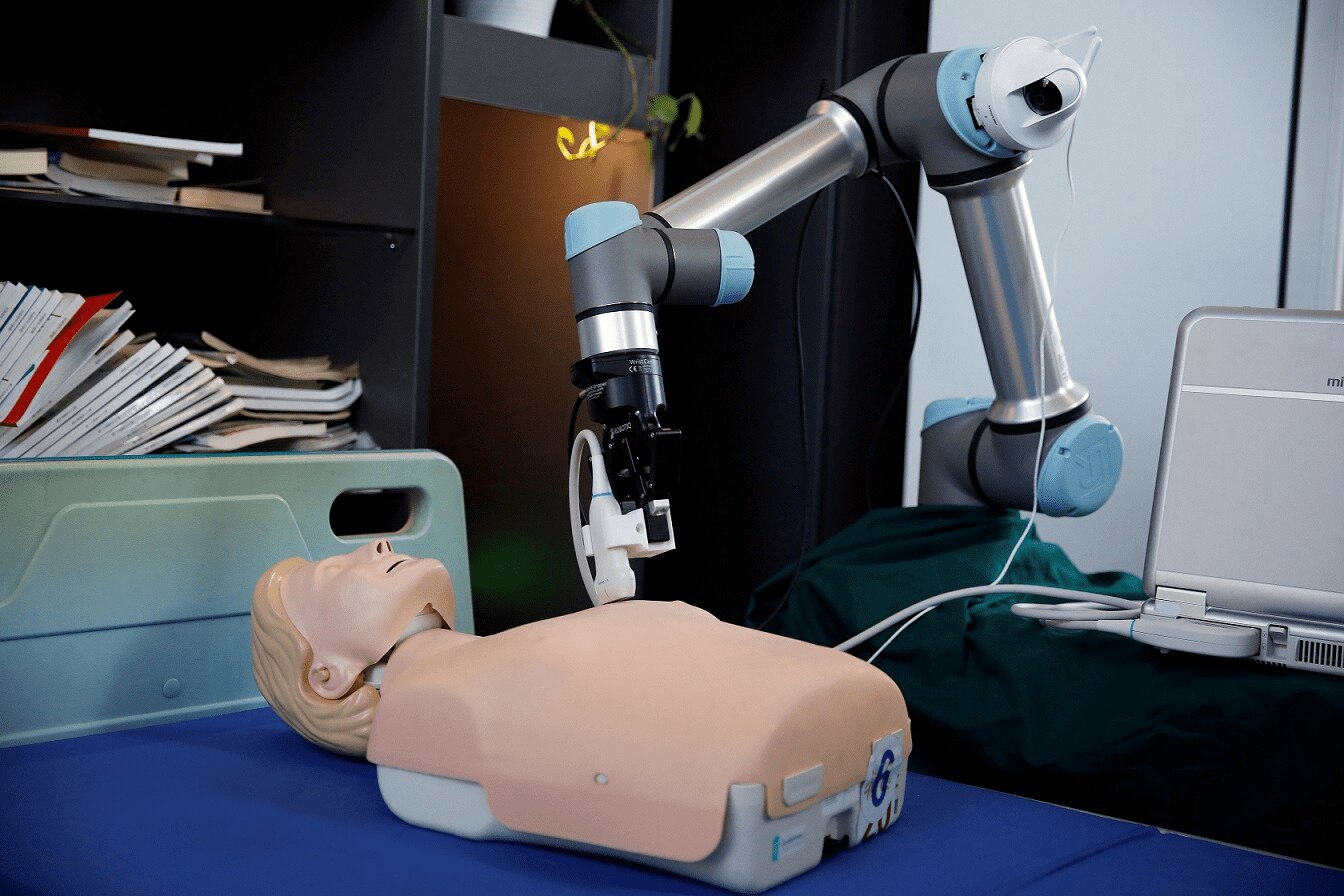
This robot can perform tasks, like ultrasounds and listen to a patient's organs. (Image credit: Reuters)
Doctors and other healthcare workers treating COVID-19 patients put themselves at risk of contracting the virus. To keep workers safe and healthy, a team of researchers from China's Tsinghua University has created a robot that can take a patient's vitals. Professor Zheng Gangtie designed the robot, which is made up of a mechanized arm on wheels. It uses the same technology found on space stations and lunar explorers.
Gangtie and his team converted two mechanized robotic arms to make them fully automated. They even had the ability to disinfect themselves. But after some feedback from doctors, the team reduced the amount of automation for safety reasons. They also believe having a personal presence with the robot would keep patients calm.
The robot is able to perform tasks, such as ultrasounds, take mouth swabs, and listen to a patient's organs, all of which are normally done by a doctor. Currently, there are two robots in operation, one at a hospital in Beijing, the other at the university's lab. Gangtie hopes to build more robots, but since they cost roughly $72,000 each to make, the university has run out of funding. Right now there are no plans to commercialize the robot.
Grocery stores are using robots to help them restock shelves
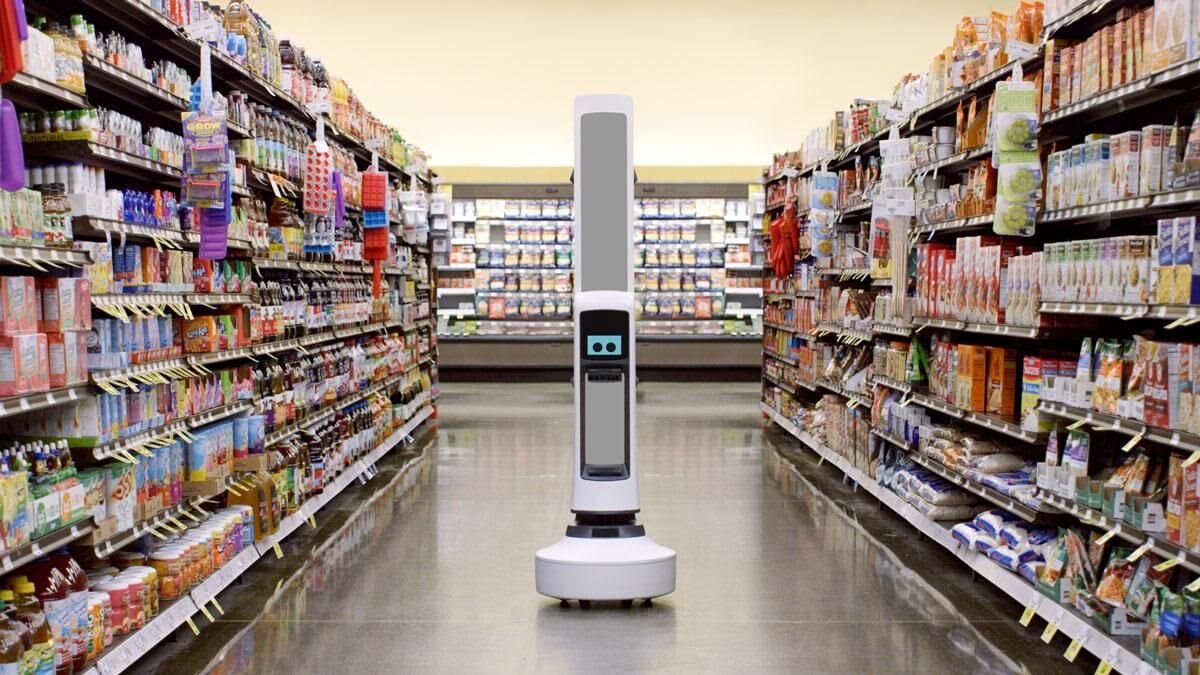
Don't be alarmed, Tally is just doing inventory. (Image credit: Simbe Robotics)
Grocery stores have also felt the impact of COVID-19. Supplies, such as disinfectants, bleach, among other base needs, have been selling out everywhere, putting pressure on stores to keep up with demand. Some stores have turned to robots to decrease some of the burdens.
Tally, by Simbe Robotics, is a robot that travels through grocery store aisles takes a real-time inventory of items on shelves using image recognition. The information is then used by store teams to let them know what items they need to restock and speed up the process.
Broad Branch Market in Washington, D.C., has similar robots in their stores. These bots, designed by Brain Corp, are self-driving and equipped with sensors. They use AI to make deliveries to people in the area. The company has also supplied its automated floor-scrubbing robots to stores during this crisis. Walmart hopes to install these robots in their stores by the end of the year. They also plan to have robots to keep track of their inventory and automatically scan packages as they come off delivery trucks.
By employing these robots, stores are hoping to not only increase the rate at which they restock shelves, but also keep employees out of the aisles.
Have a story tip? Message me at: cabe(at)element14(dot)com