element14 Community
element14 Community
    Register Log In
  • Site
  • Search
  • Log In Register
  • Community Hub
    Community Hub
    • What's New on element14
    • Feedback and Support
    • Benefits of Membership
    • Personal Blogs
    • Members Area
    • Achievement Levels
  • Learn
    Learn
    • Ask an Expert
    • eBooks
    • element14 presents
    • Learning Center
    • Tech Spotlight
    • STEM Academy
    • Webinars, Training and Events
    • Learning Groups
  • Technologies
    Technologies
    • 3D Printing
    • FPGA
    • Industrial Automation
    • Internet of Things
    • Power & Energy
    • Sensors
    • Technology Groups
  • Challenges & Projects
    Challenges & Projects
    • Design Challenges
    • element14 presents Projects
    • Project14
    • Arduino Projects
    • Raspberry Pi Projects
    • Project Groups
  • Products
    Products
    • Arduino
    • Avnet & Tria Boards Community
    • Dev Tools
    • Manufacturers
    • Multicomp Pro
    • Product Groups
    • Raspberry Pi
    • RoadTests & Reviews
  • About Us
  • Store
    Store
    • Visit Your Store
    • Choose another store...
      • Europe
      •  Austria (German)
      •  Belgium (Dutch, French)
      •  Bulgaria (Bulgarian)
      •  Czech Republic (Czech)
      •  Denmark (Danish)
      •  Estonia (Estonian)
      •  Finland (Finnish)
      •  France (French)
      •  Germany (German)
      •  Hungary (Hungarian)
      •  Ireland
      •  Israel
      •  Italy (Italian)
      •  Latvia (Latvian)
      •  
      •  Lithuania (Lithuanian)
      •  Netherlands (Dutch)
      •  Norway (Norwegian)
      •  Poland (Polish)
      •  Portugal (Portuguese)
      •  Romania (Romanian)
      •  Russia (Russian)
      •  Slovakia (Slovak)
      •  Slovenia (Slovenian)
      •  Spain (Spanish)
      •  Sweden (Swedish)
      •  Switzerland(German, French)
      •  Turkey (Turkish)
      •  United Kingdom
      • Asia Pacific
      •  Australia
      •  China
      •  Hong Kong
      •  India
      • Japan
      •  Korea (Korean)
      •  Malaysia
      •  New Zealand
      •  Philippines
      •  Singapore
      •  Taiwan
      •  Thailand (Thai)
      • Vietnam
      • Americas
      •  Brazil (Portuguese)
      •  Canada
      •  Mexico (Spanish)
      •  United States
      Can't find the country/region you're looking for? Visit our export site or find a local distributor.
  • Translate
  • Profile
  • Settings
Webinars, Training and Events
  • Learn
  • More
Webinars, Training and Events
Blog Webinar Briefing & FAQ: Circuit Design with MOSFET Relays is Available On Demand!
  • Blog
  • Forum
  • Documents
  • Events
  • Polls
  • Files
  • Members
  • Mentions
  • Sub-Groups
  • Tags
  • More
  • Cancel
  • New
Join Webinars, Training and Events to participate - click to join for free!
Group - Links
  • Group RSS
  • More
  • Cancel
  • Author Author: tariq.ahmad
  • Date Created: 20 Sep 2019 7:07 PM Date Created
  • Views 1094 views
  • Likes 4 likes
  • Comments 0 comments
  • webinar_briefing
  • webinar_update
Related
Recommended

Webinar Briefing & FAQ: Circuit Design with MOSFET Relays is Available On Demand!

tariq.ahmad
tariq.ahmad
20 Sep 2019

The following webinar is now available for On-Demand Viewing:
  • Circuit design with MOSFET relays!


imageimage
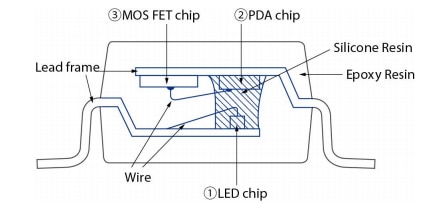
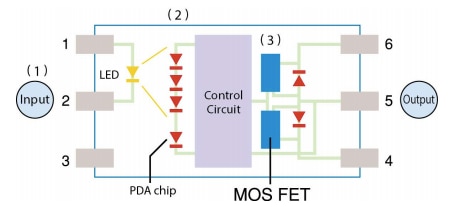
MOSFET Relay Block DiagramMOSFET Relay Construction


Q&A Session


image

What is the minimum input voltage to trigger MOSFET relay? Opto-coulers operation is not reliable >3V.


Min. input  voltage as defined in datasheet (attachment: gvm_51g_61g_61vy1): LED froward voltage , eg. For G3VM-61VY3 it is 1,1V ;


Download Datasheet Attachment Below


What are the units for each of the specification parameters?

If it concerning input circuit: MOSFET relays cannot be used in parallel.


The MOSFET relay input LED has forward voltage characteristics. This forward voltage has characteristic variations. LEDs with low forward voltage carry a large amount of current, while LEDs with high forward voltage carry a small amount of current. As a result, one of the circuits connected in parallel may not work. When the MOSFET relay input is connected in series, the forward voltage is higher than than normal MOSFET relay. As a result, an operating voltage of 5V or more is required, but there is no problem in use. For output circuit Seial connection: the capacitance between the terminals decreases. Therefore, the isolation of high frequency characteristics is improved. However, the load voltage that can be applied to each does not change.


Even if connected in series, the insulation distance is extended like a mechanical relay and the performance is not improved. This is because the operation timing of the output side of the MOSFET relay also varies. Since the operating voltage is instantaneously applied to one side of the MOSFET relay, it cannot be used at a voltage exceeding the rating. Next, in the case of parallel output: it can flow more than the rated load current. This is because the resistance value is lowered by parallel connection. However, it is not possible to pass double the current. Since there is also variation in the operation timing, a large current flows only on one side instantaneously. However, a MOSFET relay can pass a large amount of current if it is instantaneous.


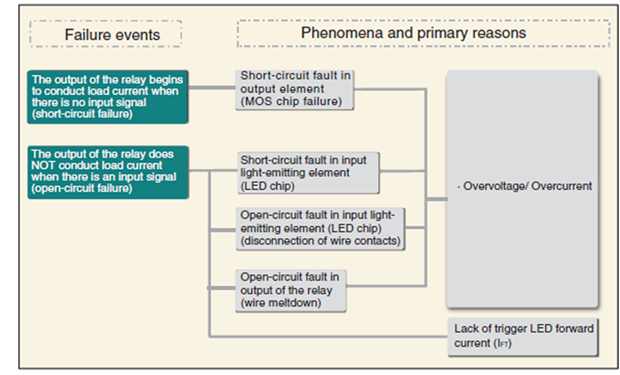
What is the failure mode, if there is ESD or overvoltage/overcurrent on the switched side,


See failure criteria below.  Please provide more details from the actual design and we can provide recommendations!
 

image

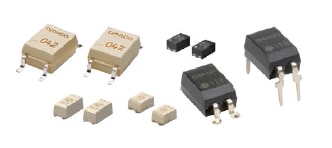
Hi Gabriel, my first question is why some of Omron mosfet relays are white and some are black plastic?


White plastic mold creates better MOSFET relay sensitivity and allows lower power consumption on LED side.


Download Datasheet Attachment Below


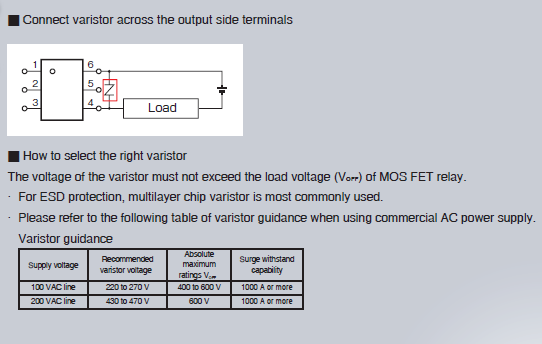
Is there any ESD protection for the MOSFET relays?


To prevent ESD - Electrostatic Discharge, using a varistor can be effective method. Please use protection device whose operation time is faster than the time to be applied Overvoltage to MOS FET.
 

image


Talking about signal integrity - what is maximum frequency a mosfet relay ( not module) can switch without significant signal integrity loss?


Based on experience it is about 900MHz (need more application details)

Attachments:
imageen-g3vm_61g_61vy1.pdf
  • Sign in to reply
element14 Community

element14 is the first online community specifically for engineers. Connect with your peers and get expert answers to your questions.

  • Members
  • Learn
  • Technologies
  • Challenges & Projects
  • Products
  • Store
  • About Us
  • Feedback & Support
  • FAQs
  • Terms of Use
  • Privacy Policy
  • Legal and Copyright Notices
  • Sitemap
  • Cookies

An Avnet Company © 2025 Premier Farnell Limited. All Rights Reserved.

Premier Farnell Ltd, registered in England and Wales (no 00876412), registered office: Farnell House, Forge Lane, Leeds LS12 2NE.

ICP 备案号 10220084.

Follow element14

  • X
  • Facebook
  • linkedin
  • YouTube