


 |
| Buy NowBuy Now |
We're Giving Away 2 HAQ Air Quality Monitors for Asking the Best Questions!
Register for a Chance to Win!
The future of HVAC innovation starts with the right sensors and switches.
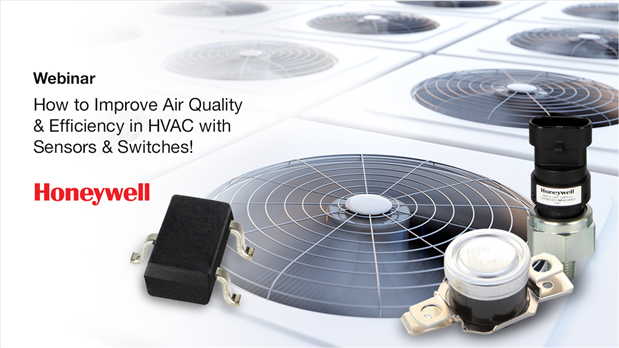
Optimize HVAC system functionality while improving air quality and energy efficiency with Honeywell switches, pressure sensors, air quality sensors, and gas sensors.
Global market trends and requirements in home and building automation are driving the need to improve air quality and efficiency while helping to reducing global warming in HVAC systems. Until recently, there were very few sensors in a typical HVAC/R system but with the advent of powerful, low-cost microcontrollers, these systems have become much more sophisticated. With the proper use of sensing solutions providing feedback to these control systems, HVAC/R systems can run more efficiently, ensure cleaner air, reduce energy waste, and ensure a safer overall system.
What you will learn in this live webinar:
- How sensors can be used to improve occupant productivity and health by optimizing air purification and its energy use
- How sensors can help address increasingly complex regulatory requirements for indoor air safety and global warming reduction
- The role sensors and switches play in protection against the highly flammable and toxic refrigerants used in HVAC/R systems
- How sensors can be used to balance the airflow in complex ducting systems to provide cost-saving energy efficiencies
The Presenters:
 |  |
| Stephanie Edmonson, Product Manager, Industrial Switches and Thermal Sensors, Honeywell | Simon Anderson, Product Manager, Pressure & Force Sensors, Honeywell |
| Stephanie has been with Honeywell for eleven years with 6 years’ experience as a sales application engineer in the test and measurement market and 5 years’ experience in product marketing within the industrial and aerospace industries. Stephanie brings her experience in application engineering, customer engagement, and market analysis to drive innovation in product and solutions development for the Industrial portfolio. | Highly accomplished product manager with a proven track record of delivering growth, strategic vision, innovation and continuous improvement on an international basis. Responsible for developing best-in-class next generation pressure and force sensors for industry leading medical and industrial OEMs. Before joining Honeywell, he worked in the data protection and storage market, 8 years as a failure analysis engineer and 10 years as a global product manager developing products for Apple, IBM and HP. Enjoys engaging with customers, sharing ideas, information and knowledge. |
 |
| Craig Gannon, Product Manager, Environmental and Gas sensors, Honeywell |
Craig has been with Honeywell for two years and has over 15 years product marketing and business development experience within the aviation and power generation industries. Craig brings his wealth of experience in customer engagement, market analysis and insight to drive continuous product development, innovation and solutions for the Environmental and Gas sensors portfolio. |


