element14 Community
element14 Community
    Register Log In
  • Site
  • Search
  • Log In Register
  • Community Hub
    Community Hub
    • What's New on element14
    • Feedback and Support
    • Benefits of Membership
    • Personal Blogs
    • Members Area
    • Achievement Levels
  • Learn
    Learn
    • Ask an Expert
    • eBooks
    • element14 presents
    • Learning Center
    • Tech Spotlight
    • STEM Academy
    • Webinars, Training and Events
    • Learning Groups
  • Technologies
    Technologies
    • 3D Printing
    • FPGA
    • Industrial Automation
    • Internet of Things
    • Power & Energy
    • Sensors
    • Technology Groups
  • Challenges & Projects
    Challenges & Projects
    • Design Challenges
    • element14 presents Projects
    • Project14
    • Arduino Projects
    • Raspberry Pi Projects
    • Project Groups
  • Products
    Products
    • Arduino
    • Avnet & Tria Boards Community
    • Dev Tools
    • Manufacturers
    • Multicomp Pro
    • Product Groups
    • Raspberry Pi
    • RoadTests & Reviews
  • About Us
    About the element14 Community
  • Store
    Store
    • Visit Your Store
    • Choose another store...
      • Europe
      •  Austria (German)
      •  Belgium (Dutch, French)
      •  Bulgaria (Bulgarian)
      •  Czech Republic (Czech)
      •  Denmark (Danish)
      •  Estonia (Estonian)
      •  Finland (Finnish)
      •  France (French)
      •  Germany (German)
      •  Hungary (Hungarian)
      •  Ireland
      •  Israel
      •  Italy (Italian)
      •  Latvia (Latvian)
      •  
      •  Lithuania (Lithuanian)
      •  Netherlands (Dutch)
      •  Norway (Norwegian)
      •  Poland (Polish)
      •  Portugal (Portuguese)
      •  Romania (Romanian)
      •  Russia (Russian)
      •  Slovakia (Slovak)
      •  Slovenia (Slovenian)
      •  Spain (Spanish)
      •  Sweden (Swedish)
      •  Switzerland(German, French)
      •  Turkey (Turkish)
      •  United Kingdom
      • Asia Pacific
      •  Australia
      •  China
      •  Hong Kong
      •  India
      •  Japan
      •  Korea (Korean)
      •  Malaysia
      •  New Zealand
      •  Philippines
      •  Singapore
      •  Taiwan
      •  Thailand (Thai)
      •  Vietnam
      • Americas
      •  Brazil (Portuguese)
      •  Canada
      •  Mexico (Spanish)
      •  United States
      Can't find the country/region you're looking for? Visit our export site or find a local distributor.
  • Translate
  • Profile
  • Settings
Webinars, Training and Events
  • Learn
  • More
Webinars, Training and Events
Documents Winners Announcement: PYNQ-Z2: Embedded Vision Workshop (Zero to Hero) Series with Adam Taylor!
  • Blog
  • Forum
  • Documents
  • Events
  • Polls
  • Files
  • Members
  • Mentions
  • Sub-Groups
  • Tags
  • More
  • Cancel
  • New
Join Webinars, Training and Events to participate - click to join for free!
Actions
  • Share
  • More
  • Cancel
Engagement
  • Author Author: tariq.ahmad
  • Date Created: 3 Apr 2020 11:10 PM Date Created
  • Last Updated Last Updated: 17 Aug 2020 3:07 PM
  • Views 11648 views
  • Likes 20 likes
  • Comments 86 comments
Related
Recommended

Winners Announcement: PYNQ-Z2: Embedded Vision Workshop (Zero to Hero) Series with Adam Taylor!

image

PYNQ-Z2: Embedded Vision Workshop Series with Adam Taylor


Getting Started | Getting Up and Running  | Unlocking Your Inner PYNQ Hero  | Project14 | PYNQ Workshop image


Thank you to everyone who participated and we apologize for the delays.  We are pleased the following winners:


Grand Prize:   The winner of the $500 gift card goes to Fred27 for Ponq - bringing Pong to life with Pynq !


First Place Prizes: The winner of the $200 Gift Card goes to  yuricts for Taylor waves - WaveDrom demonstration on the PYNQ framework  + Ping Pong trainer, beacon_dave for PYNQ-Z2 Workshop - AXI GPIO and PYNQ-Z2 Workshop - PS GPIO , and riklaunim with Using PYNQ as user interface/user experience platform!


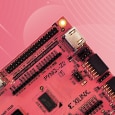
The element14 community is proud to welcome Adam Taylor, author of the MicroZed Chronicles, to present a hands-on workshop featuring the PYNQ-Z2.  If you follow along with Adam, for all three workshops, he'll walk you through everything you need to do to build an Embedded Vision application.  PYNQ is an open source project started by Xilinx, which fuses the productivity of Python with the acceleration provided by programmable logic within the Zynq / Zynq MPSoC.  The PYNQ-Z2 board that you will need in order to follow along with this workshop is a good board to get started using PYNQ because its got a strong community supporting it and it has Arduino and Raspberry Pi compatibility.


To complete this lab series, you will need the following Hardware:


  • PYNQ-Z2 BoardPYNQ-Z2 Board
  • Micro SD CardMicro SD Card greater than or equal to 16 GB
  • Micro USB CableMicro USB Cable
  • Ethernet CableEthernet Cable
  • Jumper CableJumper Cable
  • HDMI to Micro HDMI CableHDMI to Micro HDMI Cable


Buy KitBuy Kit


Not Included in Kit:  You will also need an HDMI camera such as:


  • HDMI Camera  (Any camera as long as HDMI Output is 720p or lower!)


To be able to complete these three labs you will need the following software on your development machine:


  • Vivado 2019.1
  • 7 Zip
  • Etcher
  • TerraTerm
  • WinSCP
  • PYNQ-Z2 Image


Each workshop session will walk you through everything you need to know to go from a Zero to a Hero using the PYNQ-Z2 board.  In between each session you'll be given missions where you can earn badges and win free swag prizes for blogging about PYNQ experience.  We'll set up a workshop space in Project14 but you're free to blog anywhere on the community as long as you use the assigned tags for your blog.  During the final mission, 3 First Place Winners will receive a $200 Amazon Gift Card for having the most creative and original Embedded Vision project.


In the spirit of open-source, we want to be as inclusive as possible and make sure that everyone has an opportunity learn while having fun and being creative.  No experience required.  We've even put together a short quiz based on Free material on pynq.io and the book Exploring Zynq MPSoC Book which you can download a free PDF copy of on the Xilinx site.


Dates and Register for Free:


Workshop:Dates and Missions:

Session 1 - Getting Started with PYNQ


What You'll Learn:

  • PYNQ Framework and PYNQ-Z2 Development Board
  • Base and Logic Tool Overlays
  • How to install existing overlays from the PYNQ Community

Tuesday, 5th of May 2020image


  • PYNQ-Z2 Workshop: Getting Started with PYNQ

Your Mission:

  • Update the overlay to include additional features.
  • Blog about your PYNQ experience and tag it pynqstarter to earn a badge and a chance to win free swag!

Session 2 - Getting Up and Running with PYNQ


What You'll Learn:

  • How to Build Your Own Overlays for the PYNQ Framework
  • Using existing PYNQ IP cores to aid in the creating an application
  • Using the Jupyter notebook to understand control with the application
  • Create GitHub repositories which can be used to share overlays

Tuesday, 19th of May 2020image


  • PYNQ-Z2 Workshop: Getting Up and Running with PYNQ

Your Mission:

  • Update the overlay to include additional features.
  • Blog about your PYNQ experience and tag it pynqrunner to earn a badge and a chance to win free swag!

Session 3 - Unlocking Your Inner PYNQ Hero


What You'll Learn:


  • Create a PYNQ overlay which implements an embedded vision application
  • Use an HDMI camera to receive images before processing and using OpenCV

Tuesday 2nd of June 2020image


  • PYNQ-Z2 Workshop: Unlocking Your Inner PYNQ Hero

Your Mission:

  • Accelerate the overlay using additional OpenCV functions
  • Blog about your PYNQ experience and tag it pynqhero to earn a badge a chance to win free swag!


Prizes:

imageimage
One Grand Prize Winner Receives a $500 Gift Card!3 First Place Winners Receive a $200 Amazon Gift Card


In-between sessions, blog about your learning experience to win badges, free swag, and a chance to win a $500 Gift Card Grand Prize for the Best Embedded Vision Project. 


3 First place winners will receive a $200 Amazon Gift Card. 


To be eligible you must:


  • Attend all 3 sessions with Adam Taylor!
  • Blog about your PYNQ experience and earn 3 PYNQ badges!
  • Every time you earn a badge you have a chance to win free swag!
  • Demonstrate what you've learned by completing an Embedded Vision Project!
  • The Best Overall Embedded Vision Project Wins a $500 Gift Card!
  • 3 First Place Winners Receive a $200 Amazon Gift Card!
  • Winners will be chosen based on Creativity and Originality!
  • Have Fun, Be Creative!


Presenter:


image
Founder and Lead Engineer, Adiuvo Engineering & Training Ltd
Adam has over 18 years engineering experience of which a significant number of these are at Design Authority / Responsible Engineer level on complex System and Electronic projects for advanced satellite payloads, safety critical systems (SIL4) and other high performance systems. He is both a Chartered Engineer and Fellow of the IET, as well as, a prolific blogger on technical subjects such as Electronics design, FPGA design and Reliable techniques.He is also the author of the MicroZed Chronicles, a weekly blog which focuses on the Xilinx Zynq & Zynq UltraScale+ SoC, as well as, the Vivado and SDSoC tool sets. The series contains over 250 in depth technical articles, providing examples and how to's which cover every aspect of using the device from basics to advanced concepts such as Asymmetric Multi Processing and High Level Synthesis.
  • pynqworkshpch
  • pynq-z2
  • pynqseries
  • embedded vision workshop
  • pynq
  • zero to hero
  • webinar_update
  • Share
  • History
  • More
  • Cancel
  • Sign in to reply

Top Comments

  • weiwei2
    weiwei2 over 5 years ago +6
    Keep Captain Hook Away I want to do a home "pest' repellent. In this case is a stray cat that often "invade" and "rampage" my home garden. It does a lot of naughty job like pooping, digging food. Just…
  • Fred27
    Fred27 over 5 years ago +5
    I thought I'd make sure I was ready to hit the ground running with the webinar and found there were a few quirks to getting PYNQ set up. If you already see a Jupyter notebook when you open http://pynq;9090…
  • Fred27
    Fred27 over 5 years ago +4
    I notice that Vivado 2019.1 has been added to the prerequisites. I just wanted to add that when you're installing this do not be tempted to go for 2019.2 . There's nothing wrong with 2019.2 - in fact it…
  • michaelwylie
    michaelwylie over 5 years ago in reply to ipv1

    How about data logging. 14 or 16-bit sampling at 100 MSPS with GPS time-stamping.  A TTL or similar pulse triggers the start of sampling (on the next 100 MHz clock edge). The data gets the timestamp in hardware and is transmitted back to the PC by one of the high speed interfaces - likely ethernet. Basically, a high degree of timing control application.

    • Cancel
    • Vote Up +1 Vote Down
    • Sign in to reply
    • More
    • Cancel
  • ipv1
    ipv1 over 5 years ago in reply to michaelwylie

    Hi! Great to hear from you after such a long time. Hope all is safe and well.


    What in your opinion would be a good chunk of content and what could be a good demo example(s) or project, not just in terms of computer vision but FPGAs themselves?


    I am planning a few post beyond the PYNQ and have (hopefully) other FPGA boards on the way as well. This includes comparing FPGAs, designing with FPGAs, doing testing in simulation and then validation using a kit and test jig(microcontroller) and then finally doing a small board for an FPGA part.

    • Cancel
    • Vote Up 0 Vote Down
    • Sign in to reply
    • More
    • Cancel
  • michaelwylie
    michaelwylie over 5 years ago

    I'd be interested in this series. I've never had a proper introduction to FPGAs, just videos and trial and error to accomplish anything, which hasn't been much.

    • Cancel
    • Vote Up +1 Vote Down
    • Sign in to reply
    • More
    • Cancel
  • maxim.yudayev
    maxim.yudayev over 5 years ago in reply to tariq.ahmad

    Look what I got in the mail today!!! Thank you tariq.ahmad and Element14 for this great opportunity! A blogpost is coming up soon.

    (Yes, these are mango and avocado trees in the background).

    image

    • Cancel
    • Vote Up +3 Vote Down
    • Sign in to reply
    • More
    • Cancel
  • weiwei2
    weiwei2 over 5 years ago in reply to tariq.ahmad

    thank you , I'm thrilled. Need to start take more photos of captain hook (the cat) image

    • Cancel
    • Vote Up +1 Vote Down
    • Sign in to reply
    • More
    • Cancel
  • maxim.yudayev
    maxim.yudayev over 5 years ago in reply to tariq.ahmad

    Thank you! That's a byte of positivity for the day! (why byte? because it's at least 8 times better!) Eager to start with the workshops already!

    • Cancel
    • Vote Up 0 Vote Down
    • Sign in to reply
    • More
    • Cancel
  • ipv1
    ipv1 over 5 years ago in reply to tariq.ahmad

    Thank you! Looking forward to working on the projects.

    • Cancel
    • Vote Up 0 Vote Down
    • Sign in to reply
    • More
    • Cancel
  • tariq.ahmad
    tariq.ahmad over 5 years ago

    Congratulations to maxim.yudayev , weiwei2 ,  and ipv1 .   We will be sending you a free kit to serve as an example and help inspire other members to participate in this Zero to Hero Workshop Series using the PYNQ-Z2.  

    • Cancel
    • Vote Up +4 Vote Down
    • Sign in to reply
    • More
    • Cancel
  • weiwei2
    weiwei2 over 5 years ago in reply to weiwei2

    Captain Hook is spotted today

    image

    • Cancel
    • Vote Up 0 Vote Down
    • Sign in to reply
    • More
    • Cancel
  • ralphjy
    ralphjy over 5 years ago in reply to weiwei2

    The network is implemented partially in the PS and partially in the PL.  If you look back at the review - at the top is a diagram and description of the network topology.

    image

    The colored layers have been quantized with 1 bit for weights and 3 bit for activations, and will be executed in the HW accelerator in the PL, while the other layers are executed in python.  So basically only the input and output layers are run in the PS.

    The bitstream is loaded when the classifier is created.

    • Cancel
    • Vote Up 0 Vote Down
    • Sign in to reply
    • More
    • Cancel
<>
element14 Community

element14 is the first online community specifically for engineers. Connect with your peers and get expert answers to your questions.

  • Members
  • Learn
  • Technologies
  • Challenges & Projects
  • Products
  • Store
  • About Us
  • Feedback & Support
  • FAQs
  • Terms of Use
  • Privacy Policy
  • Legal and Copyright Notices
  • Sitemap
  • Cookies

An Avnet Company © 2026 Premier Farnell Limited. All Rights Reserved.

Premier Farnell Ltd, registered in England and Wales (no 00876412), registered office: Farnell House, Forge Lane, Leeds LS12 2NE.

ICP 备案号 10220084.

Follow element14

  • X
  • Facebook
  • linkedin
  • YouTube