element14 Community
element14 Community
    Register Log In
  • Site
  • Search
  • Log In Register
  • Community Hub
    Community Hub
    • What's New on element14
    • Feedback and Support
    • Benefits of Membership
    • Personal Blogs
    • Members Area
    • Achievement Levels
  • Learn
    Learn
    • Ask an Expert
    • eBooks
    • element14 presents
    • Learning Center
    • Tech Spotlight
    • STEM Academy
    • Webinars, Training and Events
    • Learning Groups
  • Technologies
    Technologies
    • 3D Printing
    • FPGA
    • Industrial Automation
    • Internet of Things
    • Power & Energy
    • Sensors
    • Technology Groups
  • Challenges & Projects
    Challenges & Projects
    • Design Challenges
    • element14 presents Projects
    • Project14
    • Arduino Projects
    • Raspberry Pi Projects
    • Project Groups
  • Products
    Products
    • Arduino
    • Avnet & Tria Boards Community
    • Dev Tools
    • Manufacturers
    • Multicomp Pro
    • Product Groups
    • Raspberry Pi
    • RoadTests & Reviews
  • About Us
    About the element14 Community
  • Store
    Store
    • Visit Your Store
    • Choose another store...
      • Europe
      •  Austria (German)
      •  Belgium (Dutch, French)
      •  Bulgaria (Bulgarian)
      •  Czech Republic (Czech)
      •  Denmark (Danish)
      •  Estonia (Estonian)
      •  Finland (Finnish)
      •  France (French)
      •  Germany (German)
      •  Hungary (Hungarian)
      •  Ireland
      •  Israel
      •  Italy (Italian)
      •  Latvia (Latvian)
      •  
      •  Lithuania (Lithuanian)
      •  Netherlands (Dutch)
      •  Norway (Norwegian)
      •  Poland (Polish)
      •  Portugal (Portuguese)
      •  Romania (Romanian)
      •  Russia (Russian)
      •  Slovakia (Slovak)
      •  Slovenia (Slovenian)
      •  Spain (Spanish)
      •  Sweden (Swedish)
      •  Switzerland(German, French)
      •  Turkey (Turkish)
      •  United Kingdom
      • Asia Pacific
      •  Australia
      •  China
      •  Hong Kong
      •  India
      •  Japan
      •  Korea (Korean)
      •  Malaysia
      •  New Zealand
      •  Philippines
      •  Singapore
      •  Taiwan
      •  Thailand (Thai)
      •  Vietnam
      • Americas
      •  Brazil (Portuguese)
      •  Canada
      •  Mexico (Spanish)
      •  United States
      Can't find the country/region you're looking for? Visit our export site or find a local distributor.
  • Translate
  • Profile
  • Settings
STEM Academy
  • Learn
  • Learning Center
  • STEM Academy
  • More
  • Cancel
STEM Academy
Documents What Do I Need to Teach STEM? STEM Educator and Wishlist Giveaway
  • Blog
  • Forum
  • Documents
  • Events
  • Polls
  • Files
  • Members
  • Mentions
  • Sub-Groups
  • Tags
  • More
  • Cancel
  • New
Join STEM Academy to participate - click to join for free!
Actions
  • Share
  • More
  • Cancel
Engagement
  • Author Author: e14phil
  • Date Created: 10 Aug 2021 12:44 PM Date Created
  • Last Updated Last Updated: 2 Mar 2022 9:30 AM
  • Views 4446 views
  • Likes 19 likes
  • Comments 23 comments
Related
Recommended

What Do I Need to Teach STEM? STEM Educator and Wishlist Giveaway

What Do I Need to Teach STEM?image


Summer is wrapping up in the northern hemisphere, and students are heading back to school. The U.S. Bureau of Labor Statistics (BLS) 2019–29 employment projections show that occupations in the STEM field are expected to grow 8 percent by 2029, compared with 3.7 percent for all other occupations.


Clearly STEM is an important and in-demand field of expertise, so get your students started in the world of engineering by introducing them to the tools and building blocks that are used to design the devices that we use every day.

We've put together a wish list with all the fundamental items needed to help you educate the next generation.


STEM Giveaway

imageimage


STEM Giveaway Prize

  • Duratool Digital Multimeter
  • BBC micro:bit Club Box set with 10x micro:bitsimage

Questions:

1) Engineers, tell us about your favorite teacher, and why they were your favorite
2) What item are we missing from this list?


Terms:

Post your answer as a comment below between 3rd September 2021 and 15th October 2021.
The best answers will be chosen by the element14 community team, and you will be shipped your prize (or local equivalent) free of charge.


List of Items:

The Basics


Computational Thinking

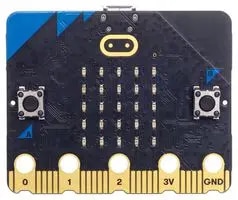
BBC micro:bit

Teaching logic and computational thinking is the first step for many children into a life of engineering of any kind. The BBC micro:bit comes with educational lesson plans and is a great teaching tool for any level.
image

imageimage


We also have our own BBC micro:bit v2 resources in the dedicated micro:bit space.


Single BBC micro:Bit

BBC micro:bit GO


10 x Club STEAM Set

10 x BBC micro:bit set


Measurement and Power

Multimeter – An electrical engineer’s best friend. A multimeter reads voltage, current, and resistance, basic measurements that are important in any circuit.

imageimage

Bench -

Multicomp Pro 3.7" Bench Multimeter

Handheld -

Duratool Handheld Digital Multimeter


Oscilloscope – Electrical measurements aren’t always fixed; some of them change with time! An oscilloscope maps electrical signals against time. Pair it with a function generator to see the difference between a sine wave and a square wave, or plug a capacitor in there and watch those square waves turn into shark fins!

imageimage

Digital Oscilloscope -

Multicomp Pro Digital Oscilloscope

Handheld Oscilloscope -

Handheld Oscilloscope


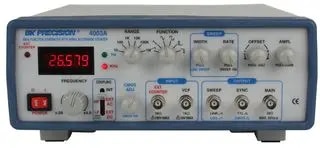
Function Generator – A function generator creates different waveforms at different voltages. Function generators generally allow you to specify voltage, frequency, and the type of waveform. Very useful in learning about AC power, audio, clocking, RF, and more.
image

Function Generator -

Bk Precision Function Generator


Bench Power Supply – A digital circuit might require 5V, while an analog audio circuit might require +/-15V. A bench power supply makes it convenient to jump from project to project, even when the voltages are different.

imageimage

Bench Power Supply

Multicomp Pro Bench Power Supply


Building Circuits – The Basics

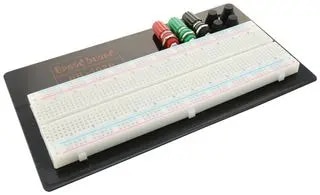
Breadboard – Breadboards let you quickly wire up a circuit without having to solder wires. Simply plug wires into the right holes and they’re connected. Breadboards also have rails for power and are compatible with ICs (integrated circuits).
image

Breadboard -

Multicomp Breadboard


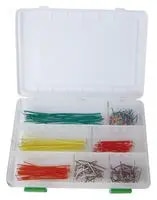
Jumper wire – Don’t skimp on wire; you’ll need a lot of it! Make sure you have a variety of colors, because no one like to debug a circuit when all the wires are the same color and can't be easily told apart.
image

Jumper Wire Kit -

Multicomp Jumper Wire Kit


Components


Passive Components

Passive components are components that change the power flowing through a circuit, but do not require power themselves. Passive components include resistors, capacitors, inductors, and more.


Semiconductors – Discrete

Semiconductors come in two varieties: discrete and integrated circuit. A discrete component is a component with just one circuit element. Passive components like resistors and capacitors are discrete components; however, there are also active ones, like transistors and diodes. These serve multiple purposes, from switching to amplifying and more.


Semiconductors – IC

Integrated circuits are chips containing multiple components. ICs are incredibly advanced, with analog and digital chips designed for a wide variety of purposes. Examples of analog chips include audio op-amps, filters, and amplifiers, while digital chips can run the gamut from a simple NAND logic gate to the most advanced FPGA (Field Programmable Gate Array). Simple logic gates are ideal for teaching the fundamentals of digital circuits.
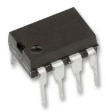
 

image

Op Amp – an op amp is a high gain electronic voltage amplifier. They are used in many devices, ranging from consumer to industrial. An MC1458 is a commonly used dual op amp.
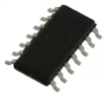
Op Amp

image

Quad NAND Gate – a NAND gate is an example of a digital logic gate. A NAND gate returns a 0 only if both of its inputs are 1.

Nexperia Quad NAND Gate


image

OR Gate – an OR gate is another type of logic gate. An OR returns a 1 if either input is 1. If both are 0, it returns a 0.
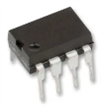
Logic OR Gate


image

555 Timer – A 555 timer generates a pulse that is useful for many applications, but for simple digital circuits, it works wonderfully as a clock to keep everything running.

555 Timer


Interfacing with the Outside World

Now that you’ve got the pieces to build a circuit, you’ll need some components that let the circuit do something, whether it be turning on a bulb, reproducing audio, or running a motor.


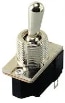
Switches – these turn things on and off, whether it be power, an LED, or turbo mode on your robotic vehicle.
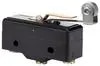
image


image

Rocker Switch -

E-Switch Red Rocker Switch


image

Toggle Switch -

Eaton Toggle Switch


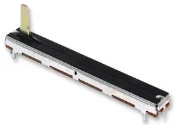
Potentiometers Overview – a variable resistor that lets the user adjust the level of a signal, for example audio volume or the intensity of a light bulb.


image

Wirewound -

Bourns Wire Wound Rotary Potentiometer
 

image

Slider -

Bournes Slider Potentiometer


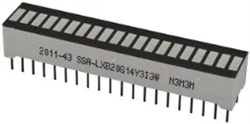
LED – Light Emitting Diodes or LEDs are a great way to display what’s happening in a circuit. They come in different colors, and you can get them to blink.
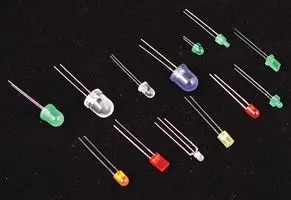
 

LED Overview

image

LEDs -

Red LED Set


image

LED Array -

LED Array


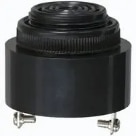
Piezo buzzer – A piezo buzzer beeps when it gets voltage. They’re a great audio notification; remember the classic board game Operation?
image

PUI Audio Buzzer


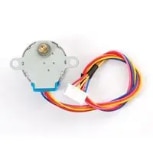
Stepper motor – Motors are very versatile tools, and building a circuit to control one is a great learning tool. Whether the motor is attached to wheels or spooling an excess cable, motors let users immediately see what the circuit is doing.
image

Stepper Motor -

Stepper Motor


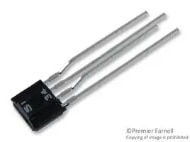
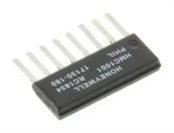
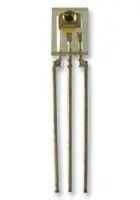
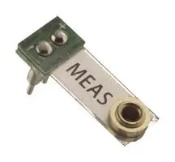
Sensors (inc Transducers) – sensors detect changes in the environment around them, and come in a tremendous variety of types, making pretty much any interactive circuit possible. Photo, magnetic, and vibration sensors make for great learning tools in the lab.
 

image

Photo sensor -

TT Electronics Optical Sensor


image

IR detector -

Sharpe Light Detector


image

Magnetic sensor -

Honeywell Magnetic Field Sensor
image

Vibration sensor -

Vibration Sensor


STEM Giveaway


As mentioned above, if you want to be in the running to win the giveaway mentioned earlier in this document, just answer these questions in the comments below:


Questions:

1) Engineers, tell us about your favorite teacher, and why they were your favorite
2) What item are we missing from  this list?

Terms:

Post your answer below between 3rd September 2021 and 15th October 2021.
The best answers will be chosen by the element14 community team, and you will be shipped your prize (or local equivalent) free of charge.

  • competition
  • stem
  • microbit
  • introduction to electronics
  • giveaway
  • Share
  • History
  • More
  • Cancel
  • Sign in to reply

Top Comments

  • fmilburn
    fmilburn over 4 years ago +9
    My favorite teacher prior to university was Mr. Perry Regier who taught physics and chemistry at my high school. There are two things I distinctly remember. First, Mr. Regier did lots of demonstrations…
  • dougw
    dougw over 4 years ago +7
    Missing components: The sensors in the micro:bit help round out the list nicely. A force sensor might also be interesting, maybe a force sensitive resistor. I also like the servo motor suggestion. For…
  • rsc
    rsc over 4 years ago +6
    The logic gates you show above are surface mount devices - you will need DIP package devices or some sort of adapter for use with the prototyping board listed. Schmartboard sells some interesting circuit…
  • scottiebabe
    scottiebabe over 4 years ago

    I feel extraordinarily fortunate to say most of the teachers I had between K-12 would go out of there way to donate their time or finances to help or provide opportunities to a student. So, I couldn't pick just one.


    Today, I believe a USB oscilloscope should be an essential teaching tool along with a laptop and projector to perform live experiments with sound or light, etc...


    I have no use for the prizes, but would be thrilled if you sent them to https://trinityrobotcontest.org/  in my name, which my high school teacher at the time had developed their curriculum around many years ago. They used to have photos dating back to the early nineties... perhaps on the internet archive.

    • Cancel
    • Vote Up +4 Vote Down
    • Sign in to reply
    • More
    • Cancel
  • javagoza
    javagoza over 4 years ago

    I miss:

    • Iron filings to make magnetic field lines visible.
    • Enameled wire and some magnets
    • Reed switch and hall effect sensor
    • Cancel
    • Vote Up +5 Vote Down
    • Sign in to reply
    • More
    • Cancel
  • redcharly
    redcharly over 4 years ago

    The professors who have left their mark on my way of thinking are two physics professors. The first is Professor Costa, who, in high school, taught me to always look at the nature around me to try to understand what happens every day of our daily life. His lessons were based on experiments and observations of natural phenomena. At the University of Engineering, I then met Professor Falciglia who taught me to solve the most complex problems by analyzing well the forces involved and breaking them down into simpler problems. I remember the accuracy of the lessons and his simple and rigorous way of solving the exercises.

    As for the tools for STEM, to those proposed by you, I would add a good soldering iron.

    As devices, I would add a Feather Huzzah, a truly exciting and versatile board that, thanks to WiFi, also allows older students to create simple home automation and IoT applications and to interface easily with their smartphones.

    I am also pleased to see that, even in 2021, my beloved NE555 is very much appreciated. Thanks to him I built timers, oscillators, led light games, modulators of all kinds ...

    • Cancel
    • Vote Up +3 Vote Down
    • Sign in to reply
    • More
    • Cancel
  • c4m4ch0
    c4m4ch0 over 4 years ago

    There was a professor who marked me positively more than others at the university. He gave the theoretical part and the practical part of some classes. I still remember the first job of one of these classes, which was to design a dc/dc converter. If we had a question, he would take a blank sheet of paper, a pen and explain concepts such as continuous and discontinuous mode, duty cycle, etc. and it showed the way of how we could overcome the difficulties, without giving the final answer. Today it's true that I don't remember half of it and if I need it, I select and buy an IC. However I know that if I need it, I have the basic knowledge to understand and solve any problem.

    As for missing tools, a soldering iron and tweezers are essential.


    • Cancel
    • Vote Up +3 Vote Down
    • Sign in to reply
    • More
    • Cancel
  • colporteur
    colporteur over 4 years ago in reply to dougw

    Growing up without a father, your dad sounds like a character from the Norman Rockwell picture of dad's that I created in my head.

    • Cancel
    • Vote Up +4 Vote Down
    • Sign in to reply
    • More
    • Cancel
  • dougw
    dougw over 4 years ago

    Missing components:

    The sensors in the micro:bit help round out the list nicely. A force sensor might also be interesting, maybe a force sensitive resistor. I also like the servo motor suggestion.

    For components perhaps some transistors, diodes, a regulator, and a counter chip.

    Missing Electronics Tools:

    side cutter, needle nose pliers, tweezers, soldering iron


    Teacher

    I never really had a favorite prof, I was an invisible student, but the best course I ever took was static mechanics. It taught me the general methods of engineering problem solving - like how to break a problem down into smaller problems that are easier to solve.

    As far as a favorite teacher goes, I would have to say my Dad - he taught me how the world worked, how to build a lot of things, how to use tools and firmly planted the maker bug in me.

    • Cancel
    • Vote Up +7 Vote Down
    • Sign in to reply
    • More
    • Cancel
  • dychen
    dychen over 4 years ago

    I had a lot of great teachers, but my favorite was Prof. Peck, who taught a circuits class that covered resistors, capacitors, and inductors (transistors and diodes were a later class). He was just amazing at explaining everything. I had taken other circuits classes and labs before that, but I never really got it. Prof Peck's class kind of opened my eyes, and every other class after that was much easier to understand.


    Sometimes, it just takes someone to explain things to you in a certain way and then things click!

    • Cancel
    • Vote Up +5 Vote Down
    • Sign in to reply
    • More
    • Cancel
  • robogary
    robogary over 4 years ago in reply to robogary

    One very memorable teacher was my 7th grade science teacher, nicknamed TNT, Terry Norman Trees.

    He was a younger teacher, enthusiastic, happy, silly at times, made science class fun, relevant and always interesting.

    I wanted to learn more.  I was eager to learn more, and I felt I could be successful to learn more

    about levers, torques,lifting things, batteries and voltages, power  etc..

    • Cancel
    • Vote Up +4 Vote Down
    • Sign in to reply
    • More
    • Cancel
  • fmilburn
    fmilburn over 4 years ago

    My favorite teacher prior to university was Mr. Perry Regier who taught physics and chemistry at my high school.  There are two things I distinctly remember.  First, Mr. Regier did lots of demonstrations where we would gather around the lab table at the front of the classroom.  The physics experiments included the frequency of pendulums, the mechanical advantage of different mechanisms, acceleration under gravity, and so on.  Second, we learned the formulas for the item under study and this being the 1960s there was a large classroom slide rule visible from the back of the room hanging over the blackboard.  These slide rules were huge!  Often Mr. Regier would demonstrate the calculation and sometimes a student would be called to come up and perform a calculation.

    image

    Source:  Pickett Teaching Guide for Slide Rule Instruction, ca 1960


    The fiddling about before doing the experiments was minimal and to this day I get a rush when my calculations and designs match observed behavior image 


    I presume this is targeted towards high school level students who have yet to determine a course of study for college.  But it is possible to get started earlier than that and I have found the Lego Wedo system works well with children as young as seven.  The advantages include:

    • many children already enjoy Lego
    • instructions are visual and students get hands-on immediately
    • feedback in the programming phase is immediate
    • excellent curriculum and teaching material is available online


    The teaching material associated with the kit is at least as important as the kit itself.  An example of a very good product is the TI Robotics System Learning Kit which Newark carries.  For many students having the material linked to something they find interesting like robots, drones, or environmental monitoring could be motivating and for a first course, it might be good to provide structure in that regard.  Computer modeling is very important these days and learning to use MATLAB, Numpy, and other such tools would be useful.


    At a high level:

    • Course objective will determine materials and tools
    • Get students involved and hands-on quickly
    • Teach age-appropriate theory
    • Show real-world application


    (no need to consider me for prizes :-)

    • Cancel
    • Vote Up +9 Vote Down
    • Sign in to reply
    • More
    • Cancel
  • colporteur
    colporteur over 4 years ago

    1) Engineers, tell us about your favorite teacher, and why they were your favorite

    Mr Radu, the instructor that oversaw lab work during my Electronic Engineering Technology diploma program.


    I recall how he forced me to find my own answers? Why are you taking that measurement? What do you expect to find? How will that influence your next step? He would shake his head, if he asked you questions and you couldn't respond. I remember being frustrated because my FM radio circuit was not working. His responses to my questions only prompted me to develop a methodology to troubleshoot. He would lead you to discover your own answers.


    Mr. Radu was a small, unassuming man. He never raised his voice or showed frustration. I recall talking to him about building a audio amplifier with dual 250Watt outputs, His response "You want to cook a chicken? Why so much power?"


    As my courses wrapped up, he shared with me some of his knowledge that influenced my response to an employers job offer. I did get the job and a wonderful career from it.


    During my careers, I did a lot of mentoring. New hires, junior individuals or summer students, I had no problem taking them on to support projects I was working on. When I retired three individuals spoke to me during my retirement function, expressing how much they learned working with me. "You never told us anything. You just asked questions and pointed us in the direction to get the answers. I can install a Linux operating system (O/S), slice drives, allocate memory, configure devices and make it secure without effort because of your questions. Having to reload the O/S after failing  to respond to a question was frustrating. Why didn't you ask me the question before I started the install?" I guess I suffer from the curse of Mr. Radu:)


    2) What item are we missing

    Where is the soldering iron?


    The item stands out for me because I'm hoping to have the Physical Computer Club members use them this year. They have been dabbling with SBC and microcontrollers for the past year. I'm thinking a printed circuit board they can mount components to and create a working circuit would be something they would enjoy.

    • Cancel
    • Vote Up +6 Vote Down
    • Sign in to reply
    • More
    • Cancel
<>
element14 Community

element14 is the first online community specifically for engineers. Connect with your peers and get expert answers to your questions.

  • Members
  • Learn
  • Technologies
  • Challenges & Projects
  • Products
  • Store
  • About Us
  • Feedback & Support
  • FAQs
  • Terms of Use
  • Privacy Policy
  • Legal and Copyright Notices
  • Sitemap
  • Cookies

An Avnet Company © 2026 Premier Farnell Limited. All Rights Reserved.

Premier Farnell Ltd, registered in England and Wales (no 00876412), registered office: Farnell House, Forge Lane, Leeds LS12 2NE.

ICP 备案号 10220084.

Follow element14

  • X
  • Facebook
  • linkedin
  • YouTube