element14 Community
element14 Community
    Register Log In
  • Site
  • Search
  • Log In Register
  • Community Hub
    Community Hub
    • What's New on element14
    • Feedback and Support
    • Benefits of Membership
    • Personal Blogs
    • Members Area
    • Achievement Levels
  • Learn
    Learn
    • Ask an Expert
    • eBooks
    • element14 presents
    • Learning Center
    • Tech Spotlight
    • STEM Academy
    • Webinars, Training and Events
    • Learning Groups
  • Technologies
    Technologies
    • 3D Printing
    • FPGA
    • Industrial Automation
    • Internet of Things
    • Power & Energy
    • Sensors
    • Technology Groups
  • Challenges & Projects
    Challenges & Projects
    • Design Challenges
    • element14 presents Projects
    • Project14
    • Arduino Projects
    • Raspberry Pi Projects
    • Project Groups
  • Products
    Products
    • Arduino
    • Avnet & Tria Boards Community
    • Dev Tools
    • Manufacturers
    • Multicomp Pro
    • Product Groups
    • Raspberry Pi
    • RoadTests & Reviews
  • About Us
    About the element14 Community
  • Store
    Store
    • Visit Your Store
    • Choose another store...
      • Europe
      •  Austria (German)
      •  Belgium (Dutch, French)
      •  Bulgaria (Bulgarian)
      •  Czech Republic (Czech)
      •  Denmark (Danish)
      •  Estonia (Estonian)
      •  Finland (Finnish)
      •  France (French)
      •  Germany (German)
      •  Hungary (Hungarian)
      •  Ireland
      •  Israel
      •  Italy (Italian)
      •  Latvia (Latvian)
      •  
      •  Lithuania (Lithuanian)
      •  Netherlands (Dutch)
      •  Norway (Norwegian)
      •  Poland (Polish)
      •  Portugal (Portuguese)
      •  Romania (Romanian)
      •  Russia (Russian)
      •  Slovakia (Slovak)
      •  Slovenia (Slovenian)
      •  Spain (Spanish)
      •  Sweden (Swedish)
      •  Switzerland(German, French)
      •  Turkey (Turkish)
      •  United Kingdom
      • Asia Pacific
      •  Australia
      •  China
      •  Hong Kong
      •  India
      •  Japan
      •  Korea (Korean)
      •  Malaysia
      •  New Zealand
      •  Philippines
      •  Singapore
      •  Taiwan
      •  Thailand (Thai)
      •  Vietnam
      • Americas
      •  Brazil (Portuguese)
      •  Canada
      •  Mexico (Spanish)
      •  United States
      Can't find the country/region you're looking for? Visit our export site or find a local distributor.
  • Translate
  • Profile
  • Settings
STEM Academy
  • Learn
  • Learning Center
  • STEM Academy
  • More
  • Cancel
STEM Academy
Documents Electrical Engineering Students Wishlist
  • Blog
  • Forum
  • Documents
  • Events
  • Polls
  • Files
  • Members
  • Mentions
  • Sub-Groups
  • Tags
  • More
  • Cancel
  • New
Join STEM Academy to participate - click to join for free!
Actions
  • Share
  • More
  • Cancel
Engagement
  • Author Author: e14phil
  • Date Created: 8 Sep 2021 2:49 PM Date Created
  • Last Updated Last Updated: 1 Apr 2023 2:09 PM
  • Views 11579 views
  • Likes 3 likes
  • Comments 60 comments
Related
Recommended

Electrical Engineering Students Wishlist

What should Electrical Engineering students buy for their first semester?


Electrical Engineering (EE) is a field that encompasses a wide range of specialties, but for students learning the basics, there are some tools that apply to almost everything, and make learning more interesting and fun.

We've put together a wish list with all the fundamental items needed to set you up for a life in Electrical Engineering.


The Basics


Basic Tools

As an EE student, you'll want to have your own basic set of tools to make your life easier. These are some of tools that every EE needs, no matter what their specialty:


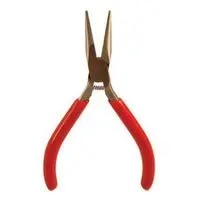
Needle-nose Pliers -

Electronic components are tiny and wiring up those tiny connectors is something our hands are just not built for. Needle-nose pliers are essential for any kind of circuit building.
 

image

Needle Nose Pliers


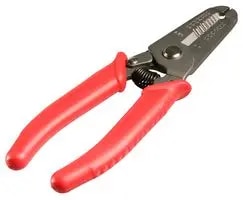
Wire Stripper

One of my lab partners use to strip wires with his teeth. With a few bites, a twist, and a pull, he'd have any gauge wire stripped and ready to go. For us regular people, wire strippers are mandatory.
image

Wire Strippers


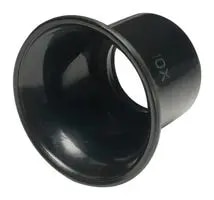
Loupe or Magnifying Glass

Loupes or magnifying glasses are incredibly helpful when soldering or working with a breadboard.
image

Loupe or Magnifying Glass


Tweezers

I don't envy anyone who has to modify a circuit made up of surface mount components, but for those types of jobs, eagle eyes, steady hands, patience, and a good set of tweezers are required.

image

Tweezers Six Pack


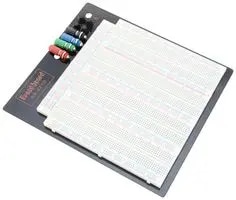
Breadboard

A breadboard is a quick prototyping tool where you can plug components and wires into holes to quickly connect them. Most labs will provide the necessary breadboard, but having one at your disposal is very handy.
image

Multicomp 1mm ABS Breadboard


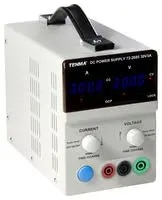
DC Power Supply

Circuits need a power source and for classroom projects, 5-12V should be sufficient.
image

Bench Power Supply


Soldering

Every EE should keep their soldering tools handy. Whether it's building cables or modifying/repairing equipment, soldering tools get a lot of use on the workbench.


Soldering Iron -

Soldering starts with a good iron. Because they're main task is melting things, they need to have enough power; 40W should do the job. A higher wattage iron doesn't get hotter, it maintains its temperature better. Every time an iron melts solder, it cools down. A higher wattage iron will heat back up more quickly. There's not much that's more frustrating than blobs of solder are taking forever to melt because the iron isn't getting hot fast enough.

image


Soldering Iron


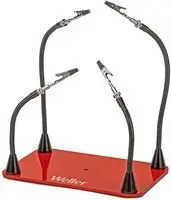
Helping Hand and Circuit Board Holder - You can always tell who likes to solder by the burn marks on their knees. We've all done it; holding a PCB or connector between our knees, with a soldering iron in one hand and a wire in the other. No matter how careful you are, you're going to hit your knee at some point! Growing a third arm is the best solution, but since science isn't quite there yet, save your knees with a Helping Hand setup or a circuit board holder.
 

image

Helping Hand -

Helping Hands


image

Circuit board holder -

Circuit Board Holder


Wicks and Desoldering Pumps -

Sometimes things won't go right, and you'll find that you accidentally shorted two pins on an IC. Use a wick or a desoldering pump (or both) to remove that extra solder after you've heated it up.

 

image

Solder Wick

Solder Wick


image

Desoldering pump

Desoldering pump


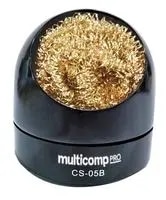
Soldering Iron cleaner -

Soldering irons quickly get oxidized. To keep them clean, brass shavings are more effective than a wet sponge (although a wet sponge does make that cool sizzling sound).
image

Soldering Iron Tip Cleaner


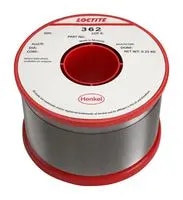
Solder - Of course, don't forget the solder!
image

Solder


Test Equipment

Testing is tricky with complex circuits. In order to make sure the different parts of the circuit are doing what you want them to, you need tools to measure the signal at each point.


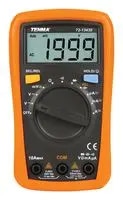
Multimeter -

Multimeters measure voltage, resistance, and current, the basic and most important measurements in electronics. Want to know if a component is broken? Measure across it; if the voltage drop is 0V, then it's broken.
image

Digital Multimeter


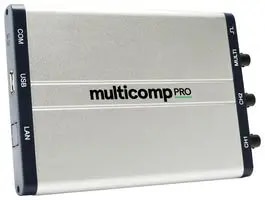
Oscilloscope - Oscilloscopes measure electrical signals mapped against time, useful for viewing the outputs of capacitors and inductors, distortion and noise, and clocked digital signals.


PC USB Oscilloscope -
image

USB Oscilloscope


Software

A big part of electrical engineering in the modern world is software. Most designs can be modeled and optimized before the first resistor even gets plugged into the breadboard.


PSpice - a SPICE (Simulation Program with Integrated Circuit Emphasis) circuit simulator that lets you design and simulate circuits built from a library of almost every component and IC available.

https://www.pspice.com


MATLAB - MATLAB (MATrix LABoratory) is used by many EEs to solve the complex math that arises from engineering problems. MATLAB simplifies matrix manipulations, graphing, creating algorithms, and with add-on toolkits, differential equations and linear algebra.

https://www.mathworks.com


Simulink - Simulink is a GUI add-on for MATLAB from Mathworks, the maker of MATLAB. It lets you combine graphical and textual programming, making MATLAB easier to use.

https://www.mathworks.com


LabVIEW - LabVIEW (Laboratory Virtual Instruments Engineering Workbench) from National Instruments is software that connects with measurement devices in order to control, retrieve, and analyze their data.

Labview


PI Expert - PI Expert from Power Integrations is a free tool that lets you design power supplies based on the specifications you need. It's a great learning tool in that you can switch parts in and out to see their effect on the circuit. It can even automatically optimize your design.

https://www.power.com/piexpert/


3D Printer

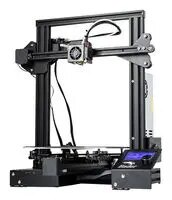
3D printers are on everyone's wishlist, but for EEs, they are especially useful. EEs are always in need of custom enclosures, mounts, risers, shims, and more. 3D printers can even print out entire sets of tools for the workbench. Because of advancing technology, prices have come down in recent years.
image

Ender 3 PRO 3D Printer


Microcontrollers and Single Board Computers

The integration of hardware and software has produced some of the most innovative devices out there. Microcontrollers and single board computers (SBC) are powerful learning tools to get you familiar with combining software and hardware.


Arduino

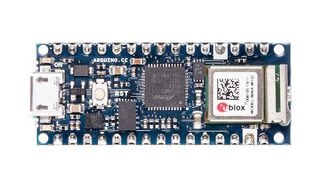
Arduino is a microcontroller that functions as an interface for a variety of hardware, including sensors, robots, displays, and more. It comes with its own development environment where you can write code (C++) to control the hardware attached to it. You can find Arduinos everywhere, from classrooms to automated factory floors.
image

Arduino Nano 33 IoT


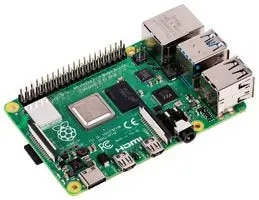
Raspberry Pi is entire computer packed onto a single board, capable of running any software compatible with the Linux operating system. Several manufacturers build "hats", small boards designed to interface with Pi that connect specifically to different types of hardware.
image

Raspberry Pi 4 2GB


Scientific Calculator

Last but not least, a good scientific calculator is mandatory for any EE student.

Mine was the legendary Hewlett Packard 28S (https://www.hpmuseum.org/hp28c.htm).

This $235 beast did everything, graphing, unit conversions, and it was the first Reverse Polish Lisp (RPL) (https://www.hpmuseum.org/rpl.htm) calculator.


However, the feature you really need as an EE student is solving matrices; any basic circuits class will have you solving hundreds. No one wants to solve matrices by hand! Luckily, these days, you don't need to pay $200 for a scientific calculator. Whether you're using iOS or Android, pop on your App Store and search for "scientific calculator" to pull up some low cost or even free alternatives to the monster HP.

  • what should i buy?
  • students
  • stem
  • electrical engineering
  • wishlist
  • Share
  • History
  • More
  • Cancel
  • Sign in to reply

Top Comments

  • maxpowerr
    maxpowerr over 4 years ago +4
    I figured out what was missing on this list.
  • kmikemoo
    kmikemoo over 4 years ago in reply to maxpowerr +2
    maxpowerr That got an audible laugh! That's funny!
  • phoenixcomm
    phoenixcomm over 4 years ago +2
    I have a bone to pick with you and your choice of wire strippers. both of these strippers do a better job with no twisting, razor blades, etc. ~~ Cris BTW By the best iron, you can afford. A ten - 20 hobby…
  • biker93
    biker93 over 4 years ago

    First thing I learned: Thevenin equivalents beat the hell out of solving differential equations

    What's missing: a small ARC reactor ... you need power do do anyhting

    • Cancel
    • Vote Up 0 Vote Down
    • Sign in to reply
    • More
    • Cancel
  • gsgill112
    gsgill112 over 4 years ago

    So for me,


    Q.   What was the first thing you learned in engineering school that stuck with you throughout your career?

    A.   If your breadboard design is Kinna functional, Always perfboard it and solder it into a prototype before things started getting messy. To add, another very important thing that I learned was Modularity. No matter how convenient it seams to solder everything into one board and get the prototype fully functional, its always good to divide the design into modules and tie them together. I still have a box full of Modules that I can reuse from old projects, and at the same time a box filled with early projects that either failed and became way too complex for me to work on; Or projects that I couldn't finish in time due to things becoming more complicated than envisaged.


    Q.   What is missing from this list?

    Well, I would recommend few things that I loved and saved my life a lot.

    1.   A good side angle cutter, it not only saves unnecessary  pokes into your body or unnecessary shorts, but the long lead extracted from a through hole component, can actually save the day and can definitely save some solder.

    2.   A Grove/ Raspberry pi/ Arduino starter kit, cause why rebuild things when you can reuse and quickly prototype your idea image

    3.   Cables both  Male-Male/ Male-Female/ Female-Female 0.1" standard size. I still remember myself plucking thin multi strand wires from cheep Chinese toys/ old vintage computers ( any junk electronic thingy I could get my hands on) , soldering small part of the tip of wire, and using it for breadboard projects. (NOT FUN AT ALL image)


    Regards,

    • Cancel
    • Vote Up 0 Vote Down
    • Sign in to reply
    • More
    • Cancel
  • ljmora.13
    ljmora.13 over 4 years ago

    1. What was the first thing you learned in engineering school that stuck with you throughout your career?


         I always remember when my professor of "Introduction to Electronic Circuits" mentioned that theres a golden rule to follow when you want to measure voltage or current on a circuit, and      that rule is: if you want to measure CURRENT, break the circuit and place the ammeter in SERIES, otherwise for VOLTAGE, you only have to place the voltmeter in PARALLEL. That rule      follows every student of electronic or electrical engineering along his career. In my case i used the multimeter mostly to detect and solve malfuncions.


    2. What is missing from this list?


         - Function Generator, is important to see how a circuits respond to a particular signal.

         - Im not a fan of arduino, i prefer PICs, so i recomend 16F84A or atmega328p (its the same that runs in the Arduino UNO board)

         - CABLES.

         - A toolcase for all your instruments and accesories.

         - And lastly, A COOL T-SHIRT TO SHOW OFF!!! 


         image

    • Cancel
    • Vote Up 0 Vote Down
    • Sign in to reply
    • More
    • Cancel
  • navadeepganeshu
    navadeepganeshu over 4 years ago

    Input coupling mode should be observed in oscilloscopes: I'd then on never forget to read top and bottom window of scope and its settings before touching. I remember running to an oscilloscope in university lab, hooking up a battery and seeing nothing on screen later to call the lab instructor to realize it was in AC couplingimage


    Woah! very nice compilation of stuffs to gear up with EE. What more to add? A pile of 74xx logic ICs to play around lot of combinations and rig up logics.

    • Cancel
    • Vote Up 0 Vote Down
    • Sign in to reply
    • More
    • Cancel
  • robogary
    robogary over 4 years ago in reply to earthling#2003

    Thank you for your post.  It reminded me to get a refreshed look at  the EE curriculum.

    • Cancel
    • Vote Up 0 Vote Down
    • Sign in to reply
    • More
    • Cancel
  • kmikemoo
    kmikemoo over 4 years ago in reply to earthling#2003

    earthling  YES!  The Art of Electronics!  Fantastic recommendation.

    • Cancel
    • Vote Up 0 Vote Down
    • Sign in to reply
    • More
    • Cancel
  • earthling#2003
    earthling#2003 over 4 years ago

    I am an now a freshman in electronics engineering but we haven't touch the topics about basic of electronics yet, but I firstly gain knowledge from watching youtube videos.

    (1) ohms law, the difference between analog and digital, C programming

    (2) I think I would like you to include a book about learning Electronics or maybe the Arts of Electronics. In addition, a soldering flux is missing and also screwdrivers, wires.

    • Cancel
    • Vote Up 0 Vote Down
    • Sign in to reply
    • More
    • Cancel
  • abhishekee
    abhishekee over 4 years ago

    1) As far as an electrical engineering student and DIY enthusiast biggest question for me was how these electrical boards are designed and arranged ...

    In the first year workshop on pcb designing I came to understand the skills of components assembling..

    And that was what reflects in my mind while working on electrical drives and equipments .. 

    2) -even though multimeter is there I think that tester is elementary.

    -You missed the soldering flux in the list 

    -And also  the wire pulling spring sets are also needed. 

    • Cancel
    • Vote Up 0 Vote Down
    • Sign in to reply
    • More
    • Cancel
  • krdnu46
    krdnu46 over 4 years ago

    First I want to give to e14community which has organized this Giveaway, Honestly this is very helpful for students and hobbies, For whoever wins this giveaway I hope they can use the prizes given well and be useful.

    1.    1. What was the first thing you learned in technical school that stuck with you throughout your career? : 1. If I were to ask the above about the first thing I learned in engineering school that stuck with me throughout my career, I would answer about studying basic Electronics, Electronic Physics, Calculating resistors, PCB Making and PCB Designing, and very other things. about electronics. It's the thing that stuck with me the most throughout my career, no denying it's very useful for my career, All the most basic things will be very useful later, Everything starts from the basics, like building an electronics project Will start with a prototype until the end result is very useful amazing.
    2. 2. What's missing on the list? :

          1.I think everything is enough for a list for a student like me, Even if there is something missing with the list below I think It's, Like: -Solder Fume Extractor: This item is indispensable in electronics work, especially if we are soldering, This is related to our respiratory health, I once read an article that mentioned the dangers of Soldering fumes, Soldering with lead (or other metals used in soldering) can produce harmful dust and fumes. In addition, using rosin containing fluxes produces solder fumes which, if inhaled, can cause occupational asthma or exacerbate existing asthmatic conditions; and cause eye and upper respiratory tract irritation.   

        2. The second is for software, I don't see any software for designing PCB circuits (EDA) Like Altiumdesigner, Software plays an important role in designing PCBs.

        3. Soldering Blower, I don't think it's on the list, This tool is very very useful, especially for electronics students, I have difficulty installing some SMD components, or other small components, These tools are very useful for me.

       4. Hook Clip, Hook clip will be very useful in measuring or testing the circuit we are working on, according to my personal experience, it will be difficult to measure or test the circuit at some point, yes of course I can solder it but it is very ineffective and in some cases will damage the circuit .

       5. Jumper Wires, it would be useless if you have a breadboard as listed if there is no jumper cable, jumper cables will be very helpful in making a circuit above the bread board. 6.Electronic basics book, Basic Physics of electronics, and some basic books in the field of electronics, The book will be very useful especially for people who are very layman in electronics, it will guide in working on electronics projects.

       Maybe there will be many tools missing in the list, this may be due to the needs of each individual in studying electronics, well each need is different, but more than that I think the list is more than enough.Thankyou!!

    • Cancel
    • Vote Up 0 Vote Down
    • Sign in to reply
    • More
    • Cancel
  • krdnu
    krdnu over 4 years ago

    First I want to thank e14community who has organized this Giveaway, Honestly this is very helpful for students and hobbyists, For anyone who wins this giveaway I hope they can use the prizes given well and usefully.


    1. What was the first thing you learned in technical school that stuck with you throughout your career?

    :

    1. If I were asked a question like the one above about the first thing I learned in engineering school that stuck with me throughout my career, I would answer it was about learning basic Electronics, Electronic Physics, Calculating resistors, PCB Making and PCB Designing, and very basic stuff. more about Studying electronics. It is the thing that stuck with me the most throughout my career, no doubt it is very useful for my career, All the most basic things will be very useful later, Everything starts from the basics, such as building an electronics project Will start with a prototype until the final result is very amazing.


    2. What is missing from the list? :

    >I think everything is enough for a list for students like me, even if there is something missing from the list below, I think it is, such as:

           1.Solder Fume Extractor: This item is indispensable in electronics work, especially if we are soldering, This is related to our respiratory health, I've read an article that mentions the dangers of soldering fumes,Soldering with lead (or other metals used in soldering) can produce dust and fumes that are hazardous. In addition, using flux containing rosin produces solder fumes that, if inhaled, can result in occupational asthma or worsen existing asthmatic conditions; as well as cause eye and upper respiratory tract irritation. source: https://blink.ucsd.edu/safety/occupational/hazard-control/lead-soldering.html#:~:text=Soldering%20with%20lead%20(or%20ot…

           2. The second is for software, I don't see any software for designing PCB circuits (EDA) Like Altiumdesigner, Software plays an important role in designing PCBs.

          3. Soldering Blower, I don't think it's on the list, This tool is very very useful, especially for electronics students, I have difficulty installing some SMD components, or other small components, These tools are very useful for me.

         4. Hook Clip, Hook clip will be very useful in measuring or testing the circuit we are working on, according to my personal experience, it will be difficult to measure or test the circuit at some point, yes of course I can solder it but it is very ineffective and in some cases will damage the circuit.

         5. Jumper Wires, it would be useless if you have a breadboard as listed if there is no jumper cable, jumper cables will be very helpful in making a circuit above the bread board.

         6.Electronic basics book, Basic Physics of electronics, and some basic books in the field of electronics, The book will be very useful especially for people who are very layman in electronics, it will guide in working on electronics projects.

         Maybe there will be many tools missing in the list, this may be due to the needs of each individual in studying electronics, well each need is different, but more than that I think the list is more than enough.Thankyou!!


    • Cancel
    • Vote Up 0 Vote Down
    • Sign in to reply
    • More
    • Cancel
<>
element14 Community

element14 is the first online community specifically for engineers. Connect with your peers and get expert answers to your questions.

  • Members
  • Learn
  • Technologies
  • Challenges & Projects
  • Products
  • Store
  • About Us
  • Feedback & Support
  • FAQs
  • Terms of Use
  • Privacy Policy
  • Legal and Copyright Notices
  • Sitemap
  • Cookies

An Avnet Company © 2026 Premier Farnell Limited. All Rights Reserved.

Premier Farnell Ltd, registered in England and Wales (no 00876412), registered office: Farnell House, Forge Lane, Leeds LS12 2NE.

ICP 备案号 10220084.

Follow element14

  • X
  • Facebook
  • linkedin
  • YouTube