

.jpg)

 Advancements in semiconductor technology, optoelectronics, and power electronics have introduced new challenges for test and measurement infrastructure. Modern devices require higher precision, faster throughput, and more flexible test configurations. Traditional benchtop instruments often struggle to scale efficiently and integrate seamlessly into automated workflows. They consume excessive rack space, lack reconfiguration flexibility, and cause costly downtime during maintenance, turning these limitations into critical bottlenecks. Modular precision test platforms address all these challenges effectively.
The Tektronix MP5000 Series Modular Precision Test System redefines Automated Test Equipment (ATE) by combining high-density modularity, sub-microsecond synchronization, and embedded automation in a compact 1U chassis. This spotlight explores the technical architecture of the MP5000, specifically detailing how its embedded Test Script Processor (TSP®) technology and modular design solve the "Cost of Test" equation.
What is a Script-Driven Modular Test System?
A script-driven modular test system represents the latest evolution of standard ATE. Unlike traditional instruments that rely on a central PC to send individual commands for every action (source, measure, decision), a script-driven system embeds a processor directly within the instrument. This enables the instrument to execute complex test sequences locally. This feature, when combined with a modular chassis design, allows users to mix Source Measure Units (SMUs) and Power Supply Units (PSUs) in a single frame. Such systems provide a high-density solution that maximizes channels per rack unit.
Key Challenges in Conventional Automated Test Equipment (ATE)
- Precision degradation in high-channel systems:
Accuracy and resolution often decline as channel count increases, particularly for low-level current and voltage measurements. - Poor Low-Current Measurement Capability:
Many ATE platforms struggle with picoamp-to-nanoamp measurements due to noise, leakage, and inadequate front-end design. - Synchronization and Parallel Testing Limitations:
Difficulty in tightly synchronizing multiple instruments results in sequential sampling, timing errors, and reduced test fidelity. - High System Footprint and Rack Density Constraints:
Traditional ATE consumes significant rack space and requires extensive infrastructure, limiting laboratory and production floor efficiency. - System Downtime During Maintenance and Calibration:
Calibration complexity and module-level servicing often result in extended downtime and reduced test availability. - Calibration complexity and long-term accuracy drift
Maintaining traceability and precision over time is costly and operationally intensive. - Automation and Software Complexity:
Steep learning curves, fragmented software stacks, and custom scripting increase development time and maintenance overhead. - High Total Cost of Ownership (TCO):
Initial capital expense combined with ongoing costs for calibration, maintenance, infrastructure, and upgrades reduces return on investment (ROI).
What Makes the MP5000 a Precision Test Platform?
Precision measurement requires stability, repeatability, and seamless integration into automated environments. The MP5000 achieves this through a combination of technologies and design principles that distinguishes it from both standalone bench instruments and other modular test architectures. The key USPs are:
- True Mix-and-Match Modularity: The MP5103 mainframe provides three slots that accept any combination of MSMU60-2 source measure units and MPSU50-2ST programmable power supplies. Independent slot power control means engineers can remove, replace, or upgrade modules without powering down the system. They can swap a module in minutes while the remaining channels continue testing. This capability transforms maintenance from a system-disrupting event into a routine operation that barely affects throughput.
- Unprecedented Channel Density: The MP5000 packs up to 6 independent channels into a single 1U mainframe, optimizing rack space and reducing overall system costs compared to bulkier alternatives. A traditional six-channel SMU configuration consumes approximately 12U of rack space. The MP5000 accomplishes the same in 1U. The MSMU60-2 provides two complete four-quadrant source-measure channels, while the MPSU50-2ST delivers two isolated 50-watt power supply channels.
- Ultra-Low Noise Precision: With current resolution down to 100 fA and voltage down to 500 nV (6½-digit accuracy), the MP5000 is tailored for sensitive measurements in low-power devices like photodiodes and sensors.
- Embedded Automation: The built-in Test Script Processor (TSP®) runs Lua-based scripts directly on the instrument, eliminating PC latency for faster, more reliable test execution. When paired with the TSP Toolkit (a Visual Studio Code extension for debugging and no-code generation), it simplifies custom automation. Engineers can choose their path: code with the Python driver (tm_devices beta; IVI-C/.NET and LabVIEW soon), script effortlessly using the free TSP Toolkit VS Code extension (with autocomplete, validation, and live debugging; beta auto-generates I-V scripts), or go no-code with the upcoming Automated Characterization Suite (ACS) for drag-and-drop test sequences.
- Sub-Microsecond Synchronization: TSP-Link® technology delivers <500 ns timing across up to 32 linked mainframes, perfect for parallel multi-site testing in production lines.
- Future-Ready Scalability: The engineer can stack, rack, or link units effortlessly. While current modules cover essential needs, development continues on enhancements like a 200V high-pulse SMU module. This module is slated for early 2026 release to handle higher-voltage applications in semiconductors.
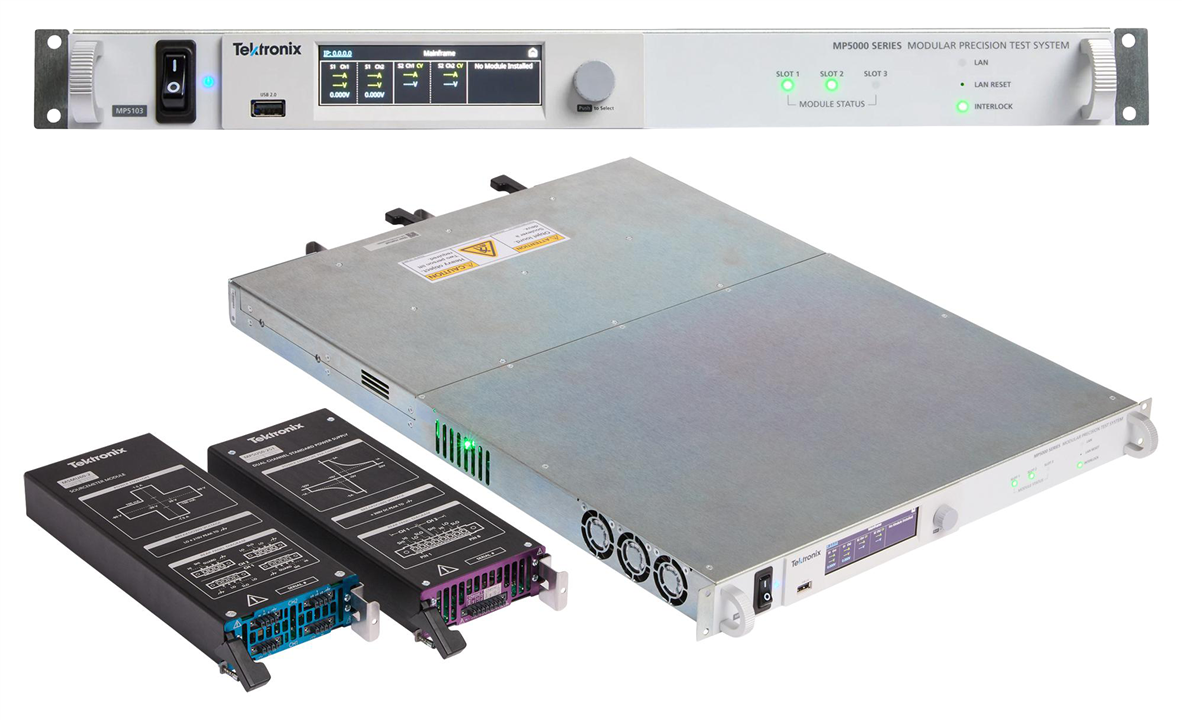
Fig 1. MP5000 Series Modular Precision Test System (Source)
A few special technologies power these features:
- TSP and TSP-Link: TSP handles on-instrument processing with human-readable commands, custom APIs, and tools for rapid script development. TSP-Link extends this to distributed systems, ensuring tight synchronization without external controllers, crucial for reducing test times in high-throughput scenarios.
- Advanced digitization and sensing: 1 MSa/s ADCs per channel capture waveforms accurately, while features like 4-wire remote sensing, asymmetric compliance, auto-sense resistors, and hardware protections (OVP/OCP) safeguard devices and enhance measurement integrity.
- User-friendly interfaces: A modern touchscreen and embedded web server provide real-time insights, troubleshooting, and control, making it accessible for both benchtop and rack-mounted setups.
| Challenge |
Conventional Rack Systems |
MP5000 Advantage |
| Channel density |
1–2 channels per 2U |
6 channels per 1U |
| Synchronization |
ms-level triggers |
≈500 ns via TSP-Link |
| Downtime |
Full rack recalibration |
Module-only calibration |
| Automation |
PC-dependent |
Embedded scripting |
Performance specifications: A technical deep dive
The MP5000 ecosystem starts with the MP5103 Mainframe (1U, 3 slots), supporting Gigabit Ethernet, USB 3.0, digital I/O, and TSP-Link for seamless expansion.
The available modules are:
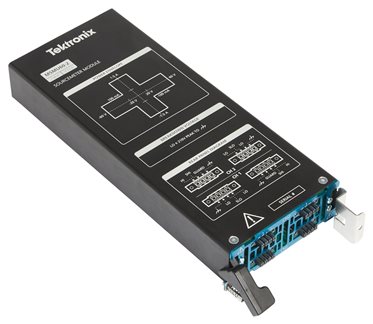
- MSMU60-2 Dual-Channel SMU:
- Channels: 2 independent, 4-quadrant bipolar.
- Voltage/Current: ±60 V / ±1.5 A, 30 W per channel.
- Resolution: 100 fA current, 500 nV voltage.
- Features: 1 MSa/s digitizers, asymmetric compliance, output disconnect relays.
- Ideal for precise IV sweeps and low- current measurements.
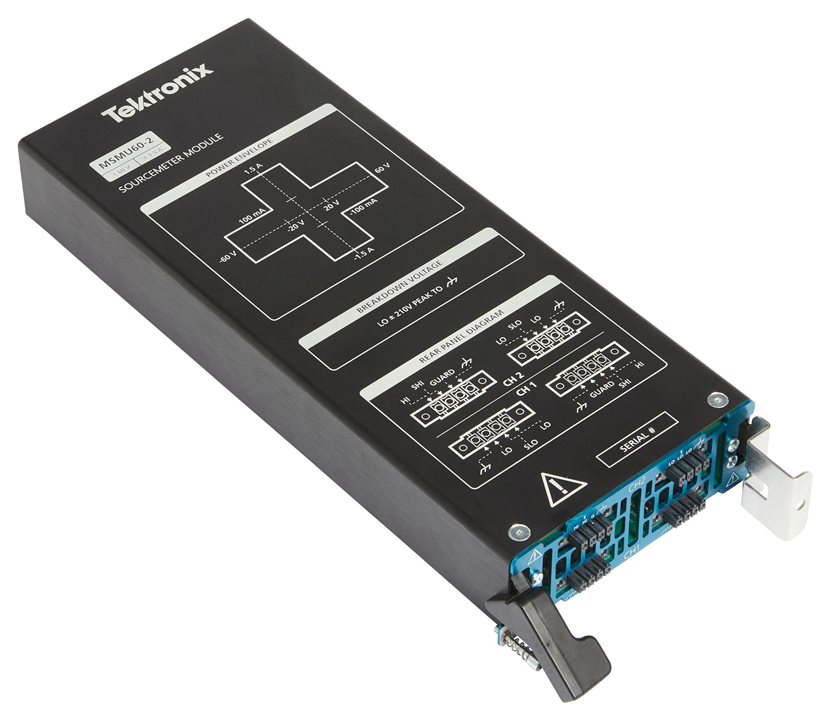
Fig 2. MSMU60-2 Module: Dual Channel SMU (Source)
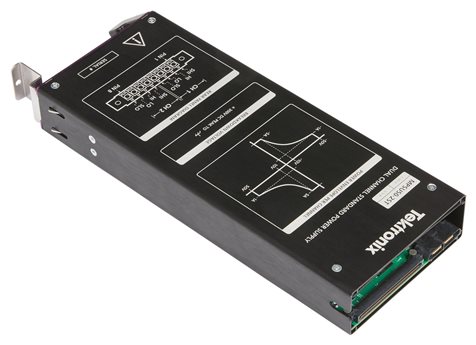
- MPSU50-2ST Dual-Channel PSU:
- Channels: 2 isolated, stackable for extended ranges (±100 V / ±10 A).
- Voltage/Current: ±50 V / ±5 A, 50 W per channel.
- Features: Bipolar outputs without lead switching, 4-wire remote sense, fast OVP/OCP.
- Perfect for power delivery in mixed setups.

Fig 3. MPSU50-2ST Module: Dual Channel PSU (source)
These specs ensure 6½-digit accuracy across quadrants, with low-noise performance critical for AMS validation. Connectivity options such as USB-C and web interfaces further streamline integration into modern workflows.
Application Showcase: MP5000 Driving High-Speed VCSEL Validation
VCSELs are core to a large number of applications ranging from smartphone facial recognition to automotive LiDAR. Validating these devices demands fast, tightly synchronized LIV (current–voltage–light) measurements, something conventional test setups struggle to deliver at production scale.
The Challenge:
Accurate VCSEL LIV characterization requires sourcing a precise drive current while simultaneously measuring forward voltage and photocurrent from an integrated photodiode. Even minor timing skew between these measurements leads to inaccurate results. In production, the challenge intensifies: 50–100 current points must be captured in seconds to meet throughput and cost targets, which is well beyond the limits of command-by-command automation.
The MP5000 Advantage:
A Tektronix MP5000 system configured with two or three MSMU60-2 modules solves this festering problem. One SMU sources fast, highly stable laser current; a second captures forward voltage with nanovolt resolution; a third measures photocurrent with femtoamp sensitivity. Built-in 1 MSa/s simultaneous digitizers ensure all parameters are captured in perfect time alignment. Using a single TSP script, the MP5000 executes a complete LIV sweep from threshold to maximum current in under one second, returning a fully correlated dataset.
For multi-site testing, TSP-Link synchronizes multiple MP5000 mainframes, enabling parallel validation of large VCSEL arrays without crosstalk or thermal distortion. The result is up to 10× higher throughput, dramatically reducing cost per device and redefining VCSEL production test efficiency.
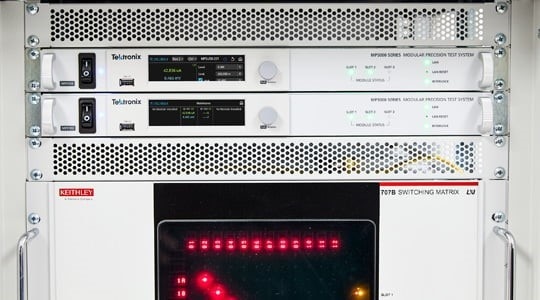
Fig 4. VCSEL Module Functional Test
Other Real-World Applications: Clarifying Use Cases
The MP5000 is designed to solve specific challenges in precision testing:
- Semiconductor and sensor characterization: In IC functional testing or AMS production, engineers can combine SMU precision for low-current probing (e.g., photodiodes, sensors) with PSU channels for stable biasing. Parallel testing via linked mainframes boosts throughput, ideal for high-volume fabs.
- General device validation in industrial settings: Handle emerging low-power IoT sensors or high-reliability components with femtoamp-level sensitivity and hardware interlocks, ensuring safe, repeatable results in critical environments like aerospace or automotive electronics.
Zero-Downtime Precision Without the Hassle
The Tektronix MP5000 Series, with its modularity and embedded intelligence, represents a fundamental shift in the architecture of precision test systems. By addressing pain points like downtime and scalability while delivering unmatched accuracy, it builds trust through proven performance and supports faster innovation cycles. For R&D teams, this means test systems that evolve through product development cycles without repeated capital investments. For production engineers, it means optimizing cost-performance on a per-application basis while maintaining scalability for volume growth. For facilities managers, it means dramatic space efficiency improvements that translate directly to reduced infrastructure costs.
Featured Products
|
|
|
|
For more innovative products from Tektronix Shop Now
ABOUT THE SPONSOR
Tektronix designs and manufactures test and measurement solutions to break through the walls of complexity, and accelerate global innovation. Together we empower engineers to create and realize technological advances with ever greater ease, speed, and accuracy. For more information, click here.