



Radia Perlman is famous for inventing the Spanning Tree Protocol for networks. (Image Credit: Wikimedia Commons)
Radia Perlman was hailed as a hero in the networking world for solving one of its most serious problems: network loops. Network loops often flood a system with traffic, causing unstable communication. Her work made networking solutions more scalable and reliable.
Growing up, Perlman was deeply curious about math, science, and how technology worked. Her parents contributed to this with their technical mindset, working as engineers for the US government. While her father focused on radar, her mother served as a mathematician and computer programmer. During her school years, Perlman says she developed a natural understanding of math and science, and always excelled with top grades. However, she believed she wasn’t meant to be an engineer as she never took apart computer components or put them back together.
Even though she became one of the top students in those subjects, she found her passion in computer programming while attending Ocean Township High School. This led her to pursue a computer-related career. After graduating, Perlman attended MIT, where she took programming as part of a physics class. In 1971, she obtained her first paying job at MIT’s Artificial Intelligence Laboratory, serving as a part-time programmer for the LOGO lab, where she developed system software like debuggers.
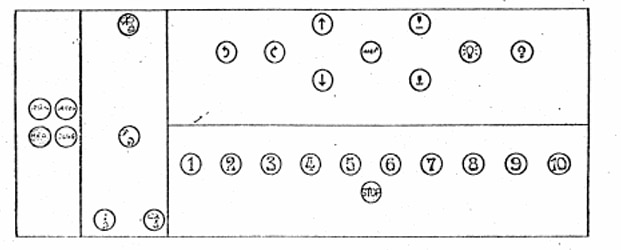
Button box of the Toddler’s Own Recursive Turtle Interpreter System. (Image Credit: LOGO Memo)
While working there, Perlman created Toddler’s Own Recursive Turtle Interpreter System (TORTIS), a robotic language for young children to code a Turtle robot. She was well-known for making computer programming accessible to young learners. Here, motivation didn’t stop there as she created a new programming language designed to teach younger children via input devices. However, this project was canceled as she wanted to be taken more seriously as a scientist.
She then obtained her SB in 1973 and SM in 1976 in mathematics. Following that achievement, Perlman was hired by Bolt, Beranek, Newman (BBN), a government contractor that specialized in software for network systems, where she designed network protocols. During one of her network routing presentations, she impressed a Digital Equipment Corporation (DEC) manager. The company then presented her with a job opportunity, and she accepted the role in 1980. While working for Digital, she developed the Spanning Tree Protocol (STP), which Perlman is most well-known for.
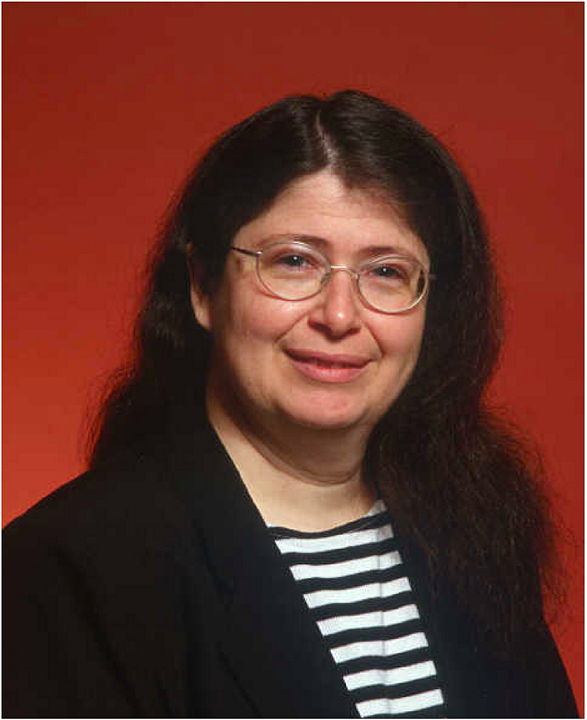
Radia Perlman by IntelFreePress is licensed under Creative Commons Attribution-ShareALike 2.0 (CC BY-SA 2.0)
STP improves reliability by preventing network loops that can interfere with communications while allowing backup network paths to exist if an active connection fails. Essentially, it disables unnecessary connections to maintain a single active path between network nodes. Additionally, STP is used by smaller networks to manage bridge operations. She helped define the rules designed to keep network communication structured and reliable. Eventually, STP was adopted as an IEEE standard for bridge networking and is still in use today. Her contributions went even further into advanced network routing as she developed algorithms to improve the performance and scalability of protocols like Intermediate System-to-Intermediate System (IS-IS) and Open Shorted Path First (OSPF).
Perlman was involved in network security research and wrote textbooks on networking, such as “Interconnections: Bridges, Routers, Switches, and Internetworking Protocols.” She also coauthored “Network Security: Private Communication in a Public World.” Not only that, but she worked on trust models for Public Key Infrastructure, data expiration, and distributed algorithms that remained reliable even when there were compromised nodes.
By 1988, Perlman obtained her PhD in computer science at MIT. Most of the research in this field builds on her doctoral thesis, which explored how routing can be maintained in networks prone to malicious failures. In 1993, she stopped working for Digital and was hired by Novell, which she left in 1997, joining Sun Microsystems. She received over 200 patents throughout her career, 40 of which she received as a Sun Fellow while working at Sun Microsystems. Perlman became a professor at Harvard University, MIT, Texas A&M, and the University of Washington.
She held a specialized role in network security at Sun Microsystems, focusing on a project called transparent interconnections of lots of links (TRILL). This role involved reworking the STP algorithm, improving stability, and allowing it to create the most efficient paths between points. Perlman created another system called an ephemerizer. The idea of this project was to secure multiple files under a single key by using time-limited encryption keys. If it reaches a certain date, the keys would be destroyed, making it impossible to access the encrypted data.
More notably, Perlman won several awards. The Silicon Valley Intellectual Property Law Association awarded her the 2004 Inventor of the Year. Data Communication Magazine named her as one of the 20 most influential people in IT in its 20th and 25th anniversary editions. She also received the Lifetime Achievement award from USENIX and the Association for Computing Machinery’s Special Interest Group.
Have a story tip? Message me here at element14.