element14 Community
element14 Community
    Register Log In
  • Site
  • Search
  • Log In Register
  • Community Hub
    Community Hub
    • What's New on element14
    • Feedback and Support
    • Benefits of Membership
    • Personal Blogs
    • Members Area
    • Achievement Levels
  • Learn
    Learn
    • Ask an Expert
    • eBooks
    • element14 presents
    • Learning Center
    • Tech Spotlight
    • STEM Academy
    • Webinars, Training and Events
    • Learning Groups
  • Technologies
    Technologies
    • 3D Printing
    • FPGA
    • Industrial Automation
    • Internet of Things
    • Power & Energy
    • Sensors
    • Technology Groups
  • Challenges & Projects
    Challenges & Projects
    • Design Challenges
    • element14 presents Projects
    • Project14
    • Arduino Projects
    • Raspberry Pi Projects
    • Project Groups
  • Products and Partners
    Products and Partners
    • Arduino
    • Avnet & Tria Boards Community
    • Dev Tools
    • Manufacturers
    • Multicomp Pro
    • Product Groups
    • Raspberry Pi
    • RoadTests & Reviews
  • About Us
    About the element14 Community
  • Store
    Store
    • Visit Your Store
    • Choose another store...
      • Europe
      •  Austria (German)
      •  Belgium (Dutch, French)
      •  Bulgaria (Bulgarian)
      •  Czech Republic (Czech)
      •  Denmark (Danish)
      •  Estonia (Estonian)
      •  Finland (Finnish)
      •  France (French)
      •  Germany (German)
      •  Hungary (Hungarian)
      •  Ireland
      •  Israel
      •  Italy (Italian)
      •  Latvia (Latvian)
      •  
      •  Lithuania (Lithuanian)
      •  Netherlands (Dutch)
      •  Norway (Norwegian)
      •  Poland (Polish)
      •  Portugal (Portuguese)
      •  Romania (Romanian)
      •  Russia (Russian)
      •  Slovakia (Slovak)
      •  Slovenia (Slovenian)
      •  Spain (Spanish)
      •  Sweden (Swedish)
      •  Switzerland(German, French)
      •  Turkey (Turkish)
      •  United Kingdom
      • Asia Pacific
      •  Australia
      •  China
      •  Hong Kong
      •  India
      •  Japan
      •  Korea (Korean)
      •  Malaysia
      •  New Zealand
      •  Philippines
      •  Singapore
      •  Taiwan
      •  Thailand (Thai)
      •  Vietnam
      • Americas
      •  Brazil (Portuguese)
      •  Canada
      •  Mexico (Spanish)
      •  United States
      Can't find the country/region you're looking for? Visit our export site or find a local distributor.
  • Translate
  • Profile
  • Settings
Community Hub
Community Hub
Member's Forum Iphone charging...
  • Blog
  • Forum
  • Documents
  • Quiz
  • Events
  • Leaderboard
  • Polls
  • Files
  • Members
  • Mentions
  • Sub-Groups
  • Tags
  • More
  • Cancel
  • New
Join Community Hub to participate - click to join for free!
Actions
  • Share
  • More
  • Cancel
Forum Thread Details
  • State Not Answered
  • Replies 60 replies
  • Subscribers 634 subscribers
  • Views 6078 views
  • Users 0 members are here
  • usb
  • 5vdc
  • iphone
Related

Iphone charging...

e14 Contributor
e14 Contributor over 11 years ago

Hello, my name is Martin
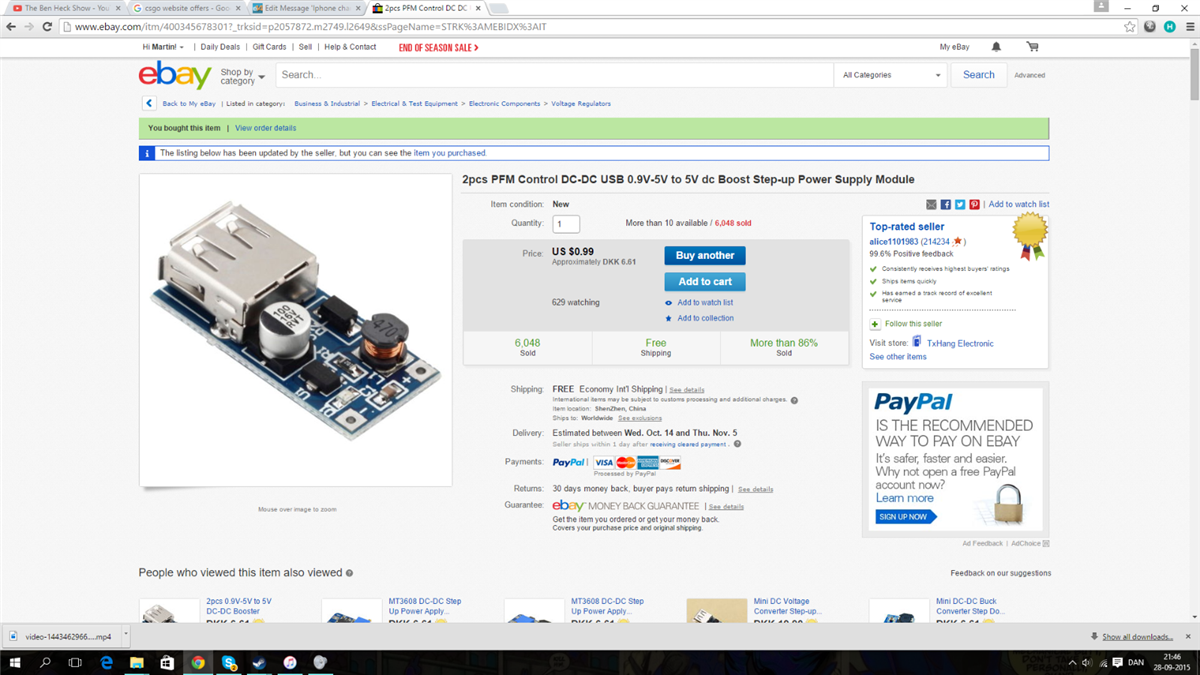
I have a very big problem with a 5v usb boost circuit. When i connect the circuit to the power, the led lights up, but no power... to iphones... everything else works, just not iphones. i already tried shorting the data ports with the 5v pin, AND THAT USED TO WORK, but not now!!!??

PLEASE HELP

I have now tried with adding some resistors to data+ and minus, still nothing image


HELP!!!


image

  • Sign in to reply
  • Cancel
  • shabaz
    0 shabaz over 11 years ago in reply to e14 Contributor

    What are you powering that circuit with?

    A couple of AA batteries? It will take a long time to charge your phone if so.

    The resistors connect to the USB D+ and D- lines and to the 5V and 0V connections. In the link that Petri showed, the USB connector is shown on the right (i.e. corresponds to the USB connector on your board), and the two center pins there are designated USB D+ and D-. The top wire connection in that diagram is +5V and the bottom wire is 0V.

    Google may have some better annotated diagrams, but the connections will be similar. Without the resistors, expect it not to work or to charge slowly.

    • Cancel
    • Vote Up +1 Vote Down
    • Sign in to reply
    • Verify Answer
    • Cancel
  • e14 Contributor
    0 e14 Contributor over 11 years ago in reply to e14 Contributor

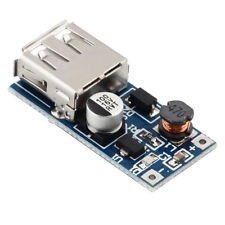
    Thanks for the answers btw, but now i need more xD, while waiting for the resistors i tried shorting the data+ and data- just by connecting the two, and the phone charged! but... not really, since the icon was there, but the percentage wasnt going up, but down xD, is this because of the resistors i need? and also, what part of the 5v boost converter do i connect my resistors to? the regulator? capacitor (assuming that's the round black thing)? xD

    • Cancel
    • Vote Up 0 Vote Down
    • Sign in to reply
    • Verify Answer
    • Cancel
  • e14 Contributor
    0 e14 Contributor over 11 years ago in reply to e14 Contributor

    Resistors can be what ever wattage, there's almost none current draw. I can't give you pictures from my ipod charger, it was gone by mistake when i sold my car. Now i only have a linear 7805 reg. in a piece of veroboard with some resistors and a ridiculously big heatsink, because ipod acts as a lithium battery when charging and pulls supply down to cell voltage, and so 7805 dissipates so much heat. Good thing is that it starts to cool down as battery gets charged.

    • Cancel
    • Vote Up 0 Vote Down
    • Sign in to reply
    • Verify Answer
    • Cancel
  • e14 Contributor
    0 e14 Contributor over 11 years ago in reply to e14 Contributor

    also the resistors i assume can be 1/4 watt?

    • Cancel
    • Vote Up 0 Vote Down
    • Sign in to reply
    • Verify Answer
    • Cancel
  • e14 Contributor
    0 e14 Contributor over 11 years ago in reply to e14 Contributor

    Allright, ill hop over and order some 33k and 22k resistors i guess image can you by any chance give me a pic of that selfmade ipod charger? image

    • Cancel
    • Vote Up 0 Vote Down
    • Sign in to reply
    • Verify Answer
    • Cancel
  • e14 Contributor
    0 e14 Contributor over 11 years ago in reply to e14 Contributor

    You could try that. image

    My self made ipod charger is done like that.

    • Cancel
    • Vote Up 0 Vote Down
    • Sign in to reply
    • Verify Answer
    • Cancel
  • e14 Contributor
    0 e14 Contributor over 11 years ago in reply to e14 Contributor

    But can the resistors just be placed loosely under the board? or what are you sugggesting?

    • Cancel
    • Vote Up 0 Vote Down
    • Sign in to reply
    • Verify Answer
    • Cancel
  • e14 Contributor
    0 e14 Contributor over 11 years ago in reply to e14 Contributor

    Exactly. iphone charges only when d+ and d- are pulled to about 2.7v. I cannot exactly remember if those voltages are absolutely correct.

    Normal USB charger just won't work for that reason.

    • Cancel
    • Vote Up 0 Vote Down
    • Sign in to reply
    • Verify Answer
    • Cancel
  • e14 Contributor
    0 e14 Contributor over 11 years ago in reply to e14 Contributor

    Im not sure if i understood correctly. This picture shows the device i have, and what you're telling me, is that somewhere, i have to add 4 resistors?image

    • Cancel
    • Vote Up 0 Vote Down
    • Sign in to reply
    • Verify Answer
    • Cancel
  • e14 Contributor
    0 e14 Contributor over 11 years ago

    You need to make a resistor dividers to both D+ and D- lines: http://cdn.instructables.com/FOF/IG95/GTLRHJWG/FOFIG95GTLRHJWG.LARGE.jpg

    • Cancel
    • Vote Up +1 Vote Down
    • Sign in to reply
    • Verify Answer
    • Cancel
<
element14 Community

element14 is the first online community specifically for engineers. Connect with your peers and get expert answers to your questions.

  • Members
  • Learn
  • Technologies
  • Challenges & Projects
  • Products
  • Store
  • About Us
  • Feedback & Support
  • FAQs
  • Terms of Use
  • Privacy Policy
  • Legal and Copyright Notices
  • Sitemap
  • Cookies

An Avnet Company © 2026 Premier Farnell Limited. All Rights Reserved.

Premier Farnell Ltd, registered in England and Wales (no 00876412), registered office: Farnell House, Forge Lane, Leeds LS12 2NE.

Follow element14

  • X
  • Facebook
  • linkedin
  • YouTube