element14 Community
element14 Community
    Register Log In
  • Site
  • Search
  • Log In Register
  • Community Hub
    Community Hub
    • What's New on element14
    • Feedback and Support
    • Benefits of Membership
    • Personal Blogs
    • Members Area
    • Achievement Levels
  • Learn
    Learn
    • Ask an Expert
    • eBooks
    • element14 presents
    • Learning Center
    • Tech Spotlight
    • STEM Academy
    • Webinars, Training and Events
    • Learning Groups
  • Technologies
    Technologies
    • 3D Printing
    • FPGA
    • Industrial Automation
    • Internet of Things
    • Power & Energy
    • Sensors
    • Technology Groups
  • Challenges & Projects
    Challenges & Projects
    • Design Challenges
    • element14 presents Projects
    • Project14
    • Arduino Projects
    • Raspberry Pi Projects
    • Project Groups
  • Products
    Products
    • Arduino
    • Avnet & Tria Boards Community
    • Dev Tools
    • Manufacturers
    • Multicomp Pro
    • Product Groups
    • Raspberry Pi
    • RoadTests & Reviews
  • About Us
  • Store
    Store
    • Visit Your Store
    • Choose another store...
      • Europe
      •  Austria (German)
      •  Belgium (Dutch, French)
      •  Bulgaria (Bulgarian)
      •  Czech Republic (Czech)
      •  Denmark (Danish)
      •  Estonia (Estonian)
      •  Finland (Finnish)
      •  France (French)
      •  Germany (German)
      •  Hungary (Hungarian)
      •  Ireland
      •  Israel
      •  Italy (Italian)
      •  Latvia (Latvian)
      •  
      •  Lithuania (Lithuanian)
      •  Netherlands (Dutch)
      •  Norway (Norwegian)
      •  Poland (Polish)
      •  Portugal (Portuguese)
      •  Romania (Romanian)
      •  Russia (Russian)
      •  Slovakia (Slovak)
      •  Slovenia (Slovenian)
      •  Spain (Spanish)
      •  Sweden (Swedish)
      •  Switzerland(German, French)
      •  Turkey (Turkish)
      •  United Kingdom
      • Asia Pacific
      •  Australia
      •  China
      •  Hong Kong
      •  India
      • Japan
      •  Korea (Korean)
      •  Malaysia
      •  New Zealand
      •  Philippines
      •  Singapore
      •  Taiwan
      •  Thailand (Thai)
      • Vietnam
      • Americas
      •  Brazil (Portuguese)
      •  Canada
      •  Mexico (Spanish)
      •  United States
      Can't find the country/region you're looking for? Visit our export site or find a local distributor.
  • Translate
  • Profile
  • Settings
Community Hub
Community Hub
Member's Forum Case to Case Connections
  • Blog
  • Forum
  • Documents
  • Quiz
  • Events
  • Leaderboard
  • Polls
  • Files
  • Members
  • Mentions
  • Sub-Groups
  • Tags
  • More
  • Cancel
  • New
Join Community Hub to participate - click to join for free!
Actions
  • Share
  • More
  • Cancel
Forum Thread Details
  • State Suggested Answer
  • Replies 20 replies
  • Answers 11 answers
  • Subscribers 569 subscribers
  • Views 2601 views
  • Users 0 members are here
Related

Case to Case Connections

Andrew J
Andrew J over 4 years ago

I'm looking for ideas for connecting encased devices.  So PCB -> Panel <-air gap-> Panel -> PCB.  Better:  Free end (for crimping connector) -> Panel <-air gap-> Panel -> Free end (for crimping connector).  I'm just looking to transfer signals and low-current, low-voltage power in a cheap way.  Although PCB edge-mounted connectors are an available option, I can't use these.


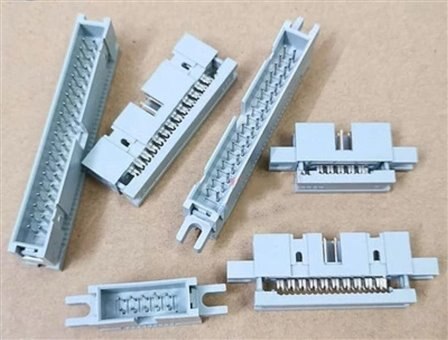
An example solution would be an IDC connector with flat cable: flexible with a variety of potential contacts and easily obtained with pre-made cables.  It's easy to find PCB mounts and male/female connectors but a panel mount socket (or plug) seems non-existent.   


An alternative would be d-sub connectors.  Again, variety of potential contacts, easy to solder up, but quite large.  Easy to find male/female connectors as well as panel mount.  Cheap as chips, but quite large.

I've come across pluggable terminal blocks but these are expensive.


The hardest element to find seems to be the panel mount socket (except for d-sub) but I'm not sure that I'm searching with the right keywords.  It's even harder to find a panel mount socket that is not expensive.  I'd settle for d-sub but thought I'd throw this out there for ideas.

  • Sign in to reply
  • Cancel
  • shabaz
    0 shabaz over 4 years ago

    Hi Andrew,


    'Modular' (RJ45) could be an option, since circular panel mount sockets are available, and the circular hole is easier to make than rectangular. Wiring them is simple/cheap, provided you're ok with twisted pairs. I've used RJ45 on a few projects, and I like it because I can use standard ready-made network cables. It might be too bulky though if you wanted something smaller. For higher density, maybe 'MDR' connectors? They were used for old SCSI connections, and are available in (say) 20-pin and 30-pin, and the connectors are panel mount usually.

    Regarding IDC connectors, there are some that are panel mount but they are more rare. This one maybe:

    https://uk.farnell.com/3m/4620-6000/header-idc-lugged-20way/dp/469166

    (It is panel mount but would use ribbon cable, to the PCB, or strip the other end of the ribbon cable and solder to the PCB or whatever).

    • Cancel
    • Vote Up 0 Vote Down
    • Sign in to reply
    • Verify Answer
    • Reject Answer
    • Cancel
  • jw0752
    0 jw0752 over 4 years ago

    You could check out :


    http://www.tag-connect.com


    Neil is an expert on connecting things together inexpensively.


    John

    • Cancel
    • Vote Up 0 Vote Down
    • Sign in to reply
    • Verify Answer
    • Reject Answer
    • Cancel
  • Andrew J
    0 Andrew J over 4 years ago

    Thanks Guys.  John: there are some interesting test tools on that site but I couldn't find anything specific to panel connectors unfortunately.


    RJ45 is a good idea for up to 8 contacts.  The MDR connectors are very similar to the D-Sub connectors, a little smaller and using wiper contacts for IDC cables rather than pins and soldered wires; bit more expensive.  As for IDC panel connectors there are very few.  Also, micro-bayonet connectors e.g. https://uk.farnell.com/amphenol-sine-tuchel/c016-10g014-0001/socket-panel-14-pe-way/dp/1123480 although they need crimps as well.


    It would seem that PCB edge mount would give the most flexibility but would need to be designed with the case in mind, assuming a custom one wasn't being made (which it isn't!!)  I'm amazed that there aren't more options.

    • Cancel
    • Vote Up 0 Vote Down
    • Sign in to reply
    • Verify Answer
    • Cancel
  • jc2048
    0 jc2048 over 4 years ago

    Many crimp connector series include panel-mounting housings.


    As an example, this link is a Molex Mini-Fit Jr plug housing which will clip into a panel.


    https://www.molex.com/molex/products/part-detail/crimp_housings/0039012066


    They're intended more for wiring harnesses to internal bulkhead panels in industrial and consumer equipment, but if you're not too fussy about looks and just want something that's functional they might do you. The specialised crimp tool is very expensive, but the crimps are large enough that you can solder the wires to them as an alternative, or if you're careful just use a pair of pliers. TE Connectivity also have a huge range of different parts.

    • Cancel
    • Vote Up 0 Vote Down
    • Sign in to reply
    • Verify Answer
    • Reject Answer
    • Cancel
  • shabaz
    0 shabaz over 4 years ago in reply to Andrew J

    Hi Andrew,


    I know what you mean, and sometimes it may be easier to just place all connectors on one side of the board, so it fits any enclosure, but often it's not ideal/feasible to put them all on one side.

    Another option could be to have a snap-off portion of PCB, where (say) it could have vertical DIL header and screw holes on the PCB so that the snap-off portion is screwed onto the enclosure. and then have flat flex (for example) to connect to the main board. For really low cost non-critical applications, the flat flex could just be soldered without connectors.

    This is also ideal for all sorts of connectors that are PCB-mount, and saves on wire assembly time etc.


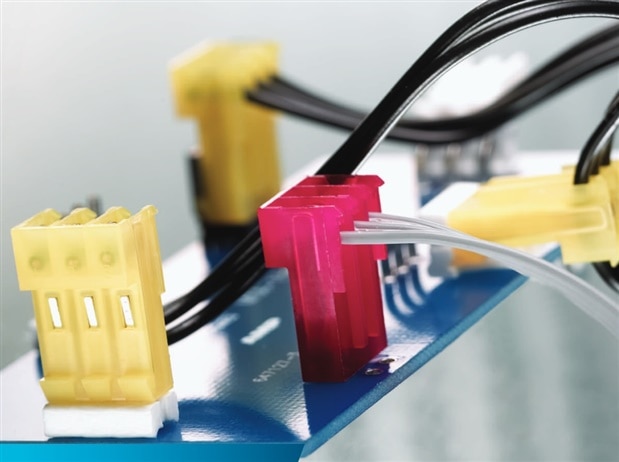
    In this example (at right angles in this case however) I needed three connectors, but the main PCB wasn't designed for that, so I created a small separate custom PCB with the three connectors on it, and inside the enclosure there are JST cables going from here to the boards that require each of the connections.

    image

    image

    • Cancel
    • Vote Up 0 Vote Down
    • Sign in to reply
    • Verify Answer
    • Reject Answer
    • Cancel
  • Andrew J
    0 Andrew J over 4 years ago in reply to shabaz

    That's something I've been thinking of and trying to determine if I could do it with the connectors I have - related to Jon's answer below actually. Or even with a bunch of IDC connectors.

    • Cancel
    • Vote Up 0 Vote Down
    • Sign in to reply
    • Verify Answer
    • Reject Answer
    • Cancel
  • Andrew J
    0 Andrew J over 4 years ago in reply to jc2048

    I've been thinking about right-angled headers to go with some of the Moiex KK connectors I have, on a separate PCB as Shabaz suggests above.  I struggle to see how those lugs support the panel connector from both sides as I can't envisage the panel 'sandwich' effect to stop them falling through from one side.

    • Cancel
    • Vote Up 0 Vote Down
    • Sign in to reply
    • Verify Answer
    • Reject Answer
    • Cancel
  • dougw
    0 dougw over 4 years ago

    How many pins do you need?

    How much weight or force will the connection need to support?

    How often does the connection need to be disconnected?

    Are there any other mechanical connections between panels?

    Is there motion or vibration involved?

    Do the connectors need to lock together?

    How big are the PCBs?

    PCB-mount connectors that are also bulkhead mounted exist but are over-constrained mechanically - if the pcb is screwed to the chassis and the connector is fastened to the panel, it can put stress on the solder joints. (So tight tolerances will need to be maintained)

    If the panel-to-panel connector is the only connection between modules, the connector may need to withstand high forces. Many connectors only have one side panel mounted to avoid this because they are not strong enough to support more than the weight of a cable.

    There are many through-hole board-to-board connectors that need cutouts in the panels to go between modules, but they don't usually have panel fasteners.

    The DB connectors you mentioned can do it all, but have limited strength, and it is tough to get them screwed together in the confined gap between panels.

    Many circular bulkhead connectors can be mounted to PCBs although most are vertically oriented on the PCB. Also usually pretty expensive.

    The bottom line is that what you want is not commonly available because the connectors would need to be so strong, they would be very expensive. There are many possible solutions to accommodate specific applications where some of the normal requirements are not needed, but more information is needed to tailor a solution.

    • Cancel
    • Vote Up 0 Vote Down
    • Sign in to reply
    • Verify Answer
    • Reject Answer
    • Cancel
  • jw0752
    0 jw0752 over 4 years ago

    Hi andrew,


    Another technique that I like to use when I am searching for a component is to get out one of my parts supply house catalogs from a few years ago. I will then go page by page through the section related to my need and look at the pictures. Very often I can find what I am looking for. The searches on the internet do not lend themselves to this type of  browsing.


    John

    • Cancel
    • Vote Up 0 Vote Down
    • Sign in to reply
    • Verify Answer
    • Reject Answer
    • Cancel
  • Andrew J
    0 Andrew J over 4 years ago in reply to jw0752

    That's for sure.  It might be worth trying to get hold of one of those.

    • Cancel
    • Vote Up 0 Vote Down
    • Sign in to reply
    • Verify Answer
    • Cancel
>
element14 Community

element14 is the first online community specifically for engineers. Connect with your peers and get expert answers to your questions.

  • Members
  • Learn
  • Technologies
  • Challenges & Projects
  • Products
  • Store
  • About Us
  • Feedback & Support
  • FAQs
  • Terms of Use
  • Privacy Policy
  • Legal and Copyright Notices
  • Sitemap
  • Cookies

An Avnet Company © 2026 Premier Farnell Limited. All Rights Reserved.

Premier Farnell Ltd, registered in England and Wales (no 00876412), registered office: Farnell House, Forge Lane, Leeds LS12 2NE.

ICP 备案号 10220084.

Follow element14

  • X
  • Facebook
  • linkedin
  • YouTube