element14 Community
element14 Community
    Register Log In
  • Site
  • Search
  • Log In Register
  • Community Hub
    Community Hub
    • What's New on element14
    • Feedback and Support
    • Benefits of Membership
    • Personal Blogs
    • Members Area
    • Achievement Levels
  • Learn
    Learn
    • Ask an Expert
    • eBooks
    • element14 presents
    • Learning Center
    • Tech Spotlight
    • STEM Academy
    • Webinars, Training and Events
    • Learning Groups
  • Technologies
    Technologies
    • 3D Printing
    • FPGA
    • Industrial Automation
    • Internet of Things
    • Power & Energy
    • Sensors
    • Technology Groups
  • Challenges & Projects
    Challenges & Projects
    • Design Challenges
    • element14 presents Projects
    • Project14
    • Arduino Projects
    • Raspberry Pi Projects
    • Project Groups
  • Products
    Products
    • Arduino
    • Avnet & Tria Boards Community
    • Dev Tools
    • Manufacturers
    • Multicomp Pro
    • Product Groups
    • Raspberry Pi
    • RoadTests & Reviews
  • About Us
    About the element14 Community
  • Store
    Store
    • Visit Your Store
    • Choose another store...
      • Europe
      •  Austria (German)
      •  Belgium (Dutch, French)
      •  Bulgaria (Bulgarian)
      •  Czech Republic (Czech)
      •  Denmark (Danish)
      •  Estonia (Estonian)
      •  Finland (Finnish)
      •  France (French)
      •  Germany (German)
      •  Hungary (Hungarian)
      •  Ireland
      •  Israel
      •  Italy (Italian)
      •  Latvia (Latvian)
      •  
      •  Lithuania (Lithuanian)
      •  Netherlands (Dutch)
      •  Norway (Norwegian)
      •  Poland (Polish)
      •  Portugal (Portuguese)
      •  Romania (Romanian)
      •  Russia (Russian)
      •  Slovakia (Slovak)
      •  Slovenia (Slovenian)
      •  Spain (Spanish)
      •  Sweden (Swedish)
      •  Switzerland(German, French)
      •  Turkey (Turkish)
      •  United Kingdom
      • Asia Pacific
      •  Australia
      •  China
      •  Hong Kong
      •  India
      •  Japan
      •  Korea (Korean)
      •  Malaysia
      •  New Zealand
      •  Philippines
      •  Singapore
      •  Taiwan
      •  Thailand (Thai)
      •  Vietnam
      • Americas
      •  Brazil (Portuguese)
      •  Canada
      •  Mexico (Spanish)
      •  United States
      Can't find the country/region you're looking for? Visit our export site or find a local distributor.
  • Translate
  • Profile
  • Settings
Community Hub
Community Hub
Member's Forum What’s the worst mistake/problem you’ve made during a project, and what did you learn from it? We are asking e14 in our Join, Share & Win Competition
  • Blog
  • Forum
  • Documents
  • Quiz
  • Events
  • Leaderboard
  • Polls
  • Files
  • Members
  • Mentions
  • Sub-Groups
  • Tags
  • More
  • Cancel
  • New
Join Community Hub to participate - click to join for free!
Actions
  • Share
  • More
  • Cancel
Forum Thread Details
  • Replies 59 replies
  • Subscribers 592 subscribers
  • Views 1558 views
  • Users 0 members are here
  • rasberrypi
  • win
  • aske14
Related

What’s the worst mistake/problem you’ve made during a project, and what did you learn from it? We are asking e14 in our Join, Share & Win Competition

E14Alice
E14Alice 16 days ago

Hello Everyone!

Hope you are all doing well. I’m excited to announce that this month's AskE14 question is: What is the worst mistake or problem you've encountered during a project, and what did you learn from it?

Sharing your experiences can help others identify similar challenges and understand how to overcome them. I hope this discussion will be beneficial for those who are just starting out on a project or feeling stuck with a problem.

Here's the question:

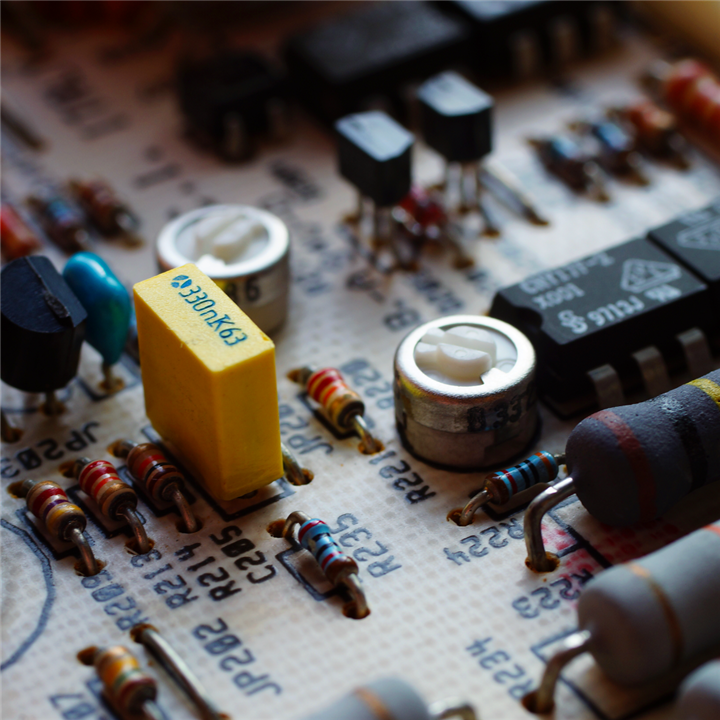
What’s the worst mistake/problem you’ve made during a project, and what did you learn from it? 
imageimage

Competition Details

You'll have to be a member of the element14 Community to join in and take part in this “Join, Share & Win” challenge. It's simple, all you have to do is:

1. You need to make sure you are Register  or Login
2. Then answer the following question by adding a reply or commenting!

What’s the worst mistake/problem you’ve made during a project, and what did you learn from it?  
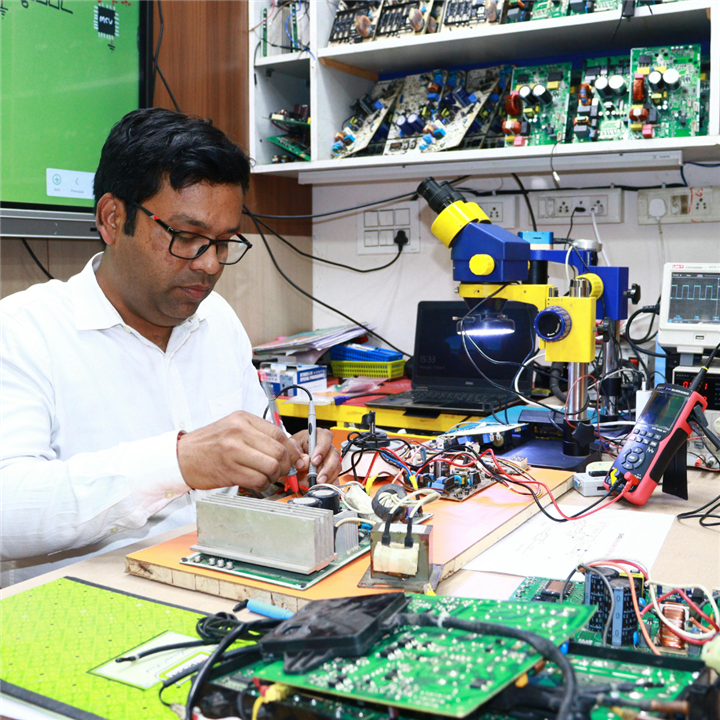
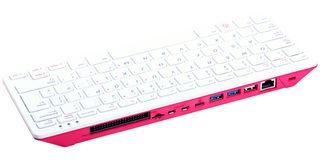
The Community team will then select the best 3 answers to win a Raspberry Pi 400!

This month, we are giving away:
image

Learn more

Terms and Conditions 

imagePDF

  • Sign in to reply
  • Cancel

Top Replies

  • dougw
    dougw 15 days ago +8
    My first rude awakening on the job was building a linear regulator to output 4A at 5V with a car battery as the input. I used a 2N3055 (TO3) as the pass transistor because it could handle 15 Amps and 115…
  • gordonmx
    gordonmx 15 days ago +6
    Many years ago, I worked for a company that made portable computers. A large service company wanted an add-on module base with more battery power to boost the operating life. The original computer had…
  • chloro
    chloro 15 days ago +5
    My worst project mistake? I guess I would say trusting a breadboard connection that “looked fine.” I spent hours debugging firmware, rewriting code, and questioning my life choices… only to find one…
  • manojroy123
    manojroy123 16 days ago

    I connected LM7805 in series with LM1117 3.3v. microcontroller powered by 3.3v started working improperly and was getting reset again and again.

    What did I learn?

    Never cascade LM7805 with LM1117 3.3v for running integrated circuits and microcontroller use other solution instead.

    • Cancel
    • Vote Up +1 Vote Down
    • Sign in to reply
    • Cancel
  • battlecoder
    battlecoder 16 days ago

    I once forgot to add power connections to two ICs on a PCB I was designing, and we send to manufacture like a 100 of them, so it was a comically tragic fail.

    This happened because the parts library (containing that family of ICs) had the clever idea of use "implicit" power connections that wouldn't show up as pins on the schematic editor (so I never even had the option to wire the power up to those pins), but they would automatically connect to any node network named Vdd and Vss. Which was kinda smart, except that I didn't know, and I don't think that I named my power pins anything remotely close to that. As a result the pins were left floating.

    Now, it was mostly my mistake because I didn't run the DRC, which would have detected the floating pins, and I didn't even think once "what are these two floating pins for?".

    At any rate, after that incident I always run the DRC, AND I check that all ICs and components on the PCB are connected to power.

    • Cancel
    • Vote Up +1 Vote Down
    • Sign in to reply
    • Cancel
  • bradfordmiller
    bradfordmiller 15 days ago

    I always socket ICs. I once plugged one in reversed, and when I applied power "ping" a bit of plastic from the case embedded itself in the ceiling. I learned to always double check both the supply voltage/grounds on the sockets and orientation before powering on.

    • Cancel
    • Vote Up +1 Vote Down
    • Sign in to reply
    • Cancel
  • chloro
    chloro 15 days ago

    My worst project mistake? I guess I would say trusting a breadboard connection that “looked fine.”

    I spent hours debugging firmware, rewriting code, and questioning my life choices… only to find one jumper wire sitting half a millimeter out of the socket Slight smile.

    Lesson learned: in electronics, 90% of problems are either power, ground, or a wire pretending to be connected.

    • Cancel
    • Vote Up +5 Vote Down
    • Sign in to reply
    • Cancel
  • ralphjy
    ralphjy 15 days ago

    Back in the early 80's when we were first learning to design 6 and 8 layer PCBs and we had limited ERC and DRC rules,  I made a critical current density error in a PCB design.  We were doing high power and high performance designs where we used power and ground planes for power distribution and impedance control.  I had a design that was using a coplanar waveguide for critical signal delivery.  I had instructed the PCB designer to stitch the coplanar and bottom ground planes together with closely spaced vias.  The waveguide worked great,  but because this was before the use of blind vias, I had inadvertently perforated a high power trace that ran below the bottom ground plane.  Our existing ERC/DRC checks passed.  Of course, the design powered up and checked out fine, but after several hours of operation - the board went up in flames.  It was extremely fortunate that I was there when it happened and was able pull the PCB from the backplane before the system caught fire.  

    After that I always made sure that I checked power and ground film for via perforation to identify and fix areas that would have high current density.  Years afterward we had a DFM group that helped check for these types of errors and many others that I hadn't considered.  I've had other less dramatic failures that were mitigated by DFM.  When we first started designing our own custom ICs, a hard lesson that we had to learn was to match the TCEs between the PCB and component substrates.  Not doing that caused reliability failures due to attachment failures.

    • Cancel
    • Vote Up +4 Vote Down
    • Sign in to reply
    • Cancel
  • dougw
    dougw 15 days ago

    My first rude awakening on the job was building a linear regulator to output 4A at 5V with a car battery as the input. I used a 2N3055 (TO3) as the pass transistor because it could handle 15 Amps and 115 Watts. I selected a standard TO3 heatsink to dissipate the heat - it looked something like this:

    image

    After firing it up I decided to put my thumb on the transistor to see if it was warm.

    Well ..... I was still alive .... but I had 2N3055 burned into my thumb. (figuratively)

    I was pretty mortified at the mistake and you can bet I immediately learned how to properly calculate heat transfer and temperature rise - in great detail.

    I learned that power rating on a transistor assumes there is an "adequate" heatsink.

    I also learned that the initial touch should be very brief when using your finger as a temperature probe.

    Pain is great teacher, if you survive....

    • Cancel
    • Vote Up +8 Vote Down
    • Sign in to reply
    • Cancel
  • gordonmx
    gordonmx 15 days ago

    Many years ago, I worked for a company that made portable computers.  A large service company wanted an add-on module base with more battery power to boost the operating life.  The original computer had gold plated battery contacts.  The battery pack had Ni-plated contacts.  The original battery was removed and the computer set on to the add-on base where its battery contacts mated with Ni-plated contacts in the base.  Nichel has a tendency to oxidize making it hard to solder to, so production decided to change to tin-plated contacts in the base (without testing) and it was cheaper.  It seemed to fix the production problem, but not long afterwards, the computers in the field started randomly resetting themselves.  Everyone thought they knew what the problem was.  The software folks blamed the hardware.  The hardware folks blamed the software.  The sales folks blamed the customer, and the customer was not happy.  To make an already long story, short, it was indeed a hardware problem.  For many years the combination of gold and Ni battery contact worked great.  Gold was soft but didn’t oxidize.  Ni was hard and oxidizes, but the contact pressure overcame that.  When production changed to a softer metal, tin, all that changed.  As the softer metal started to wear, little tin balls started to form.  These tin balls would oxidize and when they came between the gold and remain tin contacts, BINGO, the computer reset.  This process is called “fretting” and very hard to find since any vibration can cause the problem to temporarily go away.  Production switched back to Ni contacts on the base and the problem was solved.  I should note that the problem became industry wide during the 80’s when manufacturers replace gold plated connector with tin plated contacts to reduce cost.  Connector manufacturers finally settled of partial gold plating on all mating surfaces.

    • Cancel
    • Vote Up +6 Vote Down
    • Sign in to reply
    • Cancel
  • JWx
    JWx 15 days ago in reply to chloro

    Yes, breadboards can be insidious - especially when contact deforms after inserting goldpin connector and is only pretending to hold e.g. (thinner) resistor wire afterwards... And try to find this problem when it appears...

    • Cancel
    • Vote Up +1 Vote Down
    • Sign in to reply
    • Cancel
  • JWx
    JWx 15 days ago in reply to manojroy123

    that is interesting - in theory, LM1117 dropout voltage of max. 1.3V should allow it to operate connected to the 5V power supply. Did you manage to find the cause of the problems? maybe more bypass capacitors were required?

    • Cancel
    • Vote Up 0 Vote Down
    • Sign in to reply
    • Cancel
  • Andrew J
    Andrew J 15 days ago

    Nothing so bad as some of these mistakes, but I bet not uncommon.  I designed a PCB and sent it off for manufacture, waited 3 weeks for it to arrive only to find that the footprints for one of the parts were wrong.  Not in a “find an alternative”, but the through holes were too small and it was a jelly bean part. So that needed sorting out and also, in the meantime, I was looking at the layout and was struggling for space but I (miraculously) found a 50uH part that was way smaller than the one I’d currently specced and really helped with the layout.  So I changed the PCB for the changed through holes and smaller part with other layout changes and sent it off for manufacture.  3 weeks later, the original TH part now fitted but….the smaller 50uH part turned out to be a 50nH one and I’d misread the spec in my excitement.  So now I had to re do the layout yet again and remanufacture!

    Here’s the lesson: NEVER trust the footprints or the symbols in your CAD programme and double, triple check the parts particularly if you miraculously find an alternative.

    NOTE: I can’t remember exactly the 50xx part after all this time but it was way too small to work.

    • Cancel
    • Vote Up +2 Vote Down
    • Sign in to reply
    • Cancel
>
element14 Community

element14 is the first online community specifically for engineers. Connect with your peers and get expert answers to your questions.

  • Members
  • Learn
  • Technologies
  • Challenges & Projects
  • Products
  • Store
  • About Us
  • Feedback & Support
  • FAQs
  • Terms of Use
  • Privacy Policy
  • Legal and Copyright Notices
  • Sitemap
  • Cookies

An Avnet Company © 2026 Premier Farnell Limited. All Rights Reserved.

Premier Farnell Ltd, registered in England and Wales (no 00876412), registered office: Farnell House, Forge Lane, Leeds LS12 2NE.

ICP 备案号 10220084.

Follow element14

  • X
  • Facebook
  • linkedin
  • YouTube