element14 Community
element14 Community
    Register Log In
  • Site
  • Search
  • Log In Register
  • Community Hub
    Community Hub
    • What's New on element14
    • Feedback and Support
    • Benefits of Membership
    • Personal Blogs
    • Members Area
    • Achievement Levels
  • Learn
    Learn
    • Ask an Expert
    • eBooks
    • element14 presents
    • Learning Center
    • Tech Spotlight
    • STEM Academy
    • Webinars, Training and Events
    • Learning Groups
  • Technologies
    Technologies
    • 3D Printing
    • FPGA
    • Industrial Automation
    • Internet of Things
    • Power & Energy
    • Sensors
    • Technology Groups
  • Challenges & Projects
    Challenges & Projects
    • Design Challenges
    • element14 presents Projects
    • Project14
    • Arduino Projects
    • Raspberry Pi Projects
    • Project Groups
  • Products
    Products
    • Arduino
    • Avnet & Tria Boards Community
    • Dev Tools
    • Manufacturers
    • Multicomp Pro
    • Product Groups
    • Raspberry Pi
    • RoadTests & Reviews
  • About Us
    About the element14 Community
  • Store
    Store
    • Visit Your Store
    • Choose another store...
      • Europe
      •  Austria (German)
      •  Belgium (Dutch, French)
      •  Bulgaria (Bulgarian)
      •  Czech Republic (Czech)
      •  Denmark (Danish)
      •  Estonia (Estonian)
      •  Finland (Finnish)
      •  France (French)
      •  Germany (German)
      •  Hungary (Hungarian)
      •  Ireland
      •  Israel
      •  Italy (Italian)
      •  Latvia (Latvian)
      •  
      •  Lithuania (Lithuanian)
      •  Netherlands (Dutch)
      •  Norway (Norwegian)
      •  Poland (Polish)
      •  Portugal (Portuguese)
      •  Romania (Romanian)
      •  Russia (Russian)
      •  Slovakia (Slovak)
      •  Slovenia (Slovenian)
      •  Spain (Spanish)
      •  Sweden (Swedish)
      •  Switzerland(German, French)
      •  Turkey (Turkish)
      •  United Kingdom
      • Asia Pacific
      •  Australia
      •  China
      •  Hong Kong
      •  India
      •  Japan
      •  Korea (Korean)
      •  Malaysia
      •  New Zealand
      •  Philippines
      •  Singapore
      •  Taiwan
      •  Thailand (Thai)
      •  Vietnam
      • Americas
      •  Brazil (Portuguese)
      •  Canada
      •  Mexico (Spanish)
      •  United States
      Can't find the country/region you're looking for? Visit our export site or find a local distributor.
  • Translate
  • Profile
  • Settings
Community Hub
Community Hub
Member's Forum What’s the most dramatic failure of a low‑quality component you’ve seen, and how did you diagnose the root cause, evaluate the impact, and prevent it from happening again? We are asking e14 in our Join, Share & Win Competition
  • Blog
  • Forum
  • Documents
  • Quiz
  • Events
  • Leaderboard
  • Polls
  • Files
  • Members
  • Mentions
  • Sub-Groups
  • Tags
  • More
  • Cancel
  • New
Join Community Hub to participate - click to join for free!
Actions
  • Share
  • More
  • Cancel
Forum Thread Details
  • Locked Locked
  • Replies 23 replies
  • Subscribers 628 subscribers
  • Views 5891 views
  • Users 0 members are here
  • element14 community
  • win
  • element14 members
  • aske14
Related
This discussion has been locked.
You can no longer post new replies to this discussion. If you have a question you can start a new discussion

What’s the most dramatic failure of a low‑quality component you’ve seen, and how did you diagnose the root cause, evaluate the impact, and prevent it from happening again? We are asking e14 in our Join, Share & Win Competition

E14Alice
E14Alice 5 months ago

Hello Everyone,

I hope you are doing well!

This month’s question was inspired by one that JWx sent over, so a big thank you to JWx for the suggestion!

If anyone else has questions or ideas they’d like to see featured in AskE14, please send them my way, and I’ll line them up for the coming months.

Now to the question: 

What’s the most dramatic failure of a low‑quality component you’ve seen, and how did you diagnose the root cause, evaluate the impact, and prevent it from happening again?
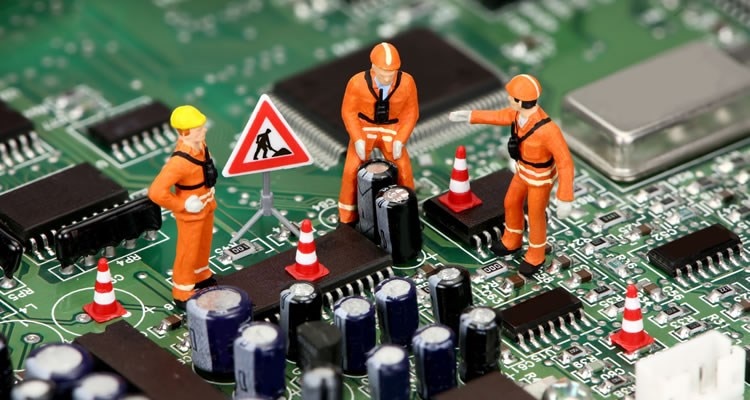

imageimage

Competition Details 

You'll have to be a member of the element14 Community to join in and take part in this “Join, Share & Win” challenge. It's simple, all you have to do is:

1. You need to make sure you are Register or Login
2. Then answer the following question by adding a reply or commenting!

What’s the most dramatic failure of a low‑quality component you’ve seen, and how did you diagnose the root cause, evaluate the impact, and prevent it from happening again?

3. The Community team will then select the best 3 answers to win a UNO R4 Minima! 

image

Closing Date: 30th April 

Winners announced: 1st May

UNO R4 Minima

Terms and Conditions 

imagePDF

This month's winners

 acdc90 

 gpolder 

 strb 

E14Alice will be reaching out to you soon to confirm contact details

  • Cancel
Parents
  • gordonmx
    gordonmx 5 months ago

    RF attenuators are not necessary a low-cost component, but I’ve found inexpensive attenuators have a number of issues to watch out for. Issue #1 is their power ratings. The maximum power rating covers the whole frequency spectrum of the measured signal. You may have a main frequency of interest (MFoI) that is under the max power rating, but other frequencies, including harmonics of the MFoI, can cause the max power to be exceeded. Issue #2 is inexpensive connectors cause poor repeatability in measurements. More issues to follow…

    What issues have you found?

    • Cancel
    • Vote Up +3 Vote Down
    • Cancel
  • chloro
    chloro 5 months ago in reply to gordonmx

    Yes, I completely agree on both points, especially about the connectors; they can cause quiet trouble.

    One problem I have run into is that the attenuation is not consistent across all frequencies. It might say '10 dB' on paper, but when you actually test it, the loss changes a lot depending on the frequency. It can look perfectly fine at your main frequency of interest, but go a bit higher, and suddenly you are off by a couple of dB. This really messes up calibration if you do not catch it.

    Another issue is when the return loss or VSWR turns out to be worse than you expected. Cheaper attenuators often do not keep the impedance proper, so instead of just reducing the signal, they start reflecting power back. This can show up as weird ripples or mismatch errors in your measurements.

    I have also seen thermal drift. If you run a signal for a while, the attenuation slowly shifts as the device heats up. It is not usually a dramatic change, but it is enough to throw off precise measurements.

    And one more subtle thing is the quality of the shielding. Some of these devices leak more signal than they should. In sensitive setups, this means you start picking up unwanted coupling or external noise that absolutely should not be there.

    So, sure, they work... but only until you actually rely on them to be accurate.

    • Cancel
    • Vote Up 0 Vote Down
    • Cancel
Reply
  • chloro
    chloro 5 months ago in reply to gordonmx

    Yes, I completely agree on both points, especially about the connectors; they can cause quiet trouble.

    One problem I have run into is that the attenuation is not consistent across all frequencies. It might say '10 dB' on paper, but when you actually test it, the loss changes a lot depending on the frequency. It can look perfectly fine at your main frequency of interest, but go a bit higher, and suddenly you are off by a couple of dB. This really messes up calibration if you do not catch it.

    Another issue is when the return loss or VSWR turns out to be worse than you expected. Cheaper attenuators often do not keep the impedance proper, so instead of just reducing the signal, they start reflecting power back. This can show up as weird ripples or mismatch errors in your measurements.

    I have also seen thermal drift. If you run a signal for a while, the attenuation slowly shifts as the device heats up. It is not usually a dramatic change, but it is enough to throw off precise measurements.

    And one more subtle thing is the quality of the shielding. Some of these devices leak more signal than they should. In sensitive setups, this means you start picking up unwanted coupling or external noise that absolutely should not be there.

    So, sure, they work... but only until you actually rely on them to be accurate.

    • Cancel
    • Vote Up 0 Vote Down
    • Cancel
Children
No Data
element14 Community

element14 is the first online community specifically for engineers. Connect with your peers and get expert answers to your questions.

  • Members
  • Learn
  • Technologies
  • Challenges & Projects
  • Products
  • Store
  • About Us
  • Feedback & Support
  • FAQs
  • Terms of Use
  • Privacy Policy
  • Legal and Copyright Notices
  • Sitemap
  • Cookies

An Avnet Company © 2026 Premier Farnell Limited. All Rights Reserved.

Premier Farnell Ltd, registered in England and Wales (no 00876412), registered office: Farnell House, Forge Lane, Leeds LS12 2NE.

Follow element14

  • X
  • Facebook
  • linkedin
  • YouTube