element14 Community
element14 Community
    Register Log In
  • Site
  • Search
  • Log In Register
  • Community Hub
    Community Hub
    • What's New on element14
    • Feedback and Support
    • Benefits of Membership
    • Personal Blogs
    • Members Area
    • Achievement Levels
  • Learn
    Learn
    • Ask an Expert
    • eBooks
    • element14 presents
    • Learning Center
    • Tech Spotlight
    • STEM Academy
    • Webinars, Training and Events
    • Learning Groups
  • Technologies
    Technologies
    • 3D Printing
    • FPGA
    • Industrial Automation
    • Internet of Things
    • Power & Energy
    • Sensors
    • Technology Groups
  • Challenges & Projects
    Challenges & Projects
    • Design Challenges
    • element14 presents Projects
    • Project14
    • Arduino Projects
    • Raspberry Pi Projects
    • Project Groups
  • Products
    Products
    • Arduino
    • Avnet & Tria Boards Community
    • Dev Tools
    • Manufacturers
    • Multicomp Pro
    • Product Groups
    • Raspberry Pi
    • RoadTests & Reviews
  • About Us
    About the element14 Community
  • Store
    Store
    • Visit Your Store
    • Choose another store...
      • Europe
      •  Austria (German)
      •  Belgium (Dutch, French)
      •  Bulgaria (Bulgarian)
      •  Czech Republic (Czech)
      •  Denmark (Danish)
      •  Estonia (Estonian)
      •  Finland (Finnish)
      •  France (French)
      •  Germany (German)
      •  Hungary (Hungarian)
      •  Ireland
      •  Israel
      •  Italy (Italian)
      •  Latvia (Latvian)
      •  
      •  Lithuania (Lithuanian)
      •  Netherlands (Dutch)
      •  Norway (Norwegian)
      •  Poland (Polish)
      •  Portugal (Portuguese)
      •  Romania (Romanian)
      •  Russia (Russian)
      •  Slovakia (Slovak)
      •  Slovenia (Slovenian)
      •  Spain (Spanish)
      •  Sweden (Swedish)
      •  Switzerland(German, French)
      •  Turkey (Turkish)
      •  United Kingdom
      • Asia Pacific
      •  Australia
      •  China
      •  Hong Kong
      •  India
      •  Japan
      •  Korea (Korean)
      •  Malaysia
      •  New Zealand
      •  Philippines
      •  Singapore
      •  Taiwan
      •  Thailand (Thai)
      •  Vietnam
      • Americas
      •  Brazil (Portuguese)
      •  Canada
      •  Mexico (Spanish)
      •  United States
      Can't find the country/region you're looking for? Visit our export site or find a local distributor.
  • Translate
  • Profile
  • Settings
Community Hub
Community Hub
Member's Forum Top Tech Voices Podcast S2 E5: Work-Tech Life Balance
  • Blog
  • Forum
  • Documents
  • Quiz
  • Events
  • Leaderboard
  • Polls
  • Files
  • Members
  • Mentions
  • Sub-Groups
  • Tags
  • More
  • Cancel
  • New
Join Community Hub to participate - click to join for free!
Actions
  • Share
  • More
  • Cancel
Forum Thread Details
  • Replies 31 replies
  • Subscribers 629 subscribers
  • Views 2183 views
  • Users 0 members are here
  • journaling
  • work life balance
  • top-tech-voices
  • top tech voices podcast
  • ai
  • podcast
  • ttv2
  • TOP TECH VOICES 2
Related

Top Tech Voices Podcast S2 E5: Work-Tech Life Balance

JoRatcliffe
JoRatcliffe 3 months ago

It is time for Episode 5 of the Top Tech Voices podcast! This episode’s guest is Dr Anne-Laure Le Cunff: a neuroscientist and former Googler.

Tune in for an episode covering:

  • Why ‘pushing through’ and resilience culture can be toxic
  • How curiosity helps you learn and improve yourself in the long-term
  • The ‘plus minus next’ journaling system for self-improvement
  • How to use AI as a partner for thinking and feedback

Click the banner below to watch the podcast video or listen on your favorite platform.
image
Or you can watch straight away right here:

You don't have permission to edit metadata of this video.
Edit media
x
image
Upload Preview
image

Competition Now Closed - Leave a comment and be in the running to win a prize!

All you have to do is the following:

  1. You have to either Register or Login
2. Leave a comment or reply below!

Comments should include constructive discussion on the episode's topics (for example, spending the first hour of your day on deep / focused work instead of checking emails, meta-cognition, how to deal with uncertainty), or useful feedback that helps improve future podcasts.

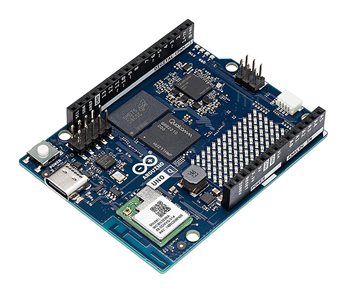
 The Community team will select the best 5 comments to each win an Arduino Uno Q 4GB! Plus, an additional sixth comment will be selected to receive a Raspberry Pi 400 as dougw  generously donated his prize from a previous episode to be awarded to another community member.
image
 Learn More

Terms and Conditions


 The Winners

  •  Akansha  
  •  Qbit 
  •  embeddedguy  
  •  fyaocn 
  •  jelektro 
  •  gordonmx (winner of the Raspberry Pi rollover!)
  • Sign in to reply
  • Cancel
Parents
  • jelektro
    jelektro 3 months ago

    One idea from this episode that really stayed with me was the shift from "goal-based thinking" to "experimental thinking". The suggestion to spend the first hour of the day on deep work instead of immediately checking emails feels especially relevant in a world where constant notifications fragment our attention before we've even started thinking clearly.
    The conversation about uncertainty was probably the strongest part of the episode. Reframing uncertainty from something threatening into something worth exploring feels like a healthier and more sustainable mindset, especially for people working in tech or creative industries where change is constant.
    I also liked the discussion around metacognition and treating emotions as useful data instead of distractions. The 'plus - minus - next' reflection system sounds like a practical way to notice patterns in energy, motivation, and focus over time without becoming overly rigid or obsessed with productivity metrics.
    For future episodes, it would be interesting to hear more concrete real-world examples of tiny experiments people have tried successfully at work or in their personal lives, especially cases where the experiment initially failed but still led to useful insights.

    • Cancel
    • Vote Up 0 Vote Down
    • Sign in to reply
    • Cancel
  • jelektro
    jelektro 3 months ago in reply to jelektro

    After rewatching this interview once again, I noticed how much of the conversation is really about creating healthier ways of working and thinking, rather than simply becoming “more productive.” One part that stood out to me was the discussion about how environments shape our ability to deal with uncertainty. I appreciated the point that personal growth is not only about individual discipline or resilience, but also about whether workplaces and cultures allow people to experiment, question things openly, and admit when they do not have all the answers.
    I also found the conversation about routines and cognitive scripts particularly interesting. The idea that many of our habits exist because the brain tries to conserve energy — and that we rarely stop to question those automatic patterns — felt very relatable. It made me think about how often people continue certain workflows, technologies, or habits simply because they have become familiar, not because they are still useful.
    Another insight I enjoyed was the emphasis on designing technology more intentionally. The example about replacing a phone alarm with a dedicated alarm clock was simple, but it illustrated a much bigger point about how multi-purpose technology can quietly blur boundaries between focus, rest, and constant stimulation.
    I also appreciated the broader discussion around neurodiversity and product design. The idea that many digital tools are unconsciously designed for only one type of user experience is something that deserves far more attention, especially in technology and product development.
    Overall, this episode felt less like a conversation about productivity hacks and more like a thoughtful reflection on attention, curiosity, work culture, and the way technology shapes human behavior.

    • Cancel
    • Vote Up +1 Vote Down
    • Sign in to reply
    • Cancel
  • Qbit
    Qbit 2 months ago in reply to jelektro

    ​@jelektro Your points on workflow efficiency really connect with Dr. Le Cunff’s segment on 'Tiny Experiments' (11:00). In hardware development, we never deploy an entire unverified system architecture at once—we isolate variables on a breadboard and run incremental tests. Applying that exact modular prototyping mindset to our daily cognitive habits is a great framework. It makes you wonder: why haven't we built more dedicated, physical desk widgets with tactile e-ink displays strictly to log these workflow iterations without needing to open a distracting PC monitor?

    • Cancel
    • Vote Up 0 Vote Down
    • Sign in to reply
    • Cancel
  • Qbit
    Qbit 2 months ago in reply to jelektro

    Thank you for this incredibly thoughtful reflection! You’ve beautifully captured the core of Anne-Laure Le Cunff’s perspective in this episode.

    ​I love how you tied the idea of 'tiny experiments' directly back to hardware prototyping—isolating variables and avoiding over-engineering early on is exactly how we build sustainable cognitive routines. Your concept of a tactile, dedicated e-ink workflow tracker is brilliant. It fits perfectly into what Anne-Laure mentioned about replacing a multi-purpose phone with a single-purpose alarm clock [42:52]; it’s not about being 'anti-tech,' but about demanding better, more intentional technology.

    ​It’s a fascinating paradox that those who build the most complex digital infrastructure are often the ones craving physical woodworking or analog craftsmanship at the end of the day. Thanks for adding such deep value to the discussion!

    • Cancel
    • Vote Up 0 Vote Down
    • Sign in to reply
    • Cancel
  • jelektro
    jelektro 2 months ago in reply to Qbit

    I really like this comparison to hardware prototyping because it connects perfectly with the broader theme of the discussion - designing systems that support intentional thinking instead of constant cognitive overload. The idea of "tiny experiments" feels much more tangible when framed like iterative hardware testing: isolate variables, observe behavior, adjust incrementally, and avoid introducing unnecessary complexity too early.
    Your point about dedicated physical desk widgets is especially interesting in the context of the episode's discussion about intentional technology design. It mirrors the example about replacing a phone alarm with a standalone alarm clock - creating tools with a single cognitive purpose instead of relying on multifunctional devices that constantly compete for attention. A small tactile e-ink workflow tracker could actually reinforce metacognition without pulling someone back into the distraction loop of notifications, tabs, and context switching.
    What makes this even more relevant is how cognitively overloaded many people have become. After spending entire days navigating notifications, dashboards, abstractions, and fragmented digital workflows, the brain naturally starts craving the simplest and most frictionless forms of interaction possible. It is interesting how often the response to extreme technological complexity is not "more technology," but a return to simpler, slower, and more tangible systems.
    Interestingly, many engineers and developers who work daily with the most advanced technologies often prefer very traditional or even old-fashioned solutions in their personal lives. People who spend 8–10 hours building sophisticated systems frequently move toward low-tech or fully analog hobbies outside work. A lot of highly skilled programmers relax through woodworking, repairing old motorcycles, film photography, brewing beer, or various forms of craftsmanship. 
    In that sense, low-distraction physical tools are not really "anti-technology." They may actually represent a more mature form of technological design — one that respects cognitive limits instead of constantly competing for attention.

    • Cancel
    • Vote Up 0 Vote Down
    • Sign in to reply
    • Cancel
Reply
  • jelektro
    jelektro 2 months ago in reply to Qbit

    I really like this comparison to hardware prototyping because it connects perfectly with the broader theme of the discussion - designing systems that support intentional thinking instead of constant cognitive overload. The idea of "tiny experiments" feels much more tangible when framed like iterative hardware testing: isolate variables, observe behavior, adjust incrementally, and avoid introducing unnecessary complexity too early.
    Your point about dedicated physical desk widgets is especially interesting in the context of the episode's discussion about intentional technology design. It mirrors the example about replacing a phone alarm with a standalone alarm clock - creating tools with a single cognitive purpose instead of relying on multifunctional devices that constantly compete for attention. A small tactile e-ink workflow tracker could actually reinforce metacognition without pulling someone back into the distraction loop of notifications, tabs, and context switching.
    What makes this even more relevant is how cognitively overloaded many people have become. After spending entire days navigating notifications, dashboards, abstractions, and fragmented digital workflows, the brain naturally starts craving the simplest and most frictionless forms of interaction possible. It is interesting how often the response to extreme technological complexity is not "more technology," but a return to simpler, slower, and more tangible systems.
    Interestingly, many engineers and developers who work daily with the most advanced technologies often prefer very traditional or even old-fashioned solutions in their personal lives. People who spend 8–10 hours building sophisticated systems frequently move toward low-tech or fully analog hobbies outside work. A lot of highly skilled programmers relax through woodworking, repairing old motorcycles, film photography, brewing beer, or various forms of craftsmanship. 
    In that sense, low-distraction physical tools are not really "anti-technology." They may actually represent a more mature form of technological design — one that respects cognitive limits instead of constantly competing for attention.

    • Cancel
    • Vote Up 0 Vote Down
    • Sign in to reply
    • Cancel
Children
  • Qbit
    Qbit 2 months ago in reply to jelektro

    Thank you for this incredibly thoughtful reflection! You’ve beautifully captured the core of Anne-Laure Le Cunff’s perspective in this episode.

    ​I love how you tied the idea of 'tiny experiments' directly back to hardware prototyping—isolating variables and avoiding over-engineering early on is exactly how we build sustainable cognitive routines. Your concept of a tactile, dedicated e-ink workflow tracker is brilliant. It fits perfectly into what Anne-Laure mentioned about replacing a multi-purpose phone with a single-purpose alarm clock [42:52]; it’s not about being 'anti-tech,' but about demanding better, more intentional technology.

    ​It’s a fascinating paradox that those who build the most complex digital infrastructure are often the ones craving physical woodworking or analog craftsmanship at the end of the day. Thanks for adding such deep value to the discussion!

    • Cancel
    • Vote Up 0 Vote Down
    • Sign in to reply
    • Cancel
element14 Community

element14 is the first online community specifically for engineers. Connect with your peers and get expert answers to your questions.

  • Members
  • Learn
  • Technologies
  • Challenges & Projects
  • Products
  • Store
  • About Us
  • Feedback & Support
  • FAQs
  • Terms of Use
  • Privacy Policy
  • Legal and Copyright Notices
  • Sitemap
  • Cookies

An Avnet Company © 2026 Premier Farnell Limited. All Rights Reserved.

Premier Farnell Ltd, registered in England and Wales (no 00876412), registered office: Farnell House, Forge Lane, Leeds LS12 2NE.

Follow element14

  • X
  • Facebook
  • linkedin
  • YouTube